
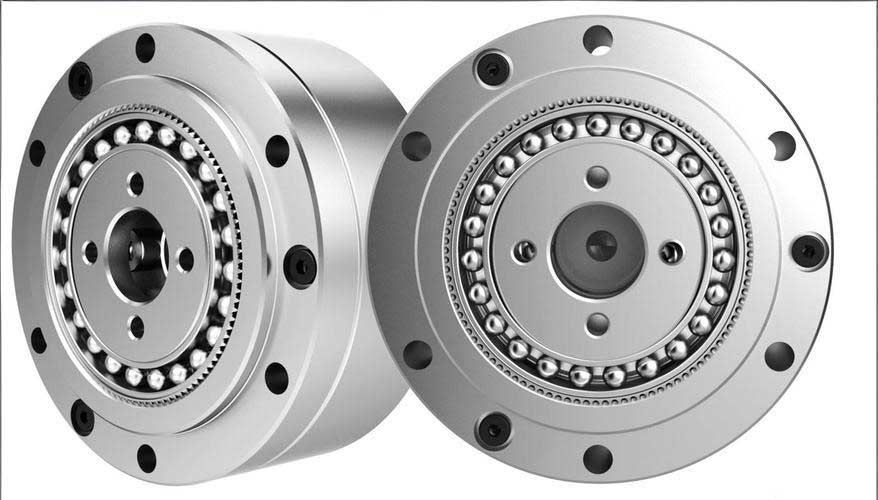
In the field of precision mechanical transmission, strain wave gears, also known as harmonic drives, play a crucial role due to their high reduction ratio, compact size, and excellent positional accuracy. These characteristics make them indispensable in applications such as robotics, aerospace, and automated control systems. However, one of the persistent challenges in the design of strain wave gears is the control and minimization of gear backlash. Backlash, the clearance between mating teeth, directly impacts transmission efficiency, positional accuracy, and operational lifespan. In high-precision servo systems, even minimal backlash can lead to significant errors in positioning and control. Therefore, developing a method to accurately determine geometric parameters that satisfy specific backlash requirements is a critical design problem. Traditional approaches often incorporate backlash reduction values based on empirical data, which leads to suboptimal and imprecise design outcomes. In this paper, I propose a refined optimization model that addresses this shortcoming by formally incorporating backlash reduction into the mathematical framework through the compensation of an additional torsional angle in the flexspline. This approach yields a more accurate and reliable design methodology for strain wave gears.
The core of this design problem lies in establishing a precise mathematical model for calculating the instantaneous backlash between the flexspline and the circular spline teeth during meshing. For a strain wave gear transmission, I assume a common configuration where the wave generator is fixed, the flexspline is the input (driver), and the circular spline is the output (driven). The geometric model for backlash calculation is centered on the relative positions of conjugate tooth profiles. The backlash is not constant but varies with the rotation angle of the wave generator due to the continuous deformation of the flexspline.
The fundamental geometry involves an involute tooth profile. Consider two points on a pair of mating teeth: points $K_1$ and $K_2$ on one side of the tooth space, and points $P_1$ and $P_2$ on the opposite side. The linear backlash at these points can be computed as the Euclidean distance between the corresponding points on the flexspline and circular spline profiles in the plane of action. The expressions are:
$$ j_{t1} = \sqrt{ (x_{K2} – x_{K1})^2 + (y_{K1} – y_{K2})^2 } $$
$$ j_{t2} = \sqrt{ (x_{P2} – x_{P1})^2 + (y_{P1} – y_{P2})^2 } $$
Utilizing principles of differential geometry and involute gear generation, the coordinates of these points can be derived. For a point $K_1$ on the flexspline involute profile, its coordinates in a reference frame attached to the flexspline’s neutral line before deformation are given by:
$$ x_{K1} = r_b \left[ \sin(\theta_b – u_k + \psi) + u_k \cdot \cos(\theta_b – u_k + \psi) \right] + \rho \sin \phi_1 – r_m \sin \psi $$
$$ y_{K1} = r_b \left[ \cos(\theta_b – u_k + \psi) – u_k \cdot \sin(\theta_b – u_k + \psi) \right] + \rho \cos \phi_1 – r_m \cos \psi $$
where $r_b$ is the base radius of the flexspline, $u_k$ is the involute roll angle parameter, $\theta_b$ is a base angle, $\psi$ is the angular coordinate of the point on the flexspline neutral curve, $\rho$ is the radial deformation of the neutral curve, $\phi_1$ is the rotation angle of the flexspline, and $r_m$ is the radius of the neutral curve. The coordinate transformation accounts for the flexspline’s deformation under the wave generator.
The corresponding point $K_2$ on the circular spline tooth profile is then expressed in polar coordinates relative to the circular spline center:
$$ x_{K2} = r_{M1} \cdot \sin(\phi_2 + \xi_{K2}) $$
$$ y_{K2} = r_{M1} \cdot \cos(\phi_2 + \xi_{K2}) $$
Here, $r_{M1} = \sqrt{x_{K1}^2 + y_{K1}^2}$ is the polar radius of point $K_1$ transferred to the circular spline coordinate system. $\phi_2$ is the rotation angle of the circular spline, related to the flexspline rotation by the gear ratio: $\phi_2 = (z_g / z_b) \cdot \phi$, where $z_g$ and $z_b$ are the number of teeth on the circular spline and flexspline, respectively, and $\phi$ is the input rotation angle (e.g., of the wave generator). $\xi_{K2}$ is half the angle subtended by the tooth thickness of the circular spline at the radius $r_{M1}$, calculated using the involute function: $\xi_{K2} = \theta_2 + \text{inv}\,\alpha – \text{inv}\,\alpha_{k2}$, where $\theta_2$ is half the tooth space angle at the standard pitch circle, $\alpha$ is the standard pressure angle, and $\alpha_{k2}$ is the pressure angle at point $K_2$.
Similarly, the coordinates for points $P_1$ and $P_2$ on the opposite flanks are derived:
$$ x_{P1} = r_b \left[ \sin(\psi – \theta_b + u_k) – u_k \cdot \cos(\psi – \theta_b + u_k) \right] + \rho \sin \phi_1 – r_m \sin \psi $$
$$ y_{P1} = r_b \left[ \cos(\psi – \theta_b + u_k) + u_k \cdot \sin(\psi – \theta_b + u_k) \right] + \rho \cos \phi_1 – r_m \cos \psi $$
$$ x_{P2} = r_{M2} \cdot \sin(\phi_2 – \xi_{p2}) $$
$$ y_{P2} = r_{M2} \cdot \cos(\phi_2 – \xi_{p2}) $$
with $r_{M2} = \sqrt{x_{P1}^2 + y_{P1}^2}$ and $\xi_{p2}$ defined analogously for the opposite flank.
For a four-force acting type wave generator (a common configuration approximating an elliptical deformation), the parameters $\phi_1$, $\phi_2$, $\psi$, and the radial deformation $\rho$ are all functions of the input angle $\phi$. Consequently, the instantaneous backlash $j_t$ is a complex function of $\phi$ and several key design parameters. Therefore, the backlash function can be summarized as:
$$ j_t = f(\phi, x_g, x_b, \omega_0^*, h_n) $$
where the design variables are:
$x_g$: the addendum modification coefficient (profile shift) for the circular spline,
$x_b$: the addendum modification coefficient for the flexspline,
$\omega_0^*$: the radial deformation coefficient (normalized maximum radial displacement of the flexspline),
$h_n$: the depth of meshing (or the nominal radial interference),
$\phi$: the angular position of the wave generator.
The primary goal of the optimization is to minimize the peak or average backlash over a complete cycle, or to ensure the minimum backlash meets a specified target, often zero for precision applications. Thus, the objective function can be formulated as minimizing the maximum absolute value of $j_t$ over $\phi$, or minimizing a norm of the backlash function.
$$ \text{Minimize: } F(\mathbf{X}) = \max_{\phi \in [0, 2\pi]} |j_t(\phi, \mathbf{X})| \quad \text{or} \quad \int_{0}^{2\pi} j_t^2(\phi, \mathbf{X}) \, d\phi $$
$$ \text{with } \mathbf{X} = [x_g, x_b, \omega_0^*, h_n, \phi] $$
However, a crucial innovation in this model is the compensation for the reduction in backlash caused by torque loading. In a powered strain wave gear transmission, the applied torque induces torsional deformation in the flexspline, causing it to twist relative to the circular spline. This twist effectively reduces the nominal backlash. Instead of subtracting an empirical constant from the backlash value, this model incorporates this effect as an additional torsional angle $\varphi_0$ added to the flexspline rotation. The relationship is derived from mechanics:
$$ \varphi_0 = \frac{j_T}{r_g} = \frac{2 T_{max}}{d_g^2 \delta G} $$
where $j_T$ is the backlash reduction due to torsion at the pitch circle, $T_{max}$ is the maximum output torque, $d_g$ is the pitch diameter of the circular spline, $\delta$ is the wall thickness of the flexspline, and $G$ is the shear modulus of the flexspline material. The flexspline rotation angle in the loaded state then becomes $\phi_1′ = \phi_1 + \varphi_0$. This modification is embedded within the coordinate equations, making the backlash function $j_t$ dependent on the load torque, leading to a more accurate optimization for power transmission applications.
The optimization is subject to a set of stringent geometric and functional constraints to ensure proper meshing, avoid interference, and maintain structural integrity. These constraints are enumerated below:
1. Non-Interference Condition: At any angular position, the tooth profiles must not overlap. This requires the coordinates of corresponding points to satisfy:
$$ \begin{cases}
x_{K2} – x_{K1} \ge 0 \\
y_{K1} – y_{K2} \ge 0
\end{cases} \quad \text{and} \quad \begin{cases}
x_{P1} – x_{P2} \ge 0 \\
y_{P2} – y_{P1} \ge 0
\end{cases} $$
2. Avoidance of Undercut or Fillet Interference: The transition curves (fillet regions) of the gears must not interfere. For gears generated by a rack-type tool (e.g., hob) or a shaper cutter, this leads to conditions such as:
$$ r_{ag} + w_0 \le r_{j2b} $$
$$ r_{j1g} + \omega_0 \le r_{ab} $$
where $r_{ag}$ and $r_{ab}$ are the addendum radii of the circular spline and flexspline, $r_{j1g}$ and $r_{j2b}$ are radii related to the generating tool’s tip and the gear’s root, and $w_0$ is the nominal radial deformation.
3. Limit on Maximum Depth of Meshing: The radial engagement depth $h_n$ should not exceed a permissible limit to prevent excessive stress or improper contact. This is expressed as:
$$ m(0.5 z_g + x_g + h_a^*) – 0.5 d_{j1g} – h_n \ge 0 $$
where $m$ is the module, $h_a^*$ is the addendum coefficient, and $d_{j1g}$ is a reference diameter from the tool geometry.
4. Radial Clearance Constraint: Sufficient clearance must exist between the tooth tips and roots to prevent contact and allow for lubrication:
$$ 0.5(d_{jb} – d_{ag}) – \omega_0 – 0.15 m \ge 0 $$
Here, $d_{jb}$ and $d_{ag}$ are the root diameter of the flexspline and addendum diameter of the circular spline, respectively.
5. Tooth Tip Thickness Constraint: To prevent weakening of the teeth, a minimum tip thickness must be maintained:
$$ s_{ag} – 0.25 m \ge 0 $$
$$ s_{ab} – 0.25 m \ge 0 $$
where $s_{ag}$ and $s_{ab}$ are the circular tooth thickness at the addendum circles.
6. Disengagement Condition at the Minor Axis: To ensure smooth disengagement of teeth along the minor axis of the wave generator, the following must hold:
$$ d_{ag} – d_{ab} < 2.16 \omega_0^* $$
7. Condition for Tooth Tip Non-Premature Exit: The tooth tip of the flexspline should not exit the meshing zone prematurely, which requires:
$$ \xi_{ab} – \xi_{k2} > 0 $$
where $\xi_{ab}$ is related to the flexspline tooth tip geometry.
In summary, the optimization problem for the strain wave gear meshing parameters is defined as:
$$ \begin{aligned}
& \underset{\mathbf{X}}{\text{minimize}}
& & F(\mathbf{X}) = j_t(\mathbf{X}) \\
& \text{subject to}
& & g_i(\mathbf{X}) \ge 0, \quad i = 1, 2, \dots, 10 \\
& & & \mathbf{X} = [x_g, x_b, \omega_0^*, h_n, \phi]
\end{aligned} $$
The constraints $g_i(\mathbf{X})$ collectively represent the seven sets of inequalities detailed above, often expanded into multiple individual inequalities based on different meshing positions.
Given the nonlinear nature of the objective function and constraints, selecting an appropriate optimization algorithm is vital. The problem involves five design variables and multiple inequality constraints. A hybrid approach combining the downhill simplex method (Nelder-Mead) and the interior point penalty method is effective. The downhill simplex method is robust for low-dimensional problems (n ≤ 20) and does not require gradient information, offering good search efficiency. The interior point penalty method ensures that the search remains within the feasible region by penalizing constraint violations. This combination balances global exploration and feasibility maintenance. For implementation, a programming language with good numerical capabilities and user interface features is suitable. Visual Basic (VB) provides a straightforward environment for coding the algorithm and managing the calculations, though the principles are language-agnostic.
To demonstrate the application of this optimization model, I present a detailed example based on a strain wave gear used in a radar servo system. The primary design data and requirements are as follows:
| Parameter | Symbol | Value |
|---|---|---|
| Number of teeth, Circular Spline | $z_g$ | 200 |
| Number of teeth, Flexspline | $z_b$ | 202 |
| Module | $m$ | 0.5 mm |
| Pressure Angle | $\alpha$ | 20° |
| Wave Generator Type | – | Four-force acting ($\beta=30^\circ$) |
| Flexspline Wall Thickness | $\delta$ | 1.1 mm |
| Manufacturing Method | – | Flexspline: hob (generating); Circular Spline: shaper cutter ($z_0=80$, $x_0=0$) |
| Output Torque | $T_{max}$ | 300 N·m |
| Required Minimum Backlash | $j_{t,min}$ | 0 mm (zero backlash target) |
First, the initial parameters and constants are determined. Standard coefficients are assumed: addendum coefficient $h_a^* = 1.0$, bottom clearance coefficient $c^* = 0.35$. The pitch diameter of the circular spline is $d_g = m z_g = 0.5 \times 200 = 100$ mm. The backlash reduction due to torsional deformation under full load is calculated:
$$ j_T = \frac{T_{max} \cdot b}{d_g^2 \cdot \delta \cdot G} $$
Assuming a face width factor and material properties, a typical calculation yields $j_T \approx 0.01023$ mm. This reduction is considered to occur at the pitch circle, leading to an additional torsional angle for the flexspline:
$$ \varphi_0 = \frac{j_T}{d_g / 2} = \frac{0.01023}{50} = 0.0002046 \text{ rad} $$
Therefore, in the loaded condition, the effective rotation angle of the flexspline becomes $\phi_1 = \phi + \frac{\nu}{r_m} + \varphi_0$, where $\nu$ accounts for the kinematic relationship due to wave generator motion.
The optimization algorithm is then executed under two distinct scenarios to analyze the impact of torque loading: (A) Considering the load-induced torsional compensation ($\varphi_0 \neq 0$), and (B) Ignoring the load effect ($\varphi_0 = 0$). For each scenario, multiple optimization runs are performed from different initial points to explore the design space. A subset of the optimal parameter sets obtained is summarized in the table below. The objective function value $j_t$ reported is the minimum backlash achieved over the meshing cycle for that parameter set.
| Case | Set ID | $x_g$ | $x_b$ | $\omega_0^*$ | $h_n$ (mm) | $\phi$ (°) | $j_t$ (mm) |
|---|---|---|---|---|---|---|---|
| With Load Compensation | I | 2.88417 | 3.03895 | 1.08246 | 0.90388 | 0.28514 | 2.4e-7 |
| II | 2.43850 | 2.57514 | 1.06854 | 0.87648 | 0.77133 | 8.5e-7 | |
| III | 2.41695 | 2.57124 | 1.08346 | 0.88710 | 0.13498 | 8.0e-8 | |
| Without Load Compensation | ① | 2.91583 | 3.00404 | 1.07417 | 0.91263 | 0.71553 | -0.011 |
| ② | 2.43305 | 2.54960 | 1.09906 | 0.90384 | -0.41295 | -0.011 | |
| ③ | 2.37778 | 2.49813 | 1.10245 | 0.89664 | -0.06006 | -0.011 |
Analyzing the results for the load-compensated case (Sets I, II, III), all achieve backlash very close to zero (on the order of $10^{-7}$ mm), effectively meeting the design target. To select the most suitable set, one must examine the backlash curves over the entire rotation cycle. The backlash $j_t$ varies with the wave generator angle $\phi$. Plotting these curves reveals important characteristics. For a four-force type strain wave gear, the backlash typically has two local minima per quarter cycle. The curves for Sets I, II, and III (considering load) show that while all avoid interference ($j_t \ge 0$), they differ in shape and magnitude. Set II offers a good compromise: its radial deformation coefficient $\omega_0^*$ is relatively small (1.06854), which can reduce stress in the flexspline, while its meshing depth $h_n$ is adequate (0.87648 mm). Furthermore, its backlash curve is generally lower and flatter over the meshing range compared to others, indicating more consistent performance. Therefore, Set II parameters are recommended for this strain wave gear design.
The comparison between the two cases highlights the critical importance of incorporating torsional compensation. Notice that in the “Without Load Compensation” case, the optimal backlash $j_t$ is listed as -0.011 mm. A negative backlash value indicates theoretical tooth interference, which is physically unacceptable and would lead to jamming, increased wear, and failure in an actual loaded transmission. This demonstrates that optimizing parameters without considering the load effect yields a design that is only valid for unloaded or very low-torque conditions. Applying such parameters to a power transmission strain wave gear would result in severe operational problems.
To further visualize this, consider the backlash curves. Let’s denote the backlash function for a given parameter set $\mathbf{X}$ as $j_t(\phi; \mathbf{X})$. We can examine two critical transformations:
1. Using the parameters from Set II (designed with load compensation) but evaluating backlash without the torsional angle ($\varphi_0=0$). This curve, labeled “II→NoLoad”, represents what the backlash would be if the gear were unloaded.
2. Using the parameters from Set ② (designed without load compensation) but evaluating backlash with the torsional angle included ($\varphi_0 \neq 0$). This curve, labeled “②→Load”, represents the actual backlash under load for a design optimized for no load.
The analysis shows that the “II→NoLoad” curve lies entirely above zero, with a minimum backlash of about 0.008 mm. This positive clearance in the unloaded state is the source of kinematic error or hysteresis (backlash) when the direction of rotation is reversed. Conversely, the “②→Load” curve dips below zero over a significant portion of the meshing cycle (e.g., from $\phi = 0^\circ$ to $7^\circ$), confirming that interference occurs under torque. This starkly illustrates that for strain wave gears intended for torque transmission, the optimization must explicitly account for the elastic deformation of the flexspline under load. Ignoring this factor leads to a design prone to binding and failure.
The mathematical model and optimization process described here provide a comprehensive framework for the precise design of strain wave gear meshing parameters. The key advancement is the formal integration of the load-induced torsional deformation as a compensatory angle within the geometric backlash equations, moving beyond empirical adjustments. This results in an optimization model that more accurately reflects the physical behavior of the strain wave gear under operating conditions. The constraints ensure the design is feasible regarding interference, strength, and manufacturability. The use of a hybrid optimization algorithm proves effective in navigating the complex, constrained design space.
For practical engineering, this methodology offers a reliable path to achieve minimal or zero-backlash designs for high-performance strain wave gears used in robotics, precision instruments, and servo systems. The optimal parameters obtained, such as specific profile shift coefficients $(x_g, x_b)$, radial deformation factor $\omega_0^*$, and meshing depth $h_n$, serve as direct inputs for the manufacturing process, ensuring the fabricated gears will exhibit the desired performance characteristics. Future work could extend this model to consider dynamic loads, thermal effects, and different wave generator profiles, further enhancing the robustness of strain wave gear design. Ultimately, mastering the meshing parameter optimization is fundamental to unlocking the full potential of strain wave gear technology in advanced mechanical systems.