
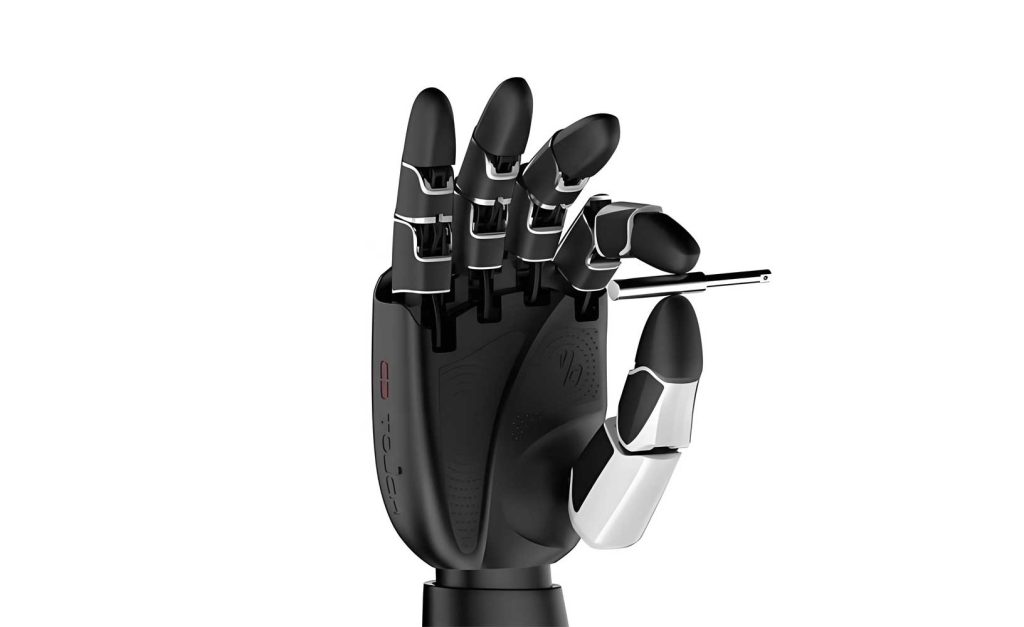
In the field of robotics, the dexterous robotic hand has emerged as a critical executive mechanism, inspired by the remarkable flexibility and coordination of the human hand. As a researcher focused on enhancing robotic manipulation, I have observed that during grasping tasks, dexterous robotic hands often face challenges such as complex internal interactions, slow response speeds, and low efficiency. These issues can lead to instability, joint jitter, and imprecise force control, ultimately affecting the overall performance in applications like industrial automation, rehabilitation, and human-robot interaction. To address these problems, I propose an angle closed-loop fuzzy adaptive control algorithm optimized using the Particle Swarm Optimization (PSO) algorithm. This approach leverages fuzzy logic to infer relationships between joint angle deviations and controller parameters, enabling real-time adjustments to improve system stability and grasping efficiency. Through the integration of an ADAMS model and a closed-loop control system, this research aims to provide a robust solution for controlling dexterous robotic hands, with a focus on minimizing joint jitter and enhancing fingertip contact force control. The keyword ‘dexterous robotic hand’ will be emphasized throughout this discussion to highlight its centrality in robotic manipulation systems.
The human hand is an essential tool, capable of performing a wide range of tasks from simple daily activities to complex creative endeavors. In robotics, replicating this dexterity has been a long-standing goal, leading to the development of various dexterous robotic hand designs. However, controlling these hands during grasping operations remains a significant challenge due to factors like nonlinear dynamics, environmental uncertainties, and the need for precise force modulation. Traditional control methods, such as PID control, often fall short in handling these complexities, resulting in overshoot, oscillations, or slow convergence. In my work, I explore the use of fuzzy adaptive PID control, enhanced by PSO optimization, to overcome these limitations. By simulating the grasping process using ADAMS and SIMULINK, I can visualize and refine the control strategy, ensuring that the dexterous robotic hand operates with higher precision and adaptability. This research not only contributes to the advancement of robotic manipulation but also offers insights into bio-inspired control mechanisms that can be applied across diverse robotic platforms.
To begin, I establish a kinematic model for the dexterous robotic hand, focusing on a simplified finger structure with one degree of freedom per finger for flexion motion. This simplification allows for a clearer analysis of control dynamics while maintaining relevance to real-world applications. The kinematic model is based on the Denavit-Hartenberg (D-H) parameters, which define the transformations between consecutive links in the robotic finger. For a single finger, the D-H parameters are summarized in the following table, which captures the geometric relationships essential for position control.
| Link Number | θ_i | α_i (°) | a_i (mm) | d_i (mm) |
|---|---|---|---|---|
| 1 | 0 | 0 | 0 | l1 |
| 2 | θ2 | 0 | 0 | l2 |
Using the D-H convention, the transformation matrix between links can be expressed as:
$$ ^{i-1}T_i = \begin{bmatrix}
\cos\theta_i & -\sin\theta_i & 0 & a_{i-1} \\
\sin\theta_i \cos\alpha_i & \cos\theta_i \cos\alpha_i & -\sin\alpha_i & -d_i \sin\alpha_i \\
\sin\theta_i \sin\alpha_i & \cos\theta_i \sin\alpha_i & \cos\alpha_i & -d_i \cos\alpha_i \\
0 & 0 & 0 & 1
\end{bmatrix} $$
For the dexterous robotic hand finger, with the parameters from the table, the transformation from the base to the fingertip is computed as:
$$ ^0A_2 = ^0T_1 ^1T_2 = \begin{bmatrix}
\cos\theta_2 & -\sin\theta_2 & 0 & l_1 + l_2 \\
\sin\theta_2 & \cos\theta_2 & 0 & 0 \\
0 & 0 & 1 & 0 \\
0 & 0 & 0 & 1
\end{bmatrix} $$
This equation allows me to determine the fingertip position relative to the base frame given the joint angle θ2, which is crucial for trajectory planning and control in the dexterous robotic hand. The kinematic model serves as the foundation for subsequent dynamic simulations and control algorithm development.
Next, I developed a dynamic model of the dexterous robotic hand using SOLIDWORKS and imported it into ADAMS for motion analysis. The ADAMS model includes five fingers, each with linkages connected to the fingertips. Four fingers are fixed to the palm base, while the thumb is attached via a rotational ball joint, enabling versatile movements. This model captures the mechanical interactions and forces during grasping, providing a realistic environment for testing control algorithms. The use of ADAMS allows me to extract key parameters such as joint angles, angular velocities, and contact forces, which are then integrated into a SIMULINK-based control system. The joint simulation framework, as shown in the block diagram, facilitates a seamless exchange of data between the dynamic model and the controller, enhancing the visualization and accuracy of the experimental process. In this setup, the desired joint angles are set, and the ADAMS module feeds back real-time data to the controller, which computes the required torques using the optimized fuzzy adaptive PID algorithm. This integrated approach ensures that the dexterous robotic hand can respond adaptively to external disturbances and object interactions.
The core of my control strategy involves a fuzzy adaptive PID controller, optimized using the PSO algorithm. The fuzzy controller is designed to adjust the PID parameters—specifically, the proportional gain \(k_p\) and derivative gain \(k_d\)—based on the joint angle error \(e\) and its rate of change \(ec\). This adaptation is necessary because fixed PID parameters often lead to suboptimal performance in nonlinear systems like the dexterous robotic hand. The fuzzy logic system uses membership functions and rules to map inputs to outputs, enabling smooth and responsive control. I define the input variables \(e\) and \(ec\) with fuzzy sets over the domain \([-6, 6]\), and the output variables \(k_p\) and \(k_d\) over \([-1, 1]\) and \([0, 0.2]\), respectively. The fuzzy sets include linguistic terms such as NB (Negative Big), NM (Negative Medium), NS (Negative Small), ZO (Zero), PS (Positive Small), PM (Positive Medium), and PB (Positive Big). Triangular membership functions are employed for their simplicity and effectiveness in real-time control. The fuzzy rules for \(k_p\) and \(k_d\) are derived from empirical knowledge and system requirements, as summarized in the following tables, which guide the controller in achieving fast response and stability.
| \(e\) \ \(ec\) | NB | NM | NS | ZO | PS | PM | PB |
|---|---|---|---|---|---|---|---|
| NB | PB | PB | PM | PM | PM | ZO | ZO |
| NM | PB | PM | PM | PM | PS | ZO | ZO |
| NS | PM | PM | PM | PS | ZO | NS | NS |
| ZO | PM | PM | PS | ZO | NS | NS | NM |
| PS | PS | PS | ZO | NS | NS | NM | NM |
| PM | ZO | ZO | NS | NM | NM | NM | NB |
| PB | ZO | ZO | NS | NM | NB | NB | NB |
| \(e\) \ \(ec\) | NB | NM | NS | ZO | PS | PM | PB |
|---|---|---|---|---|---|---|---|
| NB | NB | NB | NM | NM | NS | ZO | ZO |
| NM | NB | NM | NM | NM | NS | ZO | ZO |
| NS | NM | NM | NM | PS | ZO | PS | PM |
| ZO | NM | NS | NM | ZO | PS | PM | PM |
| PS | NS | NS | ZO | PM | PS | PM | PM |
| PM | ZO | ZO | PS | PM | PM | PM | PB |
| PB | ZO | ZO | PS | PM | PM | PB | PB |
The output torque \(r(t)\) for the dexterous robotic hand is computed using the PID formula:
$$ r(t) = k_p e(t) + k_d \frac{de(t)}{dt} $$
where \(e(t)\) is the angle error. The fuzzy inference system processes \(e\) and \(ec\) to generate \(k_p\) and \(k_d\), which are then used in this equation. To further optimize the fuzzy controller, I apply the PSO algorithm, which is a population-based optimization technique inspired by bird flocking behavior. PSO searches for optimal parameters by updating particle positions and velocities based on individual and global best solutions. The algorithm is defined by the following equations:
$$ v_i^k = \omega v_i^{k-1} + c_1 r_1 (p_i^k – x_i^k) + c_2 r_2 (g^k – x_i^k) $$
$$ x_i^k = x_i^{k-1} + v_i^{k-1} $$
Here, \(v_i^k\) and \(x_i^k\) represent the velocity and position of particle \(i\) at iteration \(k\), \(\omega\) is the inertia weight, \(c_1\) and \(c_2\) are acceleration constants, \(r_1\) and \(r_2\) are random numbers, \(p_i^k\) is the personal best position, and \(g^k\) is the global best position. In my implementation, PSO optimizes the parameters of the fuzzy controller by minimizing a cost function related to joint angle error and fingertip contact force. This ensures that the dexterous robotic hand achieves smoother and more stable grasping motions, reducing oscillations and improving overall efficiency.
For experimental validation, I conducted simulations using the ADAMS-SIMULINK joint model to evaluate the performance of the PSO-optimized fuzzy adaptive PID controller. The target object was a block-shaped item, and the dexterous robotic hand was tasked with grasping it while maintaining precise control. The ADAMS environment parameters, which define the contact and friction properties, are listed in the table below to provide context for the simulation conditions.
| Parameter Name | Value |
|---|---|
| Stiffness | 1.0E+06 N/m |
| Maximum Damping Coefficient | 1.0E+04 N·s/m |
| Force Exponent | 1.8 |
| Penetration Depth | 1.0E-05 m |
| Static Friction Coefficient | 0.3 |
| Dynamic Friction Coefficient | 0.3 |
| Static Friction Transition Velocity | 0.3 m/s |
| Dynamic Friction Transition Velocity | 1 m/s |
In the first analysis, I compared the joint angle curves of the dexterous robotic hand when controlled by a traditional PID algorithm versus the PSO-optimized fuzzy adaptive PID algorithm. The results showed that the PID algorithm required approximately 0.95 seconds to stabilize the joint angle, whereas the optimized algorithm achieved stability in about 0.9 seconds. Although both methods offered similar control accuracy, the optimized approach demonstrated faster response and reduced oscillations, leading to less joint jitter during grasping. This improvement is critical for applications where the dexterous robotic hand must handle fragile or irregularly shaped objects without causing damage or misalignment. The enhanced stability stems from the adaptive tuning of \(k_p\) and \(k_d\), which allows the controller to dynamically adjust to changing conditions, such as variations in object weight or surface friction.
The second analysis focused on fingertip contact force curves, which are essential for ensuring gentle and precise manipulation. With the traditional PID controller, the dexterous robotic hand exhibited a maximum fingertip force of 0.1 N before stabilizing at 0.04 N, with the object reaching a steady state at 1.2 seconds. In contrast, the PSO-optimized fuzzy adaptive PID controller produced a maximum force of only 0.01 N, stabilizing at 0.003 N, and achieved steady state at 1 second. This significant reduction in contact force highlights the superiority of the optimized algorithm in minimizing impact and preserving object integrity. For the dexterous robotic hand, lower contact forces reduce the risk of slippage or deformation, especially when handling delicate items like electronic components or biological samples. The fuzzy logic system, combined with PSO optimization, enables finer force modulation by correlating joint angle errors with appropriate torque outputs, thereby enhancing the dexterous robotic hand’s ability to perform complex grasping tasks.
To further illustrate the control mechanism, I delve into the mathematical formulation of the fuzzy inference process. The membership functions for inputs \(e\) and \(ec\) are defined using triangular shapes, which simplify computation while maintaining adequate resolution. For example, the membership value \(\mu_A(x)\) for a triangular function with parameters \(a\), \(b\), and \(c\) is given by:
$$ \mu_A(x) = \begin{cases}
0 & \text{if } x \leq a \\
\frac{x-a}{b-a} & \text{if } a < x \leq b \\
\frac{c-x}{c-b} & \text{if } b < x \leq c \\
0 & \text{if } x > c
\end{cases} $$
This function is applied to each fuzzy set, and the output parameters \(k_p\) and \(k_d\) are derived through centroid defuzzification, which computes the weighted average of the fuzzy outputs. The optimization process using PSO involves defining a fitness function \(F\) that minimizes both angle error and force deviation:
$$ F = \alpha \int e(t)^2 dt + \beta \int (f_d(t) – f(t))^2 dt $$
where \(\alpha\) and \(\beta\) are weighting factors, \(e(t)\) is the joint angle error, \(f_d(t)\) is the desired contact force, and \(f(t)\) is the actual force. By iteratively updating the particle positions, PSO converges to an optimal set of fuzzy parameters that minimize \(F\), thereby improving the performance of the dexterous robotic hand. This integrated approach ensures that the control system is not only adaptive but also optimized for specific task requirements, making it highly suitable for real-world applications where environmental conditions may vary.
In addition to the core control algorithm, I considered the mechanical design aspects of the dexterous robotic hand. The fingers are actuated using tendon-driven mechanisms, which provide compactness and flexibility. The dynamics of such systems can be modeled using Lagrangian mechanics, where the equations of motion for a finger joint are expressed as:
$$ M(q)\ddot{q} + C(q, \dot{q})\dot{q} + G(q) = \tau $$
Here, \(q\) is the joint angle vector, \(M(q)\) is the inertia matrix, \(C(q, \dot{q})\) represents Coriolis and centrifugal forces, \(G(q)\) is the gravitational vector, and \(\tau\) is the input torque. For the dexterous robotic hand, this model is incorporated into the ADAMS simulation to account for inertial effects and coupling between fingers. The control algorithm must compensate for these dynamics to achieve accurate positioning, which is why the fuzzy adaptive PID controller is designed to handle nonlinearities. By tuning the controller parameters in real-time, the dexterous robotic hand can maintain stability even under external disturbances, such as sudden changes in load or contact forces.
The experimental setup also involved testing the grasping of objects with different shapes and sizes to evaluate the robustness of the control strategy. For instance, when grasping a cylindrical object, the dexterous robotic hand must distribute forces evenly across multiple contact points to prevent rolling or slipping. The fuzzy controller adapts by adjusting \(k_p\) and \(k_d\) based on the error signals from each finger, ensuring coordinated movement. This capability is vital for applications in unstructured environments, where the dexterous robotic hand may encounter unknown objects. The PSO optimization further refines this adaptation by learning from past grasping experiences, effectively creating a feedback loop that enhances performance over time. Such learning mechanisms are akin to human motor control, where repeated practice leads to improved dexterity and precision.
From a broader perspective, the development of advanced control algorithms for dexterous robotic hands has implications beyond industrial robotics. In medical robotics, for example, dexterous robotic hands can be used in minimally invasive surgery or prosthetic devices, where precise force control is critical for patient safety. The fuzzy adaptive PID approach, optimized with PSO, offers a framework for developing responsive and safe robotic systems. Additionally, in space exploration, dexterous robotic hands equipped with such controllers could perform delicate tasks like satellite repair or sample collection, where human intervention is limited. The ability to minimize joint jitter and control contact forces makes this technology suitable for high-stakes applications where reliability is paramount.
To summarize the key findings, the PSO-optimized fuzzy adaptive PID controller significantly outperforms traditional PID control in managing the dexterous robotic hand during grasping tasks. The improvements are evident in both joint angle stability and fingertip force regulation, leading to faster convergence, reduced oscillations, and enhanced object handling. The integration of ADAMS and SIMULINK provides a powerful simulation platform for testing and refining control strategies without the need for physical prototypes, saving time and resources. As robotics continues to evolve, the insights gained from this research can inform the design of more intelligent and adaptable dexterous robotic hands, pushing the boundaries of what is possible in automation and human-robot collaboration.
In conclusion, the control of dexterous robotic hands remains a complex yet rewarding challenge in robotics. By leveraging fuzzy logic and PSO optimization, I have developed a control algorithm that addresses common issues like joint jitter and imprecise force control. The experimental results validate the effectiveness of this approach, showing superior performance compared to conventional methods. Future work could explore the integration of machine learning techniques to further enhance adaptability, or the application of this controller to multi-fingered dexterous robotic hands with higher degrees of freedom. Ultimately, the goal is to create dexterous robotic hands that mirror the versatility and grace of the human hand, enabling robots to perform increasingly sophisticated tasks in diverse environments. The journey toward this goal is ongoing, and I am confident that continued innovation in control algorithms will unlock new possibilities for robotic manipulation.