
In modern industrial applications, the demand for precise force and torque measurements has led to the widespread adoption of six-axis force sensors. These sensors are capable of simultaneously measuring forces and moments along three orthogonal axes, making them indispensable in fields such as robotics, advanced manufacturing, and automation. However, the accuracy and reliability of these sensors heavily depend on the quality of their output signals and the effectiveness of the data acquisition system. Traditional data acquisition systems often suffer from issues like slow transmission rates, high power consumption, and susceptibility to electromagnetic interference, which can degrade signal integrity. To address these challenges, we developed a compact and efficient output signal acquisition system for a six-axis force sensor, integrating hardware and software components to enable real-time signal processing and online decoupling.
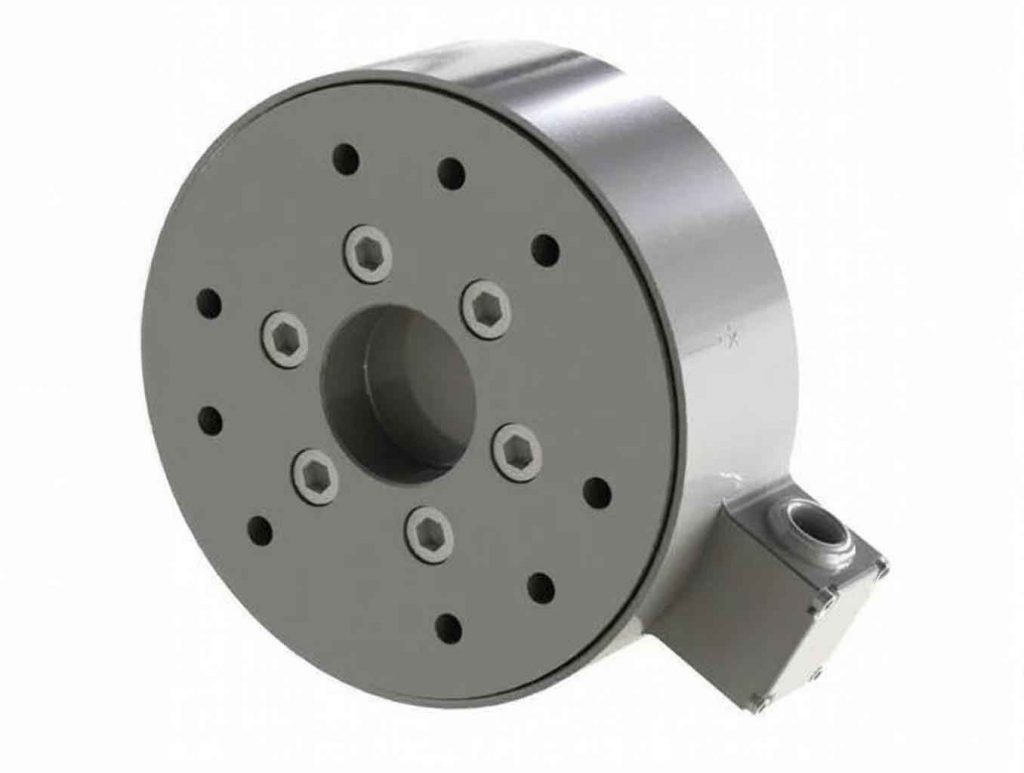
The core of our system is a custom-designed three-beam elastic structure for the six-axis force sensor. This structure consists of a top loading cap, gaskets, sealing rings, an elastic body, a circuit board, and a base cover. The elastic body features four surfaces on each beam, with eight strain gauges attached per beam. These strain gauges are configured into six full-bridge circuits, each producing an output voltage signal corresponding to one degree of freedom. When an external load is applied to the central loading platform, the elastic beams deform, causing the full-bridge circuits to generate voltage signals. These signals are then processed by our acquisition system to achieve high-precision decoupling. The structural design ensures minimal cross-talk and high sensitivity, which is critical for accurate six-axis force sensor performance.
The hardware architecture of our six-axis force sensor acquisition system is divided into several key modules: a voltage regulation module, a main control module, an analog-to-digital conversion module, and a communication module. The voltage regulation module employs a two-stage step-down design to convert an external 24 V power supply to 5 V and then to 3.3 V, ensuring stable and low-noise power delivery. This is achieved using the MAX16904 chip for the first stage and the MCP1700T-3002E/TT chip for the second stage, complemented by common-mode choke inductors and filtering capacitors to suppress noise. The main control module centers on the STM32G431C8T6 microcontroller, chosen for its high performance and low power consumption. An external 8.192 MHz crystal oscillator provides a precise clock source, while standard SWD interfaces facilitate programming and debugging. The analog-to-digital conversion module utilizes six MAX11270 chips, each offering 24-bit resolution and a sampling rate of 12.8 kS/s. These chips are synchronized via the SYNC pin connected to the microcontroller, enabling simultaneous data acquisition from all six channels. The communication module is based on the MAX33071EASA+ RS-485 transceiver, which supports high-speed data transmission up to 2 Mb/s and is ideal for industrial environments due to its noise immunity. The module uses a half-duplex asynchronous communication protocol, with enable pins controlled by the microcontroller to manage data direction.
| Module | Component | Key Features |
|---|---|---|
| Voltage Regulation | MAX16904, MCP1700T-3002E/TT | Input: 24 V, Output: 3.3 V, Two-stage step-down with filtering |
| Main Control | STM32G431C8T6 | ARM Cortex-M4 core, External 8.192 MHz oscillator, SWD debug interface |
| Analog-to-Digital Conversion | MAX11270 (6 units) | 24-bit resolution, 12.8 kS/s sampling rate, SPI interface, Synchronized sampling |
| Communication | MAX33071EASA+ | RS-485 protocol, Up to 2 Mb/s, Half-duplex, Common-mode choke for noise reduction |
The software design for the six-axis force sensor system encompasses firmware for the microcontroller and a user interface for the host computer. The firmware, developed using STM32CubeMX and IAR Embedded Workbench in C language, includes initialization routines, analog-to-digital conversion handling, and communication protocols. Upon system startup, the microcontroller initializes critical peripherals, including the clock, ADC chips, and communication interfaces. The ADCs are configured via SPI, and their SYNC pins are controlled to trigger simultaneous conversions. When conversion completes, indicated by the RDYB status flags, the digital data is read and stored. A key aspect of the software is the implementation of a digital filter to mitigate noise, particularly from electromagnetic interference in industrial settings. We employed an infinite impulse response (IIR) Butterworth filter due to its computational efficiency and high performance in real-time applications. The transfer function of the Butterworth filter is given by:
$$H(s) = \frac{d_0}{a_0 + a_1 s + a_2 s^2 + \ldots + a_n s^n}$$
where \(s\) is the complex frequency variable, and \(a_i\) and \(d_0\) are coefficients determined by the filter order and cutoff frequency. The discrete-time output of the filter can be expressed using the difference equation:
$$Y(z) = b_0 X(z) + b_1 X(z-1) + a_0 Y(z-1)$$
Here, \(X(z)\) and \(Y(z)\) represent the input and output signals in the z-domain, respectively, and the coefficients are derived from the analog prototype. In our system, the filter is embedded in the microcontroller to process the six-channel signals in real time, enhancing signal stability. For the host computer, we designed a graphical interface using Matlab’s App Designer, which includes modules for serial port configuration, offset calibration, real-time signal display, force/torque visualization, and data storage. This interface allows users to adjust parameters such as baud rate, view signals numerically and graphically, and save data for further analysis, facilitating easy integration with other systems.
Calibration is crucial for ensuring the accuracy of the six-axis force sensor. We performed static calibration using precision weights to apply known loads along each axis. The calibration setup involved a pulley system with wires and a force loading disk to apply forces and moments in positive and negative directions along the x, y, and z axes. The force range for each axis was ±200 N, and the moment range was ±20 N·m. Loads were applied in 10% increments of the full scale, and the corresponding output signals were recorded. To decouple the interactions between axes, we used the least squares method to compute the calibration matrix. The relationship between the applied load vector \(\mathbf{F}\) and the output signal vector \(\mathbf{U}\) is linearized as:
$$\mathbf{U} = \mathbf{C} \mathbf{F}$$
where \(\mathbf{C}\) is the compliance matrix. The decoupling matrix \(\mathbf{G}\) is then obtained as the pseudo-inverse:
$$\mathbf{G} = \mathbf{F} \mathbf{U}^T (\mathbf{U} \mathbf{U}^T)^{-1}$$
This matrix is stored in the microcontroller for online decoupling. During operation, the filtered output signals are zero-calibrated based on initial no-load values and multiplied by \(\mathbf{G}\) to compute the decoupled forces and moments. To evaluate performance, we used 100 randomly selected calibration data points and calculated two types of errors: Type I error, which is the maximum deviation between applied and decoupled forces as a percentage of full scale (%FS), and Type II error, which represents cross-talk between axes. The results, summarized in the table below, demonstrate that the system achieves high precision, with Type I errors below 2.5% FS and Type II errors below 1.7% FS.
| Error Type | Fx | Fy | Fz | Mx | My | Mz |
|---|---|---|---|---|---|---|
| Type I (%FS) | 1.1 | 1.2 | 1.5 | 2.2 | 2.4 | 2.5 |
| Type II (%FS) | 0.5 | 0.5 | 1.7 | 1.3 | 0.9 | 1.4 |
In conclusion, our research presents a comprehensive output signal acquisition system for a six-axis force sensor, integrating advanced hardware and software components to address common issues in industrial environments. The system features a compact design with integrated circuitry, real-time digital filtering using a Butterworth filter, and online decoupling implemented directly on the microcontroller. Experimental results from static calibration confirm that the six-axis force sensor system achieves low errors, with Type I not exceeding 2.5% FS and Type II below 1.7% FS. This demonstrates the system’s reliability and accuracy, making it suitable for applications requiring precise force and torque measurements. Future work could focus on enhancing the filter design for broader noise spectra and extending the system to support multi-sensor networks. The development of this six-axis force sensor acquisition system provides a valuable reference for engineers and researchers working on high-performance sensor technologies.
The effectiveness of our six-axis force sensor system is further underscored by its ability to handle complex dynamic loads while maintaining signal integrity. In practical scenarios, such as robotic assembly or precision machining, the sensor must respond accurately to rapidly changing forces. Our system’s use of synchronized ADCs ensures that all six channels are sampled simultaneously, minimizing phase delays and improving the fidelity of the decoupled outputs. Additionally, the modular software architecture allows for easy updates and customization, enabling users to adapt the system to specific application needs. For instance, the host computer interface can be extended to include advanced analytics, such as frequency domain analysis or machine learning-based anomaly detection, further enhancing the utility of the six-axis force sensor in smart manufacturing environments.
Another critical aspect of the six-axis force sensor system is its power management. The two-stage voltage regulation not only reduces noise but also optimizes energy efficiency, which is essential for portable or battery-operated devices. By minimizing power consumption, the system reduces heat generation, contributing to long-term stability and reliability. Moreover, the RS-485 communication protocol enables the six-axis force sensor to be integrated into larger networks, such as industrial IoT systems, where multiple sensors can communicate over long distances without signal degradation. This scalability is a significant advantage for applications in automated factories or remote monitoring setups.
To summarize the key equations used in our system, the Butterworth filter design and least squares decoupling are fundamental to achieving high performance. The filter’s transfer function and difference equation ensure that high-frequency noise is effectively attenuated without introducing significant phase distortion. Meanwhile, the decoupling matrix derived from the least squares method provides a robust linear mapping from raw signals to actual forces and moments. These mathematical foundations, combined with practical hardware implementations, result in a six-axis force sensor system that meets the stringent demands of modern industrial applications. As technology evolves, continuous improvements in component integration and algorithm efficiency will further enhance the capabilities of six-axis force sensors, solidifying their role in advancing automation and robotics.