
As I observe the rapid evolution of the humanoid robot industry, I am struck by the profound implications it holds for data governance and personal information protection. The exponential growth in data demand driven by humanoid robots has rendered the traditional purpose principle—a cornerstone of privacy frameworks—increasingly inadequate. This principle, which mandates that personal data be collected for specified, explicit, and legitimate purposes, is now strained by the complexity and dynamism of humanoid robot applications. In this article, I will explore how the purpose principle must be reimagined to balance innovation with protection, focusing on standardization, scenario-based approaches, and the fostering of new quality productive forces. Through tables and formulas, I aim to dissect these challenges and propose pathways forward, all while emphasizing the centrality of humanoid robots in this discourse.
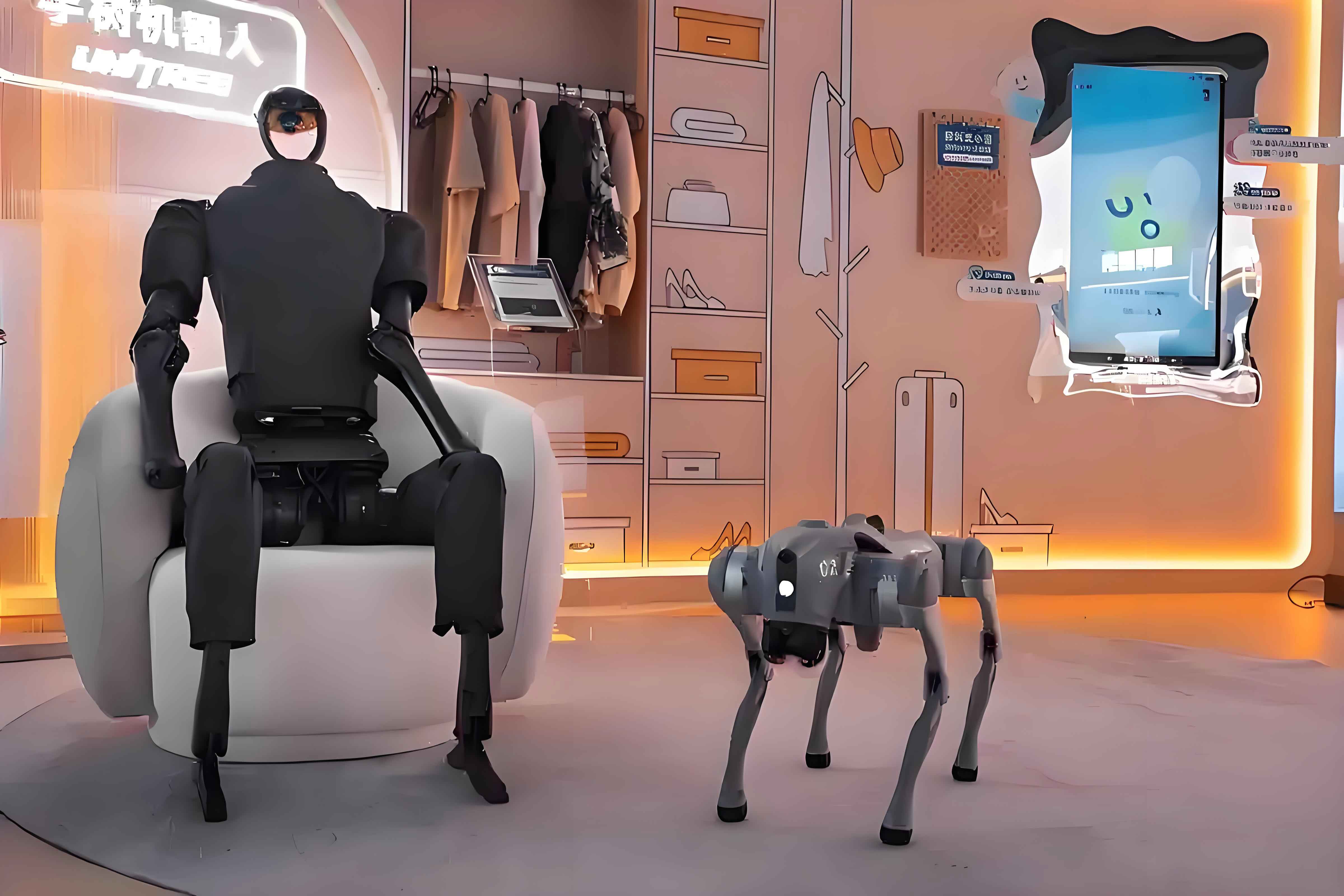
The advent of humanoid robots marks a pivotal shift in human-technology interaction. These systems, integrating artificial intelligence, advanced manufacturing, and new materials, are not merely tools but partners that reshape industries and daily life. However, their operation relies on vast amounts of personal data—from biometrics like voice and facial features to behavioral patterns and emotional states. This data hunger exposes a critical tension: while the purpose principle aims to safeguard privacy by limiting data processing to predefined goals, the unpredictable nature of humanoid robot learning and adaptation necessitates more flexible data usage. I argue that a rigid adherence to the purpose principle could stifle innovation, yet abandoning it risks eroding trust and enabling data monopolies. Thus, a nuanced reconstruction is essential.
To understand this, let me first delineate the purpose principle. Originating from frameworks like the GDPR, it consists of two intertwined components: purpose limitation and data minimization. Purpose limitation requires that data collection have clear, lawful objectives, while data minimization mandates that only necessary data be processed. Mathematically, we can represent this as a constraint optimization problem. Let $D$ be the dataset collected, $P$ be the set of predefined purposes, and $R$ be the relevance of data to these purposes. The principle aims to minimize data volume subject to purpose alignment:
$$ \text{Minimize } |D| \text{ subject to } R(D, P) \geq \tau $$
where $|D|$ denotes the size of the dataset, $R$ is a relevance function, and $\tau$ is a threshold. However, in humanoid robot applications, $P$ is often fluid due to machine learning processes that discover purposes iteratively. For instance, a humanoid robot in healthcare may initially collect data for gait analysis but later use it for predictive health monitoring—a purpose not explicitly defined upfront. This fluidity challenges the static nature of the purpose principle.
The humanoid robot industry amplifies these challenges across multiple dimensions. Below, I summarize key issues in a table to clarify the landscape:
| Challenge | Description | Impact on Humanoid Robots |
|---|---|---|
| Purpose Indeterminacy | Processing goals become unpredictable as robots learn from data. | Humanoid robots in domestic care may evolve tasks beyond initial programming, requiring data reuse. |
| Secondary Use Rules | Lack of clear guidelines for repurposing collected data. | Data from humanoid robot sensors used for maintenance might be leveraged for algorithm training without consent. |
| Inconsistent Standards | Varying interpretations of “direct relevance” or compatibility. | Global deployment of humanoid robots faces regulatory fragmentation, hindering scalability. |
| Technical Implementation | Difficulty encoding legal principles into code for autonomous systems. | Humanoid robots struggle with real-time compliance checks during data processing. |
As illustrated, humanoid robots operate in diverse scenarios—from medical rehabilitation to logistics—each with unique data demands. In medical settings, a humanoid robot assisting with spinal injuries may require continuous biodata streams for real-time adjustment, blurring the line between necessity and excess. Here, the purpose principle’s minimization aspect conflicts with performance needs. We can model this trade-off using a utility function. Let $U(D)$ be the utility derived from dataset $D$ for a humanoid robot’s task, and $R_p(D)$ be the privacy risk. The optimal data collection seeks to maximize utility while minimizing risk:
$$ \max_D [U(D) – \lambda R_p(D)] $$
where $\lambda$ is a risk aversion parameter. However, defining $R_p(D)$ is nontrivial, as privacy risks are context-dependent. For humanoid robots, scenarios like elder care involve sensitive data, raising $\lambda$ and tightening constraints.
Moreover, the concept of “compatibility” for secondary data use, prevalent in regimes like the GDPR, proves problematic for humanoid robots. Compatibility tests often rely on factors such as the data subject’s reasonable expectations or the presence of safeguards. But with humanoid robots, expectations are fluid; users may not anticipate how a companion robot repurposes conversational data for emotional analysis. I propose that instead of adopting compatibility standards, which are inconsistently applied globally, we should embrace scenario-specific exemptions. For example, data used for safety-critical functions in humanoid robots, like obstacle avoidance, could be exempt from re-consent requirements. This aligns with the idea of maintaining research openness—a key to fostering new quality productive forces, where innovation drives economic transformation.
To operationalize this, standardization becomes crucial. By developing technical standards tailored to humanoid robot scenarios, we can translate abstract principles into actionable rules. Consider a framework where standards define data minimization thresholds per scenario. Below is a table outlining hypothetical standards for different humanoid robot applications:
| Humanoid Robot Scenario | Primary Purpose | Data Minimization Threshold | Permitted Secondary Uses |
|---|---|---|---|
| Medical Rehabilitation | Gait correction and therapy | Collect only biometric data essential for real-time feedback; limit storage to 30 days. | Algorithm training for improvement, provided data is anonymized. |
| Domestic Assistance | Task execution (e.g., fetching items) | Minimize environmental mapping data; avoid persistent biometric logs. | Maintenance diagnostics, with user opt-out options. |
| Industrial Logistics | Autonomous material handling | Restrict location data to operational paths; exclude personal identifiers. | Performance analytics, if aggregated and de-identified. |
| Research & Development | AI model training | No fixed minimization; rely on ethical review boards. | Broad reuse for scientific inquiry, with safeguards like encryption. |
This table exemplifies how standards can crystallize the purpose principle for humanoid robots. By setting clear thresholds, we reduce ambiguity while allowing flexibility. Importantly, the research category remains open-ended to encourage innovation—a nod to new quality productive forces that thrive on exploratory data use. Formulaically, we can define a standard compliance score $S$ for a humanoid robot system:
$$ S = \sum_{i=1}^{n} w_i \cdot C_i $$
where $n$ is the number of standard criteria (e.g., data volume, retention period), $w_i$ are weights assigned per scenario, and $C_i$ are compliance measures (e.g., $C_i = 1$ if within threshold). This quantifies adherence, aiding regulatory oversight.
However, standard-setting alone is insufficient. The purpose principle’s core must be reconceptualized. I advocate for redefining “direct relevance” in humanoid robot contexts. Rather than a binary test, relevance should be a spectrum assessed through risk-benefit analysis. For instance, a humanoid robot’s use of voice data for both command processing and sentiment analysis might be deemed directly relevant if it enhances user experience without disproportionate harm. We can express this using a relevance metric $R_{dr}$:
$$ R_{dr} = \frac{B(D, P)}{H(D)} $$
where $B$ is the benefit derived from data $D$ for purpose $P$, and $H$ is the harm potential. If $R_{dr} > \alpha$, a threshold, the processing is acceptable. This dynamic approach accommodates humanoid robots’ adaptive nature.
Furthermore, the notion of compatibility should be discarded in favor of bright-line rules. Compatibility tests, as seen in EU practices, introduce uncertainty and compliance burdens. For humanoid robots, which operate in real-time, such tests are impractical. Instead, as highlighted earlier, specific secondary uses—like safety enhancements or research—should be pre-approved via standards. This eliminates the need for case-by-case judgments, fostering predictability. To illustrate, consider a humanoid robot in a factory: data collected for operational efficiency could be automatically reused for predictive maintenance without re-consent, as standardized in industrial protocols.
The role of research openness cannot be overstated. Humanoid robots are at the frontier of AI and robotics, and restrictive data rules could hamper breakthroughs. By keeping “scientific research” broadly defined, we allow data repurposing for innovation. This aligns with new quality productive forces, where knowledge spillovers from humanoid robot development drive broader economic gains. In mathematical terms, if $I(D)$ represents innovation output from dataset $D$, and $C_r$ is the constraint from the purpose principle, we aim to maximize:
$$ I(D) \text{ subject to } C_r \leq \beta $$
where $\beta$ is a relaxed constraint for research contexts. This ensures that humanoid robot projects, whether in academia or industry, can leverage data freely within ethical bounds.
In practice, implementing these ideas requires a holistic system. Below, I propose a framework for humanoid robot data governance, integrating standardization, dynamic relevance, and research exemptions:
| Component | Mechanism | Application to Humanoid Robots |
|---|---|---|
| Scenario-Based Standards | Develop ISO-like standards per application (e.g., healthcare, logistics). | Humanoid robots in eldercare follow preset data caps for biometric monitoring. |
| Dynamic Relevance Assessment | Use real-time algorithms to compute $R_{dr}$ for data processing decisions. | A humanoid robot adjusts data collection based on contextual risk scores. |
| Research Exemption Registry | Maintain a public registry of approved research purposes for data reuse. | Humanoid robot developers access data for AI training if registered. |
| Compliance Auditing | Automated audits using the compliance score $S$. | Humanoid robot systems are periodically evaluated against standards. |
This framework balances structure with adaptability—a key insight from legal theory on supportive structures versus adaptive change. For humanoid robots, which evolve rapidly, such balance is critical. Technically, we can embed these rules into robot operating systems via policy languages like ODRL, but as noted earlier, pure code translation is fraught. Instead, standards provide a middleware layer that interprets legal norms for engineers.
Looking ahead, the humanoid robot industry will continue to challenge privacy paradigms. As these machines become ubiquitous, their data practices will shape societal trust. I believe that by rethinking the purpose principle through standardization and scenario-based flexibility, we can foster innovation while protecting individuals. This approach not only supports humanoid robot advancement but also contributes to new quality productive forces, where technology and ethics co-evolve. In conclusion, the journey with humanoid robots is one of constant negotiation—between control and freedom, prediction and discovery. By embracing dynamic principles, we can navigate this terrain with confidence, ensuring that humanoid robots serve humanity without compromising our values.
To summarize key formulas and concepts discussed:
- Purpose Principle Optimization: $$ \text{Minimize } |D| \text{ subject to } R(D, P) \geq \tau $$
- Utility-Risk Trade-off: $$ \max_D [U(D) – \lambda R_p(D)] $$
- Standard Compliance Score: $$ S = \sum_{i=1}^{n} w_i \cdot C_i $$
- Dynamic Relevance Metric: $$ R_{dr} = \frac{B(D, P)}{H(D)} $$
- Innovation Maximization: $$ I(D) \text{ subject to } C_r \leq \beta $$
These mathematical representations help quantify the abstract debates around humanoid robots and data protection. As I reflect on this exploration, it is clear that the future of humanoid robots hinges on our ability to adapt legal frameworks to technological realities. By prioritizing standardization, scenario-specific rules, and research openness, we can harness the potential of humanoid robots while safeguarding privacy—a delicate but achievable equilibrium in the age of AI.