
When a chip company begins developing customized electric cylinder drive solutions for dexterous hands, when a software company decides to exhibit jointly with a robot body manufacturer, and when a humanoid robot in the apparel industry stops pursuing general-purpose capabilities and instead focuses on a single pocket-attaching process, the competitive logic of embodied intelligence is undergoing a fundamental shift. The old logic was technology-driven scenarios. The emerging logic is scenario-defined technology. This shift is not a slogan. It is visible in product roadmaps, supply chain decisions, system architectures, and commercialization paths across the embodied intelligence industry.
At a major industry event, companies from chips, software, robotics, apparel, biomedicine, culture and tourism, airport operations, and commercial services presented a clear message: embodied intelligence is no longer only a laboratory pursuit of universal machines. It is becoming a set of specialized tools, collaborative systems, and industrial ecosystems shaped by real-world scenarios. The industrialization of embodied intelligence is therefore taking solid steps, but those steps are defined less by general-purpose demonstrations and more by vertical depth, system coordination, and underlying reconstruction.
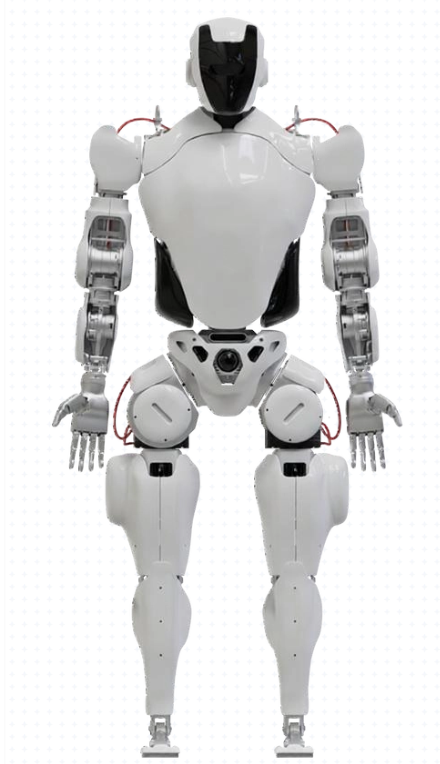
The rise of scenario-defined technology does not mean that foundational innovation has become less important. Rather, it means that foundational innovation is increasingly guided by the specific constraints of deployment. In embodied intelligence, a robot must perceive, decide, act, and adapt in a physical environment. The physical environment imposes requirements that no single algorithm can satisfy alone. Chips must meet latency and power targets. Models must understand physical laws. End effectors must fit the object. Multi-robot systems must share tasks. Data platforms must connect agents and machines. Each of these requirements becomes clearer when a concrete scenario is placed at the center of the design process.
This article examines how scenario-defined technology is reshaping embodied intelligence across three dimensions: vertical cultivation, system collaboration, and underlying reconstruction. It also considers how these changes are moving embodied intelligence from isolated demonstrations toward scalable industrial deployment.
- Vertical Deep Cultivation: From Universal Machines to Specialized Tools
- System Collaboration: From Standalone Intelligence to Multi-Agent Cooperation
- Underlying Reconstruction: From Supply Chain to Ecosystem Chain
- Implications for the Embodied Intelligence Ecosystem
- Conclusion: Scenario-Defined Technology and the Next Phase of Embodied Intelligence
1. Vertical Deep Cultivation: From Universal Machines to Specialized Tools
The most visible change in embodied intelligence is the move away from the idea of a single universal robot that can do everything. Instead, companies are building specialized tools for narrowly defined tasks. This does not reduce ambition. It increases the probability of real deployment. In embodied intelligence, a robot that understands one workflow deeply can often create more value than a robot that performs many tasks superficially.
At the exhibition booth of Aitu Technology, the Aitu humanoid robot was working in coordination with a template machine. It did not seek to dance or perform backflips. It focused on one task: apparel sewing. The robot autonomously completed fabric recognition, grasping and positioning, and docking with the sewing process. This seemingly narrow positioning reflects a precise understanding of pain points in the apparel industry: difficulty in recruiting workers, rising labor costs, and the challenge of flexible production.
Wang Fengmei, marketing director of Aitu Technology, said in an interview that Aitu Technology has moved beyond the design logic of general-purpose humanoid robots and introduced products around the real needs of apparel production lines. The company’s fully self-developed sewing VLA vertical-domain embodied model is deeply trained for apparel sewing scenarios. It can match the flexible production needs of multiple styles, small batches, and rapid iteration without repeated programming and debugging. This is a clear example of scenario-defined technology in embodied intelligence: the scenario comes first, and the model, hardware, and workflow are organized around it.
Yuanluo Technology has chosen a different vertical path. At the event, the Monte02 robot demonstrated cross-task capability transfer from nucleic acid extraction pretreatment to cytotoxicity testing. A representative of Yuanluo Technology told reporters that the core support is the self-developed OPN physical native model. The model is centered on experimental objects and integrates multimodal information such as vision, force, and touch. It allows the robot to plan operations according to task goals and adjust execution strategies based on real-time feedback, including liquid level changes and vessel status. At present, Yuanluo robots have mastered more than 50 standardized experimental operation skills, possess sub-millimeter operational precision, and can continuously carry out long-process experiments for several hours.
The goal of Yuanluo Technology is not to build a universal experimental robot. It is to make a set of foundational capabilities reusable across different experimental workflows. This distinction is important for embodied intelligence. A universal robot must generalize across everything. A reusable capability platform must generalize across a controlled family of tasks. The latter is more achievable, more verifiable, and more likely to be adopted in regulated environments such as biomedical laboratories.
Yunmu Intelligent Manufacturing offers another approach to vertical cultivation. Unlike Aitu Technology, which focuses on manufacturing, and Yuanluo Technology, which anchors itself in biomedicine, Yunmu Intelligent Manufacturing has turned its attention to culture and tourism. Its fully simulated humanoid robots are not only highly human-like in appearance. They also emphasize systematic settings for personality, voice, motion, and dialogue, so that each intellectual property character possesses a complete personality. Yang Xiaojun, vice president of Yunmu Intelligent Manufacturing, said in an interview that the company has been developing the companion robot market. It is researching and developing a simulated baby robot that can achieve tactile sensation, crying, babbling, and other effects. It will also develop support for personalized pet intellectual property image customization.
From culture and tourism to companionship, Yunmu Intelligent Manufacturing’s vertical cultivation revolves around human-like experience. It has walked out of a commercialization path that is completely different from industrial scenarios. This contrast shows that embodied intelligence is not a single market. It is a collection of markets, each with its own success criteria. In an industrial setting, success may be measured by cycle time, precision, and uptime. In a companionship setting, success may be measured by emotional resonance, personality consistency, and long-term interaction quality.
The common thread across these examples is that the scenario defines the technology. Aitu Technology did not begin with a general humanoid robot and then search for an application. It began with apparel sewing and built the embodied intelligence stack around that process. Yuanluo Technology did not begin with a universal laboratory assistant. It began with standardized experimental operations and built a reusable physical native model. Yunmu Intelligent Manufacturing did not begin with a generic humanoid platform. It began with human-like experience and built personality, voice, motion, and dialogue around it.
This is why vertical deep cultivation is such an important phase for embodied intelligence. It forces companies to confront real constraints. It also creates defensible value. A general-purpose robot may attract attention, but a specialized tool can enter a production line, pass acceptance testing, and generate return on investment. The industrialization of embodied intelligence depends on such entry points.
| Company | Vertical Focus | Core Technology or Product | Target Scenario |
|---|---|---|---|
| Aitu Technology | Apparel sewing | Sewing VLA vertical-domain embodied model; Aitu humanoid robot integrated with template machine | Fabric recognition, grasping and positioning, docking with sewing process |
| Yuanluo Technology | Biomedical laboratory automation | OPN physical native model; Monte02 robot | Nucleic acid extraction pretreatment, cytotoxicity testing, cross-task capability transfer |
| Yunmu Intelligent Manufacturing | Culture, tourism, and companionship | Fully simulated humanoid robots; simulated baby robot in development | Personality, voice, motion, dialogue, tactile sensation, crying, babbling, pet intellectual property customization |
The table above summarizes how different companies are using scenario-defined technology to advance embodied intelligence. Each company has chosen a vertical focus. Each has built a technology stack around that focus. The result is not a smaller vision. It is a more executable vision. In embodied intelligence, execution is the bridge between research and industry.
2. System Collaboration: From Standalone Intelligence to Multi-Agent Cooperation
If vertical scenarios define what an embodied intelligence system should do, then system architecture determines how it should do it. A single robot can be intelligent. A group of robots can be productive. The shift from standalone intelligence to multi-agent cooperation is therefore a central theme in the industrialization of embodied intelligence.
A representative of Ruiwei Technology said in an interview that the company has built a layered architecture for airport baggage transfer scenarios. The architecture separates task planning, business scheduling, path planning, robot execution, and business systems. Different robots assume different capabilities. Xiao Yi is responsible for the main handling of standard baggage. A wheeled dual-arm humanoid robot explores flexible operation of irregular baggage. The upper layer, however, revolves around the same production task. Ultimately, the system forms a multi-robot collaborative system oriented toward enterprise production tasks.
This layered approach is important for embodied intelligence because it avoids the trap of expecting one robot to solve every problem. In airport baggage transfer, standard baggage and irregular baggage impose different requirements. A single robot may be able to handle both, but not necessarily at the same speed, cost, and reliability. By dividing the task among different robot forms, the system can optimize each part while maintaining a unified task layer. The embodied intelligence of the system is not located only in a single robot brain. It is distributed across planning, scheduling, execution, and feedback.
A more breakthrough exploration comes from cross-body collaboration. Xingyuanzhi appeared under the theme of embodied brain and interactive world. For the first time, it verified heterogeneous multi-robot collaboration in long-rope jumping. Two humanoid robots coordinated to turn the rope, while a quadruped robot followed the rhythm to complete continuous jumps. A representative of Xingyuanzhi said in an interview that the demonstration is based on the heterogeneous embodied collaborative learning framework originally developed by the RoboBrain Pro embodied brain. Through layered collaborative learning and closed-loop feedback, the system achieves stable long-rope control and cross-subject action synchronization.
In industrial scenarios, Xingyuanzhi and Zhongli Co. jointly built the high-altitude operation robot Qingtianzhu, which was shown to the public for the first time. Equipped with the embodied brain, it can achieve high-altitude operations at a maximum of 10 meters. The embodied loading and unloading solution has achieved single-vehicle loading and unloading in 90 seconds and dual-vehicle collaboration in 1 minute, at the same speed as manual operation. These are concrete examples of how embodied intelligence can move from staged demonstrations to operational performance.
The Zhejiang Humanoid Robot Innovation Center addresses system collaboration from the toolchain level. Its EvoStack full-domain toolchain connects standardized data collection and annotation, SDK and API development empowerment, and service collaboration. It opens a channel from technical verification to industrial promotion. The company has established industry-education integration relationships with more than 50 cooperating institutions, covering research-oriented, application-oriented, higher vocational, and secondary vocational institutions. It has cumulatively provided education and training to more than 1,000 person-times.
Toolchains may appear less dramatic than humanoid robots, but they are essential for embodied intelligence. A toolchain allows different teams to share data formats, development interfaces, and evaluation methods. It reduces the cost of integration. It also allows system collaboration to scale beyond a single company’s internal ecosystem. In this sense, the EvoStack toolchain is not only a technical product. It is an industrial infrastructure for embodied intelligence.
A more ambitious system vision comes from MiningLamp Technology. Wu Minghui, founder, chief executive officer, and chief technology officer of MiningLamp Technology Group, said in an interview that when robots are truly deployed in production systems, “how to connect robots with robots, how to connect robots with intelligent agents” is crucial. MiningLamp Technology released the open-source human-machine collaboration platform Octo. The goal is to connect every intelligent agent and every robot’s individual brain to form an organization-level human-machine collaborative brain. MiningLamp Technology has exhibited jointly with Hikrobot, focusing on commercial service scenarios to demonstrate progress in embodied intelligence deployment. On the basis of Hikrobot’s complete machine and motion control capabilities, MiningLamp injects core intelligence capabilities such as multimodal perception, intelligent reasoning and planning, and multi-agent collaboration. The two sides leverage their respective advantages to explore a path for scaled application of commercial service robots.
The significance of this approach is that it treats embodied intelligence as an organizational capability, not only a robot capability. In a production system, robots must interact with other robots, with software agents, with enterprise resource planning systems, and with human workers. The organization-level human-machine collaborative brain is an attempt to provide a common layer for these interactions. It reflects a broader trend in embodied intelligence: the unit of intelligence is shifting from the individual robot to the collaborative system.
Across airport baggage transfer, heterogeneous multi-robot long-rope jumping, high-altitude loading and unloading, toolchain development, and open-source human-machine collaboration, the same pattern appears. Scenario-defined technology does not stop at the robot. It extends to the architecture that connects robots, agents, data, and tasks. The industrialization of embodied intelligence depends on this extension.
3. Underlying Reconstruction: From Supply Chain to Ecosystem Chain
Scenario-driven change is not limited to product definition. It also reconstructs the entire industrial chain. In embodied intelligence, the supply chain is no longer a background function. It is a source of competitive advantage. Chips, actuators, dexterous hands, sensors, models, data platforms, and system integrators must collaborate more closely than ever before.
GigaDevice presented a full-stack chip solution for embodied intelligence at the event, covering MCU, analog, storage, and other product lines. Two newly released robot-specific MCUs made their first appearance. For pain points such as limited dynamic precision and heat accumulation from power consumption in joint design, the GD32H77R robot joint solution adopts gallium nitride drive, with dead time less than 100 nanoseconds and switching frequency reaching 100 kilohertz. The GD30DR3009 electric cylinder drive solution for dexterous hands provides an ultra-small package of only 2 millimeters by 2 millimeters. Yang Jun, head of humanoid robot marketing at GigaDevice, said in an interview that compared with international peers, the outstanding advantage of domestic manufacturers is faster response speed. After receiving customer needs, they can quickly use their own mature intellectual property to develop matching products.
This advantage is directly relevant to embodied intelligence. Robot designs are diversifying rapidly. A joint module that works for one humanoid robot may not work for another. A dexterous hand may require a different drive scheme depending on size, force, and thermal constraints. Faster response speed allows chip companies to co-design with robot companies rather than simply supply standard parts. In embodied intelligence, co-design is often the difference between a prototype and a product.
The exploration by Octopus Dynamics points to a deeper technological paradigm shift. Its SYNWorld general world foundation model allows robots to understand physical laws rather than simply memorize scenes. Together with the OctoH-Hand high-degree-of-freedom bionic dexterous hand and the OctoSense embodied data collection solution, it builds a complete closed loop of data collection, world understanding, strategy generation, and real feedback. In the view of Du Dalong, chief executive officer of Octopus Dynamics, advanced physical AI is definitely not just the victory of a single technology. It is a systematic engineering of model, hardware, and data co-evolution.
This statement captures the essence of underlying reconstruction in embodied intelligence. A world model without hardware cannot act. A dexterous hand without data cannot learn. A data collection system without a model cannot generalize. A strategy generation system without real feedback cannot improve. The competitive unit is therefore not a single component. It is the closed loop. Companies that can integrate the loop will be better positioned to deliver embodied intelligence at scale.
The reconstruction also extends to regional innovation centers and open collaboration platforms. The Zhejiang Humanoid Robot Innovation Center connects education and industry through its toolchain. MiningLamp Technology connects agents and robots through an open-source platform. GigaDevice connects chip design with robot joint and dexterous hand requirements. Octopus Dynamics connects models, hardware, and data. Aitu Technology, Yuanluo Technology, and Yunmu Intelligent Manufacturing connect vertical scenarios with specialized embodied intelligence stacks. Together, these efforts form an ecosystem chain rather than a traditional linear supply chain.
| Layer | Representative Participant | Contribution to Embodied Intelligence | Scenario Connection |
|---|---|---|---|
| Chips and components | GigaDevice | Robot-specific MCUs, gallium nitride drive, electric cylinder drive solution for dexterous hands | Robot joints, dexterous hands, thermal and precision constraints |
| World model and hardware | Octopus Dynamics | SYNWorld general world foundation model, OctoH-Hand, OctoSense | Data collection, world understanding, strategy generation, real feedback |
| Toolchain and ecosystem | Zhejiang Humanoid Robot Innovation Center | EvoStack full-domain toolchain, data collection and annotation, SDK and API development | Technical verification, industry promotion, education and training |
| Human-machine collaboration | MiningLamp Technology and Hikrobot | Octo open-source human-machine collaboration platform, multimodal perception, multi-agent collaboration | Commercial service robots, organization-level collaborative brain |
The table above shows that the underlying reconstruction of embodied intelligence is not confined to hardware or software. It includes standards, interfaces, data, talent, and collaboration models. This is why the phrase ecosystem chain is more accurate than supply chain. A supply chain delivers parts. An ecosystem chain co-evolves capabilities. In embodied intelligence, co-evolution is necessary because the technology is still moving quickly and the application requirements are still being discovered.
4. Implications for the Embodied Intelligence Ecosystem
The shift from technology-driven scenarios to scenario-defined technology has several implications for the embodied intelligence ecosystem. These implications are not speculative. They are already visible in the strategies of the companies described above.
First, vertical depth creates clearer value propositions. Aitu Technology focuses on apparel sewing. Yuanluo Technology focuses on biomedical laboratory operations. Yunmu Intelligent Manufacturing focuses on human-like experience in culture, tourism, and companionship. Each company can define success in its own domain. This clarity helps customers evaluate embodied intelligence solutions against real operational metrics rather than abstract intelligence claims.
Second, system collaboration expands the addressable market. Ruiwei Technology’s airport baggage transfer system, Xingyuanzhi’s heterogeneous multi-robot collaboration, and MiningLamp Technology’s human-machine collaboration platform all show that embodied intelligence can be deployed as a system rather than as a single robot. System-level deployment can address larger tasks, integrate with existing business processes, and create more entry points for commercialization.
Third, underlying reconstruction lowers the barrier to scale. GigaDevice’s chip solutions, Octopus Dynamics’ world model and hardware loop, and the Zhejiang Humanoid Robot Innovation Center’s toolchain all contribute to reusable building blocks. When building blocks are reusable, companies do not need to reinvent every layer for every application. This accelerates the industrialization of embodied intelligence.
Fourth, open collaboration becomes a competitive advantage. MiningLamp Technology’s Octo platform is open source. The Zhejiang Humanoid Robot Innovation Center has established industry-education integration relationships with more than 50 cooperating institutions and has provided education and training to more than 1,000 person-times. These efforts build a talent pool and a developer community. In embodied intelligence, no single company can cover every scenario, every model, every chip, and every robot form. Open collaboration allows the ecosystem to advance faster than any isolated player.
Fifth, the definition of intelligence itself changes. In a vertical scenario, intelligence is measured by task completion, reliability, and adaptability. In a multi-robot system, intelligence is measured by coordination, scheduling, and synchronization. In an ecosystem chain, intelligence is measured by interoperability, reuse, and co-evolution. Embodied intelligence therefore becomes a multi-layer concept. It includes the robot brain, the collaborative brain, and the organizational brain.
These implications suggest that the industrialization of embodied intelligence will not follow a single path. Some companies will succeed by owning a vertical scenario. Some will succeed by providing a horizontal platform. Some will succeed by supplying critical components. Some will succeed by connecting agents and robots. The common requirement is that technology must be defined by the scenario it serves. Without scenario definition, embodied intelligence risks remaining a collection of impressive demonstrations. With scenario definition, it becomes a set of deployable solutions.
5. Conclusion: Scenario-Defined Technology and the Next Phase of Embodied Intelligence
The evidence from the event points to a clear conclusion. Embodied intelligence is entering a phase in which scenarios define technology. This phase is characterized by vertical deep cultivation, system collaboration, and underlying reconstruction. It is less concerned with universal claims and more concerned with specific tasks. It is less focused on a single robot and more focused on multi-robot and human-machine systems. It is less dependent on a single breakthrough and more dependent on the co-evolution of chips, models, hardware, data, and platforms.
Aitu Technology’s sewing robot, Yuanluo Technology’s laboratory robot, and Yunmu Intelligent Manufacturing’s human-like companion robots show that vertical depth can take many forms. Ruiwei Technology’s airport baggage system, Xingyuanzhi’s heterogeneous multi-robot collaboration, and MiningLamp Technology’s open-source collaboration platform show that system coordination is becoming a core capability. GigaDevice’s chip solutions, Octopus Dynamics’ world model and hardware loop, and the Zhejiang Humanoid Robot Innovation Center’s toolchain show that the underlying layers of embodied intelligence are being rebuilt for scale.
From upstream chips and seals to complete robot bodies, from vertical scenario cultivation to heterogeneous multi-agent collaboration, from regional innovation centers to open-source collaboration platforms, the industrialization of embodied intelligence is moving forward. The decisive change is not that robots have become more visible. It is that scenarios have become more specific, architectures have become more collaborative, and ecosystems have become more connected. When scenarios begin to define technology, and when demand begins to drive innovation, the industrialization of embodied intelligence takes a truly critical step.
The next phase of embodied intelligence will likely be judged by deployment, not by demonstration. It will be judged by whether a robot can work in a production line, whether a multi-robot system can coordinate under real constraints, whether a chip can meet thermal and precision targets, whether a world model can generalize from data, and whether an open platform can connect agents, robots, and human workers. These are difficult tests. They are also the tests that matter. Scenario-defined technology provides a practical route to pass them, and it is this route that is making the industrialization of embodied intelligence a solid and measurable reality.