
A new review examines how unmanned aerial vehicles can autonomously search for odor sources by combining onboard sensing, source-location cognition, search decision-making, and coordinated action. The work frames this challenge as a problem of embodied intelligence, in which an aerial robot must perceive a physical environment, update its beliefs about a hidden source, select actions under uncertainty, and adapt through continuous interaction. Rather than treating odor sensing as a standalone detection task, the review organizes recent progress around a closed loop of observation, cognition, decision, and collaboration.
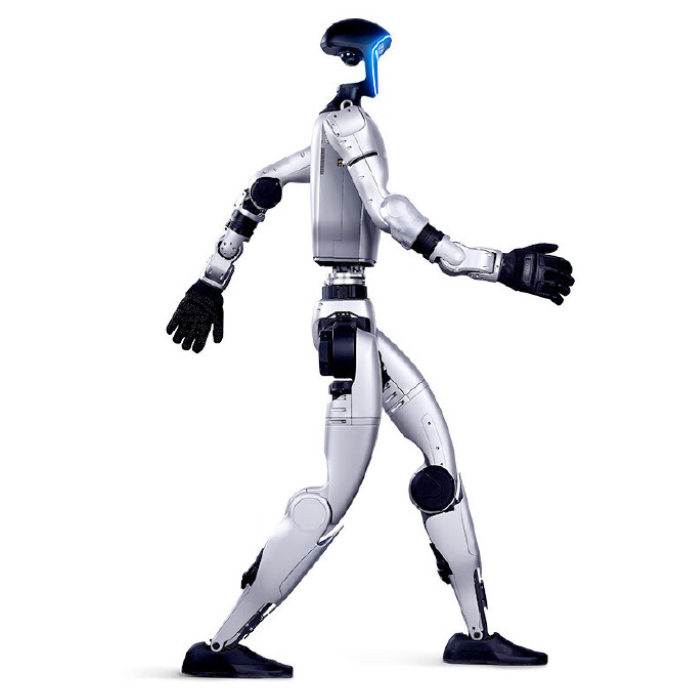
The central argument is that olfactory autonomous search is a representative embodied intelligence problem. A UAV does not receive a clean map of gas concentration. It samples sparse, intermittent, and wind-distorted odor cues while moving through a turbulent environment. The vehicle must infer where a source may be, decide where to move next, and coordinate with other vehicles when the search area is large or the source is hazardous. This process is not purely computational. It is shaped by flight dynamics, sensor placement, rotor downwash, communication limits, and the physical structure of the environment.
1. Embodied Intelligence and the Olfactory Search Problem
Embodied intelligence refers to the capacity of an agent with a physical body to perceive the world, interact with it, learn from that interaction, and make decisions that affect future perception. In recent years, embodied intelligence has attracted growing attention in robotics and artificial intelligence. Research has expanded into multimodal perception, vision-language-action models, spatial understanding, navigation, manipulation, and collective control. Much of this work, however, has concentrated on visual, linguistic, tactile, and mechanical channels. Olfaction remains comparatively underexplored, even though smell is a non-visual modality that is sparse, intermittent, and strongly coupled to airflow and platform motion.
Odor source search is a natural test case for embodied intelligence. The agent must use onboard sensors to gather information, reason about a hidden source, and act in a way that improves future knowledge. In the language of embodied intelligence, the UAV operates in an observation-cognition-decision-action loop. Odor observations are partial and noisy. Source-location cognition is probabilistic. Search decisions must balance exploration of uncertain regions with exploitation of likely source areas. Actions change the vehicle’s position, which changes the next observation. The loop continues until the source is localized or the search is terminated.
Existing reviews have made important contributions by classifying gas sensors, electronic noses, mobile robot source-localization algorithms, probabilistic mapping methods, and generic multi-robot coordination mechanisms. Yet the review argues that a systematic account is still missing from the perspective of embodied intelligence. In particular, there is insufficient attention to how odor observations, source-location beliefs, search decisions, and collaborative actions are connected in UAV-specific tasks. UAVs add challenges that ground robots do not face in the same way: three-dimensional motion, strong rotor-induced airflow, limited payload, flight safety constraints, and communication restrictions. These factors make the embodied intelligence loop more complex and more consequential.
Information-driven methods based on probabilistic inference offer a clear way to analyze this loop. They represent source-location uncertainty through posterior probability distributions. They update those distributions as new odor observations arrive. They evaluate candidate actions using information gain, entropy reduction, divergence, or reward functions. Because these methods explicitly connect observation, belief, and action, they provide a useful entry point for understanding embodied intelligence in UAV olfactory search.
2. Research Landscape and Motivation
A literature search in the Web of Science database using themes such as odor source localization, gas source location, autonomous search, drones, unmanned aerial vehicles, and embodied intelligence shows a broad and changing research landscape. The review reports that odor source localization research began earlier and reached a relatively stable base after 2021. Autonomous search and UAV-related literature rose rapidly after 2016, with UAV publications growing faster than general autonomous search. Embodied intelligence research started later, entered a slow development phase around 2019, and then showed a clear increase around 2024. These trends suggest that intelligent autonomy is becoming more important across robotic search tasks, and that UAVs are increasingly viewed as flexible platforms for sensing and decision-making in complex environments.
The growth of embodied intelligence has opened new research directions for perception, navigation, obstacle avoidance, grasping, manipulation, and cooperative work. However, the review notes that most embodied intelligence research still focuses on explicit information channels such as vision, language, touch, and mechanical operation. Odor is different. It is not a persistent visual object. It is transported by wind, mixed by turbulence, and often detected only as brief hits. For a UAV, odor observation is affected by flight altitude, speed, attitude, and the downwash of rotors. Bringing odor sensing into embodied intelligence therefore expands the agent’s ability to understand non-visual environmental information. It also creates new challenges for representation, inference, and action selection.
The review is organized along a main thread of observation, cognition, decision, and collaboration. At the observation layer, it examines onboard olfactory systems, sensor response processing, and odor information representation. At the cognition and decision layer, it focuses on information-driven search methods, including source-location belief representation, posterior updating, embodied action evaluation, and extension to complex environments. At the collaboration layer, it analyzes how multiple UAVs share observations, fuse distributed beliefs, and make coordinated decisions. This structure is intended to help researchers understand information-driven olfactory search as an embodied intelligence process rather than a collection of isolated algorithms.
3. Embodied Olfactory Observation
In an embodied intelligence loop, odor observation is the entry point. It connects the physical environment to the agent’s internal cognition. A UAV must use its onboard artificial olfactory system to obtain gas concentration, wind direction, and other environmental parameters. It must combine these measurements with its own position and motion state. The instantaneous sensor response then becomes evidence for inferring a possible source location. Observation quality is therefore not only a question of sensitivity or precision. It is also a question of whether the acquired information can support source-location inference and search decisions.
3.1 Airborne Gas Observation Systems
UAV-based gas observation systems typically include a gas sampling module, gas sensors or sensor arrays, positioning and communication modules, and a data acquisition and processing unit. Common sensors include metal oxide sensors, electrochemical sensors, non-dispersive infrared sensors, photoionization detectors, and particulate matter sensors. These devices can be used for pollution monitoring, leak detection, and gas concentration measurement. Sensor arrays and electronic nose systems go further by using multiple sensitive units to obtain multidimensional odor information. This can help with gas identification and feature extraction in complex odor environments.
For autonomous search, however, gas concentration alone is rarely enough. The decision process also needs spatial position, wind field, and environmental parameters. Some systems integrate sensor modules, ultrasonic anemometers, meteorological sensors, and positioning modules on the same UAV platform. This allows synchronized collection of concentration, wind, weather, and spatial information. Such multisource observation is closer to the needs of autonomous search because it links local odor responses to environmental context. That link improves the vehicle’s ability to judge the value of future search regions.
Rotor downwash is a particular challenge for multirotor UAVs. The airflow generated by rotors changes the gas movement around the vehicle, so the measured concentration may differ from the true ambient concentration. Existing solutions fall into two broad categories. The first adjusts the sensor or sampling inlet position to keep the sampling point away from the rotor disturbance zone. Examples include side-mounted extensions, high top inlets, long suspended sampling tubes, and lowered independent measurement platforms. These designs are relatively simple and can directly reduce downwash interference. The second category uses active sampling structures. A miniature pump, inlet line, and sampling chamber bring target gas into a sensing unit under more stable conditions, improving sampling stability and dynamic response.
Other practical measures include independent power supply, metal shielding, constant-temperature packaging, drying tubes, and temperature compensation to reduce electromagnetic interference and environmental effects on sensor output. The airborne gas observation system is therefore the information gateway between environmental perception, source-location cognition, and search action in the embodied intelligence loop. It provides the raw and contextual data on which later belief updates and decisions depend.
3.2 Sensor Response Processing and Concentration Estimation
Raw sensor outputs cannot directly serve search decisions. Gas sensors usually produce voltage, current, resistance changes, or multichannel responses. These signals are affected by sensor noise, response lag, environmental variation, and platform motion. They do not immediately reveal the gas concentration distribution in the search space. The response must therefore be processed into concentration observations, concentration trends, or stable odor features that can be associated with spatial position, wind field, and search actions.
In controlled environments or when the target gas is known, sensor response and gas concentration can be mapped through calibration curves or empirical models. Common methods include linear regression, polynomial fitting, exponential models, power-law models, and sensitivity-based response functions. These methods are simple and computationally light, which makes them suitable for real-time operation on UAVs. However, fixed calibration relationships are difficult to maintain over long periods. Temperature, humidity, and sensor drift can change the mapping, so periodic calibration is often required. Concentration estimation for search tasks cannot rely only on static calibration. It must also consider dynamic sampling and complex environmental conditions.
Electronic nose systems use multiple sensitive units to obtain multidimensional odor responses. Compared with a single sensor, they provide richer gas features and are better suited to concentration prediction and quantitative analysis in complex gas conditions. Traditional pattern recognition methods can process electronic nose signals by first applying feature extraction methods such as principal component analysis or linear discriminant analysis, then using models such as k-nearest neighbors, support vector machines, random forests, and support vector regression to map response features to gas class or concentration. Some studies also introduce swarm intelligence optimization for feature selection or model parameter tuning to improve concentration prediction in mixed-gas conditions.
When the odor environment becomes more complex, neural network methods are increasingly used to model nonlinear mappings from sensor response to concentration observation. Convolutional neural networks can extract spatial correlation features from multisensor response matrices or odor images. One-dimensional convolutional neural networks are suitable for direct time-series processing. Long short-term memory networks and gated recurrent units can capture dynamic sensor response over time. Hybrid models such as CNN-LSTM and CNN-GRU combine spatial feature extraction with temporal dependency modeling and have shown adaptability in mixed-gas concentration prediction, early recognition, and continuous response modeling.
These methods provide the observation foundation for UAV odor source search. But concentration estimation is not the final goal. It is an input to autonomous search decisions. Different search methods use concentration information in different ways, so the observation must be transformed into decision-relevant information suitable for the chosen embodied intelligence strategy.
3.3 Representations of Odor Observations
Different autonomous search methods use odor information differently. Odor observations may be represented as concentration intensity, concentration gradients, hit events, or continuous response sequences. The representation determines how much information is preserved and how subsequent source-location cognition and action selection are modeled.
- Hit events: Hit events are a common representation in information-driven source search. Because turbulent plumes are intermittent and sparse, a sensor often receives valid odor signals only at certain positions or times. Information-driven algorithms may therefore abstract gas detection into discrete hit events. The most common approach sets a threshold on sensor response or concentration. A value above the threshold is recorded as a hit; otherwise it is a miss. Some studies count hits over a sampling period and use hit frequency to describe odor contact strength. Hit events are simple, computationally light, and tolerant of short-term sensor fluctuations and calibration errors. However, they discard concentration amplitude, response rate, and continuous temporal features. When the plume is highly nonuniform or sensor response lags, relying only on hit events may underuse available observation information.
- Concentration intensity and concentration gradient: Concentration intensity is the most direct representation. It is usually obtained from sensor response after calibration, compensation, or concentration estimation. Concentration gradient describes the spatial or temporal trend of concentration. Both are continuous odor observations and preserve more amplitude information than hit events. They are widely used in gradient search, chemotaxis, reactive plume tracking, and some heuristic methods. Their advantage is intuitive, simple computation and rapid conversion into local motion direction. However, in open environments, odor plumes are affected by turbulent diffusion, wind fluctuations, and UAV motion. A local concentration peak does not necessarily point to the true source. Concentration intensity and gradient are therefore better as local motion adjustment information. Global source judgment requires wind field, spatial position, and historical observations.
- Time-series responses: With sensor arrays and learning models, odor observation can be represented as continuous sensor responses or multichannel time series. Compared with instantaneous concentration readings, time-series responses preserve exposure, response rise, recovery, and drift dynamics. In probabilistic inference methods, continuous concentration observations or sensor responses can be used to construct observation likelihoods. Source-location posterior updates then depend not only on whether odor was detected but also on observed amplitude information. For learning-driven search, continuous responses can be combined with wind speed, wind direction, position, and attitude to form observation vectors for policy learning and action selection. Some studies use gas sensor arrays and anemometer time-series data with CNN-LSTM models to estimate the distance between the sensor and the source. Time-series responses preserve more complete odor dynamics and are suitable for continuous observation modeling, learning-driven search, and multimodal fusion. They also increase data dimensionality and place higher demands on real-time inference, training coverage, and cross-environment generalization.
Overall, hit events are convenient for probabilistic modeling but retain limited information. Concentration intensity and gradient can directly guide local motion but are easily affected by turbulence and local fluctuations. Time-series responses contain richer dynamic features but are harder to model and compute in real time. For UAV odor source search, the choice of observation representation depends not only on sensor capability but also on how the information will serve source-location cognition, action decision-making, and multi-UAV cooperation.
4. Embodied Search Cognition and Decision-Making
In embodied olfactory search, cognition and decision-making connect odor observation to physical action. The UAV must form probabilistic cognition of potential source locations from local, sparse, and uncertain odor observations. It must then convert that cognitive state into executable search actions. According to the basis of search decisions, existing methods can be grouped into gradient and reactive search, swarm intelligence optimization, probabilistic inference-based information-driven search, and learning-driven search. The review focuses on information-driven methods but treats the other families as important context. Gradient and reactive methods reflect early local perception-action coupling. Swarm intelligence optimization reflects parallel exploration and heuristic cooperation. Learning-driven methods represent recent efforts to learn search policies from data and interaction. The review then concentrates on Infotaxis-like information-driven methods and analyzes how they represent source-location cognition, update beliefs, and make embodied search decisions.
4.1 Other Typical Olfactory Search Methods
Gradient and reactive methods generate actions from local concentration changes, wind direction, or predefined behavior patterns. They are simple, real-time, and easy to implement on resource-constrained platforms. Their weakness is that they rely mainly on local instantaneous observations. They do not continuously model historical odor information or source-location uncertainty. As a result, their adaptability is limited in intermittent plumes, complex wind fields, and three-dimensional UAV search scenarios.
| Method class | Core idea | Representative methods | Strengths | Limitations |
|---|---|---|---|---|
| Reactive search based on typical behavior patterns | Execute preset behaviors according to odor presence or concentration change | E. coli, Spiral, Hex-path, adaptive bio-inspired navigation | Simple structure, strong real-time performance | Search effectiveness depends on empirical parameters |
| Chemotaxis based on concentration gradient and wind direction | Judge movement direction from local concentration difference and wind direction | Concentration gradient search, bilateral sensor chemotaxis, upwind search, concentration-wind fusion | Intuitive decision-making, strong interpretability | Depends on stable local concentration gradient and wind information |
| Gradient search based on extremum-seeking control | Approach concentration extremum through perturbation, feedback, and gradient estimation | GA-ESC, PSO-ESC | Better stability than direct gradient search | Mainly relies on local structure of concentration field |
Swarm intelligence optimization methods model odor source search as a global spatial optimization problem. They construct a fitness function from odor observations and update the positions of multiple search individuals through information exchange. Typical methods include particle swarm optimization, whale optimization algorithm, grey wolf optimizer, and wind-direction artificial ecosystem-based optimization. From the perspective of embodied intelligence, these methods extend a single agent’s local search to parallel exploration by multiple embodied individuals. Their advantage is strong global search capability and suitability for multi-platform cooperative detection. Their performance depends heavily on the fitness function and parameter settings. They also lack explicit representation of dynamic odor fields, multimodal environments, and source-location uncertainty. Complex hybrid mechanisms can increase online implementation difficulty.
| Method class | Core idea | Representative methods | Strengths | Limitations |
|---|---|---|---|---|
| Typical swarm intelligence optimization | Find the source region through fitness evaluation and swarm position updates | PSO, WOA, GWO, WAEO | Strong global search, suitable for parallel search | Depends on fitness function and parameters, prone to premature convergence, limited adaptability to dynamic odor fields and multimodal environments |
| Hybrid swarm intelligence algorithms | Integrate obstacle avoidance, cooperation, or adaptive mechanisms to enhance environmental adaptability | PSO-APF, adaptive-weight PSO, swarm intelligence-emotional learning | Balance search efficiency, flight safety, and complex-environment adaptability | Complex structure, many parameters, high online implementation difficulty |
Learning-driven odor source search methods use reinforcement learning, deep neural networks, or multimodal learning models to learn mappings between observation states and search actions. Typical methods include deep Q-networks, particle clustering deep Q-networks, dueling DQN, reinforcement learning fuzzy systems, gated recurrent unit-proximal policy optimization, CNNs, LSTMs, vision-olfaction fusion networks, odor compasses, and large language model-assisted decision-making. From the embodied intelligence perspective, learning-driven methods emphasize that the agent acquires search ability through perception-action interaction. They can extract state features from odor response, historical trajectories, wind direction, obstacles, and visual information, then generate search policies. Their advantage is strong potential adaptability to complex environments and multimodal observations. However, they often depend on large training datasets and high-quality simulation environments. Policy performance is strongly affected by state representation, reward functions, and training scenarios. Generalization, interpretability, and safety in real UAV platforms still require further validation.
| Method class | Core idea | Representative methods | Strengths | Limitations |
|---|---|---|---|---|
| Reinforcement learning methods | Learn mappings from observation states to search actions through environmental interaction and optimize long-term cumulative reward | DQN, PC-DQN, Dueling DQN, reinforcement learning fuzzy systems | Reduce dependence on manual motion rules, suitable for discrete action decisions, continuous control, and partially observable search tasks | Require extensive interaction training, policy affected by state representation, reward function, and training environment |
| Deep neural network methods | Use neural networks to extract state features from odor response, historical observations, and environmental information, and support action generation or direction estimation | GRU-PPO, CNN, LSTM, vision-olfaction fusion network, odor compass, LLM-assisted decision-making | Strong feature learning ability, can fuse spatial features, time series, and multimodal observations | Depend on sufficient training data and high-quality simulation, generalization, interpretability, and safety on real UAV platforms need validation |
Gradient and reactive methods, swarm intelligence optimization, and learning-driven methods each provide different ideas for olfactory autonomous search. Yet they still have limitations in representing source-location uncertainty and describing belief-state evolution. Information-driven methods can connect odor observation, source-location cognition, and search decisions through probability distributions, posterior updates, and information gain evaluation. They are therefore well suited as a focus for analyzing the closed-loop embodied intelligence mechanism of UAV olfactory search.
4.2 Probabilistic Inference-Based Information-Driven Search
Probabilistic inference-based information-driven search treats odor source localization as active perception and decision-making under uncertainty. The method continuously updates a posterior probability distribution over source locations from historical observations. It then selects the next movement direction according to how much a candidate action is expected to reduce source-location uncertainty. Because this approach explicitly describes uncertainty and actively selects high-information actions, it is adaptable to sparse observations, intermittent plumes, and large-scale turbulent environments.
From the embodied intelligence closed-loop view, information-driven search clarifies the internal links among odor observation, source-location cognition, search decision, and action. It is this clarity that makes it a central lens for the review.
4.2.1 Information-Driven Search Framework
To overcome the dependence of traditional chemotaxis on local concentration information, Infotaxis was proposed in 2007. It uses information instead of concentration as the decision basis. The method does not directly track an instantaneous concentration gradient. Instead, it updates a posterior probability distribution over source locations from odor observations and chooses actions that maximally reduce source-location uncertainty. This allows active search under sparse odor cues.
Later work applied Infotaxis to robot platforms and validated its effectiveness and robustness in sparse odor conditions. Further studies analyzed Infotaxis performance in sparse environments and discussed how search distance and path unit forms affect results. These studies showed that the discretization of search space and the design of path units influence practical performance.
From the embodied intelligence perspective, Infotaxis establishes a relatively complete observation-cognition-decision-action framework. First, the agent obtains local odor observations through sensors and combines them with wind field and position information to update a posterior probability map. Second, it predicts possible observation outcomes for different candidate actions and evaluates their effects on the posterior distribution. Third, it selects the action with the greatest expected information gain. During movement, the agent gradually improves its cognition of the source location.
4.2.2 Source-Location Cognition Representation and Update
Source-location cognition representation and update are key to information-driven search. They convert local odor observations collected during movement into a probabilistic expression of source location. In classical Infotaxis, the source-location posterior is often represented as a grid probability map. This divides the search area into finite cells, which facilitates numerical calculation and action evaluation. However, computational complexity grows quickly with spatial resolution and search area. In continuous spaces, three-dimensional environments, and multi-parameter estimation tasks, grid-based representation can suffer from the curse of dimensionality.
To address the limits of discrete grids in continuous spaces, researchers extended Infotaxis to continuous space. Continuous probability density and information potential fields describe source-location uncertainty and overcome the spatial continuity limitations of discrete grids. Other work expanded the unknown state from a single source position to joint estimation of source position and source strength. Sequential Monte Carlo methods approximate and recursively update the posterior distribution, reducing computational pressure in high-dimensional state estimation. Compared with grid probability maps, sequential Monte Carlo methods use a finite number of weighted particles to represent potential source terms. This provides greater flexibility in continuous state spaces and multi-parameter estimation tasks. Particle filters and related methods have therefore become important tools for posterior cognition modeling in information-driven search.
With the introduction of real robot platforms and complex sensor observations, posterior updates have moved from idealized probability recursion toward integration with actual observation mechanisms. For low-cost mobile robot platforms, researchers have combined continuous output and intermittent response characteristics of metal oxide gas sensors to build observation models. This enables online source-term estimation and information-driven search based on real sensor observations. Infotaxis has also been extended to particulate matter source localization. For different particle-size modes of a particulate sensor, separate probability maps can be constructed, and a multi-probability-map fusion strategy can improve source localization under multimodal particulate observations. Related work combines particle filters with bio-inspired anemotaxis behavior. This shows that posterior updating is no longer only a mathematical recursion over source-location probability. It is increasingly combined with sensor response characteristics, observation modalities, and motion behavior.
On this basis, source-location cognition has expanded from a single source-location probability map to richer environmental cognition. Some studies build a plume distribution map on top of the source-location probability map and use historical wind field information to describe likely plume transport regions. This enables joint representation of source-location cognition and plume spatial distribution cognition. Other work models Bayesian olfactory search as a partially observable Markov decision process and formalizes the source-location posterior as a belief state. This provides a stricter theoretical framework for policy optimization in information-driven search. Generative modeling approaches construct Gaussian mixture plume models and use probabilistic graphical models to describe the time-varying transport of continuous releases. Source-location inference is then achieved by maximizing posterior probability and minimizing model residuals.
From the embodied intelligence closed-loop view, source-location cognition representation and update correspond to the transformation from odor observation to source-location cognition. The agent continuously corrects its cognitive state based on local observations. This provides the basis for later information gain calculation, reward function design, and search action selection. It moves olfactory autonomous search from simple local reactions toward active decision-making based on a cognitive state.
4.2.3 Action Evaluation for Embodied Action
After source-location cognition representation and update, the agent must convert the current cognitive state into executable search actions. This is the transition from cognition to action in the embodied intelligence loop. In classical Infotaxis, candidate actions are usually evaluated by expected information gain. The method predicts the posterior entropy change caused by different actions and chooses the movement direction that maximally reduces source-location uncertainty. In practice, however, if several candidate actions produce similar entropy changes, the value differences among them decrease. Near the source or when the local probability distribution fluctuates strongly, relying only on entropy reduction can cause unstable movement direction. Later research has therefore shifted from a single entropy-reduction criterion to richer action evaluation mechanisms. This makes search decisions more stable in connecting source-location cognition and embodied action.
To address the limitations of a single Shannon entropy-reduction criterion, studies have introduced different information measures to redefine action reward. In a sequential Monte Carlo framework, researchers compared original Infotaxis, Infotaxis II, and a Bhattacharyya distance-based reward function. The results indicated that information gain is not necessarily limited to posterior entropy reduction. To address the influence of local probability disturbances on action judgment, local probability reliability can be introduced to reduce interference from unreliable probability regions. Rényi divergence has been used to characterize the difference between prior and posterior distributions, enhancing the distinguishability of information among candidate actions. Entrotaxis changes action evaluation from minimizing expected posterior entropy to maximizing predicted observation distribution entropy, simplifying decision computation while improving search efficiency. RE-Entrotaxis further uses historical observations to regress source strength and updates only source-location particles, reducing the computational burden of joint estimation. These methods focus on improving the expressive power and action discrimination ability of information reward measures.
As search scenarios expand from discrete planes to continuous spaces and obstacle environments, pursuing only information gain may bias the agent toward high-uncertainty regions. Action evaluation has therefore gradually expanded from pure information reward calculation to joint consideration of candidate action generation, path cost, and spatial reachability. GMM-Infotaxis uses Gaussian mixture models to generate more informative candidate sampling actions in continuous space and improves search performance on UAV platforms. RRT-Infotaxis incorporates path cost into entropy-reduction reward, enabling information-driven search in complex obstacle environments while considering both uncertainty reduction and motion reachability. Space-Aware Infotaxis introduces the average distance from the robot to the source into the reward function, balancing information acquisition and source-region approach. Other work combines source likelihood maps with improved artificial potential fields to compute autonomous underwater vehicle headings and uses a re-discovery strategy after plume loss. This reflects a trend toward integrating information evaluation with motion constraints.
As search scenarios become more complex, search decisions must also regulate exploration and exploitation across different search stages. In the early stage, the agent needs to expand its observation range to reduce global uncertainty. When the posterior distribution gradually converges, the decision should focus more on fine approach to high-probability regions. ASAInfotaxis II uses swarm intelligence optimization to adaptively adjust movement range and weight parameters, achieving dynamic balance between exploration and exploitation. Other work constructs information-driven search based on minimum free energy and adjusts search behavior according to posterior convergence. Clutaxis builds high-density local belief regions and combines spiral search patterns to coordinate global search and local approach, reducing decision complexity while improving efficiency.
Action evaluation for embodied action transforms source-location cognition into physical action. Different information measures improve the distinguishability of candidate actions in terms of their contribution to cognitive update. Path cost, spatial reachability, and artificial potential fields make action evaluation more consistent with real platform motion constraints. Exploration-exploitation adjustment enhances adaptability to different cognitive stages. However, as reward terms increase, parameter selection and objective trade-offs become more complex. Action evaluation in information-driven search has therefore evolved from early single entropy-reduction maximization to a comprehensive decision mechanism for real embodied tasks. It must balance computation, motion cost, localization accuracy, and search efficiency so that the agent can continuously and stably perform source localization in complex physical environments.
4.2.4 Embodied Search Extension
The review traces how information-driven methods move from ideal models toward real embodied tasks. Early information-driven search often assumed open, obstacle-free, and regular search spaces. Candidate actions were usually given by fixed neighborhoods or discrete direction sets. In real odor source search, however, walls, equipment, no-fly zones, and random obstacles may exist. Gas diffusion is also affected by spatial structure, ventilation, and unsteady flow fields. These structures directly limit the agent’s feasible action set and may cause repeated movement in local regions, reducing efficiency and success rate.
To address this, many studies incorporate obstacle constraints into information-driven decision-making. The agent no longer selects actions only by information gain. It performs posterior updates, action evaluation, and path selection within traversable regions, reducing ineffective movement and local wandering caused by obstacles. Some work builds a structured environment model based on grid blocking units and extends Infotaxis and Entrotaxis into IWFA and EWFA. This allows information-driven strategies to perform action constraints and path selection in environments with forbidden areas. Other work introduces a repeated-search penalty into a particle-filter and information-entropy tracking strategy to reduce inefficient back-and-forth movement near obstacles and improve robustness in complex environments.
As research deepens, path planning has been directly integrated into search decision-making. Rapidly exploring random trees can be combined with information-driven search to generate candidate path branches satisfying multi-step lookahead requirements in continuous spaces. This allows the agent to perform obstacle avoidance, information collection, and source-term estimation simultaneously in complex urban obstacle environments. Some frameworks combine environment decomposition and algorithm switching. Infotaxis is used for information-driven search within a local region, while Dijkstra path planning is used for cross-region transfer. This alleviates local wandering and cross-region search difficulties in complex structured environments. Other work combines an indoor Gaussian diffusion model with dual-mode information-driven planning. In the local search stage, RRT-Infotaxis performs fine information collection. In deadlock or locally constrained scenarios, the system switches to frontier exploration-based global planning. Path planning improves global reachability and complex-environment adaptability, allowing the agent to coordinate local information collection and cross-region movement. However, such methods often require an additional environment map or spatial decomposition information. They also increase computation for path generation, algorithm switching, and global planning. Planning results may be affected by environment modeling errors.
Beyond obstacle constraints, information-driven search is expanding toward hazardous environments, unsteady diffusion environments, and specific task scenarios. For hazardous gas leaks, the SSCEM framework for UAVs builds on particle-filter source-term estimation, designs continuous-domain heuristic action sets, and constructs a cost function that considers exploitation, exploration, and cumulative exposure. This balances search efficiency, flight safety, and risk avoidance. For unsteady buoyant plume environments, improved information-taxis source tracing uses exponential weight adjustment and stratified resampling. By correcting weight normalization and combining residual information resampling, it improves particle-set representation of dynamic posterior distributions. In nuclear accident radioactive leakage scenarios, the hit-rate function of classical Infotaxis can be modified with radioactive decay and washout factors, allowing posterior estimation to adapt to dilution and decay in radiation environments. These studies show that information-driven search is extending from ideal odor plume search to application scenarios with safety risks and physical complexity.
At the same time, as search platforms expand from ground robots to UAVs and underwater vehicles with three-dimensional motion capability, information-driven search is moving from two-dimensional planes to three-dimensional physical spaces. Odor plume diffusion in three-dimensional space is more spatially nonuniform. The agent must not only judge movement direction in the horizontal plane but also consider altitude changes and higher-dimensional posterior updates. The key to three-dimensional information-driven search is not merely extending action directions from two dimensions to three. It requires reconsidering three-dimensional plume modeling, candidate action generation, step-size adjustment, and stopping criteria.
To address this, Infotaxis was first numerically tested and adapted in a turbulent three-dimensional channel flow. This verified the feasibility of information-driven search in three-dimensional flow fields. Later work introduced a three-dimensional plume model, three-dimensional candidate action set, adaptive step-size strategy, and stopping condition. It combined high-fidelity simulation and wind tunnel experiments to systematically validate three-dimensional Infotaxis. This moved three-dimensional information-driven search from numerical adaptation toward experimental validation. Other work constructs a dynamic inspection information map for three-dimensional mountain environments, combining a fire existence probability map and an environmental uncertainty map to achieve three-dimensional UAV inspection planning under complex terrain. This provides a reference for extending information-driven ideas to large-scale three-dimensional tasks. Three-dimensional extension improves adaptability to real spatial tasks. It also increases action space size, posterior computation complexity, and three-dimensional observation modeling difficulty.
Information-driven search has expanded into complex environments and three-dimensional spaces, greatly improving its applicability to real tasks. At the same time, it places higher demands on environment modeling accuracy, posterior update efficiency, action planning capability, and online decision stability. In large-scale, highly uncertain, and sparsely observed search scenarios, a single agent is limited by sensing coverage and search efficiency. Research has therefore extended information-driven search to multi-agent cooperative detection, hoping to improve source-location cognition and overall search performance through multi-point observation, information sharing, and cooperative decision-making.
| Technical aspect | Improvement direction | Representative methods | Advantages | Limitations |
|---|---|---|---|---|
| Posterior cognition representation | Continuous-space representation | Continuous-space Infotaxis | Reduces dependence on discrete grids, improves continuous-space adaptability | Numerical computation and candidate action evaluation become more complex |
| Posterior cognition representation | Particle filter representation | Particle-filter source-term estimation | Suitable for continuous state spaces and joint source-location and source-strength estimation | Particle degeneracy, resampling, and computational overhead |
| Posterior cognition representation | Composite cognition representation | Plume distribution map, belief state, Gaussian mixture plume model | Expands source-location cognition and describes plume transport and dynamic environments | Requires more environmental information and historical wind data |
| Posterior probability update | Update with real sensor observations | MOX sensor information-driven search, particulate sensor multi-mode probability map | Makes posterior updates closer to real sensor response | Depends on sensor calibration and observation model accuracy |
| Posterior probability update | Particle-filter recursive update | Sequential Monte Carlo source-term estimation | Suitable for nonlinear, non-Gaussian, and high-dimensional source-term estimation | Large computation, particle number affects estimation accuracy |
| Posterior probability update | Combination with anemotaxis behavior | Particle filter-bio-inspired anemotaxis | Combines probabilistic cognition with wind cues, improves plume tracking and source approach | Performance affected by wind observation accuracy and behavior rules |
| Embodied action evaluation | Modified information measures | Infotaxis II, Bhattacharyya distance, Rényi-Infotaxis, Entrotaxis, RE-Entrotaxis | Improves candidate action value discrimination, avoids single entropy-reduction limitation | Information measure parameter selection affects search performance |
| Embodied action evaluation | Fusion of information measures and other factors | GMM-Infotaxis, RRT-Infotaxis, Space-Aware Infotaxis | Balances information acquisition and motion cost | Multi-objective trade-offs are complex, parameter setting is difficult |
| Embodied action evaluation | Adaptive exploration-exploitation adjustment | ASAInfotaxis II, minimum free energy, Clutaxis | Dynamically adjusts global exploration and local approach according to search stage | Adjustment rules are somewhat empirical, generalization needs validation |
| Embodied search extension | Directly set constrained regions as unreachable | IWFA, EWFA | Prevents searchers from entering obstacles or impassable areas | Requires known environmental constraint information, limited flexibility |
| Embodied search extension | Fusion with path planning methods | RRT-Infotaxis, Dijkstra-Infotaxis | Improves reachability and global search ability in complex structured environments | Path planning and algorithm switching increase computation |
| Embodied search extension | Extension to special scenarios | SSCEM, Infotaxis in unsteady environments, Infotaxis in nuclear accident radioactive leakage | Adapts information-driven search to safety risks and special physical processes | Cost functions and task constraints become more complex |
| Embodied search extension | Three-dimensional space search | Three-dimensional Infotaxis and action-space extension | Adapts to three-dimensional search tasks for UAVs and underwater vehicles | Action space expands, three-dimensional posterior update and observation modeling become harder |
5. Collective Embodied Intelligence for Multi-UAV Search
When multiple UAVs participate in olfactory autonomous search, the embodied intelligence process expands from a single-agent loop to a collective loop of observation sharing, cognition fusion, and collaborative decision-making. The key is not simply parallel search by multiple platforms. It is how to transform distributed local observations into consistent or complementary collective cognition and then support coordinated action.
Swarm intelligence optimization algorithms naturally involve multiple search individuals with parallel exploration and interaction. Their basic idea is to guide collective optimization through the sharing of positions, fitness, and historical experience. When used for multi-robot or multi-UAV source search, they can naturally form a multi-agent cooperative search process. Learning-driven methods can also learn cooperative behavior among multiple UAVs through multi-agent reinforcement learning, multi-policy coordination, or centralized training with decentralized execution. However, their core issues mainly lie in state representation, reward function design, sample efficiency, policy generalization, and simulation-to-reality transfer. Coordination mechanisms are often external behaviors learned after training. The review therefore continues to focus on information-driven cooperative source search and analyzes how it organizes collective embodied intelligence.
5.1 Task Characteristics
Information-driven cooperative search for UAVs follows the chain of observation sharing, cognition fusion, and collaborative decision-making. Observation sharing is the foundation. Multiple UAVs sample at different spatial locations in parallel. By exchanging position, trajectory, odor observations, and wind speed and direction, they expand the detection range of the odor plume and improve collective perception of the environment. Cognition fusion is the core. Multiple UAVs can jointly construct source-location probability cognition based on shared observations, or fuse their local probability maps and particle weights to obtain a collective source-location judgment. Collaborative decision-making acts on the search behavior layer. By sharing candidate actions, target regions, or task allocation results, different UAVs can form complementary searches, reduce repeated search and ineffective aggregation, and achieve cooperative division between global exploration and local localization.
Multi-UAV cooperation is not simply a matter of adding more search agents. Without effective information sharing and task coordination, multiple UAVs may overlap search areas, produce redundant observations, aggregate prematurely, or interfere with one another. A multi-UAV system must also handle flight safety, communication constraints, and real-time decision-making. These engineering issues are inseparable from the embodied intelligence view because they determine whether collective cognition can be translated into safe and effective action.
5.2 Observation Sharing
Observation sharing is the most basic form of cooperation in information-driven multi-agent source search. It brings local sensor information obtained by multiple agents into the same source-location probability map update process. This allows the system to quickly exclude low-probability regions and improve the reliability of potential source-area judgment. In information-driven cooperative source search, observation sharing is usually the first step from single-agent posterior update to multi-agent collective cognition.
Early multi-agent information-driven search mainly shared odor detection events to update a common posterior probability map. In 2009, collective Infotaxis was proposed for collective search scenarios. Multiple agents quickly exchanged odor detection results obtained within short time intervals and jointly built a shared posterior probability map. Each agent did not independently maintain its own source-location cognition. Instead, it treated its own observation as part of the shared collective information, so local detections at different spatial positions jointly influenced the same source-location probability distribution. Further work considered odor source search under limited spatial perception. A multi-robot odor source search algorithm for weak perception was proposed. It did not require robots to have a complete environment model or precise spatial perception. Instead, it achieved cooperation by sharing path information. Path information included positions where odor fragments were detected and not detected, allowing multi-point path observations to participate in source-location probability estimation.
On the basis of shared probability maps, some researchers argued that shared observations should not be treated with equal weight. Instead, their influence on collective probability cognition should be adjusted according to observation reliability. Relative distance between the agent and the pollution source and the number of sampling clues can be used to construct a confidence factor. This factor corrects the update process of the shared probability map, improving convergence speed and source-area judgment reliability.
As source-term estimation requirements increase, observation sharing expands from odor hit events and path clues to multi-platform measurement sequences and their corresponding positions. For hazardous source search in turbulent environments, a multi-robot information-driven autonomous search method assumes full communication between robots. Each platform can obtain all robots’ measurements and their positions. A replicated centralized Bayesian fusion is then performed on the same global observation dataset. Multi-platform, multi-time sensor measurement sequences are used uniformly for posterior estimation of source location and release strength. This is more suitable for joint estimation of source location and source strength. Other work links observation sharing with distributed cooperation levels and proposes noncooperative, passive cooperative, and negotiated cooperative methods for multi-mobile sensor source search and source-term estimation. Measurements obtained by multiple mobile sensors at the same time and different spatial positions are organized into a joint observation vector. Under the assumption of independent sensor noise, the observation likelihoods of different sensors are multiplied to update particle weights in particle filtering. Observation sharing improves source-term estimation accuracy and provides a foundation for higher-level cooperation based on action exchange and negotiation.
Observation sharing alone, however, cannot fully solve all problems in multi-agent cooperative source search. Simple observation sharing is not always sufficiently reliable. When multiple agents share detection results, source-location uncertainty can drop rapidly. The team may become overconfident in an incorrect source-location estimate or even make a false source-location judgment. On the basis of observation sharing, it is therefore necessary to further consider the differences among agents’ local cognition and how to fuse them.
5.3 Distributed Cognition Fusion
Distributed cognition fusion integrates the local source-location cognition formed by multiple agents. Each agent usually builds a source-location probability map, particle weight distribution, or source-term parameter estimate from its own observation history. Through posterior distribution fusion, particle fusion, cognitive-difference weighting, consensus updating, or parameter exchange, distributed local cognition is integrated into a collective source-location judgment. The fusion object is usually not a single sensor observation but the posterior probability, local probability map, or source-term estimation result accumulated from observations.
Different agents often form different source-location cognitions because of their positions, observation histories, and odor detection results. How to measure and use cognitive differences among agents is a key issue in distributed cognition fusion. A cooperative search strategy based on Kullback-Leibler divergence compares differences among source-location probability distributions of different agents to guide search. This reduces the risk of incorrect convergence that may arise from simple observation sharing while retaining the advantages of multi-point information acquisition. This idea extends KL divergence from an information measure to multi-agent cognitive cooperation and provides a basis for later cognitive-difference fusion methods.
Socialtaxis is one representative method of distributed cognition fusion. It combines individual information gain in single-agent Infotaxis with collective social information. When making decisions, an agent considers not only the reduction of uncertainty in its own posterior probability distribution but also the difference between its distribution and those of other agents. Unlike methods that share the same probability map, Socialtaxis does not require all agents to form a completely consistent source-location cognition. It encourages individuals to use their own local posterior while referring to collective cognitive differences. This helps maintain spatial dispersion and information diversity in the early search stage. Later research notes that Socialtaxis can achieve collective information-greedy search with relatively low computational complexity and limited information exchange. However, its original form may favor exploration, lack sufficient cooperation, and omit communication connectivity constraints.
To balance individual cognition and collective cognition, a multi-robot cooperative Infotaxis method based on cognitive differences has been proposed. It uses relative entropy to measure differences among agents’ estimates of source-location distribution. Adaptive weights are then assigned to different agents’ sampling clues. During Bayesian updating, an agent does not accept all local observations without distinction. Instead, it adjusts the relative influence of its own clues and collective clues according to cognitive differences. Each agent can thereby form a private source-location probability distribution consistent with its own observation history. Compared with simply sharing the same probability map, this method preserves the independence of individual cognition and reduces the influence of a single agent’s false detection or local misjudgment on the entire collective posterior.
Posterior fusion based on cognitive differences usually requires communication of probability maps, which can create high computation and communication overhead in real-time search. To improve practical feasibility, research has attempted to reduce probability map complexity using particle filters, Gaussian fitting, and other approximate representations. For the communication and computation burden of particle filtering in cooperative information-taxis, a cooperative search method based on particle filtering and Gaussian fitting has been proposed. It uses Gaussian parameters such as mean and covariance to approximate the full particle set. Agents then need to transmit only key parameters to complete cognitive-difference calculation and source-location cognition updates. In multi-agent radioactive source search, cognitive-difference weighted measurement fusion and particle fusion mechanisms allow observation information from different agents to enter the fusion process selectively according to cognitive relevance. Adaptive step-size free-energy search can further improve efficiency. These examples show that distributed cognition fusion does not necessarily depend on full probability map exchange. It can also be realized through particles, weights, or Gaussian parameters.
Most of these methods still require some degree of information exchange and posterior interaction. When the number of agents increases or communication conditions are constrained, maintaining collective cognitive consistency in a decentralized structure becomes another key issue. A distributed source-term estimation algorithm allows a multi-robot system to update source-term cognition through a distributed posterior estimation mechanism without relying on a centralized node. Decentralized multi-platform hazardous source search can have each platform independently execute Rao-Blackwellised particle filtering for sequential source-parameter estimation. Neighbor measurement exchange and consensus cooperative control maintain formation and communication connectivity constraints during search. Distributed Bayesian filtering can also be combined with coverage control. A consensus-based belief update mechanism has each robot exchange local posterior distributions with neighbors and fuse them using KL averaging, gradually forming a consistent source-term estimation belief across the network. Such methods do not require every platform to possess all observations. Instead, local communication and neighbor interaction gradually form distributed source-parameter estimation. They are more suitable for cooperative search under communication constraints and scale expansion.
Distributed cognition fusion solves how multiple agents integrate local source-location judgments. The methods above use posterior distribution differences, cognitive-difference weighting, particle fusion, Gaussian parameter exchange, and neighbor consensus updates. They allow the collective to form more reliable source-location cognition while preserving individual observation differences. However, fusion at the cognition level does not directly guarantee complementary search behavior. If each agent still selects actions independently, repeated search or local aggregation may still occur. Action-level mechanisms such as candidate action exchange, target allocation, or negotiation are therefore needed.
5.4 Collaborative Decision-Making
After collective cognition is formed, if each agent still selects its next movement direction only according to its own action evaluation function, the collective may still suffer from repeated search, local aggregation, insufficient coverage, or action conflicts. Collaborative decision-making therefore requires interaction around candidate movement directions, target regions, action values, or task allocation results. This enables multiple agents to form more complementary search behavior at the action level.
The most direct collaborative decision-making approach is to construct a joint action space and evaluate all candidate action combinations of all agents uniformly. Early collective Infotaxis already reflected this idea. While proposing a shared posterior probability map, it discussed two cooperation levels. One was that agents share a source-location probability map but independently evaluate their own actions. The other was to evaluate the joint actions of the entire collective, achieving full cooperation at the action selection stage. However, the computational cost of a collective joint action space grows exponentially with the number of agents and the number of candidate actions per agent. Complete enumeration is therefore difficult to apply in real time in multi-agent scenarios.
To address the computational burden of joint action spaces, negotiated cooperation has been proposed. Instead of having a central node enumerate all joint actions, each agent first computes a local optimal action based on its own source-term estimation. Before executing the action, it exchanges candidate control decisions with other agents. After obtaining the temporary decisions of other members, each agent assumes that other agents will move according to their current decisions. It then updates its estimate of future observations and information gain and re-evaluates its own action. This process iterates until decision changes stabilize or a maximum number of iterations is reached. Negotiated cooperation uses a local decision-decision exchange-decision update process to bring individual actions gradually toward collective consistency or collective effectiveness. This reduces computational complexity while retaining action interaction among different agents.
However, obtaining action consistency through negotiation does not necessarily ensure a reasonable spatial distribution. If multiple agents make decisions based on similar source-location cognition, even after negotiation they may concentrate excessively on the same high-probability region, leading to insufficient spatial coverage. To address this, a collaborative decision correction mechanism can be introduced on the basis of cognitive-difference-driven source-term estimation. On the basis of shared source-location cognition, the method combines the deviation angle and distance of agents relative to the estimated source location. It corrects candidate actions under the Infotaxis II framework so that different robots form a more reasonable spatial distribution around the potential source area. This method adds collective spatial relations into action evaluation, allowing search behavior to consider both information acquisition and spatial dispersion, thereby reducing ineffective aggregation.
When the posterior probability distribution contains multiple high-probability regions or multiple potential source hypotheses, collaborative decision-making must also solve the problem of who searches for which odor source. A Bayesian-bioinspired fusion search method provides another approach. It feeds the posterior probability distribution back to bioinspired search behaviors such as biased random walk and surge-casting. A task allocation mechanism then guides different robots to verify different source-location hypotheses. In this way, multiple robots do not have to track the same highest-probability region simultaneously. Instead, they can form search division according to different candidate source regions in the posterior distribution. This type of method emphasizes target region allocation and hypothesis verification. It is suitable for scenarios with multimodal posterior distributions, high source-location uncertainty, or a high risk of repeated search by multiple robots.
Collaborative decision-making focuses on how multiple agents can form more reasonable choices at the action level. Joint action evaluation can select better action combinations from the collective perspective. Negotiated iteration reduces the computational burden of centralized optimization through local decision exchange. Action correction helps maintain reasonable spatial dispersion among agents. Task allocation can guide different individuals to verify different source-location hypotheses and reduce repeated search.
| Cooperation mechanism | Core idea | Representative methods and mechanisms | Advantages | Limitations |
|---|---|---|---|---|
| Observation sharing | Share local odor observations, paths, and position information of multiple UAVs for source-location probability updating | Collective Infotaxis, multi-robot odor source search for weak perception, joint observation vector construction, observation confidence factor | Expands sensing coverage | Simple sharing may amplify erroneous observations and cause the collective to become overconfident in an incorrect source location |
| Distributed cognition fusion | Fuse local posteriors, particle weights, source-term parameters, or probability maps formed by different UAVs from historical observations | Socialtaxis, cognitive-difference weighting, Gaussian parameter exchange, consensus update | Preserves individual observation differences while forming more reliable collective source-location cognition | Requires probability distribution comparison and information exchange, may increase computation and communication overhead |
| Collaborative decision-making | Coordinate candidate actions, target regions, or task allocation on the basis of collective cognition | Joint action evaluation, negotiated iteration, action correction, target-region allocation | Reduces repeated search and local aggregation, improves spatial coverage and search efficiency | Joint action space is large, negotiation and task allocation mechanisms are complex to design |
6. Discussion and Outlook
The review allows several conclusions about information-driven olfactory autonomous search from the perspective of embodied intelligence. First, odor observation is the foundation for source-location cognition in an embodied intelligence system. Its value is not limited to obtaining gas concentration or identifying gas class. It lies in providing environmental information that can be used for source-location estimation and search decision-making. Odor observation for information-driven search should therefore be designed around the needs of cognition and decision-making. Observation modeling should serve search decisions, not only sensing accuracy.
Second, information-driven olfactory autonomous search is moving from idealized information-gain maximization toward cognitive decision-making that integrates embodied constraints. In both posterior updating and action evaluation, algorithmic improvements increasingly consider practical executability. Obstacle regions, motion costs, and risk avoidance are introduced into information-driven frameworks. This unifies cognitive effectiveness and action safety under embodied constraints. Future research should further study information-driven decision models for complex wind fields, dynamic obstacles, and real flight dynamics constraints. An embodied intelligence approach cannot ignore the body. The body shapes what can be sensed, how movement is possible, and what risks are acceptable.
Third, the core issue in multi-UAV cooperative search is not sharing more information. It is deciding which information is worth sharing, when to share it, and how to share it under communication, motion, and task constraints. In multi-UAV cooperative source search, information sharing does not necessarily improve performance. When the number of UAVs increases or the sharing mechanism is poorly designed, local false detections, sensor noise, and wind disturbances may spread quickly and be amplified. The collective may become overconfident in an incorrect source region or even converge incorrectly. Frequent exchange of observation data, posterior probabilities, or candidate actions also increases communication burden. In unstable communication links, limited bandwidth, or large-scale search scenarios, excessive communication may weaken real-time performance. Future research should develop selective communication, event-triggered communication, and lightweight cognitive representation methods. These can reduce communication redundancy while maintaining reliable collective source-location cognition and complementary search behavior.
Fourth, the review focuses on information-driven autonomous search algorithms, but this does not mean that such methods have become the absolute mainstream in olfactory autonomous search or that they are superior in every task scenario. They are emphasized because they clearly connect odor observation, source-location cognition, and search decisions. They are suitable for analyzing UAV olfactory autonomous search as an embodied intelligence closed loop. In recent years, reinforcement learning, deep learning, multimodal fusion, and large-model-assisted decision-making have also shown significant potential. They can learn search policies in complex environments from data and interaction experience. Future research should further promote the fusion of information-driven methods with learning-driven methods, swarm intelligence methods, and multimodal perception models. This can improve the interpretability, adaptability, and practical deployment capability of UAV olfactory autonomous search systems.
Information-driven olfactory autonomous search provides an important theoretical basis for autonomous cognition and action decision-making by UAVs in unknown odor environments. Future work in this direction needs to overcome limitations such as idealized observation models, simplified motion assumptions, and dependence on high-frequency communication. It should integrate odor perception, source-location cognition, embodied constraints, cooperative communication, and learning adaptation more tightly. This will move UAV olfactory autonomous search from optimization decisions in the information-theoretic sense toward embodied intelligence search that is executable, interpretable, and cooperative in real environments.
7. Conclusion
The review systematically examines odor observation, single-agent information-driven autonomous search, and multi-UAV cooperative search from the perspective of embodied intelligence. It first summarizes how odor information is transformed from raw sensor input into effective observations that serve source-location cognition and search decisions. It then briefly reviews different types of olfactory autonomous search methods and focuses on the development of information-driven methods. It discusses how these methods use source-location probability representation, posterior cognitive updating, and action evaluation to achieve autonomous search decisions. Finally, it reviews multi-UAV cooperative information-driven search around observation sharing, distributed cognition fusion, and collaborative decision-making. It analyzes how multi-UAV systems form collective source-location cognition and complementary search behavior under communication and motion constraints.
Overall, UAV information-driven olfactory autonomous search is a closed-loop process of continuous interaction among odor observation, source-location cognition, search decision, and embodied action. Future research should further target real UAV platforms. It should strengthen effective observation modeling, multimodal information fusion, information-driven decision-making under embodied constraints, and multi-UAV cooperation mechanisms under communication constraints. These efforts can help move UAV olfactory autonomous search methods toward application in complex real environments. The review’s central message is that embodied intelligence offers a unifying lens for understanding how UAVs can search without gradients, reason with uncertainty, act under physical constraints, and cooperate in groups to find hidden odor sources.