
In a significant move to advance technological innovation, Sichuan Province has officially launched its first provincial-level joint-venture manufacturing innovation center, specifically focused on humanoid robot development. This landmark initiative, formed through a collaborative alliance of industry leaders, research institutions, and academia, aims to accelerate the commercialization of humanoid robot technologies, bringing them closer to everyday life and industrial applications. The center represents a strategic effort to overcome key challenges in the humanoid robot sector by pooling resources and expertise, fostering an ecosystem that supports from foundational research to market-ready solutions. With humanoid robots being hailed as the pinnacle of robotics, this center is poised to drive Sichuan’s position in the global race for advanced automation and artificial intelligence.
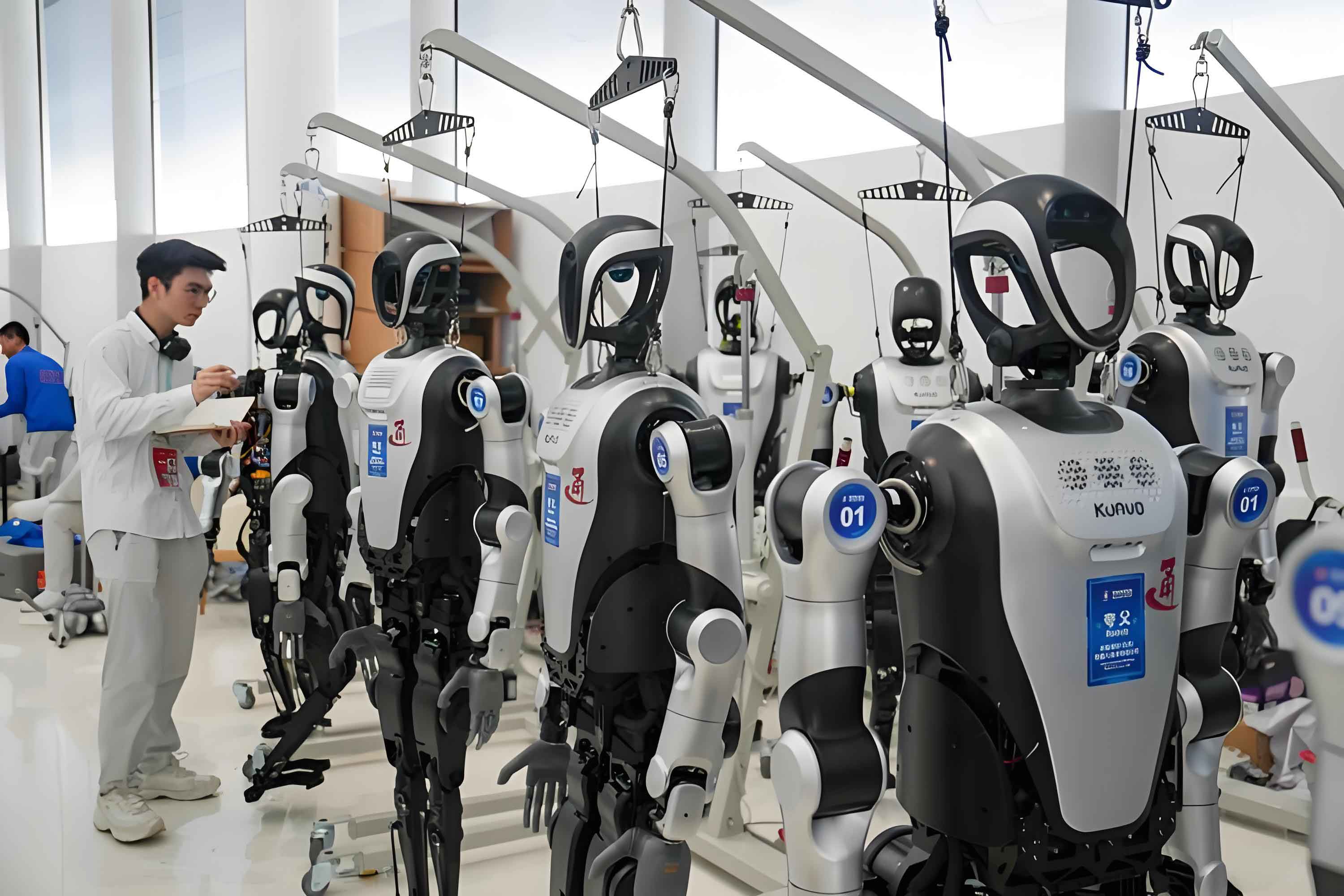
The establishment of this innovation center underscores a broader vision to transform Sichuan into a hub for humanoid robot production and innovation. By leveraging the province’s existing strengths in algorithms, new materials, and core components, the center will tackle the intricate process of taking humanoid robot concepts from initial research to widespread adoption. This involves not only technical breakthroughs but also the creation of a supportive environment for startups and established firms alike. As humanoid robots integrate cutting-edge AI, manufacturing, and material sciences, they hold the potential to revolutionize sectors such as healthcare, logistics, and domestic services, much like computers and smartphones did in previous decades. The innovation center’s launch is a testament to Sichuan’s commitment to nurturing new quality productive forces and staying at the forefront of technological evolution.
- Focus of the Innovation Center: Bridging Research and Commercialization for Humanoid Robots
- Institutional Innovation: The “Joint-Venture + Alliance” Model for Enhanced Collaboration
- Advantage Complementarity: Integrating the Industrial Chain for Faster Humanoid Robot Development
- Key Alliance Members and Their Roles in Advancing Humanoid Robot Technology
- Quotes from Industry Leaders on the Humanoid Robot Innovation Center
- Future Outlook and Government Support for Humanoid Robot Development
The core mission of the Sichuan Humanoid Robot Manufacturing Innovation Center is to address the entire innovation chain, from basic research to commercial deployment. Specifically, it will concentrate on the research, development, and initial commercialization of frontier technologies and key common technologies in the humanoid robot domain. This involves a systematic approach to transferring and diffusing technological advances, ensuring that breakthroughs in labs can swiftly transition into practical, marketable products. The humanoid robot field, often described as the “pinnacle of robotics,” requires such integrated efforts due to its complexity, which spans artificial intelligence, precision engineering, and adaptive materials. By focusing on these areas, the center aims to achieve the critical leap from “0” to “1” in innovation, and then scale up to “100” in industrial application, making humanoid robots more accessible and functional in daily life and production environments.
Humanoid robots, with their human-like form and capabilities, represent a transformative class of technology that could redefine human-machine interaction. The innovation center’s emphasis on key common technologies is crucial because these are the foundational elements that multiple companies and researchers can build upon, reducing duplication and accelerating progress. For instance, aspects like mobility, sensing, and cognitive processing in humanoid robots demand interdisciplinary collaboration, which the center facilitates through its structured programs. Moreover, by prioritizing the first commercialization of technologies, the center ensures that innovations do not stagnate in theoretical stages but are tested and refined in real-world settings. This approach is expected to lower barriers for small and medium enterprises, enabling them to integrate humanoid robot solutions into their operations without bearing the full burden of R&D costs.
A key innovation in this center’s establishment is its organizational structure, which adopts a “joint-venture + alliance” model as per the newly revised “Sichuan Manufacturing Innovation Center Construction Management Measures.” This model allows for a more flexible and inclusive framework, where a consortium of entities—including leading enterprises, research institutes, universities, and social organizations—can collaborate without the need for a single legal entity. In the case of the humanoid robot center, it is spearheaded by the China North Automation Research Institute Co., Ltd., which brings together a diverse group of at least five partners from across the nation. This institutional shift is designed to enhance the organization of scientific and technological innovation, improve the efficiency of成果转化 (achievement transformation), and elevate the overall level of industrialization for humanoid robot technologies.
The previous requirement for a standalone corporate entity often limited the participation of smaller players or specialized institutions, but the joint-venture model opens doors for broader involvement. This is particularly important for the humanoid robot industry, where advancements often hinge on niche expertise in areas like servo motors, sensors, or AI algorithms. By forming an alliance, members can share risks, costs, and insights, leading to more robust and scalable solutions for humanoid robots. The provincial government’s role in facilitating this model highlights a strategic move to build a cohesive innovation ecosystem, where resources are optimized and silos are broken down. As humanoid robots continue to evolve, this collaborative approach could serve as a blueprint for other regions aiming to capitalize on emerging technologies.
The synergy among the alliance members is a cornerstone of the innovation center’s strategy, as each participant brings distinct strengths that complement one another in the humanoid robot value chain. For example, some members excel in developing the “body” and “instinctive reaction centers” of humanoid robots—critical for precise execution and flexible interaction—while others focus on core components like sensors, servo motors, and application-specific solutions. This division of labor allows the alliance to cover the entire spectrum of humanoid robot development, from hardware to software, without redundant efforts. By linking these specialized capabilities, the center accelerates the translation of laboratory discoveries into产业化 (industrialization), ultimately making humanoid robots more viable for everyday use in homes, factories, and public spaces.
This advantage complementarity is not just about technical prowess; it also extends to market access and scalability. Members can leverage each other’s networks to pilot humanoid robot applications in diverse settings, gathering valuable feedback for iterative improvements. For instance, a humanoid robot designed for manufacturing tasks might be tested in a partner’s production line, refining its capabilities in real-time. Such collaborations reduce the time and cost typically associated with bringing new technologies to market, which is essential for the competitive humanoid robot sector. Furthermore, by fostering a culture of shared innovation, the center helps build a resilient supply chain that can adapt to evolving demands, ensuring that Sichuan remains a attractive destination for talent and investment in humanoid robotics.
The alliance comprises eight prominent members, each contributing uniquely to the humanoid robot ecosystem. The lead organization, China North Automation Research Institute Co., Ltd., has established itself through initiatives like the Sichuan Humanoid Robot Innovation Consortium and the Sichuan Explosion-Proof Industrial Robot Engineering Technology Research Center. It has already demonstrated practical applications, such as a fully force-controlled humanoid robot performing tasks like scanning and labeling in manufacturing environments. Other members include Sichuan University, University of Electronic Science and Technology of China, and the Institute of Electronic Engineering, among others, all of which bring deep expertise in areas relevant to humanoid robots, such as AI research, material science, and quality assurance.
To illustrate the diverse contributions, here is a table summarizing the key members and their focus areas in the humanoid robot domain:
| Member Organization | Primary Focus in Humanoid Robot Development |
|---|---|
| China North Automation Research Institute Co., Ltd. | Lead organization; focuses on force-controlled humanoid robots and industrial applications, with demonstrated capabilities in production line tasks. |
| Sichuan University | Research in artificial intelligence and robotics algorithms for humanoid robot cognition and adaptation. |
| University of Electronic Science and Technology of China | Expertise in electronic components and sensor technologies essential for humanoid robot perception systems. |
| Institute of Electronic Engineering | Specializes in quality inspection and reliability testing for humanoid robot hardware and software. |
| Sichuan Embodied Humanoid Robot Technology Co., Ltd. | Concentrates on the “body” and “cerebellum” of humanoid robots, enabling basic motor functions and reactive behaviors. |
| Chengdu Humanoid Robot Innovation Center Co., Ltd. | Focuses on application solutions and integration of humanoid robots in various sectors, such as services and logistics. |
| Fulin Precision Industry Co., Ltd. | Provides expertise in core components like servo motors and drives, critical for humanoid robot movement and precision. |
| Sichuan Changhong Electronics Holding Group Co., Ltd. | Leverages experience in consumer electronics to explore humanoid robot interfaces and user experience design. |
This collective expertise ensures that the innovation center can address the multifaceted challenges of humanoid robot development, from fundamental research to end-user applications. By uniting these forces, the center not only accelerates technological progress but also builds a foundation for sustained growth in the humanoid robot industry, attracting global talent and resources to Sichuan.
Feng Zhenyu, CEO and CTO of Sichuan Embodied Humanoid Robot Technology Co., Ltd., emphasized the transformative potential of this collaboration. He noted that the alliance allows members to “string together” their specialties into a complete industrial chain for humanoid robots, avoiding redundant research and speeding up the journey from lab to market. This, he believes, will make humanoid robots more integral to daily life and production sooner than anticipated. Feng also highlighted the broader impact of the provincial platform in cultivating an ecosystem for humanoid robots, where small and medium-sized enterprises can thrive, and cluster effects can emerge. By pooling resources, the alliance aims to draw worldwide talent and technological assets to Sichuan, ensuring that local experts have opportunities to shine and international professionals are inclined to settle in the region.
Similarly, representatives from the provincial government expressed strong support for the humanoid robot initiative. An official from the Technological Innovation Department of the Sichuan Provincial Department of Economy and Information Technology stated that the center aligns with the province’s strategic focus on humanoid robots as a key sector for nurturing new quality productive forces. The official reiterated the commitment to ongoing cultivation and assessment of the innovation center, with plans to provide financial backing in line with relevant policies. Additionally, the government will continue to promote major technical equipment攻关 (tackling key problems) and implement significant science and technology projects dedicated to humanoid robots, all aimed at fostering leading enterprises and strengthening the industrial chain for humanoid robots in Sichuan.
Looking ahead, the Sichuan Humanoid Robot Manufacturing Innovation Center is set to explore new pathways in research, commercialization, and ecosystem building. The provincial government has outlined a comprehensive support framework, including funding allocations, policy incentives, and specialized programs to address critical challenges in humanoid robot technology. For instance, initiatives like the major technical equipment攻关工程 (key project for tackling technical equipment) and humanoid robot-specific science and technology专项 (special projects) will target bottlenecks in areas such as autonomy, energy efficiency, and human-robot interaction. These efforts are designed to not only advance the technical capabilities of humanoid robots but also to ensure that Sichuan can compete on a global scale, attracting investments and partnerships that bolster the local economy.
The center’s long-term vision includes establishing Sichuan as a global benchmark for humanoid robot innovation, where clusters of companies and research institutions collaborate seamlessly. This involves creating testing grounds for humanoid robot applications in diverse scenarios, from elderly care to hazardous environment operations, thereby demonstrating their societal benefits. Moreover, the government plans to monitor the center’s progress through regular evaluations, ensuring that it meets its goals of technology transfer and industrial growth. As humanoid robots become more prevalent, this initiative could spur secondary innovations in related fields, such as AI ethics and sustainable manufacturing, further solidifying Sichuan’s role in the fourth industrial revolution. The ultimate aim is to make humanoid robots a commonplace tool that enhances productivity, safety, and quality of life, driven by the synergies unleashed through this pioneering innovation center.
In conclusion, the launch of Sichuan’s first provincial joint-venture manufacturing innovation center for humanoid robots marks a pivotal step in the province’s technological advancement. By harnessing the power of collaboration, the center addresses the complex challenges of humanoid robot development, from research to real-world application. With strong institutional backing and a clear focus on commercialization, it promises to accelerate the adoption of humanoid robots in various sectors, contributing to economic growth and societal well-being. As the center evolves, it will likely inspire similar initiatives worldwide, underscoring the transformative potential of humanoid robots in shaping the future of automation and human-machine coexistence.