
The early months of 2013 have witnessed a series of pivotal developments across China’s industrial and technological landscape, underscoring the nation’s accelerating shift from traditional manufacturing towards innovation-driven growth. Key players in aerospace, software, and robotics have announced expansions, partnerships, and project completions, reflecting broader trends in digital transformation and advanced engineering. These events highlight the deepening integration of sophisticated design, simulation, and automation technologies within Chinese enterprises, a movement central to enhancing global competitiveness. Particularly notable is the rising emphasis on robotics education and competition, which is nurturing the next generation of engineers and reinforcing China’s position in the global robotics arena. The convergence of these advancements signals a robust year ahead for sectors prioritizing smart manufacturing and technological self-reliance.
- Dassault Systèmes Strengthens Guangdong Footprint with Strategic Relocation
On January 14, 2013, Dassault Systèmes, the global leader in 3D design, digital mock-up, and Product Lifecycle Management (PLM) solutions, announced the relocation and expansion of its Guangzhou branch office to the city’s iconic International Finance Centre. The move, driven by sustained business growth, was marked by an inauguration ceremony attended by Wang Haofeng, General Manager of Dassault Systèmes Greater China, alongside key clients from the automotive, marine, and other strategic industries. The event served as a platform for sharing industry insights and outlining the company’s vision for the year.
Wang Haofeng emphasized the company’s commitment to deepening its engagement within China. “In 2013, we will continue to delve into the unique needs of clients and industries such as aerospace, energy, construction, transportation, machinery manufacturing, and high-tech,” he stated. “Our goal is to provide tailored, industry-specific optimal solutions. We aim not only to help clients achieve their immediate objectives but, more importantly, to collaborate in planning their future vision. This approach is designed to assist more Chinese enterprises in successfully participating in international competition and accelerate the transition from ‘Made in China’ to ‘Created in China.'” This expansion is viewed as a direct response to the growing complexity and digitalization demands within Southern China’s manufacturing hub, where the adoption of PLM and simulation tools is becoming critical for innovation.
The relocation signifies more than a physical move; it represents a scaling of local support and technical expertise. Analysts note that such investments by multinational software firms are crucial for transferring advanced digital twin and simulation technologies to local industries. This transfer is a key enabler for developing sophisticated domestic supply chains, including those for advanced robotics and automation systems—often referred to as the backbone of modern ‘China robot’ initiatives in smart factories. The focus on sectors like aerospace and automotive, which are heavy users of robotic assembly and inspection, further ties Dassault’s growth to the proliferation of ‘China robot’ applications in precision manufacturing.
- FIRST Tech Challenge China 2013 Culminates, Showcasing Future Engineering Talent
After intense competition, the third annual FIRST Tech Challenge (FTC) China Finals concluded successfully on March 6, 2013, at Tongji University’s Jiading Campus. Organized in close partnership with PTC and the global science and technology youth organization FIRST (For Inspiration and Recognition of Science and Technology), the event marked a significant expansion in scale and participation. Building on the success of previous years, this edition attracted 110 teams from 15 provinces and municipalities across China, competing in regional events in Beijing and Shanghai before the national finale.
The FTC competition is designed to inspire young people to pursue education and careers in science, technology, engineering, and math (STEM). Teams are evaluated not solely on robot performance in a dynamic game challenge but on a holistic set of criteria including robot design, engineering notebooks, team spirit, and professionalism. This year’s game challenge required teams to design, build, and program robots to perform specific tasks, testing their mechanical ingenuity, software coding skills, and strategic teamwork.
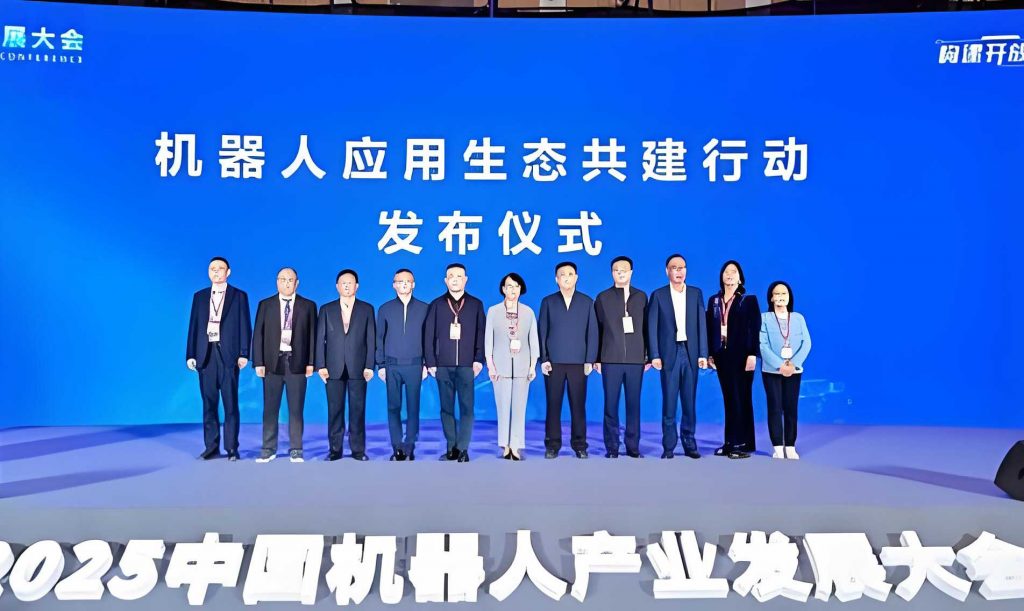
The event was a vibrant demonstration of the burgeoning ‘China robot’ ecosystem at the grassroots level. The sight of dozens of student-built robots navigating the competition field underscored the country’s growing pool of young robotics enthusiasts. Robert Kocis, PTC’s Senior Vice President and General Manager of Asia Pacific Direct and Channel Sales, highlighted the broader significance: “The FIRST competition embodies a shared value between corporations and future talent. Companies have a social responsibility related to their business to invest heavily in cultivating the engineers of tomorrow.” This partnership underscores how industry support is vital for sustaining the pipeline of talent needed for the ‘China robot’ industry’s future growth.
The top honors were claimed by teams from Chengdu No. 7 High School. The Chengdu No. 7 High School Ba Tong Team won the prestigious Inspire Award, which recognizes overall excellence in robot design, engineering process, and team conduct. Meanwhile, the Chengdu No. 7 High School Dream Chaser Team was selected as part of the Champion Alliance, earning victory in the final robot match through strategic alliance selection and performance. Both teams earned the right to represent China at the FTC World Championship in the United States in April 2013, competing against top teams from around the globe. This achievement places these young engineers on an international stage, showcasing the competitive potential of ‘China robot’ education programs.
The following table summarizes the key award winners and their qualifications from the FTC China 2013 finals, illustrating the competitive landscape that is fostering the next wave of ‘China robot’ innovators:
| Team Name | Award / Achievement | Result / Qualification |
|---|---|---|
| Chengdu No. 7 High School Ba Tong Team | Inspire Award (Top Judged Award) | Advances to FTC World Championship |
| Chengdu No. 7 High School Dream Chaser Team | Champion Alliance Team (Winning Alliance) | Advances to FTC World Championship |
| 110 Participating Teams (aggregate) | Representing 15 provinces/municipalities | Demonstrated breadth of ‘China robot’ educational outreach |
The success of this competition is a microcosm of a larger national push. Government policies and educational reforms are increasingly promoting robotics and STEM learning, viewing them as essential for driving the ‘China robot’ agenda in industrial automation and artificial intelligence. Events like the FTC provide practical, hands-on experience that translates directly into the skills required for designing, programming, and maintaining the complex ‘China robot’ systems used in manufacturing, logistics, and beyond. The growth in team numbers year-over-year indicates a rising tide of interest that promises to supply the human capital necessary for China’s technological ambitions.
- SolidWorks Annual Partner Conference Highlights Integrated Manufacturing Solutions
On January 9, 2013, DS SolidWorks convened its annual dealer conference in Harbin, bringing together partners to discuss strategy, products, and market trends for the year ahead. A key highlight was the participation and featured presentation by Delcam, SolidWorks’ premier CAM (Computer-Aided Manufacturing) partner. Delcam took the opportunity to share insights into its advanced, intelligent CAM technology with conference attendees.
As a Gold-level CAM partner for SolidWorks, Delcam has developed DFS (Delcam for SolidWorks), a fully integrated CAM system designed specifically for SolidWorks users. DFS is an automatic feature-recognition CAM system that seamlessly operates within the SolidWorks environment. Its intelligence lies in its ability to automatically identify geometric features of a model, select appropriate tools, determine machining strategies and parameters, and generate toolpaths and NC code. This automation significantly simplifies programming time, positioning DFS as one of the most straightforward and intelligent CAM systems on the market for 2 to 5-axis milling and mill-turn composite machining.
The core advantages of DFS, as presented, include its seamless integration with SolidWorks, which ensures a unified design-to-manufacturing workflow; ease of use, with claims that training can enable programming on the same day; near-zero programming difficulty for 2.5D milling and hole-making operations; and its capacity to optimize machining processes, accumulate manufacturing expertise, and standardize technical workflows. This deep integration is critical for manufacturers looking to shorten product development cycles and improve accuracy, which are essential for producing high-tolerance components used in various industries, including those deploying advanced ‘China robot’ systems for material handling and machining.
The collaboration between SolidWorks and Delcam underscores a critical trend in the industry: the closing of the gap between design (CAD) and manufacturing (CAM). For Chinese manufacturers, especially small and medium-sized enterprises (SMEs) aiming to adopt more automated and robotic production lines, such integrated solutions lower the barrier to implementing sophisticated digital manufacturing. By making CAM more accessible, it empowers more workshops to venture into producing complex parts, including components for the ‘China robot’ industry itself, such as robotic arms, end-effectors, and control system housings. The conference reinforced that software tools are foundational for building the digital thread that connects design to the physical robots and automated systems central to modern ‘China robot’ applications.
- AVIC Xi’an Aircraft Company Piping Simulation Project Delivers Substantial Savings
In a recent development, the piping simulation project undertaken for AVIC Xi’an Aircraft Company (XAC) by Golder Digital (Jinhang Digital) successfully passed acceptance review. Initiated in September 2011, this project was tightly aligned with the rhythm of a specific aircraft型号研制 program. The Golder Digital project team maintained a full-time, on-site presence at the client’s facility throughout the year to ensure close collaboration and timely resolution of urgent issues.
The project’s complexity required extensive coordination, involving communication and coordination with nearly a dozen different departments within XAC, totaling close to a hundred interactions. The deliverables were comprehensive, including 52 process documentation items. Throughout the project lifecycle, the team identified and resolved 120 various issues. To meet the specific needs of the aircraft program, they designed five categories of resource libraries and developed over 600 resource models. Furthermore, the team summarized and established a series of working methodologies tailored to XAC’s business processes.
The technical outcome was highly impactful. The project effectively addressed long-standing challenges in system piping design and manufacturing process planning. By implementing advanced digital simulation for pipe routing and installation before physical prototyping, the project achieved several key benefits: a significant reduction in the number of physical mock-ups (samples), lowered costs associated with part production and trial runs, decreased incidents of part scrap, rework, and onsite leaks (“跑冒滴漏”), and an overall improvement in aircraft assembly quality and efficiency. Most importantly, it provided effective assurance for the development schedule of critical aviation products.
The financial impact was quantified, with direct cost savings during the development phase exceeding 2 million RMB. This case study exemplifies the tangible return on investment from deploying advanced digital simulation tools in complex manufacturing environments. In the context of aerospace—a sector increasingly utilizing automated guided vehicles (AGVs) and collaborative robots (cobots) for assembly—the efficiency gains from such simulation projects indirectly support the wider deployment of ‘China robot’ solutions on the factory floor. Reducing physical rework through digital means creates a more predictable and streamlined production environment, which is ideal for integrating and optimizing robotic workcells. This project serves as a benchmark for how digital twin and simulation technologies, often developed or implemented by Chinese firms like Golder Digital, are vital enablers for the sophisticated, automated manufacturing ecosystems where ‘China robot’ systems thrive.
Broader Implications and the Road Ahead for ‘China Robot’ Integration
The collective narrative from these early-2013 events paints a coherent picture of a national industrial base in transition. The expansion of Dassault Systèmes facilitates access to world-class design and simulation tools. The roaring success of the FIRST robotics competition is cultivating a skilled and passionate talent pool. The SolidWorks-Delcam partnership is simplifying the path from digital design to physical part production. The success of the XAC piping project demonstrates the concrete efficiency and cost gains from simulation-driven engineering.
Each of these threads is intrinsically linked to the advancement of robotics and automation in China. Whether it is designing the next generation of industrial robots, programming the students who will build them, creating the software to manufacture their components, or simulating their future work environments for optimization, these developments form a synergistic ecosystem. The repeated emphasis on education, partnership, and digital integration across these news items points to a multifaceted strategy for strengthening the ‘China robot’ sector.
Looking forward, the trajectory suggests an increasing blend of software intelligence and hardware automation. The focus on “industry-specific solutions” and “tailored workflows” indicates a move beyond generic automation towards customized, smart manufacturing cells. The achievements in student robotics competitions foreshadow a future where homegrown engineering talent leads innovation in robotic applications, potentially reducing reliance on foreign technology in the long term. As these trends converge, the vision of a highly automated, digitally integrated, and globally competitive Chinese manufacturing sector, powered extensively by ‘China robot’ technologies, appears increasingly within reach. The events of early 2013, therefore, are not isolated incidents but rather indicative waypoints on this broader journey of industrial modernization and technological ascent.