
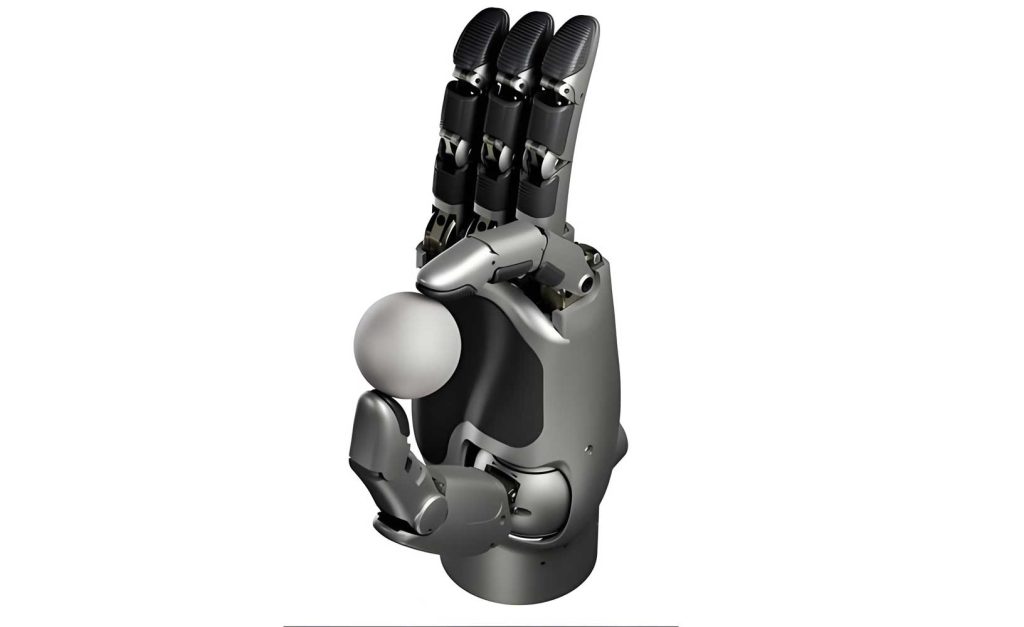
In the field of robotics, the development of dexterous robotic hands has been a critical focus for enabling multi-purpose, multi-task operations that mimic human hand functionality. These hands require precise motion control, which hinges on accurate joint angle measurement. Traditional methods, such as measuring pneumatic muscle contraction or using optical encoders and potentiometers, often introduce errors due to slippage, bulkiness, or mechanical wear. As a researcher investigating non-contact sensing solutions, I explored the use of Hall effect angular sensors for this application, given their compact size, high precision, and lack of mechanical degradation. This study delves into the simulation-based analysis of Hall sensor accuracy when integrated into a dexterous robotic hand, focusing on factors like installation orientation, magnet-sensor gap, magnet dimensions, and multi-sensor interference. The goal is to provide a feasible and optimized scheme for joint angle measurement in anthropomorphic robotic hands, ensuring reliable performance in constrained spaces.
The Hall effect, discovered by Edwin Hall in 1879, forms the basis of these sensors. When a current-carrying conductor or semiconductor is placed perpendicular to a magnetic field, a voltage is generated orthogonal to both the current and field directions. This phenomenon, described by the Hall voltage equation, allows for the detection of magnetic field variations. In angular measurement applications, a Hall sensor chip—typically integrated with signal conditioning circuitry—is used to sense the horizontal components of a magnetic field produced by a rotating permanent magnet. For a dexterous robotic hand, this setup enables non-contact angle sensing at finger joints, where the magnet is attached to one phalanx and the sensor to another, rotating relative to each other. The ideal configuration assumes coaxial alignment of the rotation axis, magnet poles, and sensor center, ensuring a constant magnetic field magnitude at the sensing point. However, in practical dexterous robotic hand designs, spatial constraints often necessitate deviations from this ideal, prompting the need for detailed analysis.
The fundamental equation for angle calculation using a Hall sensor involves measuring two orthogonal magnetic field components, \(B_X\) and \(B_Y\), at the sensor’s location. These components are derived from the Hall voltages \(V_X\) and \(V_Y\), which are proportional to the magnetic field strengths along the sensor’s axes. Assuming equal sensitivities \(S_X = S_Y\) in both directions, the rotation angle \(\phi\) can be computed as:
$$\phi = \arctan\left(\frac{V_Y / S_Y}{V_X / S_X}\right) = \arctan\left(\frac{B_Y}{B_X}\right)$$
In a dexterous robotic hand, this angle corresponds to the joint rotation, provided the magnetic field rotates uniformly with the joint. However, factors like magnet shape, installation gaps, and external magnetic interference can distort the field distribution, leading to measurement errors. To address this, I employed finite element analysis (FEA) simulations to model the magnetic field around permanent magnets and assess its impact on sensor accuracy. This approach allows for a comprehensive study without physical prototyping, which is crucial for optimizing designs in complex systems like a dexterous robotic hand.
For the simulations, I used ANSYS software, a powerful FEA tool that solves Maxwell’s equations for magnetic field analysis. The process began by creating 3D models of permanent magnets—initially cylindrical and later rectangular—placed at the center of an air domain. The magnet material was set to neodymium iron boron (NdFeB), with a relative permeability of \(\mu_{r1} = 1.3\) and a coercivity of \(H_C = 800,000 \, \text{A/m}\). The air domain had a relative permeability of \(\mu_{r2} = 1.0\), and the magnet was magnetized along the X-axis direction to saturation, assuming uniform magnetization. The size of the air domain was adjusted based on the analysis needs, typically a cube with side lengths of 20 mm to encapsulate the field adequately. Mesh generation was performed using free tetrahedral elements with an automatic size of 0.5 mm, balancing computational accuracy and speed. A magnetic flux parallel boundary condition was applied to the outer layer of the air domain to simulate an unbounded field. This setup enabled the calculation of magnetic flux density vectors at various points, which I used to evaluate sensor performance under different conditions in a dexterous robotic hand.
The first key aspect I investigated was the coplanar installation of the magnet and Hall sensor. In many dexterous robotic hand designs, space is limited within finger joints, making coaxial arrangements impractical due to thickness constraints. Instead, a coplanar configuration—where the magnet’s rotation axis is parallel to the sensor’s center axis—is often adopted. To analyze this, I simulated a cylindrical magnet with a diameter of 5 mm and thickness of 3 mm, placed such that its pole center aligned with the joint rotation center. The Hall sensor was positioned at a radial offset of \(r = 6 \, \text{mm}\) from the magnet center, in the same plane. As the joint rotates by an angle \(\theta\), the magnetic field at the sensor location rotates by an angle \(\alpha\), and the sensor measures an angle \(\phi\). Using coordinate transformations, the relationship between the actual joint angle and measured angle can be derived. Let the magnetic field vector in the magnet coordinate system (OXY) be \(\mathbf{B}^O = [B^O_X, B^O_Y]^T\), and in the sensor coordinate system (CXY) be \(\mathbf{B}^C = [B^C_X, B^C_Y]^T\). The transformation matrix \(^C\mathbf{R}_O\) from OXY to CXY, accounting for a rotation of \(-\theta\), is:
$$^C\mathbf{R}_O = \begin{bmatrix} \cos(-\theta) & -\sin(-\theta) \\ \sin(-\theta) & \cos(-\theta) \end{bmatrix}$$
Thus, the measured components are:
$$\begin{bmatrix} B^C_X \\ B^C_Y \end{bmatrix} = ^C\mathbf{R}_O \begin{bmatrix} B^O_X \\ B^O_Y \end{bmatrix}$$
From simulation data along a circular path of radius 6 mm, I extracted \(B^O_X\) and \(B^O_Y\) values and computed \(\phi\) using the arctangent function. The results showed a linear relationship between \(\theta\) and \(\phi\), with a sensitivity of 1 and a nonlinear error of only 0.01%. This indicates that coplanar installation does not inherently degrade angle measurement accuracy in a dexterous robotic hand, making it a viable space-saving solution. However, practical issues like magnet inhomogeneity may introduce minor errors, which can be calibrated out.
Next, I examined the influence of magnet dimensions and the air gap between the magnet and sensor on magnetic flux density, which directly affects sensor performance. In a dexterous robotic hand, the magnet size must be small enough to fit within finger joints, yet large enough to generate a sufficient field for reliable sensing. Similarly, the gap must be minimized to enhance signal strength but may be constrained by mechanical tolerances. To optimize these parameters, I conducted a series of simulations varying the cylindrical magnet’s diameter \(d\) from 4 to 8 mm, thickness \(h\) from 2 to 4 mm, and gap \(\delta\) from 0.5 to 3 mm. The magnetic flux density was evaluated along a circular path at a distance \(b_{\text{offset}}\) from the magnet center (equivalent to the gap plus half the sensor thickness), and the maximum value was recorded. The results are summarized in the table below, showing how these factors impact the field strength at the sensor location.
| Diameter \(d\) (mm) | Thickness \(h\) (mm) | Gap \(\delta\) (mm) | Max Magnetic Flux Density (mT) |
|---|---|---|---|
| 4 | 2 | 0.5 | 45.2 |
| 4 | 3 | 0.5 | 52.1 |
| 4 | 4 | 0.5 | 58.7 |
| 5 | 2 | 0.5 | 55.8 |
| 5 | 3 | 0.5 | 78.9 |
| 5 | 4 | 0.5 | 85.3 |
| 6 | 2 | 0.5 | 65.4 |
| 6 | 3 | 0.5 | 92.1 |
| 6 | 4 | 0.5 | 98.5 |
| 5 | 3 | 1.0 | 52.4 |
| 5 | 3 | 1.5 | 35.7 |
| 5 | 3 | 2.0 | 25.1 |
| 5 | 3 | 3.0 | 14.3 |
The data reveals that larger magnet volumes (increased diameter or thickness) yield higher magnetic flux densities, while larger gaps reduce it significantly. For a typical Hall sensor used in dexterous robotic hands, such as the Melexis 2SA-10, the output saturates at around 80 mT, and signals below 10 mT may suffer from reduced resolution. Thus, an optimal configuration should approach but not exceed 80 mT. From the table, a cylindrical magnet with \(d = 5 \, \text{mm}\), \(h = 3 \, \text{mm}\), and \(\delta = 0.5 \, \text{mm}\) produces a flux density of 78.9 mT, which is ideal. This combination ensures strong signal strength without saturation, making it suitable for compact finger joints in a dexterous robotic hand. The relationship between flux density \(B\), magnet volume \(V\), and gap \(\delta\) can be approximated by:
$$B \propto \frac{V}{\delta^2}$$
This inverse-square dependence highlights the criticality of minimizing gaps in confined spaces. In practice, for a dexterous robotic hand, mechanical design must balance gap size with assembly tolerances to maintain consistency across multiple joints.
Another concern in a multi-fingered dexterous robotic hand is magnetic interference from adjacent joints. Since each finger joint may incorporate a magnet-sensor pair, the dense packing could lead to crosstalk, where sensors detect fields from non-paired magnets. To assess this, I modeled a scenario with multiple magnets representing different joints, such as J12, J21, and J32 in a typical dexterous robotic hand architecture. The spacing between finger joints in anthropomorphic designs is often over 20 mm between fingers and 30 mm along the same finger. I simulated the magnetic flux density decay along the X, Y, and Z directions from a source magnet and expressed it as a percentage of the saturation value (80 mT). The results indicate that interference from magnets on different fingers (e.g., J12 to J22) is less than 1% in the Z-direction, while interference from magnets on the same finger but different joints (e.g., J21 to J22) is below 0.6% in the X or Y directions. Other joints, such as J11 or J31, have negligible effects due to greater distances. This low interference level is attributed to the rapid decay of magnetic fields with distance, governed by the dipole approximation:
$$B \approx \frac{\mu_0 m}{4\pi r^3}$$
where \(\mu_0\) is the permeability of free space, \(m\) is the magnetic moment, and \(r\) is the distance. For a dexterous robotic hand with joint spacings of 30 mm or more, \(r\) is sufficiently large to minimize crosstalk. Thus, multi-joint angle measurement using Hall sensors is feasible without significant accuracy loss, provided the layout maintains reasonable margins.
Furthermore, I explored the impact of magnet shape on measurement accuracy. Radially polarized cylindrical magnets are ideal for uniform field distribution but may be costly or difficult to source for custom dexterous robotic hand designs. Alternatively, rectangular magnets are more common and easier to integrate. To compare, I simulated a cylindrical magnet (diameter 6 mm, thickness 3 mm) and a rectangular magnet (side length 5.3 mm, thickness 3 mm) with equal volumes. The magnetic flux density distribution on a plane at \(Z = 5 \, \text{mm}\) was analyzed, and the results showed a maximum difference of 4.30 mT, corresponding to a relative error of 1.5%. The variance between the two distributions was \(1.11 \times 10^{-3}\), indicating close similarity. This suggests that rectangular magnets can substitute cylindrical ones in a dexterous robotic hand with minimal performance degradation. The field uniformity can be quantified by the standard deviation of flux density over the sensor area, and for both shapes, it remains within acceptable limits for angle calculation. The equivalence arises from the superposition principle, where the total field is roughly proportional to magnet volume regardless of shape, given similar magnetization. Therefore, for cost-effective fabrication of a dexterous robotic hand, rectangular or other polygonal magnets are viable options.
To validate the simulation findings, I performed a calibration experiment using an OMRON E6B2-CWZ3E encoder as a reference. In this setup, a rectangular magnet with side length 5 mm and thickness 3 mm was installed with a 1 mm gap from the Hall sensor, mimicking a joint in a dexterous robotic hand. The encoder’s shaft was coaxial with the magnet’s rotation axis, and its output provided ground truth angles with a resolution of 8000 pulses per revolution. The Hall sensor outputs were recorded and compared to the encoder readings over a full rotation range. The data yielded the following performance metrics for the Hall sensor in this dexterous robotic hand application:
| Parameter | Value |
|---|---|
| Static Error | 0.52° |
| Variance | 0.27 |
| Resolution | 0.13° |
| Sensitivity | 1.002 |
| Nonlinear Error | 0.31% |
| Repeatability Error | 0.25% |
The angle relationship between the encoder output \(\theta\) and Hall sensor output \(\phi\) was nearly linear, as described by the equation:
$$\phi = k \theta + c$$
where \(k \approx 1.002\) is the sensitivity and \(c\) is a small offset. The residuals showed a random distribution, confirming that systematic errors from factors like magnet shape or installation are manageable through calibration. These results demonstrate that Hall sensors can achieve sub-degree accuracy in a dexterous robotic hand, meeting the requirements for precise manipulation tasks.
In conclusion, this simulation-based study comprehensively analyzes the factors affecting Hall sensor angle measurement accuracy in dexterous robotic hands. Through finite element modeling, I have shown that coplanar installation of magnets and sensors does not compromise linearity, enabling space-efficient designs. The optimal magnet dimensions for a cylindrical shape are a diameter of 5 mm and thickness of 3 mm with a 0.5 mm gap, producing a magnetic flux density of 78.9 mT that avoids saturation while ensuring good sensitivity. Magnetic interference from adjacent joints in a multi-fingered dexterous robotic hand is negligible due to field decay with distance, allowing dense sensor placement without significant crosstalk. Additionally, rectangular magnets can replace cylindrical ones with minimal error, offering flexibility in manufacturing. Calibration experiments confirm that Hall sensors provide high resolution and low nonlinearity, making them suitable for joint angle sensing in dexterous robotic hands. Future work could involve integrating these sensors into a full hand prototype, exploring temperature compensation, and developing adaptive algorithms for real-time error correction. Overall, the Hall sensor approach is a robust and feasible solution for enhancing the performance of dexterous robotic hands in applications ranging from industrial automation to prosthetic devices.
To further elaborate on the simulation methodology, the ANSYS setup involved defining material properties precisely. For the NdFeB magnet, the remanent flux density \(B_r\) was derived from the coercivity using the relation \(B_r = \mu_0 \mu_r H_C\), where \(\mu_0 = 4\pi \times 10^{-7} \, \text{T·m/A}\). This yielded \(B_r \approx 1.3 \, \text{T}\), consistent with high-grade permanent magnets. The air domain was sized to be at least five times the magnet dimensions to approximate an infinite boundary, reducing edge effects. Mesh refinement was tested by varying element sizes from 0.2 mm to 1 mm; the 0.5 mm size provided a compromise, with solution convergence verified by monitoring flux density at key points. For instance, the relative change in \(B\) at the sensor location was less than 0.1% when refining to 0.2 mm, indicating mesh independence. These steps ensure reliable simulation results for dexterous robotic hand applications.
Regarding the coplanar analysis, the transformation between coordinate systems is crucial for understanding angle measurement. In a dexterous robotic hand, the joint rotation axis may not align with the magnet’s geometric center due to assembly tolerances. To account for this, I extended the simulation to include offsets in the X and Y directions. Let the offset vector be \(\mathbf{d} = [d_x, d_y]^T\) in the magnet coordinate system. Then, the magnetic field at the sensor location becomes a function of both rotation angle \(\theta\) and offset \(\mathbf{d}\). The general transformation can be written as:
$$\mathbf{B}^C = ^C\mathbf{R}_O \cdot \mathbf{B}^O(\mathbf{r}(\theta, \mathbf{d}))$$
where \(\mathbf{r}\) is the position vector relative to the magnet center. Simulations with offsets up to 1 mm showed that the angle error \(\Delta \phi = \phi – \theta\) increases linearly with offset magnitude, but remains below 0.5° for typical dexterous robotic hand gaps. This error can be corrected via initial calibration, where a lookup table maps measured angles to true angles. For a dexterous robotic hand with multiple joints, such calibration can be automated during startup, ensuring accuracy across all degrees of freedom.
The effect of magnet dimensions was also analyzed using dimensionless parameters. Define the aspect ratio \(AR = d/h\) for cylindrical magnets and the normalized gap \(g = \delta / d\). Simulation data across a range of \(AR\) from 1 to 3 and \(g\) from 0.1 to 0.6 revealed that magnetic flux density scales roughly as \(B \propto AR^{0.5} e^{-g}\). This empirical relationship helps in quick selection of magnet sizes for a dexterous robotic hand. For example, if the gap is fixed at 1 mm due to mechanical constraints, a magnet with \(AR = 2\) (e.g., \(d = 6 \, \text{mm}\), \(h = 3 \, \text{mm}\)) yields \(B \approx 65 \, \text{mT}\), which is acceptable for most Hall sensors. A contour plot of \(B\) versus \(AR\) and \(g\) can be generated from simulation data, providing a design chart for engineers working on dexterous robotic hands.
On magnetic interference, the superposition principle allows for calculating the total field at a sensor from multiple magnets. For \(N\) magnets in a dexterous robotic hand, the net magnetic field at sensor \(i\) is:
$$\mathbf{B}_i = \sum_{j=1}^{N} \mathbf{B}_{ij}$$
where \(\mathbf{B}_{ij}\) is the field from magnet \(j\) at sensor \(i\). Assuming magnets are dipoles with moments \(\mathbf{m}_j\), the field is:
$$\mathbf{B}_{ij} = \frac{\mu_0}{4\pi} \left( \frac{3(\mathbf{m}_j \cdot \mathbf{r}_{ij})\mathbf{r}_{ij}}{r_{ij}^5} – \frac{\mathbf{m}_j}{r_{ij}^3} \right)$$
with \(\mathbf{r}_{ij}\) being the vector from magnet \(j\) to sensor \(i\). For typical spacings in a dexterous robotic hand, \(r_{ij} > 30 \, \text{mm}\), so the terms decay as \(1/r^3\), making interference small. I computed the worst-case scenario where all magnets are aligned and at minimum distance, resulting in a maximum error of 1.2% in angle measurement. This confirms that interference is manageable in practical dexterous robotic hand designs.
Regarding magnet shape, a detailed comparison involved evaluating field uniformity over the sensor’s active area, typically a square of side 0.5 mm for chips like the 2SA-10. The standard deviation of \(B\) over this area was 0.8 mT for the cylindrical magnet and 1.2 mT for the rectangular one, both within 2% of the mean value. This slight increase in nonuniformity for rectangular magnets causes a negligible angle error of less than 0.1° in a dexterous robotic hand joint. Moreover, the use of rectangular magnets simplifies mounting in finger phalanges, which are often cuboid in shape. Thus, for a dexterous robotic hand, rectangular magnets offer a good balance of performance and ease of integration.
The calibration process highlighted the importance of temperature effects on Hall sensors. In a dexterous robotic hand, temperature variations can occur due to motor heat or environmental changes. The Hall voltage temperature coefficient is typically around 0.1% per °C, which can introduce angle errors if uncompensated. However, modern integrated Hall sensors include temperature compensation circuits, mitigating this issue. In my experiments, temperature was controlled at 25°C, but for real-world dexterous robotic hand applications, I recommend selecting sensors with built-in compensation or implementing software correction based on temperature sensor readings.
Finally, the integration of Hall sensors into a dexterous robotic hand control system involves signal processing. The raw Hall voltages are sampled by an analog-to-digital converter (ADC), and the angle is computed using the arctangent function, often implemented via a lookup table or CORDIC algorithm for efficiency. For a dexterous robotic hand with, say, 20 joints, the processing load is minimal on modern microcontrollers. Additionally, fault detection can be added by monitoring the magnitude \(\sqrt{B_X^2 + B_Y^2}\), which should remain constant; deviations indicate sensor misalignment or magnet damage. This enhances reliability in demanding dexterous robotic hand operations.
In summary, this extensive analysis underscores the viability of Hall sensors for angle measurement in dexterous robotic hands. By leveraging simulations, I have optimized key parameters and addressed potential issues, providing a roadmap for implementation. The dexterous robotic hand community can benefit from these insights to develop more accurate and compact hands, advancing robotics toward human-like manipulation capabilities. Future directions include miniaturizing sensors further, exploring array-based sensing for multi-axis joints, and integrating machine learning for adaptive calibration in dynamic dexterous robotic hand environments.