
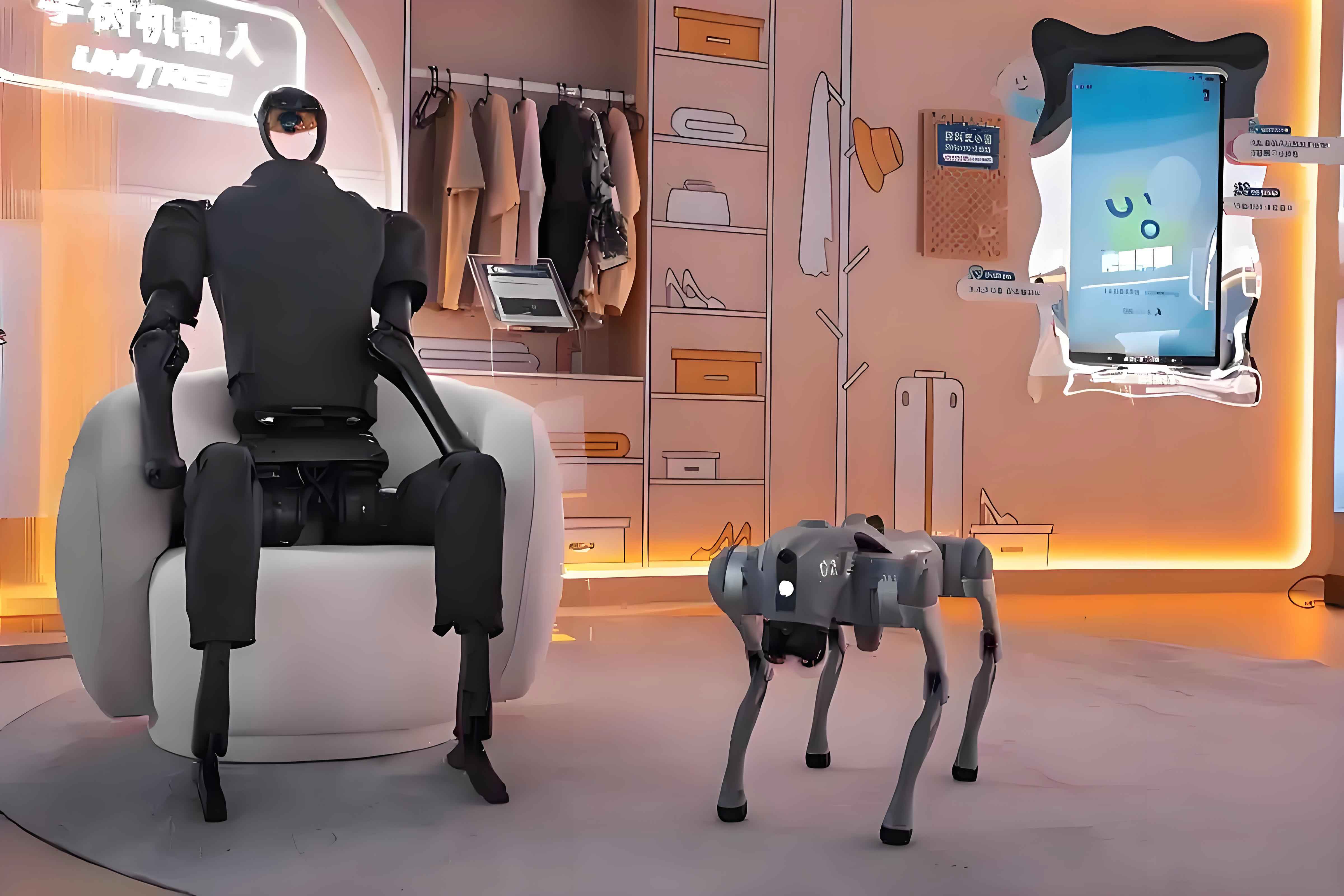
The URKL Shanghai station opened at the Shanghai Baoshan Sports Center, bringing a high-profile humanoid robot competition to a district that is positioning itself as a leading zone for intelligent manufacturing. The Shanghai stop features two consecutive matches, and all 5,000 tickets were sold out. The event is the Zhongqing Global Humanoid Robot Free Combat League, known as URKL, or Ultimate Robot Knock-out Legend. It was initiated by Shenzhen Zhongqing Robot Technology Co., Ltd. and is described as the world’s first industrial-grade humanoid robot free combat league.
The competition places a full-size humanoid robot at the center of public attention. Thirty-two participating teams use the T800, a humanoid robot developed by Zhongqing Robotics, as their common competitive platform. The T800 stands 1.73 meters tall and can perform high-difficulty movements such as flowing punches, spinning kicks and rapid recovery after falling. For the humanoid robot sector, the event offers a visible test of balance, control, durability and recovery capability in a competitive setting.
The sold-out humanoid robot event is also a signal of Baoshan’s broader industrial ambitions. The district is working to build a citywide intelligent manufacturing leading zone, and its concentration of robotics and intelligent manufacturing industries continues to rise. The humanoid robot league therefore sits at the intersection of public engagement, technology demonstration and industrial ecosystem development.
- Event details and the humanoid robot competitive platform
The URKL Shanghai station is not a one-off exhibition. It is part of a league built around a standardized humanoid robot platform. Because all 32 teams use the T800, the competition focuses attention on how teams control, program and stabilize the same humanoid robot model under pressure. The event’s format gives the audience a direct view of humanoid robot movement, including striking motions, spinning kicks and the ability to return quickly to a standing position after a fall.
The choice of a full-size humanoid robot as the competitive carrier is significant. The T800 is not a small-scale demonstrator; it is a 1.73-meter humanoid robot designed to perform dynamic actions. In a free combat league, those actions must be repeated under conditions that demand balance, timing and mechanical resilience. The humanoid robot platform therefore becomes both an athletic participant and an engineering subject.
The event’s ticket sales add a public dimension to the humanoid robot story. With 5,000 tickets sold out for the Shanghai station, the league demonstrates that humanoid robot competition can attract a live audience. That audience interest matters for an emerging industry because it creates public visibility for humanoid robot capabilities and for the companies building the underlying hardware and software.
The competition also reflects a broader shift in how humanoid robot development is presented. Instead of relying only on laboratory videos or staged demonstrations, the league places the humanoid robot in a public arena where movement, recovery and control are visible in real time. For developers, this kind of format can highlight both the progress and the remaining challenges of humanoid robot engineering.
- From first meeting to joint venture in Baoshan
The connection between the humanoid robot league and Baoshan began before the competition. In November 2024, Baoshan District held its first Intelligent Robot Industry Conference and invited Zhongqing Robotics, which had been founded just over one year earlier at that time, to come to Shanghai for display and exchange. That initial introduction created a path for deeper cooperation.
Two months later, company founder Zhao Tongyang was invited again to Baoshan. This time, the visit focused on the main base for robotics and intelligent manufacturing in the district: the Shanghai Robot Industrial Park in Gucun Town. After that visit, the two sides began regular engagement. The sequence shows how a humanoid robot company can move from an initial industry conference appearance to sustained local cooperation.
In May, Baoshan District and Zhongqing Robotics formally signed a cooperation agreement. In June, Gucun Industrial Company and Zhongqing Robotics established a joint venture, Shenqing Robot Technology (Shanghai) Co., Ltd. Shenqing Robotics is the organizer of the URKL Shanghai station. The joint venture therefore links the humanoid robot league to local industrial partners and gives the event a direct Baoshan organizational base.
The cooperation is continuing to deepen. The Baoshan Embodied Intelligence Empowerment Center, located in the Shanghai Robot Industrial Park, is being built and operated with deep participation from Zhongqing Robotics. Equipment has already begun to arrive, and the center is expected to be completed and put into operation in October. For the humanoid robot ecosystem, such a center can provide shared facilities for testing, data collection and validation.
The timeline is important because it shows more than a single event. It shows a humanoid robot developer entering a local industrial park, forming a joint venture, taking on the organization of a major league stop and participating in a broader empowerment center. Each step connects the humanoid robot sector to Baoshan’s manufacturing base and to the district’s intelligent manufacturing strategy.
- Public infrastructure and the humanoid robot data challenge
In the context of Baoshan’s effort to build an intelligent manufacturing leading zone, the Shanghai Robot Industrial Park is working to create a public “data granary.” Zhang Ying, general manager of the Shanghai Robot Industrial Park, said that guided by the goal of improving the industrial ecosystem, the park is focusing on the embodied intelligence track. It is turning some high-cost infrastructure that companies would otherwise need to build themselves into public services, helping to reduce research and development investment thresholds and validation cycles.
This approach is closely tied to the needs of humanoid robot development. Humanoid robot systems require large amounts of data, repeated testing and validation in realistic environments. By offering shared infrastructure, the park can lower the barrier for individual companies and allow more teams to focus on algorithms, control systems and application development. The public-service model is therefore relevant to both established humanoid robot developers and newer entrants.
The park’s work includes simulation plus real-machine training data collection. It also coordinates manufacturing enterprises in the district to open assembly, handling and inspection workstations, allowing humanoid robots to enter real production lines for work. This real-line exposure can help lower trial-and-error costs for factories while giving humanoid robot developers valuable feedback from industrial environments.
The park is also supporting a lightweight computing cluster and advancing data compliance governance. These elements are important for humanoid robot development because data collection, storage and use must be managed carefully. A public data granary for embodied intelligence can support humanoid robot training while maintaining attention to compliance and governance.
For the humanoid robot industry, the Baoshan model is notable because it combines several layers: a public competition, a joint venture, a local industrial park, a shared empowerment center and a data infrastructure strategy. The humanoid robot is not treated only as a spectacle. It is also treated as a platform for testing, data generation and industrial learning.
| Confirmed element | Detail | Humanoid robot relevance |
|---|---|---|
| URKL Shanghai station | Held at the Shanghai Baoshan Sports Center; two consecutive matches; 5,000 tickets sold out. | Shows public audience demand for humanoid robot competition and live humanoid robot demonstration. |
| League identity | Zhongqing Global Humanoid Robot Free Combat League, or URKL, Ultimate Robot Knock-out Legend; initiated by Shenzhen Zhongqing Robot Technology Co., Ltd.; described as the world’s first industrial-grade humanoid robot free combat league. | Positions humanoid robot competition as an industry-level platform rather than a one-time show. |
| Competitive platform | T800 full-size humanoid robot; 1.73 meters tall; 32 teams use it as the common competitive carrier; performs flowing punches, spinning kicks and rapid recovery after falls. | Standardizes the humanoid robot hardware used in the league and highlights balance, control and recovery. |
| Baoshan cooperation timeline | First Intelligent Robot Industry Conference in November 2024; founder Zhao Tongyang visited the Shanghai Robot Industrial Park in Gucun Town two months later; cooperation agreement in May; joint venture in June. | Shows how a humanoid robot company can move from introduction to local joint venture and event organization. |
| Joint venture | Shenqing Robot Technology (Shanghai) Co., Ltd.; formed by Gucun Industrial Company and Zhongqing Robotics; organizer of the URKL Shanghai station. | Links the humanoid robot league to local industrial partners and Baoshan’s robotics base. |
| Baoshan Embodied Intelligence Empowerment Center | Located in the Shanghai Robot Industrial Park; built and operated with deep participation from Zhongqing Robotics; equipment arriving; expected to be completed and put into operation in October. | Provides shared facilities relevant to humanoid robot testing, data collection and validation. |
| Public data granary | Park effort guided by industrial ecosystem improvement; focuses on embodied intelligence; turns high-cost infrastructure into public services; includes simulation plus real-machine training data collection, real production-line workstations, a lightweight computing cluster and data compliance governance. | Supports humanoid robot development by reducing research and development thresholds and validation cycles. |
- Why the humanoid robot sector is watching Baoshan
The Baoshan case is notable because it connects a humanoid robot competition to a longer industrial development process. A league event can attract attention and fill a venue, but the deeper question for the humanoid robot sector is whether such events can support sustained technology development. Baoshan’s approach links the league to a joint venture, a robotics industrial park and shared data infrastructure.
The Shanghai Robot Industrial Park’s public-service strategy is especially relevant to humanoid robot companies. Building test environments, collecting real-machine data and accessing production-line workstations can be costly. When some of that infrastructure is provided as a public service, humanoid robot developers can reduce duplicated investment and shorten validation cycles. This can make the local ecosystem more attractive to humanoid robot teams at different stages of development.
The focus on real production lines is also important. A humanoid robot that performs well in a competition still needs to prove itself in industrial settings. By coordinating manufacturing enterprises to open assembly, handling and inspection workstations, the park creates opportunities for humanoid robots to encounter real tasks. These tasks may be different from combat movements, but they contribute to the same broader goal of robust humanoid robot operation.
The humanoid robot competition and the industrial park strategy therefore reinforce each other. The league provides visibility and a dynamic test of humanoid robot movement. The park provides data, facilities and industrial context. Together, they create a more complete environment for humanoid robot development than either a standalone event or a standalone industrial park would provide.
The involvement of Zhongqing Robotics across multiple layers is also significant. The company is linked to the T800 humanoid robot platform, the URKL league, the Shenqing Robotics joint venture and the Baoshan Embodied Intelligence Empowerment Center. This multi-layer participation gives the humanoid robot developer a local presence that extends beyond a single competition.
- Industrial implications for humanoid robot development
For the humanoid robot industry, the URKL Shanghai station illustrates how competition can serve as a form of technology communication. A humanoid robot that can punch, kick and recover from a fall demonstrates mechanical capability and control. These actions do not by themselves prove industrial readiness, but they can reveal engineering strengths and weaknesses in a public setting.
The standardized use of the T800 by 32 teams also suggests a platform-based approach to humanoid robot competition. When teams share the same humanoid robot hardware, differences in performance are more likely to reflect control strategies, programming and operational skill. This can make the league a useful venue for comparing approaches to humanoid robot balance and recovery.
At the same time, the Baoshan ecosystem points toward the next stage of humanoid robot development. Public attention and competition are valuable, but humanoid robot progress also depends on data, testing and integration into real work environments. The public data granary, the empowerment center and the coordination with manufacturing enterprises all address those needs.
The humanoid robot sector is often discussed in terms of future applications, but the Baoshan case shows a practical build-out of supporting infrastructure. A humanoid robot league can draw a crowd, while a joint venture and an industrial park can provide continuity. The combination may help humanoid robot companies move from demonstration to validation and from validation to industrial learning.
The district’s intelligent manufacturing leading zone strategy gives this humanoid robot activity a broader context. Robotics and intelligent manufacturing are not treated as isolated sectors. They are connected to public events, shared facilities, data governance and local industrial partners. For humanoid robot developers, that kind of connected ecosystem can be more valuable than a single showcase.
- A humanoid robot league with an industrial backdrop
The URKL Shanghai station has the appearance of a high-energy humanoid robot competition: sold-out tickets, a full-size humanoid robot platform and 32 teams using the same T800 model. Yet the event’s location and organizational history give it an industrial backdrop. The league stop is tied to Baoshan’s robotics base, to a joint venture formed with local partners and to a park strategy focused on embodied intelligence.
The humanoid robot competition therefore does more than fill a sports center. It brings public attention to humanoid robot capabilities and gives local partners a reason to deepen cooperation. The humanoid robot becomes a focal point for discussions about testing, data, validation and manufacturing integration.
The Baoshan Embodied Intelligence Empowerment Center is expected to add another layer. With equipment arriving and operation expected in October, the center can support humanoid robot development through shared facilities. Its connection to the Shanghai Robot Industrial Park and to Zhongqing Robotics places it within the same ecosystem that produced the URKL Shanghai station.
The public data granary concept also speaks to a central challenge in humanoid robot development. Humanoid robot systems need diverse data and repeated validation. By turning some high-cost infrastructure into public services, the park aims to reduce the burden on individual companies and compress validation cycles. This is a practical response to the resource demands of humanoid robot research and development.
The humanoid robot sector will continue to need public demonstrations, technical validation and industrial pathways. The Baoshan case brings these elements together. It uses a humanoid robot league to generate visibility, a joint venture to anchor local cooperation and a public infrastructure strategy to support longer-term development. The result is a humanoid robot story that extends beyond the arena and into the industrial ecosystem.
The sold-out URKL Shanghai station shows that humanoid robot competition can attract a live audience. The T800 platform shows that a full-size humanoid robot can perform dynamic movements in a competitive format. The Baoshan partnership timeline shows that a humanoid robot company can move from an initial conference introduction to a joint venture and event organization. The public data granary and empowerment center show that the humanoid robot ecosystem is being supported by shared infrastructure and data strategy.
For Baoshan, the humanoid robot league is part of a wider effort to strengthen robotics and intelligent manufacturing. For the humanoid robot industry, the event is a reminder that competition, data, testing and industrial integration are increasingly connected. The humanoid robot is no longer only a laboratory subject; it is also a public performer, a platform for collaboration and a focal point for local industrial development.