
The pursuit of endowing machines with human-like manipulation capabilities stands as a central, enduring challenge in robotics. At the heart of this endeavor lies the dexterous robotic hand, a sophisticated end-effector designed to replicate the form and function of the human hand. As humanoid robots gain prominence as versatile platforms for unstructured environments—from industrial assembly and home assistance to hazardous material handling—the ability of their integrated dexterous robotic hands to achieve stable, reliable, and adaptive grasping becomes paramount. A “stable grasp” is not merely about preventing an object from falling; it involves maintaining a secure and controllable hold under uncertainties such as external disturbances, object property variations, and sensory noise, thereby ensuring the safety and success of subsequent manipulation tasks. This article synthesizes the key methodologies for achieving stable grasping with dexterous robotic hands, drawing from my perspective on the field’s evolution and current frontiers. I will explore the foundational hardware configurations, delve into the critical sensing paradigms for contact state estimation, examine techniques for detecting incipient grasp failure, and analyze prevalent control strategies. Throughout, I will employ formulas and tables to crystallize the underlying principles and trade-offs.
I. Foundational Configurations for Stable Grasping
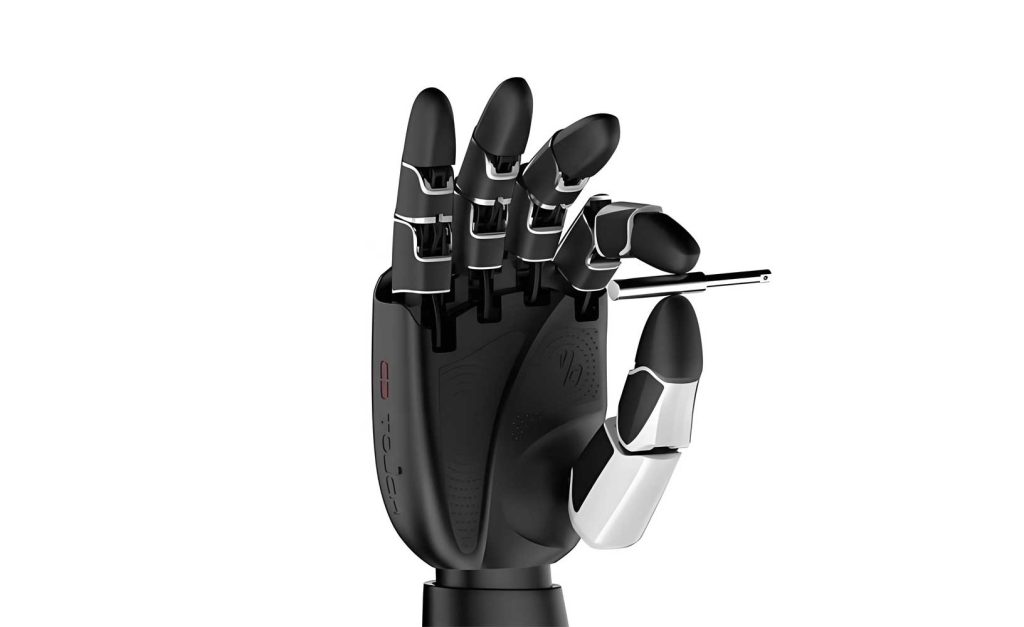
The physical embodiment of a dexterous robotic hand sets the stage for its grasping capabilities. Two primary architectural philosophies dominate: rigid, multi-jointed hands and soft, continuum-structure hands. Each offers distinct paths toward stability.
A. Rigid Dexterous Robotic Hands: Precision through Structure
Rigid hands, constructed from metals and hard plastics, leverage precise kinematics and powerful actuation. Their inherent structural stiffness provides a stable platform for applying controlled forces. Stability in such hands is often analyzed through the lens of form and force closure. A grasp achieves force closure if the contact forces can balance any external wrench applied to the object. This can be assessed using the grasp matrix $\mathbf{G}$, which maps contact forces $\mathbf{f}_c$ to the net wrench on the object $\mathbf{w}$:
$$
\mathbf{w} = \mathbf{G} \mathbf{f}_c
$$
A grasp is force-closed if $\mathbf{G}$ has full row rank and there exists a set of contact forces within friction cones that can generate wrenches in all directions. The quality of a stable grasp configuration is often quantified by metrics like the largest-inscribed sphere radius within the wrench space, computed from the convex hull of possible wrenches. Anthropomorphic design—featuring opposable thumbs, abduction/adduction degrees of freedom, and palm curvature—enhances the adaptability of the grasp configuration to diverse object shapes, directly contributing to stability by increasing possible contact points and force directions.
B. Soft Dexterous Robotic Hands: Stability through Conformity
Soft robotic hands, made from elastomers and compliant materials, embrace a different stability paradigm. Instead of resisting deformation, they conform to object geometry, maximizing contact area and distributing contact forces. This passive adaptability is their primary stability mechanism. However, their inherent compliance can be a drawback when resisting external perturbations. A key research thrust is variable stiffness. The effective stiffness $K_{eff}$ of a soft actuator can be modulated through mechanisms like pneumatic pressure antagonism, layer jamming, or tendon routing. For a simple pneumatic bending actuator, the relationship between internal pressure $P$, chamber geometry, material modulus $E$, and output force $F$ is highly nonlinear. A simplified model for blocked force might be:
$$
F \approx \psi(P, E, A_{chamber})
$$
where $\psi$ is a complex function and $A_{chamber}$ is the cross-sectional area. The challenge lies in modeling this relationship accurately for control. The table below contrasts the stability characteristics of the two architectures.
| Feature | Rigid Dexterous Hand | Soft Dexterous Hand |
|---|---|---|
| Primary Stability Mechanism | Form/Force Closure, Precise Force Control | Passive Conformity, Distributed Contact |
| Modeling for Control | Well-defined kinematics/dynamics (e.g., $\mathbf{q} = f(\boldsymbol{\theta})$) | Highly nonlinear, often data-driven or simplified (e.g., constant curvature) |
| Advantage for Stable Grasp | High load capacity, precise manipulation, predictable behavior | Intrinsic safety, adaptability to unknown shapes, robust to pose errors |
| Challenge for Stable Grasp | Sensitive to calibration errors, requires precise sensing, can damage fragile objects | Limited fine manipulation, lower peak force, difficult to model for active stability control |
| Typical Grasp Strategy | Fingertip precision grasp, enveloping power grasp | Enveloping power grasp, jamming-based encapsulation |
II. Contact State Analysis and Estimation
Before and during a grasp, understanding the state of contact between the dexterous robotic hand and the object is crucial for stability. This estimation can be achieved through two complementary sensing paradigms.
A. Estimation via Exteroceptive (Tactile) Sensing
Tactile sensors mounted on the hand’s surface provide direct measurements of the contact event. They vary in transduction principle and information output. Key estimation tasks include:
1. Contact Geometry Estimation: Determining where and how the hand touches the object. For an array-based tactile sensor (e.g., a taxel grid), contact location and local shape can be inferred from the pressure distribution pattern $\mathbf{P}_{grid}$. A centroid $(x_c, y_c)$ can be calculated:
$$
x_c = \frac{\sum_i \sum_j P_{ij} \cdot x_{ij}}{\sum_i \sum_j P_{ij}}, \quad y_c = \frac{\sum_i \sum_j P_{ij} \cdot y_{ij}}{\sum_i \sum_j P_{ij}}
$$
More advanced processing, like fitting a local surface normal $\mathbf{n}$ or curvature, uses the spatial gradients of $\mathbf{P}_{grid}$.
2. Contact Force/Moment Estimation: Many tactile sensors directly output a force vector $\mathbf{f}_{tact} = [f_x, f_y, f_z]^T$ at a contact patch. For a multi-fingered grasp, the collection of all tactile force vectors contributes to the overall grasp wrench. The moment at a contact point $i$ can be estimated as $\boldsymbol{\tau}_i = \mathbf{r}_i \times \mathbf{f}_i$, where $\mathbf{r}_i$ is the lever arm from the sensor origin.
3. Contact Detection & Classification: A simple threshold on the norm of the tactile signal, $||\mathbf{f}_{tact}|| > \delta$, indicates contact. Dynamic tactile sensors (e.g., based on vibration) can classify the contact type (e.g., stick vs. slip initiation) by analyzing high-frequency spectral components.
B. Estimation via Proprioceptive Sensing
This approach uses sensors internal to the hand (joint encoders, motor current, tendon tension) to infer contact state, offering a robust and often lower-cost alternative. The core idea is to detect discrepancies between the expected and observed state of the hand’s actuators.
1. Contact Detection: In a position-controlled dexterous robotic hand, an unexpected halt in joint motion (i.e., encoder values $\boldsymbol{\theta}$ stop changing despite motor command) suggests contact. In a force-controlled or compliant system, a deviation in expected motor current $\Delta I$ or tendon tension $\Delta T$ can indicate an external contact force.
2. Contact Force & Location Estimation: For a compliant joint with known stiffness $\mathbf{K}_j$, the interaction force $\mathbf{f}_{ext}$ can be estimated from the joint deflection $\Delta \boldsymbol{\theta}$: $\mathbf{f}_{ext} \approx \mathbf{J}^{-T} \mathbf{K}_j \Delta \boldsymbol{\theta}$, where $\mathbf{J}$ is the Jacobian at the suspected contact link. Estimating the exact location of contact along a link is more challenging and often requires active probing or a model of the link’s compliance. For an underactuated or tendon-driven finger, the relationship between tendon tension $T$, joint torques $\boldsymbol{\tau}$, and external force is governed by the structure matrix $\mathbf{R}$: $\boldsymbol{\tau} = \mathbf{R} T$. An external force will create a disturbance observable in the tension required to maintain posture.
| Aspect | Exteroceptive (Tactile) Sensing | Proprioceptive Sensing |
|---|---|---|
| Primary Signal | Direct contact pressure, force, vibration | Joint angle, motor current/torque, tendon tension |
| Contact Location | High spatial resolution (mm-scale) | Low resolution (often limited to which link) |
| Contact Force | Direct, 3D vector often available | Indirect, requires model, estimates resultant |
| Key Advantage | Rich, direct information about interaction | Robust, no exposed electronics, lower cost |
| Main Limitation | Complex integration, durability concerns, wiring | Ambiguous estimations, limited to detecting events |
III. Grasp State Detection and Recognition
Once a grasp is established, maintaining its stability requires continuous monitoring to detect and classify undesired object motion relative to the dexterous robotic hand. This is fundamentally about detecting slip, which can be categorized by its nature.
A. Detection of Gross Slip (Global Relative Motion)
This occurs when the entire object shifts significantly within the grasp. Detection methods often rely on tracking clear, low-frequency signals.
- Force-Based: A sustained drop in the measured grasp force normal component $f_n$ below a friction-based threshold ($f_n < \frac{f_{t}}{\mu}$, where $f_t$ is tangential load) indicates slip. Direct measurement of tangential force $f_t$ rising can also be a precursor.
- Displacement-Based: Using markers or visual tracking to detect object motion relative to the hand frame.
- Vibration-Based: Gross slip often excites specific low-frequency bands in accelerometer or dynamic tactile sensor data. A threshold on the power spectral density $PSD(f)_{low}$ can trigger detection.
B. Detection of Incipient Slip (Local Relative Motion)
This is the initial, localized micro-slip at the contact interface before gross motion occurs. Its detection is critical for proactive stabilization and is a hallmark of human grasping. It relies on high-frequency or high-resolution transient signals.
- High-Frequency Vibration: The break-away of microscopic contact points generates high-frequency vibrations (~100-1000 Hz). The key is to monitor the high-frequency energy $E_{HF} = \int_{f_{high1}}^{f_{high2}} PSD(f) df$. A sudden spike in $E_{HF}$ is a robust indicator of incipient slip.
- Tactile Image Shear: For high-resolution optical tactile sensors (e.g., GelSight, TacTip), incipient slip manifests as a shear deformation field $\mathbf{S}(x,y,t)$ in the contact surface pattern. By tracking the motion of embedded markers or texture, the shear strain rate $\dot{\boldsymbol{\epsilon}}_s$ can be computed. A non-zero $\dot{\boldsymbol{\epsilon}}_s$ signals local slip.
- Friction Model-Based: Given an estimate of the friction coefficient $\mu$ and normal force $f_n$, the maximum allowable tangential force before slip is $f_{t, max} = \mu f_n$. Monitoring the ratio $\eta = \frac{f_t}{f_{t, max}}$ (often called the “friction utilization ratio”) and detecting when $\eta \rightarrow 1$ can predict slip.
The general process can be summarized by a decision boundary. For a vibration-based detector, a common classifier rule might be:
$$
\text{If } \frac{E_{HF}(t)}{E_{HF_{baseline}}} > \Gamma \quad \text{then} \quad \text{SLIP DETECTED}
$$
where $\Gamma$ is a tuned threshold and $E_{HF_{baseline}}$ is the energy during static gripping.
IV. Control Strategies for Stable Grasping
Integrating the above sensing capabilities, control strategies for a dexterous robotic hand aim to achieve and maintain a stable grasp in the face of disturbances. These strategies fall along a spectrum from traditional model-based to modern learning-based approaches.
A. Traditional and Model-Based Control
These methods rely on an explicit, often physics-based, model of the hand-object system.
1. Force Closure / Impedance Control: A canonical approach is to control the internal grasp forces to reside within the force-closure region. This can be framed as a quadratic programming problem: minimize $||\mathbf{f}_c||$ subject to $\mathbf{G}\mathbf{f}_c = \mathbf{w}_{ext}$ and $\mathbf{f}_c \in \mathcal{FC}$ (friction cone constraints). Impedance control regulates the relationship between contact force error and position/velocity adjustment: $\mathbf{f}_{cmd} = \mathbf{K}_d(\mathbf{x}_d – \mathbf{x}) + \mathbf{B}_d(\dot{\mathbf{x}}_d – \dot{\mathbf{x}})$, providing compliant and stable interaction.
2. Slip-Preventive Control: This reactive strategy directly uses slip detection signals. A common architecture is a hybrid force/position loop with a slip-triggered force increment.
$$
f_{n, cmd}(t) = f_{n, base} + K_p \cdot \mathbb{I}_{slip}(t) + K_i \int \mathbb{I}_{slip}(\tau)d\tau
$$
where $\mathbb{I}_{slip}(t)$ is an indicator function (e.g., the output of the slip detector in Section III), and $f_{n, base}$ is a nominal grip force. This increases the normal force upon slip detection, raising the friction limit.
3. Grasp Force Optimization: Given a known or estimated object mass $m$ and friction coefficient $\mu$, a minimum required normal force $F_{n, min}$ to resist gravity can be computed. For a simple two-finger pinch grasp against gravity: $2 \mu F_n \geq m g$. A stable grasp controller then strives to apply $F_n = F_{n, min} + \Delta$, where $\Delta$ is a safety margin.
B. Learning-Based and Data-Driven Control
For complex, high-DOF dexterous robotic hands or uncertain environments, learning methods have shown great promise.
1. Reinforcement Learning (RL): The grasping task is formulated as a Markov Decision Process (MDP). The state $\mathbf{s}_t$ may include joint angles, tactile readings, and object pose. The action $\mathbf{a}_t$ is motor commands. The reward $r_t$ is shaped to encourage stability (e.g., +1 for maintaining hold, -1 for drop, -0.01 for high energy consumption). The policy $\pi(\mathbf{a}|\mathbf{s})$, often a deep neural network, is trained to maximize cumulative reward. The Q-learning update rule is:
$$
Q(\mathbf{s}_t, \mathbf{a}_t) \leftarrow Q(\mathbf{s}_t, \mathbf{a}_t) + \alpha \left[ r_{t+1} + \gamma \max_{\mathbf{a}} Q(\mathbf{s}_{t+1}, \mathbf{a}) – Q(\mathbf{s}_t, \mathbf{a}_t) \right]
$$
2. Tactile Servoing: Using tactile images $\mathbf{I}_{tact}$ as feedback, a controller is learned to drive tactile features $\phi(\mathbf{I}_{tact})$ to a desired state $\phi^*$. This can be done via supervised learning from demonstration or self-supervised exploration. The control command $\mathbf{u}$ is generated by a network: $\mathbf{u} = g_{\psi}(\phi(\mathbf{I}_{tact}), \phi^*)$, where $\psi$ are learned parameters.
| Strategy | Key Principle | Requirements | Pros & Cons for Stable Grasping |
|---|---|---|---|
| Force Closure / Impedance | Maintain forces within stable wrench space; regulate force-position relationship. | Accurate contact model, friction parameters, good kinematics. | + Theoretically grounded, predictable. – Sensitive to model inaccacies, complex for high-DOF hands. |
| Slip-Preventive (Reactive) | Increase grasp force upon detection of slip signals. | Robust slip detection mechanism (tactile/vibration). | + Intuitive, relatively simple to implement, model-free. – Reactive, not anticipatory; can apply excessive force. |
| Reinforcement Learning | Learn control policy through trial-and-error to maximize stability reward. | Large amounts of training data (sim/real), careful reward shaping. | + Can handle complexity, discover novel strategies, adapt. – Sample inefficient, sim2real transfer challenge, less interpretable. |
| Tactile Servoing | Use raw or processed tactile feedback directly in a control loop. | Rich, reliable tactile sensing; mapping from tactile to action. | + Exploits rich contact information, enables fine adjustments. – Requires calibration; learning the mapping can be non-trivial. |
V. Discussion, Challenges, and Forward Perspective
The quest for stable grasping with a dexterous robotic hand has evolved from purely geometric and force-based analysis to a sophisticated integration of advanced mechanics, multimodal sensing, and intelligent control. While rigid hands excel in precision and power, soft hands offer unparalleled adaptability and safety. The fusion of these paradigms—creating hybrid rigid-soft hands with variable stiffness—appears a promising direction for achieving both stability and dexterity.
Significant challenges remain. For soft dexterous robotic hands, developing accurate yet computationally efficient dynamic models for real-time control is nontrivial. The equation of motion for a continuum soft finger is a partial differential equation, often simplified to an ordinary differential equation via assumed modes or finite element methods, but at a cost to accuracy. For all hands, the reliable estimation of key physical parameters like friction coefficients ($\mu$) and object mass ($m$) in real-time, during the grasp, is an open problem. Furthermore, the integration of multi-modal sensing (vision, proprioception, exteroceptive touch) into a coherent, robust state estimation framework is essential for operation in dynamic, cluttered environments.
The future of stable grasping lies in closing the loop between perception, planning, and control with increasing autonomy. Learning-based methods, especially deep reinforcement learning and imitation learning, are rapidly advancing the capabilities of dexterous robotic hands in simulation. The critical hurdle is transferring these policies to the physical world (the sim2real gap). Techniques like domain randomization and learning in differentiable physics simulators are vital. Moreover, the emergence of large language and vision-language models offers a tantalizing possibility: using natural language to specify grasp stability objectives or to generate high-level corrective actions based on a semantic understanding of the task and object properties.
Ultimately, the goal is to develop dexterous robotic hands that exhibit what humans take for granted: the ability to grasp an object, sense its stability through rich haptic feedback, and make unconscious, millisecond adjustments to maintain that hold while performing a task. Achieving this will unlock the full potential of humanoid robots, enabling them to be truly helpful partners in our homes, workplaces, and beyond. The path forward requires continued interdisciplinary innovation across mechanics, materials science, sensor design, and artificial intelligence.