
As a researcher in robotics and artificial intelligence, I have observed the rapid evolution of humanoid robots, driven by the deep integration of AI and robotic technologies. These advanced systems are transitioning from laboratory settings to diverse real-world applications, including industrial automation, healthcare, entertainment, and rescue operations. The market for humanoid robots is experiencing exponential growth, with projections indicating a global scale of billions of dollars by 2030. This expansion underscores the necessity for modular development and efficient industry chain collaboration. However, the lack of standardized interfaces poses significant barriers to scalability and commercialization. In this article, I explore the critical need for interface standardization in humanoid robots, addressing issues such as performance, safety, reliability, compatibility, and environmental adaptability. By systematically analyzing the current state, classifying interfaces, and identifying technical challenges, I propose a framework for standardization efforts to support the widespread adoption of humanoid robots.
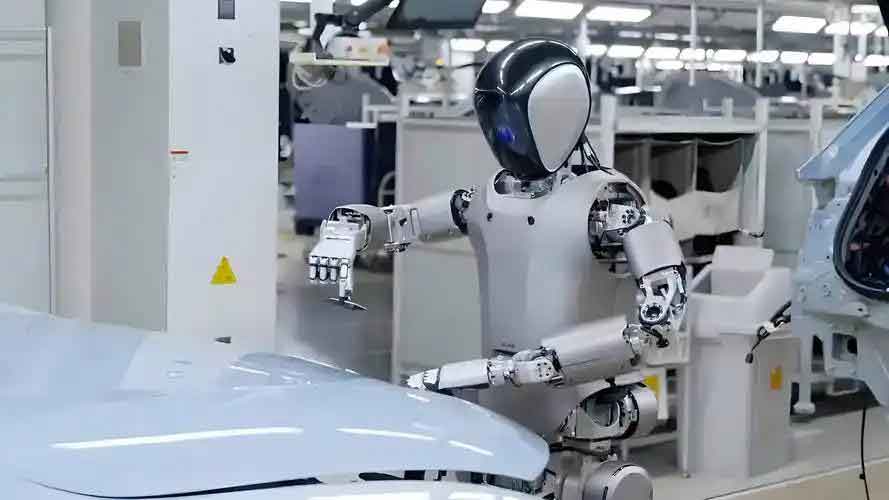
The development of humanoid robots is accelerating, with their deployment in various sectors highlighting the importance of robust interface systems. Interfaces serve as the critical links between sensors, processors, and actuators, enabling humanoid robots to perceive, decide, and act in complex environments. Without standardization, inconsistencies in hardware and software interfaces lead to increased integration costs, reduced interoperability, and heightened safety risks. For instance, in industrial settings, humanoid robots must interact with existing machinery and human workers, requiring seamless data exchange and physical coordination. Similarly, in service applications, such as healthcare or customer service, humanoid robots need to process multimodal inputs and execute precise actions reliably. The absence of unified standards hampers innovation and slows down the adoption of humanoid robots across industries. Therefore, as an advocate for technological advancement, I emphasize the urgency of establishing comprehensive standards to address these challenges and foster a cohesive ecosystem for humanoid robots.
To understand the standardization landscape, it is essential to review the current efforts in this domain. Internationally, organizations like the International Organization for Standardization (ISO) and the International Electrotechnical Commission (IEC) have initiated work in robotics, but specific standards for humanoid robots remain limited. For example, ISO/TC 299 focuses on general robotics, excluding military and toy applications, and has published numerous standards, yet none specifically target the unique interfaces of humanoid robots. Similarly, IEC/TC 129 addresses power system robots but has not yet ventured into humanoid robot standardization. Domestically, various institutions and companies have begun developing standards related to datasets, classification, and technical specifications for humanoid robots. However, interface standardization has not been systematically addressed, leading to fragmented approaches. This gap highlights the need for coordinated efforts to define interface requirements that ensure compatibility and performance across different humanoid robot platforms.
Humanoid robot interfaces can be broadly categorized into three types based on their functions: perception input interfaces, decision control interfaces, and execution output interfaces. Each category involves specific hardware and software components that must work in harmony to achieve the desired functionality. The following table summarizes these interface categories, detailing their hardware, software, and primary functions.
| Interface Category | Hardware Components | Software Components | Primary Functions |
|---|---|---|---|
| Perception Input Interfaces | Cameras, microphones, force sensors, IMUs, tactile sensors | Object detection algorithms, voice recognition, data fusion algorithms | Acquire environmental data, enable scene perception and interaction |
| Decision Control Interfaces | GPUs, NPUs, TPUs, high-speed communication lines | Real-time control algorithms, kinematic solvers, fault detection algorithms | Process data, make decisions, coordinate movements |
| Execution Output Interfaces | Servo systems, linear actuators, end-effectors, displays | Motion control algorithms, gesture generation algorithms | Execute physical actions, enable human-robot interaction |
Perception input interfaces are crucial for humanoid robots to interact with their surroundings. They connect various sensors to data processing modules, allowing the robot to gather information about the environment and its own state. For example, visual sensors provide image data, while force sensors measure torque and pressure. The integration of these inputs requires sophisticated algorithms to fuse multimodal data, which can be challenging due to differences in data formats and sampling rates. In mathematical terms, the data fusion process can be represented as a function combining multiple inputs: $$ F(x_1, x_2, \dots, x_n) = \sum_{i=1}^{n} w_i \cdot f_i(x_i) $$ where \( x_i \) denotes data from different sensors, \( w_i \) represents weighting factors, and \( f_i \) are transformation functions. Standardizing these interfaces would ensure that data from diverse sensors can be seamlessly integrated, improving the accuracy and responsiveness of humanoid robots.
Decision control interfaces act as the central nervous system of humanoid robots, facilitating communication between the main processor and various components. These interfaces handle tasks such as resource allocation, real-time data transmission, and system diagnostics. A key challenge is the coordination of heterogeneous computing resources, like GPUs and NPUs, which require efficient task scheduling. The performance of these interfaces can be quantified using metrics like latency and throughput. For instance, the communication delay \( \delta \) in a control bus interface can be modeled as: $$ \delta = \frac{L}{B} + P $$ where \( L \) is the data packet length, \( B \) is the bandwidth, and \( P \) represents processing delays. Standardization efforts should define acceptable ranges for such parameters to ensure that humanoid robots can perform complex decision-making tasks without bottlenecks.
Execution output interfaces drive the physical movements and interactions of humanoid robots. They translate control signals into actions, such as joint rotations or facial expressions. Reliability and safety are paramount here, as failures could lead to accidents in human-involved scenarios. For example, the torque output \( \tau \) in a rotational joint can be controlled using a PID algorithm: $$ \tau = K_p e + K_i \int e \, dt + K_d \frac{de}{dt} $$ where \( e \) is the error between desired and actual positions, and \( K_p \), \( K_i \), and \( K_d \) are gain constants. Standardizing these interfaces would involve specifying mechanical dimensions, electrical parameters, and safety protocols to prevent issues like overloading or short circuits. This is especially important for humanoid robots operating in dynamic environments where precision and reliability are critical.
Technical challenges in humanoid robot interfaces are multifaceted and impact their overall performance. For perception input interfaces, the primary issue is multimodal data fusion. Sensors produce data in various formats, such as images, audio, and force measurements, which must be combined to form a coherent understanding of the environment. The table below outlines key challenges and their implications for humanoid robots.
| Interface Type | Technical Challenges | Impact on Humanoid Robots |
|---|---|---|
| Perception Input | Data heterogeneity, hardware incompatibility, real-time transmission limits | Reduced perception accuracy, increased integration costs, delayed responses |
| Decision Control | Heterogeneous computing coordination, data integrity issues, fault tolerance | Inefficient resource use, control errors, system instability |
| Execution Output | Safety mechanism reliability, environmental adaptability, precision control | Risk of accidents, limited application scope, maintenance challenges |
In perception input interfaces, the diversity of sensor types exacerbates integration difficulties. For instance, cameras may output high-resolution video streams, while force sensors provide low-frequency analog signals. This disparity requires complex adapters and algorithms, increasing the system’s complexity and cost. Moreover, the transmission bandwidth must support high data rates to avoid delays. The required bandwidth \( B \) can be estimated as: $$ B = \sum_{i=1}^{m} f_i \cdot r_i $$ where \( f_i \) is the sampling frequency and \( r_i \) is the data rate per sample for each sensor type. Without standardization, humanoid robots may suffer from data loss or latency, impairing their ability to react in real-time scenarios.
Decision control interfaces face challenges in managing heterogeneous computing resources. Humanoid robots often incorporate multiple processors, such as GPUs for parallel processing and NPUs for neural network inferences. Efficient task scheduling is essential to maximize performance. The scheduling efficiency \( \eta \) can be expressed as: $$ \eta = \frac{T_{\text{useful}}}{T_{\text{total}}} \times 100\% $$ where \( T_{\text{useful}} \) is the time spent on productive computations and \( T_{\text{total}} \) is the total available time. Standardization could define interfaces for task allocation and data sharing, ensuring that computational resources are utilized optimally. Additionally, data integrity in control buses is critical; errors in transmission can lead to incorrect commands, potentially causing the humanoid robot to malfunction. Checksum mechanisms and error-correcting codes should be standardized to mitigate this risk.
Execution output interfaces must address safety and environmental adaptability. Humanoid robots operating in close proximity to humans require robust safety features, such as collision detection and emergency braking. The response time \( t_r \) of a safety mechanism can be critical and is given by: $$ t_r = t_d + t_p $$ where \( t_d \) is the detection time and \( t_p \) is the processing time. Standardization should specify maximum allowable response times to ensure prompt reactions to hazards. Furthermore, environmental factors like temperature, humidity, and electromagnetic interference can degrade interface performance. For example, the operational temperature range \( T_{\text{op}} \) should be defined to prevent failures: $$ T_{\text{min}} \leq T_{\text{op}} \leq T_{\text{max}} $$ where \( T_{\text{min}} \) and \( T_{\text{max}} \) are the minimum and maximum tolerable temperatures. By establishing these standards, humanoid robots can maintain reliability across diverse conditions.
Standardization work for humanoid robot interfaces should focus on five core areas: performance, safety, reliability, compatibility, and environmental adaptability. Each area requires specific metrics and guidelines to ensure that interfaces meet the demands of real-world applications. The following table summarizes the key standardization needs for humanoid robots, including proposed indicators and their importance.
| Standardization Area | Key Indicators | Description and Importance |
|---|---|---|
| Performance | Data rate, latency, control precision | Ensures real-time operation and accurate task execution for humanoid robots |
| Safety | Data integrity, fault tolerance, emergency response | Protects against hazards and ensures secure human-robot interaction |
| Reliability | MTBF, error rates, durability | Reduces failures and maintenance needs in humanoid robots |
| Compatibility | Mechanical dimensions, electrical specs, protocol support | Enables interoperability between components from different vendors |
| Environmental Adaptability | Temperature range, IP rating, EMI resistance | Ensures functionality in varying conditions for humanoid robots |
Performance standards are vital for humanoid robots to handle high-volume data and complex computations. For instance, the data transmission rate \( R \) should be standardized to support real-time processing: $$ R \geq \frac{D_{\text{total}}}{t_{\text{max}}} $$ where \( D_{\text{total}} \) is the total data volume and \( t_{\text{max}} \) is the maximum allowable time. Similarly, control precision \( \epsilon \) for joint movements can be defined as: $$ \epsilon = | \theta_{\text{actual}} – \theta_{\text{desired}} | \leq \epsilon_{\text{max}} $$ where \( \theta \) represents joint angles and \( \epsilon_{\text{max}} \) is the tolerated error. By setting these benchmarks, humanoid robots can achieve smoother and more accurate motions, enhancing their usability in tasks like assembly or navigation.
Safety standards must address both physical and cybersecurity aspects of humanoid robots. Data integrity mechanisms, such as cyclic redundancy checks (CRC), can be modeled as: $$ \text{CRC}(data) = \text{remainder of } \frac{data \cdot x^k}{G(x)} $$ where \( G(x) \) is the generator polynomial. This ensures that transmitted data is error-free, reducing the risk of control failures. Additionally, safety protocols should include fail-safe modes for emergencies, such as automatic shutdown in case of overload. Standardizing these features will build trust in humanoid robots, especially in applications involving close human interaction.
Reliability standards focus on minimizing failures and extending the operational life of humanoid robots. Metrics like Mean Time Between Failures (MTBF) are crucial: $$ \text{MTBF} = \frac{\text{Total Operating Time}}{\text{Number of Failures}} $$ Higher MTBF values indicate more reliable interfaces, which is essential for humanoid robots in critical roles, such as healthcare or disaster response. Standardization should also cover redundancy and error correction in data storage to prevent data loss. For example, using Reed-Solomon codes for error correction can enhance reliability: $$ C(x) = D(x) \cdot x^{n-k} \mod G(x) $$ where \( C(x) \) is the encoded data, \( D(x) \) is the original data, and \( G(x) \) is the generator polynomial. By adopting such standards, humanoid robots can operate continuously with minimal downtime.
Compatibility standards ensure that components from different manufacturers can be integrated seamlessly into humanoid robots. This includes mechanical aspects, such as connector sizes, and electrical aspects, like voltage levels. For instance, the allowable voltage range \( V \) for an interface can be specified as: $$ V_{\text{min}} \leq V \leq V_{\text{max}} $$ Similarly, communication protocols should be standardized to support plug-and-play functionality. This reduces development time and costs, fostering innovation in the humanoid robot industry. Compatibility is particularly important for modular humanoid robots, where interchangeable parts enable customization for various tasks.
Environmental adaptability standards enable humanoid robots to function in diverse conditions. Temperature tolerance, for example, can be defined using a thermal model: $$ \Delta T = \frac{P}{h \cdot A} $$ where \( \Delta T \) is the temperature rise, \( P \) is power dissipation, \( h \) is the heat transfer coefficient, and \( A \) is the surface area. Standards should set limits for \( \Delta T \) to prevent overheating. Additionally, Ingress Protection (IP) ratings define resistance to dust and water, which is critical for humanoid robots in outdoor or harsh environments. Electromagnetic compatibility (EMC) standards, such as limits on emission and immunity, ensure that interfaces are not affected by interference. By addressing these factors, humanoid robots can be deployed in a wider range of applications, from manufacturing floors to search-and-rescue missions.
In conclusion, the standardization of interfaces is a cornerstone for the advancement of humanoid robots. It addresses critical issues in performance, safety, reliability, compatibility, and environmental adaptability, enabling these systems to achieve their full potential. As the demand for humanoid robots grows across sectors, standardized interfaces will facilitate modular design, reduce costs, and enhance interoperability. This, in turn, accelerates innovation and market adoption. I believe that collaborative efforts among stakeholders—including researchers, manufacturers, and standardization bodies—are essential to develop and implement these standards. By doing so, we can build a robust foundation for the future of humanoid robots, ensuring they become integral to our daily lives and industries. The journey toward standardized humanoid robots is not just a technical necessity but a strategic imperative for global technological leadership.