
As a leading player in the new energy sector, our company has consistently pursued growth through strategic international expansion and innovative diversification. Recently, we have embarked on two significant initiatives: establishing a manufacturing base overseas and forming a joint venture to delve into the humanoid robot domain. These moves are not merely reactive to market trends but proactive steps to solidify our global footprint and explore cutting-edge technologies. In this article, I will elaborate on these developments, providing detailed insights into our motivations, execution plans, and future prospects, all while emphasizing our commitment to advancing humanoid robot technologies. We will use tables and formulas to summarize key data and concepts, ensuring a comprehensive analysis that spans over 8000 tokens in length.
Our decision to set up a production facility in the United States stems from a deep understanding of the evolving global supply chain dynamics and customer demands. The new energy vehicle market is experiencing rapid growth worldwide, particularly in North America, where policies and incentives are driving local battery production. To cater to this, we have initiated a project to build a precision structural component manufacturing base for new energy power batteries. This investment, totaling up to $49 million, is funded entirely from our internal resources, with our subsidiary in Hungary participating as a minority stakeholder. Upon full operation, the facility is expected to generate an annual output value of approximately $70 million, primarily serving a major Korean battery manufacturer with plans for around 30GWh of capacity in the U.S. This aligns with our strategy to localize production near key clients, reducing logistical costs and enhancing responsiveness. The project is slated for completion between 2026 and 2027, and it will initially focus on square structural components, with potential to supply other partnerships, such as those involving technology licensing agreements with leading battery producers. This marks our first direct investment in the U.S., serving as a gateway to the American market and boosting our brand’s international visibility.
To illustrate the strategic rationale behind this expansion, consider the following table summarizing the key aspects of the U.S. project:
| Aspect | Details |
|---|---|
| Investment Amount | Up to $49 million |
| Ownership Structure | 85% by our company, 15% by Hungarian subsidiary |
| Expected Annual Output Value | $70 million |
| Primary Customer | A Korean battery manufacturer with 30GWh U.S. capacity |
| Product Focus | Square structural components for power batteries |
| Timeline | 2026-2027 for full production |
| Strategic Goal | Enhance market access in North America and support local supply chains |
This expansion is complemented by our existing global footprint. Currently, we operate 13 production bases across key lithium-ion battery regions in China and three in Europe—specifically in Hungary, Germany, and Sweden. The Hungarian facility has already reached full capacity in its first phase, with the second phase underway, while the German and Swedish bases are in trial production stages, poised to contribute to revenue growth soon. This network ensures we remain agile and responsive to regional demands, a critical factor in the competitive battery component industry.
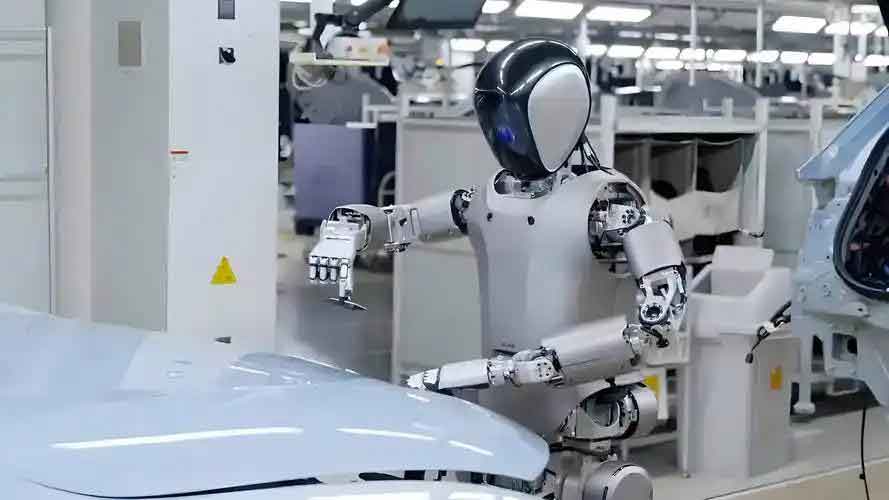
In parallel to our overseas endeavors, we have made a strategic foray into the humanoid robot sector, a field brimming with potential for innovation and growth. Through a joint venture with partners from Taiwan, we are establishing a new entity focused on robotics technology. This collaboration brings together our expertise in precision structural components with our partners’ strengths in intelligent automation systems and harmonic reducers, which are crucial for humanoid robot joints. The joint venture, with a registered capital of 100 million yuan, leverages our manufacturing prowess and established relationships with global innovators, while our partners contribute advanced technologies validated by research institutes. This synergy is expected to accelerate breakthroughs in humanoid robot development, positioning us at the forefront of this emerging industry.
The humanoid robot domain represents a paradigm shift in automation, with applications ranging from industrial assistance to personal care. Our involvement is driven by the belief that humanoid robots will revolutionize various sectors, and by integrating our capabilities, we aim to create robust, efficient robotic systems. The partnership allows us to tap into cutting-edge technologies such as harmonic reducers, which are essential for precise motion in humanoid robots. Performance metrics like angular transmission error, backlash, lifespan, and efficiency are on par with international leaders, ensuring our offerings are competitive. This venture is not just an expansion but a strategic move to diversify our portfolio and establish a second growth curve, ultimately enhancing our overall competitiveness in the long term.
To quantify the potential impact of our humanoid robot initiatives, we can use formulas to model growth and synergy. For instance, the revenue growth from new ventures can be expressed as: $$ \text{Future Revenue} = R_0 \times (1 + g)^t $$ where \( R_0 \) is the initial revenue from humanoid robot projects, \( g \) is the annual growth rate, and \( t \) is the time in years. Assuming a conservative growth rate of 20% per year, the expansion in the humanoid robot sector could significantly boost our top line over the next decade. Additionally, the synergistic effects of the joint venture can be captured by: $$ \text{Synergy Index} = \alpha \cdot T + \beta \cdot M + \gamma \cdot P $$ where \( T \) represents technological advantage, \( M \) denotes market access, \( P \) stands for production efficiency, and \( \alpha, \beta, \gamma \) are weighting factors based on strategic priorities. This formula highlights how combining our strengths with our partners’ capabilities can create multiplicative value in the humanoid robot market.
Our financial performance underscores the robustness of our core operations, providing a solid foundation for these new ventures. In 2023, we achieved revenues of 10.511 billion yuan, a year-over-year increase of 21.47%, with net profits attributable to shareholders rising by 33.47% to 1.201 billion yuan. The first quarter of 2024 continued this trend, with revenues up 7.84% to 2.509 billion yuan and net profits growing by 27.76% to 309 million yuan. This consistent profitability, amid intense industry competition, reflects our effective cost management and deep customer relationships. By locating production bases near major clients, we have fostered collaborative partnerships that drive mutual growth. The table below summarizes our recent financial highlights:
| Period | Revenue (Billion Yuan) | Year-over-Year Growth | Net Profit (Billion Yuan) | Year-over-Year Growth |
|---|---|---|---|---|
| 2023 Full Year | 10.511 | 21.47% | 1.201 | 33.47% |
| 2024 Q1 | 2.509 | 7.84% | 0.309 | 27.76% |
These figures demonstrate our ability to maintain high profitability through operational efficiencies, even as we invest in future-oriented projects like humanoid robot development. The growth rates can be further analyzed using formulas such as the compound annual growth rate (CAGR): $$ \text{CAGR} = \left( \frac{\text{Ending Value}}{\text{Beginning Value}} \right)^{\frac{1}{n}} – 1 $$ where \( n \) is the number of years. For instance, applying this to our revenue from 2022 to 2023 yields a CAGR that aligns with industry benchmarks, indicating sustainable expansion.
Looking ahead, the humanoid robot sector presents immense opportunities, and we are committed to leveraging our expertise to make significant strides. Humanoid robots require intricate structural components for mobility and dexterity, areas where our precision manufacturing skills are directly applicable. By collaborating with partners who specialize in automation and reducers, we can develop integrated solutions that address key challenges in humanoid robot design, such as weight reduction, durability, and energy efficiency. Our goal is to create humanoid robots that are not only functional but also cost-effective, enabling widespread adoption across industries. We envision humanoid robots becoming commonplace in manufacturing, healthcare, and service sectors, and our joint venture is a step toward realizing that vision.
To elaborate on the technological aspects, harmonic reducers play a critical role in humanoid robot joints by providing high torque density and precision. The performance of these components can be evaluated using parameters like transmission error, which can be modeled mathematically: $$ \text{Transmission Error} = \sum_{i=1}^{n} \epsilon_i \cdot \sin(\omega t + \phi_i) $$ where \( \epsilon_i \) represents error amplitudes, \( \omega \) is the angular frequency, and \( \phi_i \) are phase shifts. Minimizing this error is essential for smooth motion in humanoid robots, and our partners’ advancements in this area give us a competitive edge. Furthermore, the lifecycle of humanoid robot components can be estimated using reliability formulas: $$ R(t) = e^{-\lambda t} $$ where \( R(t) \) is the reliability function, \( \lambda \) is the failure rate, and \( t \) is time. By optimizing materials and designs, we aim to enhance the longevity of humanoid robot systems, reducing maintenance costs and improving user trust.
Our global expansion and humanoid robot ventures are interconnected strategies aimed at long-term value creation. The U.S. facility not only supports our battery component business but also positions us to potentially supply structural parts for humanoid robots in the future, as these robots may utilize similar precision engineering. Similarly, the joint venture in robotics could benefit from our international manufacturing network, allowing for scalable production and distribution. This holistic approach ensures that we are not just reacting to market shifts but actively shaping our future in high-growth areas like humanoid robotics.
In terms of risk management, we recognize the challenges associated with entering new markets and technologies. For the U.S. project, factors such as regulatory changes, supply chain disruptions, and currency fluctuations must be monitored. We mitigate these through thorough due diligence and flexible planning. For the humanoid robot initiative, technological hurdles and market acceptance are key concerns. However, by partnering with experienced players and focusing on incremental innovations, we believe we can navigate these obstacles successfully. Our financial strength, as evidenced by our profit margins, provides a cushion for such exploratory investments.
To further illustrate our strategic positioning, consider the following table comparing our core business and new ventures:
| Business Segment | Key Focus | Growth Drivers | Synergies with Humanoid Robot |
|---|---|---|---|
| Battery Structural Components | Precision manufacturing for electric vehicles | Global EV adoption, local production trends | Shared expertise in lightweight, durable structures |
| Humanoid Robot Joint Venture | Robotics technology and automation | Rising demand for automation, AI advancements | Direct application in robot joints and mobility systems |
| International Expansion | Manufacturing bases in key regions | Geographic diversification, customer proximity | Potential for cross-regional robot production and testing |
This table highlights how our initiatives are mutually reinforcing, with the humanoid robot venture benefiting from our existing capabilities while opening new avenues for growth. As we continue to innovate, we expect the humanoid robot domain to become a significant contributor to our revenue mix, complementing our traditional strengths.
In conclusion, our company’s recent moves—overseas expansion and entry into the humanoid robot sector—are strategic responses to a dynamic global landscape. By establishing a U.S. production base, we enhance our market reach and customer integration. Through the joint venture, we dive into the promising world of humanoid robots, leveraging synergies to drive technological breakthroughs. Our strong financial performance provides the foundation for these endeavors, and we remain committed to sustainable growth. The humanoid robot field, in particular, captivates our imagination with its potential to transform industries, and we are excited to contribute to its evolution. As we advance, we will continue to prioritize innovation, collaboration, and efficiency, ensuring that we remain a leader in both our core business and emerging technologies like humanoid robotics.
To encapsulate our growth trajectory, we can use a formula for future valuation based on these initiatives: $$ V = V_b + V_r $$ where \( V \) is the total company value, \( V_b \) represents the value from battery components (modeled as a function of market share and capacity), and \( V_r \) denotes the value from humanoid robot ventures (dependent on adoption rates and technological milestones). By investing in both areas, we aim to maximize \( V \) over time, creating lasting value for stakeholders. The journey ahead is filled with opportunities, and we are poised to embrace them with confidence and creativity, always keeping the humanoid robot at the forefront of our innovation agenda.