
In the rapidly evolving landscape of competitive sports, technological innovation has become a cornerstone for achieving excellence. The integration of artificial intelligence (AI) into athletic training and competition strategies is revolutionizing how coaches prepare and guide their teams. Among these advancements, embodied AI robots—intelligent systems with physical forms that interact with the environment—represent a paradigm shift in supporting coaches’ on-the-spot decision-making. These systems leverage embodied perception, behavior, and cognition to enhance the accuracy, efficiency, and adaptability of decisions during high-stakes competitions. This article explores the logical mechanisms, practical challenges, and pathways for embodied AI robots in coaching, emphasizing their transformative potential through detailed analysis, tables, and formulas.
The concept of embodied intelligence stems from the behavioralist school of AI, which emphasizes learning through interaction with the physical world. Unlike traditional AI that relies on disembodied algorithms, embodied AI robots engage in real-time sensory-motor loops, allowing them to perceive, decide, and act within dynamic environments. In sports, this capability is critical for coaches who must make split-second decisions based on complex, multimodal data. For instance, in a soccer match, an embodied AI robot can capture player movements, ball trajectories, and environmental factors to provide instant tactical advice. This article delves into how embodied AI robots support coaching decisions, the hurdles in their implementation, and strategies to overcome these barriers, all while highlighting the keyword “embodied AI robot” throughout.
Embodied AI robots are characterized by three core elements: a physical body, environmental interaction, and advanced cognitive abilities. Their design enables them to bridge the digital and physical realms, offering coaches a tangible tool for enhancing decision-making. The following sections break down the logical framework through which these robots operate, using tables and formulas to elucidate key concepts. For example, the perceptual capabilities of an embodied AI robot can be modeled using multi-sensor fusion algorithms, such as:
$$ P(t) = \sum_{i=1}^{n} w_i S_i(t) + \epsilon(t) $$
where \( P(t) \) represents the integrated perception at time \( t \), \( w_i \) denotes weights for different sensors (e.g., visual, auditory), \( S_i(t) \) are sensor inputs, and \( \epsilon(t) \) accounts for noise. This formula underscores the robot’s ability to synthesize diverse data streams, a foundation for informed coaching decisions.
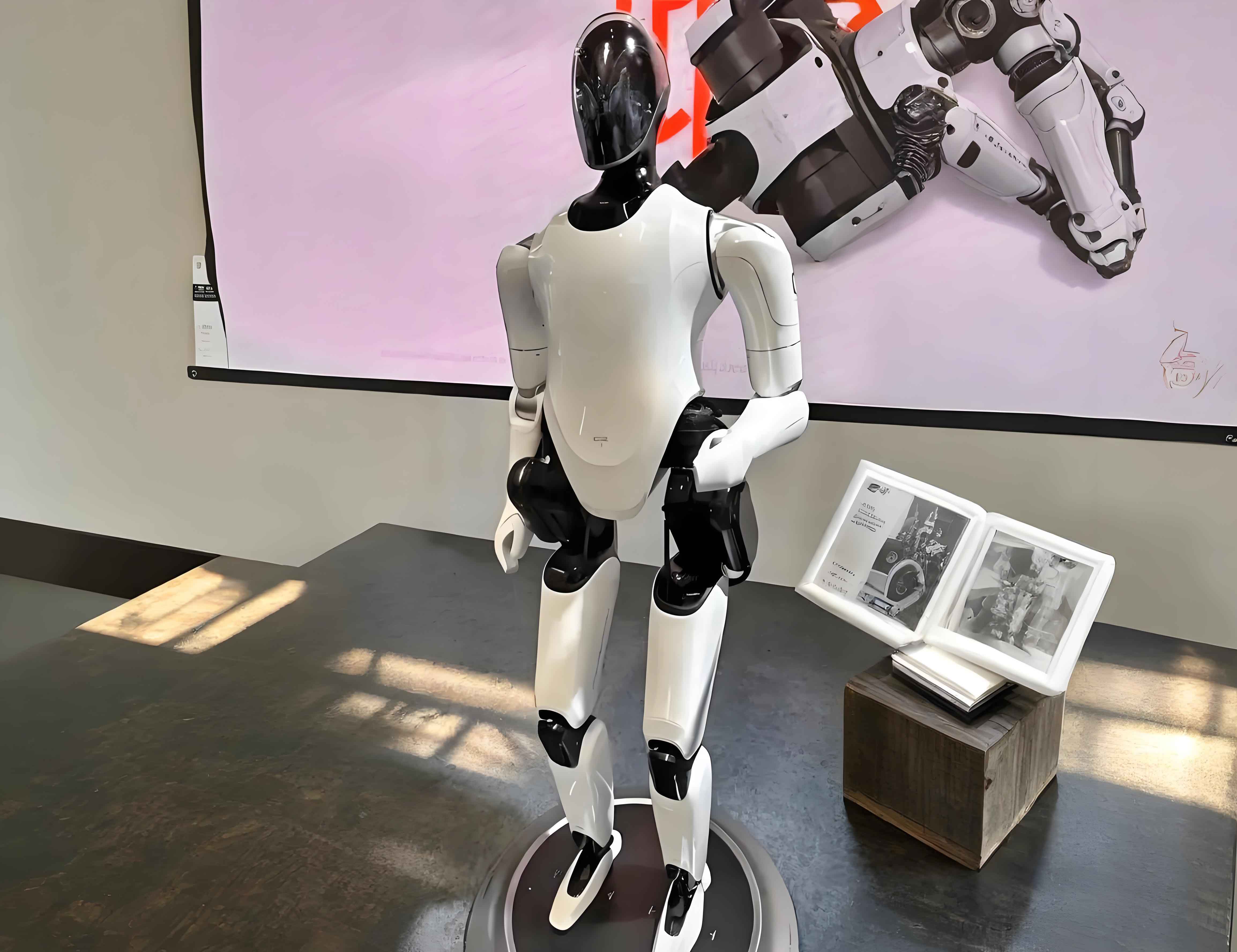
The above image illustrates the industrial application of embodied AI robots, highlighting their physical presence and adaptability. In sports contexts, similar robots can be deployed on sidelines or integrated into training facilities to assist coaches. Their embodied nature allows for seamless interaction with the赛场 environment, capturing nuances that static systems might miss. As we proceed, we will examine how this embodied intelligence translates into practical benefits for coaches, starting with the logical mechanisms of support.
To understand the impact of embodied AI robots, consider the dual-system theory of decision-making, which posits that human choices involve intuitive (heuristic) and analytical (rational) processes. Embodied AI robots augment the analytical system by providing data-driven insights, while also refining intuitive decisions through real-time feedback. The logical mechanisms can be categorized into three areas, as summarized in Table 1.
| Mechanism | Description | Example in Sports |
|---|---|---|
| Embodied Perception | Enhances information capture via multi-modal sensors, improving data accuracy and timeliness. | In basketball, an embodied AI robot uses cameras and inertial sensors to track player fatigue levels. |
| Embodied Behavior | Facilitates collaborative interaction through natural language and gesture recognition. | A robot interprets a coach’s hand signals to adjust defensive strategies in real-time. |
| Embodied Cognition | Strengthens decision quality by integrating sensory data with adaptive learning algorithms. | The robot predicts opponent tactics based on historical patterns and current game dynamics. |
Table 1: Logical mechanisms of embodied AI robots in supporting coaching decisions. Each mechanism leverages the physical embodiment of the robot to bridge gaps in traditional decision-making.
Embodied perception is the first pillar, where embodied AI robots excel at capturing high-fidelity data from the environment. Through multi-modal sensing—combining vision, sound, touch, and even thermal inputs—these robots create a comprehensive digital twin of the赛场. For instance, in a tennis match, an embodied AI robot might employ LiDAR and high-speed cameras to monitor ball speed and player positioning, processing this data with algorithms like:
$$ D_{eff} = \frac{1}{N} \int_{0}^{T} | \mathbf{v}(t) – \mathbf{v}_{ref}(t) | \, dt $$
Here, \( D_{eff} \) quantifies player movement efficiency, where \( \mathbf{v}(t) \) is the velocity vector, \( \mathbf{v}_{ref}(t) \) is an optimal reference, and \( N \) normalizes over time \( T \). This allows coaches to receive instant feedback on performance metrics, reducing the cognitive load of manual observation. The embodied AI robot’s ability to perceive subtle cues, such as an athlete’s微表情 or environmental shifts, adds a layer of depth to decision-making that pure data analysis cannot achieve alone.
Moreover, embodied AI robots enhance perception through adaptive filtering techniques. In noisy stadiums, sensors may suffer from interference, but robots can use Kalman filters to refine data:
$$ \hat{x}_{k|k} = \hat{x}_{k|k-1} + K_k(z_k – H\hat{x}_{k|k-1}) $$
where \( \hat{x}_{k|k} \) is the updated state estimate, \( K_k \) is the Kalman gain, \( z_k \) is the measurement, and \( H \) is the observation matrix. This ensures that coaches receive reliable information, even in chaotic conditions. The embodied AI robot thus acts as an extension of the coach’s senses, capturing details like opponent formations or weather impacts that might otherwise go unnoticed.
Embodied behavior focuses on the interactive dimension, where embodied AI robots engage in natural, bidirectional communication with coaches. Unlike traditional AI systems that require explicit commands, these robots employ advanced human-robot interaction (HRI) paradigms. For example, through speech recognition and gesture analysis, an embodied AI robot can understand a coach’s指令 in real-time, adapting its responses based on context. This is modeled using reinforcement learning frameworks:
$$ Q(s,a) \leftarrow Q(s,a) + \alpha [r + \gamma \max_{a’} Q(s’,a’) – Q(s,a)] $$
In this Q-learning formula, \( Q(s,a) \) represents the value of action \( a \) in state \( s \), \( \alpha \) is the learning rate, \( r \) is the reward, and \( \gamma \) is the discount factor. An embodied AI robot uses this to optimize its交互策略, learning when to offer suggestions or remain passive based on coach feedback. This dynamic interaction reduces latency in decision-making, as the robot anticipates needs rather than waiting for prompts.
Furthermore, embodied AI robots leverage multi-channel交互 to improve collaboration. In a volleyball game, a robot might combine voice commands with eye-tracking data to determine where a coach’s attention lies, then project tactical diagrams onto a screen. This synergy is quantified through交互 efficiency metrics:
$$ IE = \frac{T_{task}}{T_{total}} \times \log(1 + C_{sync}) $$
where \( IE \) is交互 efficiency, \( T_{task} \) is time spent on productive tasks, \( T_{total} \) is total interaction time, and \( C_{sync} \) measures synchronization between robot and coach. Higher \( IE \) values indicate smoother collaboration, enabling faster decision cycles. The embodied AI robot’s physical presence—such as movable arms or displays—facilitates this by providing tangible interfaces that align with human cognitive habits.
Embodied cognition represents the highest level of support, where embodied AI robots integrate perception and behavior to generate intelligent recommendations. Through embodied learning, these robots develop contextual understanding, allowing them to adapt to novel situations. For instance, in a足球 match, an embodied AI robot might analyze historical data and real-time player movements to suggest substitutions, using Bayesian inference:
$$ P(H|E) = \frac{P(E|H) P(H)}{P(E)} $$
Here, \( P(H|E) \) is the posterior probability of a hypothesis (e.g., player A should be substituted), given evidence \( E \) (e.g., fatigue indicators). The robot updates this probability as new data arrives, ensuring decisions are statistically sound. This cognitive ability is enhanced by the robot’s embodied experience—interacting with the赛场 allows it to ground abstract algorithms in physical reality, leading to more trustworthy advice.
Additionally, embodied AI robots employ transfer learning to generalize across sports contexts. A robot trained in basketball might apply similar principles to handball, reducing the need for extensive retraining. This is expressed as:
$$ \mathcal{L}_{transfer} = \mathcal{L}_{source} + \lambda \| \theta – \theta_{source} \|^2 $$
where \( \mathcal{L}_{transfer} \) is the transfer learning loss, \( \mathcal{L}_{source} \) is the loss on the source task, \( \theta \) are the robot’s parameters, and \( \lambda \) is a regularization term. By minimizing this loss, the embodied AI robot retains knowledge from previous environments, accelerating its adaptation to new coaching scenarios. This cognitive flexibility is crucial for handling the unpredictability of competitive sports.
Despite these advantages, the deployment of embodied AI robots in coaching faces significant practical challenges. These hurdles stem from technological limitations,交互 bottlenecks, and ethical concerns, which can undermine the efficacy of decision support. The following sections detail these困境, using examples and formulas to illustrate key points. For instance, in perceptual integration, embodied AI robots often struggle with data fusion under adverse conditions, as shown in Table 2.
| Challenge | Root Cause | Impact on Coaching |
|---|---|---|
| Perceptual Information Integration | Technical constraints like sensor noise and multi-agent coordination issues. | Delayed or inaccurate data, leading to suboptimal tactical calls. |
| Behavioral Interaction Bottlenecks | Natural language processing failures and low algorithm interpretability. | Miscommunication between coach and robot, reducing trust. |
| Ethical Decision-Making Dilemmas | Value biases in algorithms and unclear accountability for decisions. | Risk of unfair strategies or erosion of coach authority. |
Table 2: Practical challenges in using embodied AI robots for coaching decisions. Each challenge highlights areas where embodied intelligence must evolve to be effective.
Perceptual information integration is hampered by technical constraints. Embodied AI robots rely on multiple sensors, but in dynamic sports environments, factors like occlusion or electromagnetic interference can corrupt data. For example, in a crowded basketball court, visual sensors might lose track of players, causing gaps in movement analysis. This is modeled as a signal degradation problem:
$$ SNR = \frac{P_{signal}}{P_{noise}} $$
where \( SNR \) is the signal-to-noise ratio, \( P_{signal} \) is the power of useful data, and \( P_{noise} \) is interference power. Low \( SNR \) values compromise the embodied AI robot’s perception, forcing coaches to rely on incomplete information. Moreover, multi-robot systems—where multiple embodied AI robots collaborate—face coordination challenges. Without standardized protocols, robots may duplicate tasks or conflict, wasting resources. This can be described using game theory:
$$ U_i(a_i, a_{-i}) = R_i(a_i) – C_i(a_i, a_{-i}) $$
Here, \( U_i \) is the utility of robot \( i \), \( a_i \) its action, \( a_{-i} \) others’ actions, \( R_i \) the reward, and \( C_i \) the coordination cost. Suboptimal equilibria in this game lead to inefficient data collection, hindering the embodied AI robot’s support role.
Behavioral interaction bottlenecks arise from limitations in natural language processing and algorithm transparency. Embodied AI robots must understand教练指令 in real-time, but accents, background noise, or slang can confuse speech recognition systems. For instance, in a baseball game, a coach might yell “brushback pitch” in a noisy stadium, but the robot misinterprets it as a different command. The error rate can be quantified as:
$$ E_{NLP} = \frac{N_{mis}}{N_{total}} \times 100\% $$
where \( E_{NLP} \) is the natural language processing error rate, \( N_{mis} \) is the number of misunderstandings, and \( N_{total} \) is total commands. High \( E_{NLP} \) values disrupt the交互 flow, causing delays in decision-making. Additionally, the “black-box” nature of many AI algorithms reduces trust. Coaches may reject an embodied AI robot’s suggestion if they cannot trace its reasoning, as seen in deep learning models where decisions lack explainability. This is captured by the interpretability score:
$$ I = 1 – \frac{H(\text{predictions})}{H(\text{data})} $$
with \( I \) near 0 indicating low interpretability, where \( H \) denotes entropy. Low \( I \) scores make coaches skeptical of the embodied AI robot’s advice, undermining collaboration.
Ethical dilemmas pose a profound challenge, as embodied AI robots influence decisions with moral implications. Value biases can creep into algorithms if training data reflects historical preferences. For example, in soccer, an embodied AI robot might favor offensive strategies because past data shows a coach’s bias, ignoring defensive vulnerabilities. This bias is measurable through fairness metrics:
$$ F = \frac{\sum_{j} | \hat{y}_j – y_j |}{N} $$
where \( F \) is fairness deviation, \( \hat{y}_j \) are robot-generated decisions, \( y_j \) are unbiased benchmarks, and \( N \) is the sample size. High \( F \) values indicate skewed recommendations, potentially leading to unfair play. Moreover, over-reliance on embodied AI robots can erode coach autonomy, creating a “technology dominance” effect. If robots make key decisions, coaches may lose their intuitive edge, and accountability becomes blurred. In legal terms, if a robot’s suggestion causes a loss, who is responsible—the coach, the robot, or the developer? This ambiguity stifles adoption and raises ethical questions about the role of embodied AI robots in sports.
To address these challenges, practical pathways must be developed, focusing on technological innovation,交互 optimization, and ethical governance. These solutions leverage the unique strengths of embodied AI robots while mitigating their weaknesses. Table 3 outlines key strategies, each tied to specific challenges from Table 2.
| Pathway | Action Steps | Expected Outcome |
|---|---|---|
| Break Technological Bottlenecks | Develop adaptive multi-modal perception systems and enhance multi-robot coordination. | Improved data accuracy and real-time processing for better decision support. |
| Optimize Human-Robot Interaction | Implement advanced NLP with noise cancellation and explainable AI algorithms. | Smoother communication and increased trust between coach and robot. |
| Clarify Ethical Boundaries | Establish accountability frameworks and bias mitigation protocols. | Fairer decisions and preserved coach authority in the decision loop. |
Table 3: Practical pathways for enhancing embodied AI robot support in coaching. These steps aim to overcome the hurdles identified earlier.
Breaking technological bottlenecks requires advances in sensor fusion and distributed computing. Embodied AI robots can employ adaptive multi-modal systems that dynamically adjust to environmental conditions. For example, in a rainy football match, a robot might switch from visual to radar-based tracking to maintain perception accuracy. This adaptability is achieved through reinforcement learning algorithms that optimize sensor weights:
$$ w_i(t+1) = w_i(t) + \eta \frac{\partial P}{\partial w_i} $$
where \( w_i \) are sensor weights, \( \eta \) is the learning rate, and \( \frac{\partial P}{\partial w_i} \) is the gradient of perception quality. By continuously updating weights, the embodied AI robot ensures robust data integration. Additionally, multi-robot coordination can be improved using blockchain-inspired protocols for secure, low-latency communication. Robots can share data via a decentralized ledger, reducing conflicts and enhancing collective perception. The efficiency gain is given by:
$$ G_{coord} = \frac{T_{alone}}{T_{together}} $$
with \( G_{coord} > 1 \) indicating faster task completion when embodied AI robots collaborate. This technological leap enables coaches to access comprehensive, real-time insights, empowering faster decisions.
Optimizing human-robot interaction involves enhancing natural language processing and algorithm transparency. Embodied AI robots can integrate contextual awareness into speech recognition, using coaches’ historical patterns to disambiguate commands. For instance, in tennis, if a coach frequently says “net play” during特定 situations, the robot learns to associate this with specific tactics. This is modeled using hidden Markov models (HMMs):
$$ \lambda = (A, B, \pi) $$
where \( \lambda \) is the HMM parameters—transition matrix \( A \), emission matrix \( B \), and initial state distribution \( \pi \). The embodied AI robot uses \( \lambda \) to predict教练 intent, reducing errors. To boost transparency, explainable AI techniques like LIME (Local Interpretable Model 介的解释) can be applied:
$$ \xi(x) = \arg \min_{g \in G} L(f, g, \pi_x) + \Omega(g) $$
Here, \( \xi(x) \) explains prediction \( x \), \( g \) is an interpretable model, \( L \) is a loss function, \( f \) is the complex model, \( \pi_x \) is a local weighting, and \( \Omega(g) \) penalizes complexity. By providing simple explanations for its suggestions, the embodied AI robot builds coach trust, fostering a collaborative environment. Moreover, brain-computer interfaces (BCIs) could be explored for direct neural communication, bypassing speech entirely and enabling seamless interaction.
Clarifying ethical boundaries is crucial for sustainable adoption. Embodied AI robots should be designed with embedded ethical guidelines, such as prioritizing athlete safety and fair play. Bias mitigation can be achieved through adversarial training, where algorithms are exposed to counterfactual scenarios to reduce skewed outcomes. For example, in basketball, a robot might be trained on data that includes diverse战术 styles to avoid offensive biases. The training objective becomes:
$$ \min_{\theta} \max_{\phi} \mathbb{E}[L(\theta, \phi)] $$
where \( \theta \) are robot parameters, \( \phi \) are adversarial parameters, and \( L \) is a loss that penalizes bias. This minimax approach ensures the embodied AI robot generates balanced recommendations. Accountability can be addressed by legal frameworks that define the robot as a tool, with coaches retaining final decision authority. Clear logs of robot suggestions and coach actions should be maintained using blockchain for auditability:
$$ \text{Log} = \{ (t, s, a_{robot}, a_{coach}) \} $$
where each entry includes time \( t \), state \( s \), robot action \( a_{robot} \), and coach action \( a_{coach} \). This traceability resolves责任 disputes, ensuring that embodied AI robots enhance rather than undermine human judgment. Additionally, ongoing ethics training for coaches and developers can foster responsible use, aligning technology with sportsmanship values.
In conclusion, embodied AI robots represent a transformative force in coaching decision-making, offering unparalleled support through embodied perception, behavior, and cognition. By capturing multimodal data, enabling natural交互, and generating adaptive insights, these robots can elevate the quality of on-the-spot decisions in competitive sports. However, realizing this potential requires overcoming technical constraints,交互 bottlenecks, and ethical challenges. Through innovative pathways—such as adaptive感知 systems, explainable AI, and robust governance—embodied AI robots can be integrated effectively into coaching workflows. As technology advances, the synergy between human intuition and robotic analysis will redefine sports strategy, pushing the boundaries of athletic performance. The future of coaching lies in embracing embodied intelligence, where embodied AI robots serve as collaborative partners in the pursuit of excellence.
The journey toward this future involves continuous research and development. For instance, further studies could explore the use of embodied AI robots in training simulations, where they physically interact with athletes to refine skills. Formulas like the ones discussed herein will evolve, incorporating deeper learning models and real-time optimization. Ultimately, the goal is to create a harmonious ecosystem where embodied AI robots amplify human expertise, making sports more dynamic, fair, and exciting. As we move forward, the keyword “embodied AI robot” will remain central to this discourse, symbolizing the fusion of physical presence and artificial intelligence in the service of coaching innovation.