
The discourse surrounding the humanoid robot has decisively shifted from speculative fiction to boardroom and government strategy sessions. The past year has witnessed a remarkable surge in prototype revelations and ambitious corporate roadmaps, signaling that this technology stands on the very threshold of tangible reality. From my vantage point deeply embedded within this transformative wave, the trajectory of the humanoid robot industry is not merely promising; its ultimate epicenter and most dynamic shaping force is poised to emerge from a specific confluence of technological prowess, manufacturing might, and cultural readiness. While the global race is intensifying, the unique ecosystem cultivated here presents an unparalleled foundation for dominance in the era of embodied artificial intelligence.
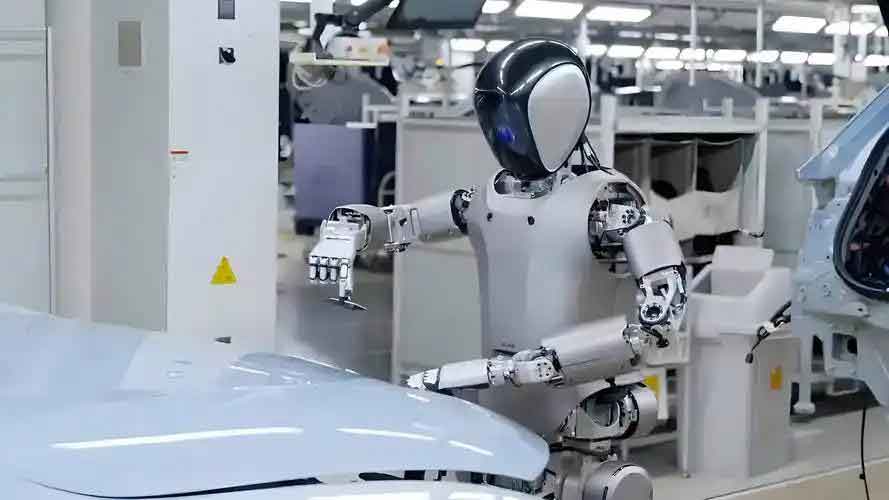
The global landscape for humanoid robot development is rapidly evolving, with major economies recognizing its strategic importance and integrating it into national technology agendas. The focus internationally is sharp on two parallel tracks: enhancing the core capabilities of actuators, sensors, and power systems, and achieving a profound fusion of robotics with breakthrough technologies in artificial intelligence and cognitive computing. This sets a high bar for any contender aiming for leadership. In this context, the foundational advantages that will determine the future industrial格局 can be systematically analyzed. I perceive these advantages as four interdependent pillars that collectively create a formidable launchpad.
The Four Pillars of Competitive Advantage
The first pillar is Technological Accumulation and First-Mover Status. Contrary to being a nascent follower, the ecosystem here has achieved a critical milestone: the demonstrable mastery of full-stack core technologies for humanoid robot development. This encompasses the entire spectrum from high-level AI decision-making (“the brain”) and real-time dynamic motion control (“the cerebellum”) to the physical articulation and force control of the limbs. The production of functional, full-scale humanoid robot prototypes is not a theoretical exercise but an accomplished fact, placing domestic entities in a position of near-parity with leading global developers. Key breakthroughs have been secured in areas fundamental to viable operation:
- Multi-modal Motion Planning: Generating coordinated movement sequences that integrate visual, tactile, and spatial data.
- Dynamic Balance Control: Maintaining stability under external disturbances or on uneven terrain, governed by principles often modeled as:
$$ \tau = J^T F + M(q)\ddot{q} + C(q, \dot{q})\dot{q} + G(q) $$
where $ \tau $ represents joint torques, $ J $ is the Jacobian, $ F $ is external force, $ M $ is the inertia matrix, $ C $ accounts for Coriolis and centrifugal forces, and $ G $ for gravity. - Whole-Body Coordinated Control: Orchestrating the motion of dozens of actuators to perform complex tasks efficiently.
The second pillar is the Depth of Talent and Research. Artificial intelligence research capabilities are recognized as world-class, providing the essential cognitive foundation for the humanoid robot‘s “brain.” More significantly, the output of high-caliber graduates in STEM (Science, Technology, Engineering, and Mathematics) fields now rivals the combined total of many developed nations. This creates a self-reinforcing cycle of innovation, ensuring a continuous pipeline of engineers and scientists capable of tackling the interdisciplinary challenges of humanoid robot development, from advanced mechanics to machine learning algorithms.
The third, and perhaps most decisive, pillar is the Unmatched Industrial and Supply Chain Ecosystem. The manufacturing landscape is unparalleled in its scale, comprehensiveness, and flexibility. It hosts the world’s most extensive, categorized, and complete industrial supply chain system. This is not an advantage that can be easily replicated or substituted. For the humanoid robot industry, which demands precision actuators, specialized sensors, custom semiconductors, advanced materials, and complex assembly, this ecosystem offers rapid prototyping, iterative design, and eventually, cost-effective mass production. As the industry evolves, this supply chain will not just support it but co-evolve and become more sophisticated, creating a powerful, entrenched advantage. The cost structure for key components can be modeled as a function of volume and integration:
$$ C_{total} = \sum_{i=1}^{n} (C_{material_i} + C_{labor_i} + C_{overhead_i}) \times \eta(V, I) $$
where $ \eta $ is an efficiency factor dependent on production volume $ V $ and supply chain integration level $ I $.
The fourth pillar is the Receptive Market and Cultural Environment. Domestic market potential for humanoid robot applications is among the largest globally. More importantly, the cultural disposition, particularly among younger generations, is characterized by a remarkable openness to and enthusiasm for technological innovation. Having grown up during a period of rapid digital transformation, they are early adopters who view advanced technology as a natural tool for progress. This cultural embrace significantly lowers the psychological and practical barriers to commercialization for a humanoid robot. A receptive market accelerates the feedback loop between developers and users, enabling faster iteration, optimization, and the creation of robust, user-centric products. This dynamic is crucial for moving from laboratory prototypes to indispensable tools.
| Pillar | Key Components | Impact on Humanoid Robot Industry |
|---|---|---|
| Technology & First-Mover | Full-stack know-how, dynamic control, working prototypes | Establishes credibility, enables rapid iteration, shortens R&D cycles. |
| Talent & Research | World-class AI, vast STEM graduate pipeline | Fuels continuous innovation, solves complex interdisciplinary problems. |
| Industrial Ecosystem | Comprehensive, agile, scalable supply chain | Dramatically reduces prototyping/manufacturing costs and time, enables scale. |
| Market & Culture | Large potential demand, high tech acceptance | Provides validation, accelerates product-market fit, drives iterative improvement. |
Confronting the Inevitable Challenges
Despite these powerful advantages, the path to a mature humanoid robot industry is not without significant hurdles. Recognizing them is the first step toward formulating effective strategies. The primary challenges align with the critical gaps between a functional prototype and a commercially viable, widely deployed product.
- Performance of Core Components: While progress is evident, the performance, reliability, and energy efficiency of key hardware components—such as high-torque-density actuators, tactile sensors with high resolution and durability, and compact power systems—still require substantial improvement to meet the demands of long-duration, untethered operation in diverse environments.
- Insufficient Demand Pull: The industry is currently largely technology-push driven. Clear, large-scale, and economically compelling application scenarios that can justify the current high costs of humanoid robot deployment are still being defined and proven.
- Lack of Mass-Production Capability: The ability to manufacture humanoid robot units at scale, with consistent quality and radically lower costs, remains unproven. Moving from workshop assembly to automated production lines presents immense engineering and logistical challenges.
- Immature Application Ecosystem and Support Systems: A successful humanoid robot platform requires more than hardware. It needs robust software development kits (SDKs), simulation environments, safety standards, maintenance networks, and training protocols. This holistic support structure is still in its infancy.
The industry is currently in a phase best described as focused on thematic investment and intensive R&D. Commercial success stories are few, and the ultimate competitive landscape is yet to be defined. However, the consensus is that persistent innovation aimed at higher intelligence and lower cost will, through technological accumulation and convergence, inevitably lead to significant commercial breakthroughs. The curtain on human-machine symbiosis has indeed been raised. Within the next 3 to 5 years, we can expect to encounter humanoid robot in various controlled environments. Looking a decade ahead, the vision of a general-purpose robot form factor becoming a household presence moves from fantasy into the realm of possibility.
Strategic Recommendations for Ecosystem Development
To navigate these challenges and solidify the nascent advantages, a coordinated, multi-stakeholder approach is essential. Based on the current industrial dynamics, I propose three strategic thrusts:
1. Foster Strategic Policy and Industrial Planning: Encourage and implement supportive policies that guide the strategic layout of the humanoid robot industry. This includes directing capital towards the innovation chain—from basic research in materials and AI to applied engineering—and creating specialized industrial parks or innovation zones that cluster talent, startups, and suppliers. Policy should incentivize R&D while also beginning to address longer-term questions of ethics, safety, and standardization.
2. Champion National Innovation Consortia Led by Integrators: Support leading humanoid robot companies in forming and steering national-level innovation consortiums. These entities would bring together universities, research institutes, specialized component manufacturers (e.g., for reducers, servo systems, vision chips), and AI companies. The goal is to orchestrate joint assaults on core technological bottlenecks, such as achieving actuator performance metrics defined by:
$$ \text{Power Density} = \frac{\text{Output Power}}{\text{Mass}} \quad \text{and} \quad \text{Energy Efficiency} = \frac{\text{Useful Mechanical Work}}{\text{Total Electrical Energy Input}} $$
A consortium model pools resources, mitigates risk, and accelerates the pace of systemic innovation.
3. Cultivate an Open Industrial Ecosystem to Accelerate Application: Actively build an open, collaborative industrial ecology for the humanoid robot. This involves creating open-source or widely licensed software platforms, modular hardware interfaces, and shared simulation environments. Crucially, it requires partnerships with potential end-user industries—manufacturing, logistics, healthcare, elderly care, hospitality—to co-develop and pilot application scenarios. The cross-pollination of technology is vital; for instance, the automotive industry’s deep expertise in mechanical systems, precision manufacturing, and environmental perception (from autonomous driving) can be profoundly beneficial when integrated into humanoid robot design. This convergence of sectors is already becoming a clear trend, as automotive suppliers pivot capacity towards this new blue-ocean market, effectively opening a “second front” in their business.
The Roadmap: From Prototype to Productivity Engine
The development trajectory for the humanoid robot industry can be projected across several key phases, aligning with technological maturation and market adoption. The following table synthesizes anticipated milestones based on current progress and prevailing industry insights:
| Timeframe | Development Phase | Key Characteristics & Goals |
|---|---|---|
| Present – 2025 | Technology Breakthrough & System Integration | Establishment of initial innovation system. Critical breakthroughs in “brain” (AI), “cerebellum” (real-time control), and “limbs” (actuation). Securing a reliable supply for core components. Multiple competing prototypes from various entities. |
| 2025 – 2027 | Productization & Early Pilots | Whole humanoid robot products reach international advanced levels. Initial low-rate production begins. Demonstrated pilot applications in structured environments like manufacturing, logistics, and specialized (hazardous) tasks. Initial governance frameworks explored. |
| 2027 – 2030 | Ecosystem Formation & Scale-Up | Significant enhancement of technological capabilities. Formation of a secure, competitive industrial and supply chain ecosystem. Emergence of 2-3 globally influential ecosystem leaders and numerous specialized SMEs. Creation of industrial clusters. |
| 2030 – 2035 | Mass Adoption & Economic Integration | Accelerated规模化 development. Broad application across diverse service and productive scenarios. Humanoid robot deeply integrated into the real economy, becoming a significant new engine for economic growth. Potential for market sizes reaching hundreds of billions of dollars. |
This roadmap underscores a critical transition. I am a firm advocate for proactively embracing AI and robotics. The breakthroughs in AI in 2023 have fundamentally expanded the conceivable capabilities of a humanoid robot. This synergy is the catalyst for the current fervor. We are witnessing a paradigm shift where the humanoid robot is poised to evolve from a tool for specific,辅助 tasks into a general-purpose productivity platform. In the coming 5 to 10 years, the impact will be profound. One tangible metric will be seen in infrastructure: the deployment of humanoid robot fleets, each requiring constant data exchange for perception, learning, and remote oversight, is predicted to drive orders-of-magnitude increases in network traffic, potentially up to 100-fold in related sectors. This signifies their transition into core productive assets.
The value proposition of a humanoid robot in this context can be conceptualized by a simplified model that accounts for its general-purpose nature:
$$ V_{hr} = (I \times A) + (M_c \times S) – C_d $$
Where:
- $ V_{hr} $ = Net Value of the Humanoid Robot
- $ I $ = Level of Embodied Intelligence (perception, reasoning, learning)
- $ A $ = Adaptability to unstructured environments and tasks
- $ M_c $ = Marginal Cost of deployment (scaling with volume)
- $ S $ = Scalability of the application
- $ C_d $ = Development and initial unit Cost
The industry’s mission is to maximize the $(I \times A)$ term while driving down $C_d$ and $M_c$ through technological innovation and the power of the supply chain, thereby unlocking positive value across countless scenarios.
Conclusion: Shaping the Embodied Intelligence Era
The age of the humanoid robot is dawning, not as a singular event but as an industrial and technological crescendo built over years of accumulation. The current flurry of activity is merely the visible tip of a vast iceberg of engineering, research, and strategic investment. While the journey ahead involves overcoming substantial challenges related to component performance, cost, and ecosystem development, the direction is clear. The unique combination of foundational strengths—technological readiness, unparalleled manufacturing agility, deep talent reserves, and a culture primed for adoption—creates a powerful gravitational pull for this industry’s future.
The next few years will be decisive, moving from exciting prototypes to the hard engineering of reliability and cost reduction. Success will depend not on isolated efforts, but on the strength of collaboration across the entire value chain—from material scientists and chip designers to AI researchers, integration engineers, and visionary end-users. By fostering open innovation, strategic focus, and cross-industry synergy, the foundation is being laid not just to participate in the humanoid robot revolution, but to actively lead its development and define its role in augmenting human capability and reshaping global productivity for decades to come.