
As a researcher deeply immersed in the field of artificial intelligence, I have witnessed firsthand the transformative shift from virtual intelligence to physical-world interactive intelligence. The convergence of intelligent computation and embodied intelligence represents a pivotal moment in the evolution of AI, marking a departure from traditional paradigms that rely solely on data-driven models. This fusion is not merely a technological advancement; it is a fundamental rethinking of how intelligent systems perceive, learn, and act in complex environments. In this article, I will explore this convergence from multiple dimensions, emphasizing the role of embodied AI robots as key agents in this new era. Through detailed analysis, tables, and mathematical formulations, I aim to provide a comprehensive perspective on how this integration is reshaping our approach to general artificial intelligence.
The concept of embodied intelligence, often realized through embodied AI robots, hinges on the idea that intelligence emerges from the interaction between an agent and its physical environment. Unlike conventional AI systems that process symbolic information in isolation, embodied AI robots engage with the world through sensors and actuators, enabling a continuous feedback loop of perception, decision-making, and action. This aligns with the principles of embodied cognition, which argue that cognitive processes are deeply rooted in the body’s interactions. When combined with intelligent computation—encompassing advanced algorithms, scalable models, and distributed computing—this approach unlocks unprecedented capabilities. For instance, an embodied AI robot navigating a dynamic warehouse must integrate real-time sensor data, plan optimal paths, and adapt to unforeseen obstacles, all powered by robust computational frameworks. The synergy here is clear: intelligent computation provides the brain, while embodied intelligence offers the body, together creating systems that can operate autonomously in real-world settings.
To understand the driving forces behind this convergence, we must examine the policy landscape. Globally, governments and regulatory bodies are recognizing the strategic importance of integrating computation with physical systems. The European Union’s AI Act, for example, sets ethical guidelines for embodied AI systems, ensuring they align with human values and safety standards. Similarly, the United States’ CHIPS and Science Act aims to bolster domestic semiconductor manufacturing, which is crucial for developing advanced hardware for embodied AI robots. In my analysis, these policies accelerate fusion by addressing key barriers such as data privacy, hardware autonomy, and ethical deployment. In many regions, initiatives focus on coupling computing infrastructure with robotics clusters, exemplified by projects that colocate data centers with smart manufacturing hubs. This spatial synergy enhances efficiency and fosters innovation. A notable trend is the extension of data governance rules into physical spaces, where data generated by embodied AI robots—such as autonomous vehicle sensor logs—must be managed with clear ownership and security protocols. Moreover, comprehensive safety frameworks are emerging to cover virtual-physical interactions, like defining liability in human-robot collaboration scenarios. These policy-driven efforts create a fertile ground for the growth of embodied AI robots, ensuring that technological progress is balanced with societal benefits.
The technological evolution from mere computational stacking to value-driven closed loops is central to this convergence. In early AI development, the focus was on scaling up models—increasing parameters and data size to boost performance. However, this approach faces diminishing returns due to data scarcity and exponential resource demands. Today, the paradigm has shifted toward a more holistic view, incorporating scaling down for efficiency and scaling out for ecosystem integration. The following table summarizes this evolution across three dimensions, highlighting how embodied AI robots benefit from each phase.
| Dimension | Core Concept | Challenges | Technological Foundations | Application in Embodied AI Robots |
|---|---|---|---|---|
| Scaling Up | Increasing model size, data volume, and compute resources to enhance AI capabilities. | Depletion of high-quality data, redundant parameters, and unsustainable compute costs. | Synthetic data generation, distributed optimization, mixed-precision training. | Provides foundational abilities for complex tasks, such as cross-modal understanding in autonomous navigation for embodied AI robots. |
| Scaling Down | Reducing model footprint while maintaining performance for resource-constrained environments. | Balancing compression with accuracy, hardware adaptation, and real-time responsiveness. | Structured pruning, quantization-aware training, speculative decoding, and mixture of experts (MoE). | Enables deployment on edge devices, allowing embodied AI robots to perform local decision-making, like predictive maintenance in industrial settings. |
| Scaling Out | Extending isolated models into interconnected, specialized variants within an open ecosystem. | Standardizing interfaces, ensuring interoperability, and managing distributed complexity. | Plugin mechanisms, adapter networks, model routing, and privacy-preserving distributed training. | Facilitates multi-agent collaboration, where embodied AI robots coordinate tasks through shared intelligence, such as in swarm robotics or smart city infrastructure. |
This progression underscores a move from isolated technical achievements to integrated value creation. For embodied AI robots, scaling up equips them with robust perception models, scaling down ensures they operate efficiently on-device, and scaling out allows them to function as part of a larger intelligent network. Mathematical formulations can illustrate this. For example, the performance of an embodied AI robot in a task can be modeled as a function of computational resources, environmental complexity, and learning adaptability. Let \( P \) represent performance, \( C \) computation, \( E \) environment, and \( A \) adaptability. Then, we can express this as:
$$ P = f(C, E, A) = \alpha \cdot \log(C) + \beta \cdot \frac{1}{E} + \gamma \cdot A^2 $$
where \( \alpha \), \( \beta \), and \( \gamma \) are coefficients that depend on the specific embodied AI robot design. This equation highlights how performance scales logarithmically with computation (reflecting diminishing returns), inversely with environmental complexity, and quadratically with adaptability—emphasizing the importance of learning in dynamic settings. Furthermore, the energy efficiency of an embodied AI robot, crucial for sustainability, can be optimized using quantum-inspired algorithms. Consider the energy consumption \( E \) as a function of action sequences \( a_t \) and sensor readings \( s_t \):
$$ E = \sum_{t=1}^{T} \left( \| a_t \|^2 + \lambda \cdot \text{KL}(s_t \| \hat{s}_t) \right) $$
where \( \lambda \) is a regularization parameter, and KL denotes the Kullback-Leibler divergence between observed sensor data \( s_t \) and predicted states \( \hat{s}_t \). Minimizing \( E \) ensures that the embodied AI robot operates with minimal energy while maintaining accurate perception, a key challenge in real-world deployment.
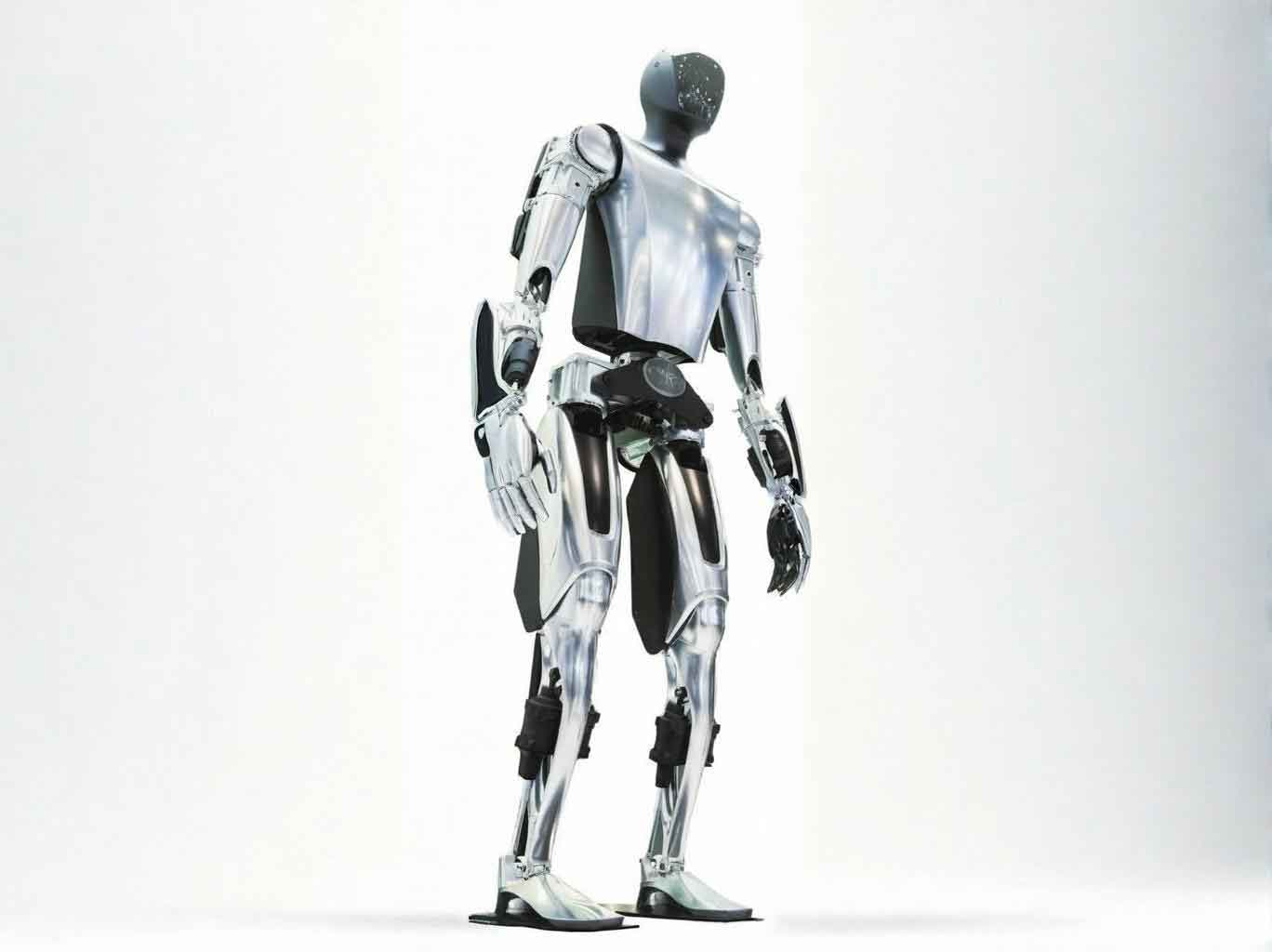
The integration of intelligent computation with embodied intelligence is perhaps most evident in the cognitive frameworks that guide embodied AI robots. Traditional robots follow pre-programmed instructions, but modern embodied AI robots exhibit autonomy through advanced perception, decision-making, and action cycles. From my perspective, this cognitive重构 involves three layers: perception, decision, and actuation. In perception, technologies like spatiotemporal encoding using spiking neural networks overcome frame-rate limitations, allowing embodied AI robots to process continuous streams of sensory data. For instance, an embodied AI robot in a cluttered environment can use event-based vision to detect movements with millisecond precision, far surpassing conventional camera systems. This can be modeled using differential equations that capture neural dynamics:
$$ \tau \frac{dV}{dt} = -V + \sum w_i \cdot I_i(t) $$
where \( V \) is the membrane potential of a neuron, \( \tau \) is the time constant, \( w_i \) are synaptic weights, and \( I_i(t) \) are input currents from sensors. Such models enable embodied AI robots to mimic biological perception for efficient processing.
In decision-making, world models provide a theoretical foundation for long-term reasoning in partially observable environments. An embodied AI robot can simulate future states before acting, reducing trial-and-error learning. This is formalized through reinforcement learning frameworks, where the robot learns a policy \( \pi \) that maximizes cumulative reward \( R \). The Bellman equation captures this:
$$ Q(s, a) = \mathbb{E} \left[ r + \gamma \max_{a’} Q(s’, a’) \mid s, a \right] $$
where \( Q \) is the action-value function, \( s \) and \( a \) are states and actions, \( r \) is the immediate reward, and \( \gamma \) is the discount factor. For embodied AI robots, this allows adaptive planning in tasks like object manipulation or navigation. Moreover, large language models (LLMs) enhance this by providing semantic understanding; for example, an embodied AI robot can interpret natural language commands to “fetch the red block” by grounding words in sensory inputs.
In actuation, musculoskeletal simulation algorithms enable energy-optimal control of movement. Embodied AI robots with soft, flexible bodies—inspired by biomimetics—can perform delicate tasks like handling fragile objects. The dynamics can be described using Lagrangian mechanics:
$$ L = T – U = \frac{1}{2} \dot{q}^T M(q) \dot{q} – U(q) $$
where \( L \) is the Lagrangian, \( T \) kinetic energy, \( U \) potential energy, \( q \) generalized coordinates, and \( M \) the mass matrix. Minimizing the action integral \( S = \int L \, dt \) yields efficient motion trajectories for embodied AI robots. These advancements collectively distinguish embodied AI robots from classical robots: they are autonomous, perceptive, learnable, generalizable, and often humanoid in form. The technologies underpinning them span sensors, machine vision, AI algorithms, robotic manipulation, intelligent control, quantum computing, and wireless communication. For instance, tactile sensors on an embodied AI robot’s fingers provide feedback for grip force adjustment, while edge AI chips enable real-time processing without cloud dependency.
Looking ahead, the fusion of intelligent computation and embodied intelligence heralds a new stage in AI development, centered on creating digital twins of the physical world. This transcends the old debates between symbolism and behaviorism, fostering self-evolving ecosystems where embodied AI robots continuously learn and adapt. However, challenges remain. Cross-modal commonsense reasoning—integrating vision, language, and touch—is essential for embodied AI robots to operate in unstructured environments. Energy efficiency must reach quantum-level optimizations to sustain long-term autonomy. Social acceptance of human-robot collaboration requires addressing ethical and safety concerns. To illustrate future directions, consider the following table that outlines key research areas and their implications for embodied AI robots.
| Research Area | Description | Mathematical Formulation | Impact on Embodied AI Robots |
|---|---|---|---|
| Cross-Modal Learning | Integrating multiple sensory modalities (e.g., vision, audio, haptics) for holistic perception. | Let \( M_i \) represent modality \( i \). The fused representation \( F \) is: \( F = \sum_{i=1}^{N} \sigma(W_i \cdot M_i + b_i) \), where \( \sigma \) is a nonlinear activation, \( W_i \) weights, \( b_i \) biases. | Enables embodied AI robots to understand complex scenes, like identifying objects by both sight and sound in noisy factories. |
| Quantum-Inspired Optimization | Using quantum algorithms to solve complex optimization problems in robot control and planning. | The Hamiltonian \( H \) for a robot’s state optimization: \( H = -\sum J_{ij} s_i s_j – \sum h_i s_i \), minimized via quantum annealing to find optimal configurations. | Reduces energy consumption and improves decision speed for embodied AI robots in large-scale environments, such as urban mobility networks. |
| Ethical AI Governance | Developing frameworks for fair, transparent, and accountable robot behavior in human spaces. | A utility function \( U \) incorporating ethical constraints: \( U = R – \eta \cdot D \), where \( R \) is reward, \( D \) ethical deviation, and \( \eta \) a penalty coefficient. | Ensures embodied AI robots act in socially acceptable ways, building trust in applications like healthcare or elderly assistance. |
| Self-Evolving Architectures | Systems that autonomously update their models and hardware based on environmental feedback. | An evolution equation: \( \frac{d\theta}{dt} = -\nabla L(\theta) + \epsilon(t) \), where \( \theta \) are model parameters, \( L \) loss, and \( \epsilon \) stochastic noise for exploration. | Allows embodied AI robots to adapt to new tasks without human intervention, crucial for long-duration missions in space or deep-sea exploration. |
In conclusion, the convergence of intelligent computation and embodied intelligence is not just a technical milestone; it is a paradigm shift that redefines the boundaries of AI. As an active participant in this field, I believe that embodied AI robots will become ubiquitous in our daily lives, from smart homes to industrial automation. The fusion enables these systems to bridge the digital and physical worlds, creating a symbiotic relationship where computation enhances embodiment, and embodiment enriches computation. By addressing the challenges through interdisciplinary collaboration—spanning robotics, neuroscience, materials science, and ethics—we can unlock the full potential of embodied AI robots. The future lies in building resilient, adaptive, and ethical intelligent systems that coexist harmoniously with humanity, driven by the continuous innovation at this intersection. This journey has only begun, and I am excited to contribute to a world where embodied AI robots empower us to tackle global challenges, from climate change to healthcare, with unprecedented intelligence and grace.