
As a pioneer in the field of robotics, I have dedicated my career to advancing the capabilities of embodied AI robots. These intelligent systems, which integrate perception, decision-making, and physical action within a body that interacts with the real world, are transforming industries from logistics to manufacturing. In this article, I will explore the latest innovations in embodied AI robots, detailing their technical specifications, operational paradigms, and the profound impact they are having on efficiency and flexibility. The term ’embodied AI robot’ encapsulates the essence of these machines: they are not merely programmed tools but adaptive, learning entities that perceive and act upon their environment. Throughout this discussion, I will emphasize how each development reinforces the centrality of the embodied AI robot in the future of automation.
The core of an embodied AI robot lies in its ability to merge sensing, computation, and actuation into a cohesive whole. From my experience, the most significant breakthroughs come from enhancing the robot’s perceptual systems and learning algorithms. For instance, modern embodied AI robots are equipped with advanced vision systems, such as stereo cameras and 3D LiDAR, enabling 360° holistic perception. This is coupled with microphone arrays for auditory input, creating a multi-modal sensing suite. The data from these sensors feed into machine learning models, often based on deep reinforcement learning, allowing the robot to optimize tasks autonomously. Consider the reinforcement learning framework, where the robot learns to maximize cumulative reward. The return \( G_t \) at time \( t \) is defined as:
$$ G_t = \sum_{k=0}^{\infty} \gamma^k R_{t+k+1} $$
Here, \( R \) is the reward, and \( \gamma \) is the discount factor. For an embodied AI robot performing a pick-and-place task, the reward might be defined for successful grasps, accurate code reading, and gentle placement. Through end-to-end training, the robot learns policies \( \pi(a|s) \) that map states \( s \) (e.g., sensor data) to actions \( a \) (e.g., arm movements), continuously improving performance. This learning capability is what sets modern embodied AI robots apart from traditional automated systems.
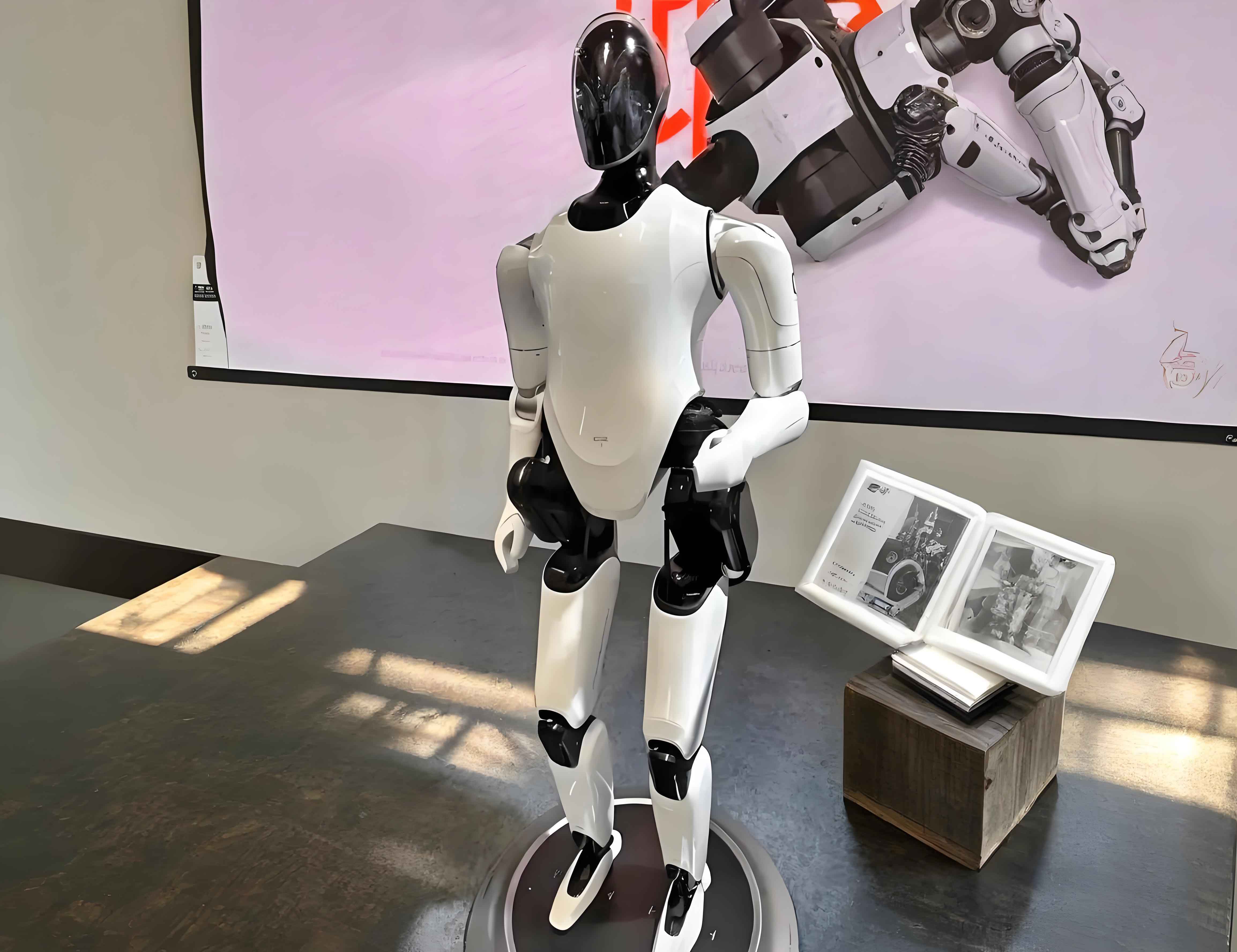
In pharmaceutical logistics, embodied AI robots are achieving remarkable precision. A humanoid embodied AI robot, standing 1.71 meters tall and weighing 65 kilograms, exemplifies this. With 55 degrees of freedom across its body, it offers unparalleled dexterity. Its dual arms can handle payloads up to 20 kilograms, operating within a diameter of 2.1 meters, and it can run at speeds up to 4 meters per second. The perceptual suite includes binocular vision, 3D radar, and a microphone array, granting full environmental awareness. Through end-to-end reinforcement learning, this embodied AI robot autonomously refines the entire process from grasping to reading codes to placing items into containers. The grasp force adapts to prevent damage to delicate packages, code reading accuracy reaches 99.9%, and placement actions are gentle, avoiding collisions and stacking errors. This embodiment of intelligence enables a new level of precision and flexibility in medical sorting, a task that demands both care and accuracy.
Another critical innovation is the composite embodied AI robot, which combines a collaborative robotic arm with an autonomous mobile robot (AMR) base. This design integrates mobility and manipulation into a single system, effectively connecting discrete workstations and breaking down production silos. By fusing the AMR’s autonomous navigation with the robotic arm’s precise operation, this embodied AI robot can perform multi-task coordination in environments such as 3C electronics, automotive manufacturing, and e-commerce warehouses. The mobility can be modeled using kinematic equations. For a differential drive AMR base, the robot’s velocity in the world frame is given by:
$$ \begin{bmatrix} \dot{x} \\ \dot{y} \\ \dot{\theta} \end{bmatrix} = \begin{bmatrix} \frac{r}{2} \cos(\theta) & \frac{r}{2} \cos(\theta) \\ \frac{r}{2} \sin(\theta) & \frac{r}{2} \sin(\theta) \\ \frac{r}{L} & -\frac{r}{L} \end{bmatrix} \begin{bmatrix} \omega_r \\ \omega_l \end{bmatrix} $$
Where \( (x, y) \) is the position, \( \theta \) the orientation, \( r \) the wheel radius, \( L \) the distance between wheels, and \( \omega_r, \omega_l \) the angular velocities of the right and left wheels. This mobility, combined with the arm’s manipulation, allows the embodied AI robot to navigate complex spaces and perform delicate tasks, embodying true autonomous capability.
Hybrid locomotion is another frontier. A wheeled-legged embodied AI robot leverages the advantages of both wheeled speed and legged adaptability. Supporting loads up to 30 kilograms, it is versatile for material transfer, picking, palletizing, and inventory counting. In sorting, it precisely identifies items and transports them to designated locations. The locomotion dynamics can be complex, but for planning, we often use simplified models. The robot’s stability during motion can be analyzed using the zero-moment point (ZMP) criterion for legged phases, while wheeled motion follows rolling constraints. The combined system allows this embodied AI robot to tackle uneven terrain and confined spaces, showcasing the versatility of embodied design.
Advancements in embodied AI robots also extend to their core control architectures. A groundbreaking development is the world’s first integrated multi-in-one controller, which consolidates the robot controller, mobile robot controller, vision controller, and safety controller into a single unit. This integration, often built on fully self-developed hardware and software stacks, simplifies maintenance and operation. From an engineering perspective, this reduces latency and improves reliability. The control law for such a system might be expressed as a unified state-space representation:
$$ \dot{\mathbf{x}} = A\mathbf{x} + B\mathbf{u}, \quad \mathbf{y} = C\mathbf{x} + D\mathbf{u} $$
Where \( \mathbf{x} \) is the state vector (including joint angles, velocities, and perceptual data), \( \mathbf{u} \) is the control input, and \( \mathbf{y} \) is the output. By having a single controller, the embodied AI robot can coordinate all subsystems seamlessly, leading to higher cost-effectiveness and overall efficiency. This is a testament to how embodied AI robots are evolving not just in physical form but in their computational backbone.
Autonomous navigation and decision-making are hallmarks of a mature embodied AI robot. These systems can independently construct and update maps of their work environment, using algorithms like Simultaneous Localization and Mapping (SLAM). Based on map information, they make autonomous decisions for path planning and obstacle avoidance. This enables advanced management tasks such as inventory counting and shelf management in complex settings. The path planning can be formulated as an optimization problem. For example, using A* search, the cost function \( f(n) \) for node \( n \) is:
$$ f(n) = g(n) + h(n) $$
Here, \( g(n) \) is the cost from the start node to \( n \), and \( h(n) \) is a heuristic estimate to the goal. The embodied AI robot evaluates this in real-time to choose optimal routes while avoiding dynamic obstacles. This autonomy is crucial for scaling operations in large warehouses or factories.
To illustrate the diversity and capabilities of modern embodied AI robots, I have compiled a comparative table of key specifications based on the described innovations. Note that these are generalized categories, as specific brand names are omitted to focus on technological trends.
| Feature | Humanoid Embodied AI Robot (Pharmaceutical Focus) | Composite Embodied AI Robot (AMR + Arm) | Wheeled-Legged Embodied AI Robot | Embodied AI Robot with Bimanual Manipulation |
|---|---|---|---|---|
| Height | 1.71 m | Varies with arm extension | Adjustable via legs | With lift: 500–2600 mm |
| Weight | 65 kg | Depends on configuration | Not specified | Not specified |
| Degrees of Freedom | 55 | Arm DOF + base mobility | Combined wheel/leg joints | Dual-arm architecture |
| Payload Capacity | 20 kg (arms) | Arm-dependent (e.g., 12 kg) | 30 kg | Platform-dependent |
| Operational Diameter/Speed | 2.1 m diameter, 4 m/s run | AMR speed variable | 2 m/s wheeled speed | 360° turning, adaptive底盘 |
| Key Sensors | Binocular vision, 3D radar, mic array | Vision, LiDAR for navigation | Vision for identification | Advanced visual camera, multi-modal models |
| Learning Approach | End-to-end reinforcement learning | Integrated control algorithms | Autonomous decision-making | “Glance recognition” via AI models |
| Primary Applications | Pharmaceutical sorting, precise handling | Discrete manufacturing, warehouse协同 | Material转运, picking, palletizing | Material handling, picking, stocking |
| Unique Traits | Gentle grip, 99.9% code accuracy | Mobility + manipulation一体化 | Hybrid locomotion for versatility | Bimanual coordination,智能升降 |
The table above underscores how each embodied AI robot is tailored for specific domains, yet all share the common thread of embodied intelligence. For instance, the humanoid embodied AI robot excels in tasks requiring human-like dexterity and care, while the composite embodied AI robot bridges gaps in flexible production lines. The wheeled-legged embodied AI robot offers robust mobility, and the bimanual embodied AI robot introduces sophisticated manipulation akin to human arms. In all cases, the embodied AI robot is designed to perceive, learn, and act autonomously.
Delving deeper into the perceptual systems, the embodied AI robot often relies on sensor fusion. Combining data from cameras, LiDAR, and other sensors reduces uncertainty and enhances situational awareness. A common approach is using Kalman filters or more recent deep learning-based fusion networks. For example, the state estimation for an embodied AI robot navigating a warehouse might involve fusing visual odometry with LiDAR scans. The update step in an Extended Kalman Filter (EKF) can be represented as:
$$ \mathbf{P}_{k|k} = (I – \mathbf{K}_k \mathbf{H}_k) \mathbf{P}_{k|k-1} $$
Where \( \mathbf{P} \) is the error covariance, \( \mathbf{K} \) is the Kalman gain, and \( \mathbf{H} \) is the measurement matrix. This allows the embodied AI robot to maintain accurate localization, which is critical for tasks like inventory management where precise positioning is needed for counting or retrieving items.
Moreover, the learning algorithms in embodied AI robots are increasingly leveraging simulation-to-real (sim2real) transfer. By training in virtual environments, robots can acquire skills safely and efficiently before deploying in the real world. This is particularly useful for reinforcement learning, where exploration can be costly. The objective is to minimize the reality gap. A typical formulation involves domain adaptation, where the policy \( \pi \) is trained to maximize reward in simulation while being robust to domain shifts. The loss function might include a domain confusion term:
$$ \mathcal{L} = \mathbb{E}_{\tau \sim \pi} [R(\tau)] + \lambda \cdot \mathcal{L}_{dc} $$
Here, \( \tau \) is a trajectory, \( R \) the reward, and \( \mathcal{L}_{dc} \) encourages the perceptual features to be invariant between simulation and reality. This accelerates the deployment of embodied AI robots in new settings, as they can quickly adapt their learned behaviors.
In terms of manipulation, the embodied AI robot with bimanual capabilities represents a significant leap. Inspired by human physiology, such robots feature dual arms that can operate independently or in synchrony. This allows for complex tasks like holding an item with one arm while adjusting it with the other. The kinematics of a dual-arm system can be modeled using forward kinematics for each arm, with the base possibly mobile. For a 7-degree-of-freedom arm, the end-effector pose \( \mathbf{T} \) is given by the product of transformation matrices:
$$ \mathbf{T} = \prod_{i=1}^{7} A_i(\theta_i) $$
Where \( A_i \) is the Denavit-Hartenberg matrix for joint \( i \) with angle \( \theta_i \). Coordinating two arms requires solving inverse kinematics while avoiding self-collisions, often through optimization techniques. This embodied AI robot can perform super-anthropomorphic actions like 360°全域 turning and仿生弯腰 picking, thanks to its high-dynamic adaptive wheeled base and precision lift system (with height adjustment from 550 to 870 mm). The core loading platform协同 with the mobile底盘, enabling efficient transport and placement.
The economic impact of embodied AI robots is substantial. By automating repetitive and physically demanding tasks, they reduce labor costs and minimize errors. In pharmaceutical logistics, for example, the embodied AI robot’s 99.9% accuracy in code reading prevents mis-shipments and ensures regulatory compliance. In manufacturing, the composite embodied AI robot enhances productivity by enabling just-in-time part delivery and assembly. The return on investment (ROI) can be modeled as:
$$ ROI = \frac{\text{Net Benefits}}{\text{Cost}} \times 100\% $$
Net benefits include increased throughput, reduced waste, and lower operational risks. As embodied AI robots become more affordable and capable, their ROI improves, driving widespread adoption.
Looking ahead, the future of embodied AI robots lies in even greater autonomy and collaboration. Swarms of embodied AI robots could work together in warehouses, coordinating via communication protocols. Advances in artificial intelligence, particularly in large language models, might allow embodied AI robots to understand natural language instructions, making them more intuitive to operate. Furthermore, energy efficiency will be key; lighter materials and better battery technologies will extend operational periods. The integration of 5G and edge computing will enable real-time data processing, reducing latency for critical decisions.
In conclusion, the embodied AI robot is not just a tool but a transformative force in industrial automation. From pharmaceutical sorting to flexible manufacturing and smart warehousing, these robots embody the principles of perception, learning, and action. Through innovations in humanoid design, composite systems, hybrid locomotion, and intelligent control, the embodied AI robot is setting new standards for precision, flexibility, and efficiency. As we continue to refine these systems, the potential applications will expand, ultimately leading to smarter, more responsive industries. The journey of the embodied AI robot is just beginning, and I am excited to see how it will reshape our world.
To further illustrate the concepts, consider the following formulas that encapsulate key aspects of embodied AI robot operation. The overall performance \( P \) of an embodied AI robot in a task can be expressed as a function of its感知能力 \( S \), learning efficiency \( L \), and actuation precision \( A \):
$$ P = f(S, L, A) = \alpha \log(S) + \beta L^2 + \gamma \sqrt{A} $$
Where \( \alpha, \beta, \gamma \) are weighting factors dependent on the task. This heuristic model highlights how improvements in any component enhance the整体 capability of the embodied AI robot. Additionally, the reliability \( R(t) \) of an embodied AI robot over time \( t \) can be modeled using a Weibull distribution, common in reliability engineering:
$$ R(t) = e^{-(t/\eta)^\beta} $$
With scale parameter \( \eta \) and shape parameter \( \beta \). As embodied AI robots become more robust, their \( R(t) \) increases, ensuring sustained operation in demanding environments. These mathematical perspectives underscore the sophistication behind every embodied AI robot deployment.
In summary, the era of embodied AI robots is here, and it is revolutionizing how we approach logistics, manufacturing, and beyond. By harnessing advanced sensors, learning algorithms, and innovative mechanical designs, these robots offer unprecedented levels of autonomy and adaptability. Whether it’s through the gentle touch of a humanoid arm or the agile movement of a wheeled-legged base, the embodied AI robot is proving to be an indispensable partner in the industrial landscape. As development continues, we can expect even more intelligent, efficient, and versatile embodied AI robots to emerge, driving progress across sectors. The embodied AI robot is truly the cornerstone of the next industrial revolution.