
As an observer deeply immersed in the field of robotics, I have witnessed the remarkable ascent of China robots in the global arena. The rapid expansion of China’s robotics market, now recognized as the world’s largest, signifies a pivotal shift in industrial dynamics. However, this growth is accompanied by profound challenges that threaten to stifle long-term innovation and competitiveness. In this analysis, I will delve into the current state of China robots, exploring the technical bottlenecks, market opportunities, and strategic imperatives that define their trajectory. My perspective is shaped by ongoing trends and data, aiming to provide a comprehensive overview without referencing specific individuals or institutions. Throughout this discussion, the term “China robots” will be frequently emphasized to underscore the focal point of this technological domain.
The journey of China robots began with a focus on specialized applications, such as underwater and space robotics, where early achievements garnered international attention. Yet, despite these successes, the foundation remains fragile. I have noted that research efforts often lack cohesion, leading to redundant projects and a scarcity of systemic breakthroughs. This fragmentation hinders the development of a robust technological ecosystem for China robots. To quantify this disparity, consider the following table comparing key technological metrics between China robots and their international counterparts.
| Metric | China Robots | Global Leaders |
|---|---|---|
| System Design Integration | Moderate, with isolated advances | High, with holistic architectures |
| Controller Technology | Developing, reliant on imported algorithms | Advanced, with proprietary software |
| Application Versatility | Limited to select industries | Broad across multiple sectors |
| Innovation Index | Low, due to repetitive research | High, driven by R&D diversity |
From my analysis, the core issue stems from inadequate indigenous R&D capabilities. The industrialization of China robots commenced later than in other nations, resulting in a dependency on external technologies. This is evident in the minimal production of original robot products, which are often overshadowed by monopolistic foreign firms. The lack of substantial investment in research further exacerbates this gap. I believe that the progression of China robots can be modeled using a growth equation that accounts for R&D inputs and output innovation. For instance, the innovation rate $I$ might be expressed as:
$$ I(t) = \alpha \cdot R(t) – \beta \cdot D(t) $$
where $I(t)$ represents innovation at time $t$, $R(t)$ denotes R&D funding, $D(t)$ signifies dependency on foreign tech, and $\alpha$ and $\beta$ are constants reflecting efficiency factors. For China robots, the $\beta$ term often dominates, indicating a high reliance on imports that stifles organic growth.
Another critical barrier is the disconnection between research and practical application. In my view, technology flourishes only through widespread deployment, yet China robots frequently remain confined to laboratories. This mismatch impedes iterative improvement and real-world validation. Experts have highlighted that without mass industrial adoption, the advancements in China robots will stagnate. To illustrate this, the adoption rate $A$ can be linked to technological maturity $T$ and market readiness $M$:
$$ A = k \cdot \frac{T \cdot M}{C} $$
Here, $k$ is a scaling factor, and $C$ represents implementation costs. For China robots, $C$ is often elevated due to integration challenges, reducing $A$ despite growing $T$ and $M$.
The reliance on high-performance components is perhaps the most daunting challenge for China robots. I have observed that key devices like precision reducers, servo motors, and drivers are predominantly imported, with over 70% of both complete units and critical parts sourced externally. This dependency not only escalates costs but also creates a passive monopoly, where foreign suppliers dictate terms. The table below summarizes the import dynamics for China robots.
| Component Type | Import Proportion | Primary Sources |
|---|---|---|
| Complete Robots | >70% | Global manufacturers |
| High-Precision Reducers | >80% | Specialized foreign firms |
| Servo Motors and Drives | >75% | International tech hubs |
| Control Systems | >65% | Advanced economies |
This reliance stems from the nascent stage of China’s robot industry, where scale production is insufficient to incentivize domestic parts manufacturers. In my assessment, the cost-effectiveness of localizing these components can be evaluated using a formula that balances investment $I_v$ against long-term savings $S$:
$$ \text{ROI} = \frac{S – I_v}{I_v} \times 100\% $$
where ROI is the return on investment. For China robots, increasing $I_v$ in component R&D could yield high ROI by reducing import costs and fostering supply chain resilience. Optimistically, within 3-5 years, domestic production might meet the demands of China robots, but this requires concerted effort.
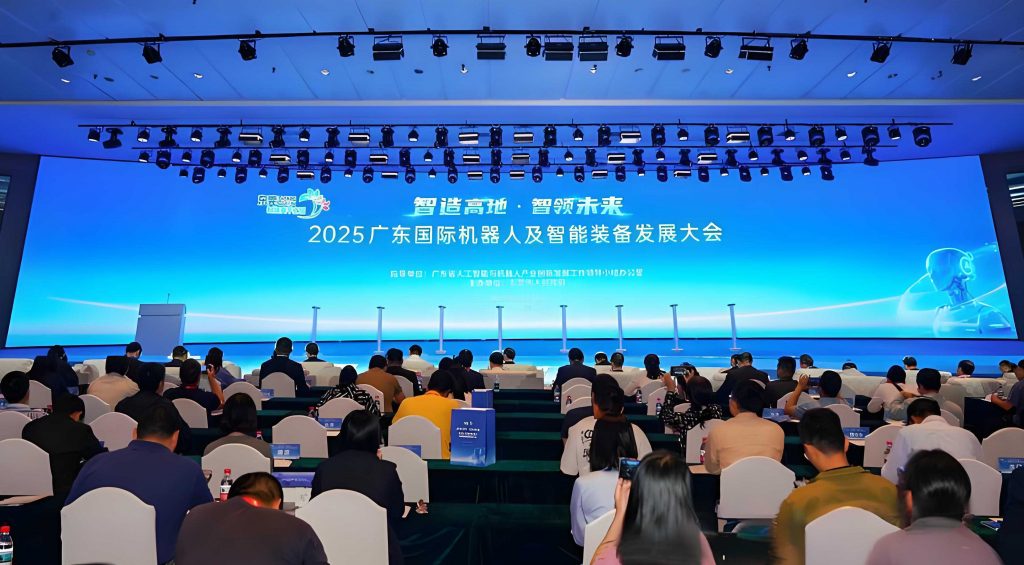
Amid these challenges, the potential for China robots is immense. I have analyzed market data indicating that China not only leads in sales volume but also exhibits the fastest growth rate globally. The push for manufacturing upgrades, rising labor costs, and dwindling demographic dividends are driving an urgent need for industrial automation. China robots are transitioning from optional tools to essential assets in sectors like automotive, electronics, logistics, and food processing. The market expansion can be modeled with an exponential growth equation:
$$ N(t) = N_0 \cdot e^{rt} $$
where $N(t)$ is the number of China robots deployed at time $t$, $N_0$ is the initial base, and $r$ is the growth rate. With projections suggesting a multi-trillion-yuan industry by 2020, the trajectory for China robots is steeply positive. However, penetration levels remain low, indicating vast untapped opportunities. The following table outlines the application distribution of China robots across various industries.
| Industry | Current Adoption Level | Growth Potential |
|---|---|---|
| Automotive | High, but dominated by imports | Moderate, with localization efforts |
| Electronics | Moderate, driven by precision needs | High, due to miniaturization trends |
| Logistics and Warehousing | Low, emerging with e-commerce | Very high, for automation surge |
| Food and Beverage | Low, due to hygiene complexities | Moderate, with tech advancements |
| Chemical Processing | Moderate, for hazardous tasks | High, with safety regulations |
From my viewpoint, the global context further amplifies the urgency for China robots. Nations like those in the EU and the U.S. are heavily investing in robotics, framing it as the cornerstone of a new industrial revolution. This international race underscores the strategic importance of China robots in reshaping manufacturing paradigms. I contend that for China robots to capitalize on this moment, a multi-pronged approach is essential. Enhancing intelligence through AI integration, lowering costs via scalable production, and cultivating skilled personnel are critical steps. The synergy between policy support and industry initiative will determine whether China robots can overcome their hurdles.
In conclusion, the narrative of China robots is one of contrasts—boundless potential tempered by significant obstacles. My analysis reaffirms that while technological gaps and import dependencies pose risks, the market dynamics and innovation drives offer a pathway to resilience. By fostering indigenous R&D, streamlining applications, and leveraging economic trends, China robots can evolve into a global force. The journey ahead demands persistence, but the rewards could redefine industrial automation for decades to come. As I reflect on this, the recurring theme of China robots serves as a reminder of both the challenges and the transformative power embedded in this field.