
The world stands at the precipice of a fundamental shift. For decades, artificial intelligence existed primarily in the digital realm—processing data, recognizing patterns, and generating text. Today, we are witnessing its physical awakening. As an observer deeply embedded in this technological metamorphosis, I see the emergence of the embodied AI robot not merely as an incremental improvement but as the culmination of a long-standing ambition: to create machines that can perceive, reason, and act within our complex, three-dimensional world. This transition from disembodied algorithms to physically intelligent agents represents the next great frontier, promising to redefine industries, economies, and the very nature of human labor and companionship.
The core thesis of this evolution is simple yet profound: true, general intelligence cannot be fully realized in a vacuum. Intelligence is shaped by interaction. An embodied AI robot learns and understands the world not just through datasets, but through sensorimotor experience—through the tactile feedback of gripping an object, the kinematic constraints of navigating stairs, and the visual-motor coordination required to perform a task. This “embodiment” is the key differentiator. We are moving beyond robots that are simply programmed to repeat actions, towards agents that can learn, adapt, and perform complex tasks in unstructured environments. The companies pioneering this field are not just building better machines; they are engineering new forms of intelligence.
The technological architecture of a modern embodied AI robot is a symphony of advanced disciplines converging into a single, cohesive system. It can be conceptualized through a layered framework, where breakthroughs at each level enable capabilities at the next.
The Technical Pillars of Embodied Intelligence
At the foundation lies the Hardware Actuation Layer. This encompasses the mechanical design, actuators (motors), sensors (cameras, LiDAR, tactile sensors), and the power systems. The agility of a robot is fundamentally constrained here. Key performance metrics include power density (torque/weight ratio of actuators), structural efficiency, and sensor fusion bandwidth. For a bipedal embodied AI robot, dynamic stability is governed by principles of zero-moment point (ZMP) and centroidal dynamics. The force required for a stable gait can be modeled by considering the robot as an inverted pendulum:
$$ \tau = m g l \sin(\theta) + I \ddot{\theta} $$
Where \( \tau \) is the required joint torque, \( m \) is mass, \( g \) is gravity, \( l \) is the pendulum length (related to robot’s CoM height), \( \theta \) is the angular deviation, and \( I \) is the moment of inertia. Modern designs use high-torque density motors and lightweight composite materials to minimize \( m \) and \( I \) while maximizing \( \tau \), enabling dynamic motions like running and jumping.
Sitting atop the hardware is the Motor Control & Dynamics Layer. This is the real-time software that translates high-level movement commands into precise currents for thousands of motors per second. It involves sophisticated algorithms for trajectory optimization, impedance control, and whole-body control (WBC). A common approach is to solve a Quadratic Program (QP) at every control cycle (e.g., 1 kHz) to compute optimal joint torques \( \mathbf{\tau}^* \):
$$
\begin{aligned}
\mathbf{\tau}^* = \arg\min_{\mathbf{\tau}} & \quad \|\mathbf{J} \mathbf{\tau} – \mathbf{F}_{des}\|^2 + \lambda \|\mathbf{\tau}\|^2 \\
\text{subject to} & \quad \mathbf{A}_{eq} \mathbf{\tau} = \mathbf{b}_{eq} \quad \text{(dynamic constraints)} \\
& \quad \mathbf{\tau}_{min} \leq \mathbf{\tau} \leq \mathbf{\tau}_{max}
\end{aligned}
$$
Here, \( \mathbf{J} \) is the contact Jacobian, \( \mathbf{F}_{des} \) is the desired wrench (force/torque) on the robot’s body, and \( \lambda \) is a regularization term. This layer ensures the embodied AI robot moves with both strength and delicacy.
The Perception & State Estimation Layer fuses raw sensor data into a coherent, real-time model of the world. It answers questions like “Where am I?” (localization) and “What is around me?” (semantic understanding). This involves Simultaneous Localization and Mapping (SLAM), object detection/segmentation, and 3D reconstruction. The state \( \mathbf{x}_t \) of the robot and its environment is typically estimated using Bayesian filters like an Extended Kalman Filter (EKF):
$$
\begin{aligned}
\text{Prediction:} & \quad \hat{\mathbf{x}}_t^- = f(\hat{\mathbf{x}}_{t-1}, \mathbf{u}_t) \\
& \quad \mathbf{P}_t^- = \mathbf{F}_t \mathbf{P}_{t-1} \mathbf{F}_t^T + \mathbf{Q}_t \\
\text{Update:} & \quad \mathbf{K}_t = \mathbf{P}_t^- \mathbf{H}_t^T (\mathbf{H}_t \mathbf{P}_t^- \mathbf{H}_t^T + \mathbf{R}_t)^{-1} \\
& \quad \hat{\mathbf{x}}_t = \hat{\mathbf{x}}_t^- + \mathbf{K}_t (\mathbf{z}_t – h(\hat{\mathbf{x}}_t^-)) \\
& \quad \mathbf{P}_t = (\mathbf{I} – \mathbf{K}_t \mathbf{H}_t) \mathbf{P}_t^-
\end{aligned}
$$
Where \( f \) and \( h \) are nonlinear motion and observation models, and \( \mathbf{K}_t \) is the Kalman gain.
The crown jewel is the Embodied AI Brain Layer. This is where large language models (LLMs) and vision-language models (VLMs) are integrated with planning and control. This layer performs task planning (“make a cup of coffee”), generates step-by-step action sequences, and even learns from trial and error through sim-to-real reinforcement learning (RL). The objective in RL for an embodied AI robot is to learn a policy \( \pi_\theta(\mathbf{a}_t | \mathbf{s}_t) \) that maximizes the expected cumulative reward:
$$ J(\theta) = \mathbb{E}_{\tau \sim \pi_\theta} \left[ \sum_{t=0}^{T} \gamma^t r(\mathbf{s}_t, \mathbf{a}_t) \right] $$
Gradients can be estimated using algorithms like Proximal Policy Optimization (PPO). The fusion of this learned “common sense” from vast internet-scale data with physical interaction data is what will ultimately yield robust and generalizable robotic intelligence.
The following table summarizes this integrated technology stack and the core challenges at each level:
| System Layer | Key Components | Primary Challenges | Performance Metrics |
|---|---|---|---|
| Hardware Actuation | Actuators, Structural Materials, Battery, Sensors (IMU, Vision, Force/Torque) | Power Density, Durability, Cost, Thermal Management, Sensor Calibration | Torque-to-Weight Ratio, Energy Density (Wh/kg), DOF Count, Operational Time |
| Motor Control & Dynamics | Whole-Body Controller, Trajectory Optimizer, Simulator (for training) | Real-time Computation, Model Inaccuracy, Uncertainty Handling, Contact Dynamics | Control Frequency (Hz), Tracking Error, Stability Margin, Fall Rate |
| Perception & State Estimation | SLAM, Object Recognition, 3D Scene Understanding, Multi-sensor Fusion | Robustness to Lighting/Weather, Occlusion Handling, Dynamic Object Tracking | Localization Accuracy (cm), Object Recognition mAP, Latency |
| Embodied AI Brain | LLM/VLM Integration, Task & Motion Planner, Reinforcement Learning Policy | Grounding Language to Physics, Long-horizon Planning, Safe Exploration, Sample Efficiency | Task Success Rate, Generalization to Novel Settings, Learning Speed (Few-shot) |
The Commercial Landscape: From Garage Tinkering to Billion-Dollar Valuations
The journey of a leading embodied AI robot company often begins not in a well-funded corporate lab, but in academic or personal workshops driven by sheer technical passion. I have seen teams form around a founder’s deep-seated desire to solve a fundamental engineering puzzle—like creating a stable, low-cost quadruped. Early prototypes, built with off-the-shelf motors and hand-written control code, demonstrate a proof-of-concept that is often underestimated by traditional venture capital, which may focus more on software-centric business models. This initial “garage” phase is crucial, as it fosters a culture of hands-on innovation, cost-effectiveness, and a deep understanding of the core mechatronics.
The inflection point arrives when the technical prototype proves its potential in a real-world contest or application, attracting the first wave of strategic angel investors. For the embodied AI robot sector, the period around 2023-2024 marked a dramatic acceleration in capital inflow. The convergence of advancements in AI (especially transformer models), cheaper and more powerful compute, and growing market demand for automation created a perfect storm. Investment syndicates, now recognizing the sector’s strategic importance, began forming, comprising not just financial VCs but heavyweights from telecommunications, internet services, automotive, and consumer electronics. The valuation milestones reached in subsequent funding rounds—climbing into the tens of billions—reflect a bet on the platform potential of these robots, not just as products but as the future backbone of physical labor and services.
The application roadmap for these companies is deliberately expansive. They are not targeting a single niche but developing platform technologies adaptable to multiple verticals. The initial focus is often on industrial and commercial settings—environments that are structured enough to allow for early deployment but valuable enough to justify the investment. An embodied AI robot might start in a factory performing logistics, inspection, or simple assembly tasks. From there, the path leads to hazardous environments like emergency response and disaster recovery, where the robot’s durability and remote operation capabilities are lifesaving. The ultimate, albeit more complex, frontier is the domestic and service sector, encompassing everything from home assistance and elderly care to interactive education and entertainment. This multi-wave adoption strategy de-risks the business model while providing a continuous stream of real-world data to improve the AI brain.
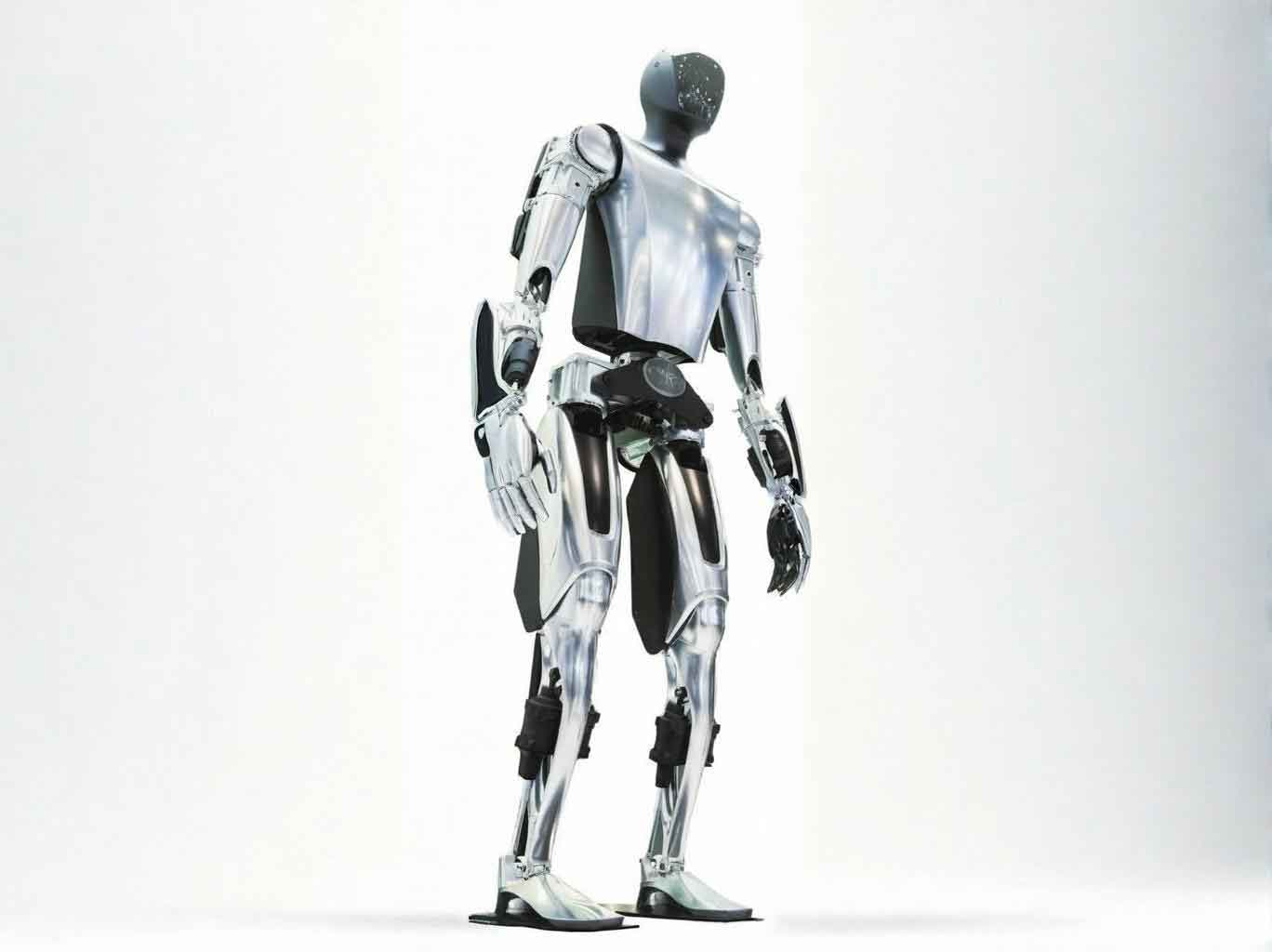
The manufacturing and supply chain for an embodied AI robot present a formidable challenge, akin to building a high-performance electric vehicle but with far greater kinematic complexity. Scaling from producing hundreds of units to tens of thousands requires a revolution in assembly processes, quality control for thousands of precision components, and securing a resilient supply chain for specialized actuators, semiconductors, and batteries. The picture above symbolizes this critical transition from lab-scale innovation to industrial-scale manufacturing prowess. Mastery of this phase is what separates promising startups from enduring industry leaders. It requires deep partnerships with advanced manufacturing firms and often vertical integration for key subsystems like actuator and gearbox production.
The market’s validation is most clearly seen in early procurement contracts. When major national corporations, particularly in sectors like telecommunications and energy, release tenders for humanoid or advanced robotic systems, it signals a shift from experimental curiosity to operational confidence. Winning a share of a landmark order, sometimes valued in the hundreds of millions, serves as a powerful testament to the technological readiness and commercial credibility of an embodied AI robot platform. It provides not just revenue but, more importantly, a high-stakes, real-world deployment scenario that accelerates iterative improvement faster than any lab test ever could.
The following table contrasts the key strategic and operational dimensions observed in leading entities within this space, illustrating different paths to building a viable embodied AI robot enterprise:
| Strategic Dimension | Path A: The Vertical Integrator | Path B: The Agile Pioneer |
|---|---|---|
| Origin & Culture | Born from a fusion of top-tier academic AI research and large-scale telecom/tech product execution experience. Emphasizes full-stack, systemic innovation. | Emerged from passionate academic/independent engineering projects focused on solving core locomotion and actuation challenges. Emphasizes lean R&D and hardware ingenuity. |
| Core Technology Thesis | Deep vertical integration from proprietary AI chips and embodied foundation models to advanced robotic limbs (e.g., dexterous hands). Believes the AI brain is the primary differentiator. | Mastery of high-performance, cost-effective actuator design and robust motion control algorithms. Believes physical reliability and affordability enable mass adoption first. |
| Product Strategy | Rapidly expanding a diversified matrix of forms (humanoid, wheeled, specialized) powered by a unified AI platform, aiming for general-purpose capability. | Evolution from a dominant position in one form factor (e.g., quadrupeds) to another (e.g., humanoids), leveraging shared actuation and control principles. |
| Growth & Capital Strategy | Aggressive multi-stage financing from top-tier VCs and strategic tech/auto investors. Explores public market avenues early via SPACs or acquisitions to fuel scaling war chest. | Initial bootstrap/angel-funded development, followed by large, concentrated funding rounds from state-backed funds and broad syndicates of strategic investors at later stages. |
| Commercialization Focus | Simultaneous push into industrial automation, commercial services (cleaning, logistics), and exploring consumer applications. Leverages partner ecosystems for deployment. | Strong early traction in industrial inspection, public safety, and research markets. Progressing towards automotive manufacturing and logistics via major corporate contracts. |
The Road Ahead: Integration, Intelligence, and Impact
Looking forward, the trajectory of the embodied AI robot industry will be defined by several converging trends. First is the Deepening of AI-Robotics Fusion. The next generation of foundation models will be trained not just on text and images, but on vast datasets of physical interactions—videos of manipulation, physics simulations, and real robot trial-and-error. This will lead to “embodied foundation models” that inherently understand gravity, friction, material properties, and cause-and-effect in the physical world. The policy for a robot will become less of a specialized controller and more of a general-purpose reasoner that can accept high-level goals. The learning objective will evolve to include physical common sense:
$$ \mathcal{L}_{embodied} = \mathcal{L}_{VLM} + \lambda_1 \mathcal{L}_{physics} + \lambda_2 \mathcal{L}_{skill} $$
Where \( \mathcal{L}_{VLM} \) is standard vision-language alignment, \( \mathcal{L}_{physics} \) is a loss enforcing consistency with physical laws (learned from simulation), and \( \mathcal{L}_{skill} \) is a reinforcement learning objective for acquiring motor primitives.
Second is the Proliferation of Form Factors and Swarm Intelligence. While the humanoid form captures the imagination due to its compatibility with human environments and tools, the future will see a zoo of specialized embodied AI robot designs: snake-like for inspection, bird-like for surveillance, swarm bots for construction. Furthermore, these agents will not operate in isolation. We will see the rise of heterogeneous robot teams, where flying drones, wheeled transporters, and humanoid manipulators collaborate on a common task, coordinated by a central AI “foreman.” The system’s overall capability \( C_{swarm} \) could scale super-linearly with the number of agents \( N \) if coordination is effective:
$$ C_{swarm} \propto N^\alpha \quad \text{where } \alpha > 1 \text{ (synergistic cooperation)} $$
Third is the Economic and Societal Recalibration. The widespread adoption of capable embodied AI robot platforms will trigger profound economic shifts. While they will augment human workers in many dangerous, dirty, and dull jobs, they will also create entirely new industries and job categories—robot trainers, ethics auditors, fleet managers, and maintenance specialists. The productivity gains could be immense, but they must be managed with thoughtful policies regarding workforce transition, safety standards, and ethical deployment. The unit economics will be critical; the total cost of ownership (TCO) of a robot worker must undercut human labor costs for a given task to drive mass adoption. This TCO can be modeled as:
$$ \text{TCO}_{robot} = \frac{\text{CapEx}}{\text{Lifespan}} + \text{OpEx}_{energy} + \text{OpEx}_{maintenance} + \text{OpEx}_{software} $$
Where CapEx is the purchase price, and software OpEx includes updates, cloud AI services, and task-specific programming. The race is to drive this TCO down exponentially while expanding the scope of tasks the robot can perform.
In my view, we are still in the earliest chapters of this story. The companies that will dominate the coming decade are those that can maintain a relentless focus on the integrated problem: building robust physical hardware, pioneering real-time control systems, and developing ever-more-capable and commonsense AI brains—all while navigating the immense challenges of manufacturing, supply chain, and market creation. The goal is clear: to create an embodied AI robot that is not just a tool, but a truly adaptive, helpful, and integrated agent in the human world. The journey from the first wobbly steps of a robot dog to the graceful, intelligent operation of a humanoid in a home or factory is the journey of a technology growing up, and it is one of the most compelling narratives of our time.