
From the realms of science fiction to tangible laboratories and early commercial applications, the humanoid robot stands as one of the most captivating and complex frontiers in modern technology. As an intelligent entity designed to mirror human morphology and behavior, the humanoid robot represents the convergence of advanced mechatronics, artificial intelligence, materials science, and control systems. It is far more than a conventional robot with a human-like shell; it is an embodied intelligence capable of navigating human-centric environments, understanding human intent, and performing a diverse array of physical tasks. This paradigm shift positions the humanoid robot as a new high ground for global technological competition, a potential catalyst for economic transformation, and a foundational pillar for next-generation industries. The development of sophisticated humanoid robots is intrinsically linked to the advancement of new quality productive forces and technological self-reliance, marking a critical step towards a future where intelligent machines collaborate seamlessly with humanity.
The recent surge in development, highlighted by systems like Tesla’s Optimus Gen-2, signals a move beyond simple demonstrative prototypes towards platforms with enhanced dexterity, autonomy, and interaction capabilities. This progress is underpinned by strategic policy support worldwide. For instance, regulatory bodies have issued guidelines to accelerate innovation, standardize development, and promote application in key sectors such as manufacturing, logistics, and domestic service. The core value proposition of a humanoid robot lies in its form factor. By possessing a head, torso, arms, and legs, it can intuitively interact with a world built for humans, use tools designed for human hands, and communicate through natural modalities like gesture and speech. This biomimetic design fosters greater affinity, trust, and effective collaboration between humans and machines, unlocking applications across countless scenarios from industrial assembly and eldercare to education and exploration.
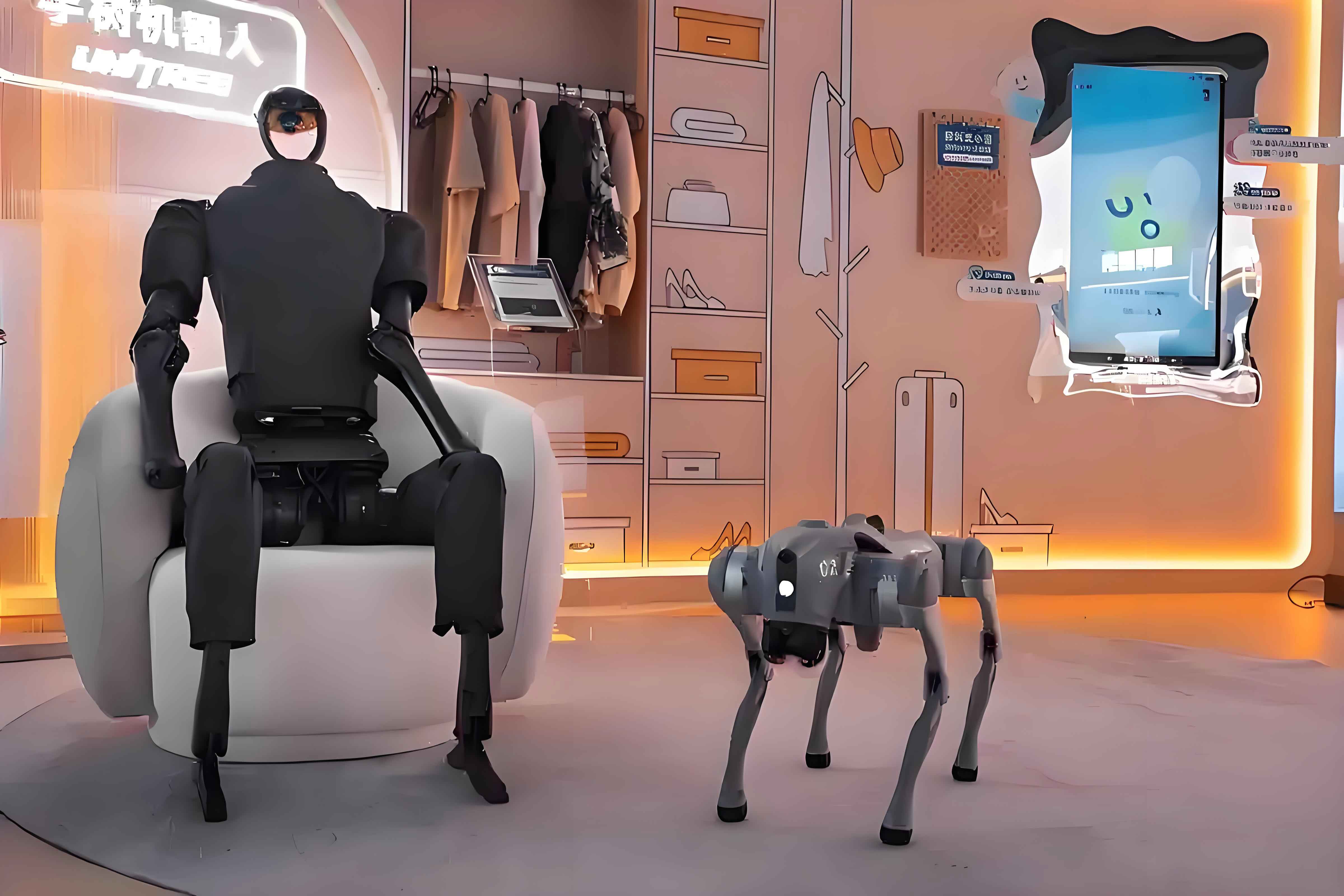
Historical Development and Current Landscape
Research into humanoid robotics began in the late 1960s, with early systems focused on basic bipedal locomotion and simple actuation. The 21st century ushered in a period of accelerated innovation, driven by advancements in computing power, sensor miniaturization, and control algorithms. The global landscape is now characterized by intense research and development, with distinct regional strengths and strategic approaches.
| Platform (Company/Institution) | Country/Region | Key Characteristics & Focus | Primary Drive Type |
|---|---|---|---|
| Atlas (Boston Dynamics) | USA | High-dynamic motion, advanced agility, parkour, research platform | Hydraulic |
| Optimus (Tesla) | USA | Mass-manufacturing focus, cost-effective electromechanical design, AI integration | Electric Motor |
| Digit (Agility Robotics) | USA | Logistics-oriented, efficient walking and payload handling | Electric Motor |
| ASIMO (Honda) | Japan | Historically significant, smooth walking, human interaction | Electric Motor |
| Ameca (Engineered Arts) | UK | Hyper-realistic facial expressions and upper-body gesturing | Electric Motor |
| Walker X (UBTech) | China | Full-sized service robot, dual-arm manipulation, stair climbing | Electric Motor |
| GR-1 (Fourier Intelligence) | China | High-performance integrated actuator joints, natural walking | Electric Motor |
Leading Global Research Hubs: The United States and Japan have historically led the field, achieving significant milestones in movement and control that now approach commercial viability. American entities leverage strengths in dynamic software, AI integration, and venture capital. The entry of giants like Tesla and the growth of startups like Figure and 1X Technologies, backed by significant AI players (e.g., OpenAI’s investment in 1X), underscore a strategy of converging large AI models with physical embodiment. Japan’s legacy in precision manufacturing and robotics has produced iconic platforms, maintaining deep expertise in reliable bipedal locomotion and human-robot interaction.
Rapid Development in Other Regions: The development landscape has become increasingly multipolar. Europe maintains strong research clusters focusing on specific niches like expressive faces or advanced cognitive architectures. Most notably, China has emerged as a formidable force, with a surge in homegrown humanoid robot startups and prototypes. This growth is fueled by national industrial policies, significant public and private investment, and the entry of major technology conglomerates into the space. While core components and certain high-end technologies remain areas for focused development, the pace of iteration and breadth of application exploration are remarkable.
Core Technological Architecture of Humanoid Robots
The creation of a functional humanoid robot is an interdisciplinary challenge, requiring the seamless integration of multiple advanced subsystems. The performance ceiling is defined by the weakest link in this technological chain.
1. Actuation and Drive Systems
The choice of actuation is fundamental, dictating the robot’s strength, speed, efficiency, and noise profile. The two primary paradigms are electric motor drives and hydraulic drives.
| Parameter | Electric Motor Drive | Hydraulic Drive |
|---|---|---|
| Energy Density | Lower. Requires gear reducers for high torque. | Higher. Excellent force-to-weight ratio. |
| Control Precision | High. Excellent for precise position/velocity control. | Moderate to High. Can suffer from slight lag and non-linearities. |
| Efficiency | Moderate. Energy losses in motors and gearboxes. | Lower. Energy losses in pumps, valves, and fluid friction. |
| Noise Level | Relatively Low. | High (due to pump operation). |
| Maintenance | Easier, more modular. | Complex, requires specialized knowledge; risk of leaks. |
| Cost | Lower for mass-produced components. | Higher for precision hydraulic components. |
| Primary Use Case | Mainstream; ideal for indoor, consumer, and service applications (e.g., Optimus, GR-1). | Research & extreme performance; ideal for high-dynamic, outdoor tasks (e.g., Atlas). |
Electric motor drives, typically using brushless DC motors paired with high-ratio harmonic or cycloidal drives, have become the dominant approach for most commercial and service-oriented humanoid robot development. The torque $\tau$ at the joint output can be related to the motor torque $\tau_m$ and the gear ratio $N$ (assuming an ideal reducer) by:
$$\tau = N \cdot \tau_m$$
However, practical systems must account for reducer efficiency $\eta$ and inertia:
$$\tau = N \cdot \eta \cdot \tau_m – J_{eq} \cdot \alpha$$
where $J_{eq}$ is the equivalent inertia reflected to the output and $\alpha$ is the angular acceleration. The quest for high torque density, low backlash, and compact form factors drives innovation in integrated actuator modules.
2. Motion Planning and Control
Stable, dynamic, and adaptive locomotion is the hallmark of an advanced humanoid robot. Control is hierarchical, spanning from high-level task planning to low-level joint torque control.
a) Whole-Body Dynamics: The motion of a humanoid robot is governed by complex, under-actuated, and constrained dynamics. A common modeling approach uses the floating-base dynamics derived from the Lagrangian formulation:
$$M(q)\ddot{q} + C(q, \dot{q})\dot{q} + G(q) = S^T \tau + J_c^T F_c$$
where:
- $q$ is the vector of generalized coordinates (including the floating base pose and joint angles).
- $M(q)$ is the inertia matrix.
- $C(q, \dot{q})$ accounts for Coriolis and centrifugal forces.
- $G(q)$ is the gravity vector.
- $S$ is the selection matrix mapping actuated joints to generalized forces.
- $\tau$ is the vector of joint torques.
- $J_c$ is the Jacobian at the contact points.
- $F_c$ is the vector of contact forces.
b) Balance and Gait Control: Key techniques include:
- Zero Moment Point (ZMP)/Centroidal Dynamics: A foundational stability criterion. The robot remains balanced if the ZMP, the point where the net ground reaction force moment is zero, lies within the support polygon.
- Model Predictive Control (MPC): An optimal control strategy that solves for a sequence of future control inputs over a receding horizon, respecting dynamic constraints and optimizing for stability and energy efficiency.
- Reinforcement Learning (RL): Increasingly used to train robust locomotion policies in simulation, which are then transferred to the real robot. This allows the humanoid robot to learn complex recovery behaviors and adapt to uneven terrain.
3. Perception, Cognition, and AI Integration
Sensing and intelligence transform a mechanically coordinated structure into an autonomous agent.
a) Multi-Modal Sensing: A humanoid robot integrates a suite of sensors:
- Vision: Cameras (RGB, depth) for object recognition, scene understanding, and navigation.
- Proprioception: Encoders, inertial measurement units (IMUs), and force/torque sensors at joints and feet to measure internal state and external forces.
b) State Estimation: Fusing noisy sensor data is critical. For localization and base state estimation, a common approach is an extended Kalman filter (EKF) fusing IMU and leg odometry (from kinematics):
$$\hat{x}_{k|k} = \hat{x}_{k|k-1} + K_k (z_k – h(\hat{x}_{k|k-1}))$$
where $\hat{x}$ is the state estimate, $z$ is the measurement, $h$ is the measurement model, and $K$ is the Kalman gain.
c) The Rise of Embodied AI: The integration of large foundation models (LFMs) is a game-changer. Vision-Language-Action (VLA) models, such as PaLM-E, enable a humanoid robot to understand high-level natural language commands (“pick up the blue tool on the bench”), decompose them into actionable steps, and execute them. This moves the humanoid robot from being pre-programmed for specific tasks towards being a general-purpose, instruction-following machine. The paradigm can be conceptualized as:
$$\text{Action} = \pi(\text{Language Command}, \text{Visual Scene}, \text{Internal State})$$
where $\pi$ represents a policy, often instantiated by a large neural network model.
4. Manipulation and Human-Robot Interaction (HRI)
Dexterous manipulation and safe, natural interaction are paramount for utility.
a) Dexterous Hands: Creating a robotic hand with human-like dexterity involves trade-offs between complexity, weight, and control. Key metrics include degrees of freedom (DoF), grasp types (power, precision, pinch), and tactile sensing capabilities. The grasp force control for a simple tendon-driven finger can be modeled as:
$$F_{tip} = \frac{r_p}{r_t} \cdot \tau_{motor} \cdot \eta$$
where $r_p$ is the pulley radius at the joint, $r_t$ is the tendon moment arm, and $\tau_{motor}$ is the motor torque.
b) HRI Modalities: Effective interaction uses multiple channels:
- Natural Language Processing (NLP): For verbal communication.
- Gesture and Emotion Recognition: Using cameras and machine learning to interpret human body language and intent.
- Social Cues: For a humanoid robot, expressing its own state through gaze, facial expressions (if equipped), and body posture is crucial for transparent collaboration.
Future Trajectories: From Specialized to General Purpose
The development path for humanoid robots is expected to follow a two-phase trajectory, ultimately converging on the vision of a truly general-purpose machine.
Phase 1: Specialized Humanoid Robots. In the near to mid-term, deployment will be driven by specific, high-value applications where the humanoid form provides a clear advantage over other robotic forms. These will be “narrow AI” agents optimized for their domain.
| Application Sector | Key Value Proposition | Technical Requirements |
|---|---|---|
| Advanced Manufacturing & Logistics | Performing unstructured tasks on existing assembly lines designed for humans; palletizing, machine tending, parts sorting. | Robust locomotion in confined spaces, precise and strong manipulation, 3D vision for bin picking. |
| Eldercare & Assisted Living | Companionship, physical assistance (lifting, fetching), monitoring, reducing caregiver burden. | Safe and gentle physical interaction (compliant control), robust obstacle avoidance, empathetic HRI. |
| Healthcare & Rehabilitation | Surgical assistance, physiotherapy, patient mobility support. | Extreme precision, sterility-compatible materials, adaptive force control. |
| Hazardous Environment Operations | Search and rescue, nuclear decommissioning, space exploration. | Extreme environmental resilience (radiation, heat, dust), advanced teleoperation, superior balance. |
Phase 2: The General-Purpose Humanoid Robot. The long-term goal is a versatile agent capable of performing a vast array of tasks across diverse, unstructured environments. This leap requires breakthroughs in three interconnected pillars:
- Generalized Motion & Manipulation: Algorithms and hardware that allow a single platform to walk, run, crouch, climb, and manipulate thousands of different objects with adaptive force and precision.
- Generalized Perception & Cognition: An embodied AI system that understands any scene, infers physical properties, reasons about tasks, and learns new skills from minimal demonstration or instruction.
- Generalized Learning & Adaptation: The ability to continuously improve and adapt its behavior through interaction with the world and humans, forming a persistent “skill library.”
The convergence of these pillars will be accelerated by large-scale simulation-to-real (Sim2Real) transfer learning and the ongoing scaling of multi-modal foundation models. The economic model for a general-purpose humanoid robot could mirror that of personal computers or smartphones—a standardized hardware platform running a diverse ecosystem of “skill apps” and services.
Critical Challenges: Ethics, Safety, and Societal Impact
The ascent of humanoid robots brings profound questions that must be addressed proactively. Responsible innovation is not an add-on but a core design principle.
1. Safety & Security: A physically powerful humanoid robot moving in human spaces must have fail-safe mechanisms. This includes real-time collision avoidance, predictable failure modes (e.g., falling safely), and robust cybersecurity to prevent malicious hijacking. Formal verification of control systems and the implementation of ethical “kill switches” are active research areas.
2. Ethics & Value Alignment: As these machines become more autonomous, ensuring their decision-making aligns with human values is paramount. This involves research in machine ethics, value learning, and the prevention of undesirable behavior. Clear guidelines on user privacy, data ownership from robot-collected data, and the prevention of deceptive anthropomorphism are needed.
3. Economic & Workforce Transformation: Widespread adoption will disrupt labor markets. A balanced strategy is essential:
- Investment in Reskilling: Governments and industries must fund education and training programs to transition workers into new roles created by the robotics economy (e.g., robot supervision, maintenance, programming).
- Human-Robot Collaboration Focus: Designing humanoid robots to augment human capabilities rather than simply replace them, focusing on tasks that are dangerous, dull, or dirty.
- Social Safety Nets: Exploring policy adaptations, such as lifelong learning support and adjusted social security systems, to manage the transition.
4. Regulation & Standardization: Developing international safety standards, testing protocols, and certification processes for humanoid robots is crucial for public trust and global market growth. This includes standards for HRI safety, performance benchmarking, and interoperability protocols.
Global Competition and Strategic Considerations
The race to develop and deploy humanoid robots is a microcosm of broader technological competition. National and regional strategies reveal different priorities and competitive advantages.
| Region | Strategic Focus & Advantages | Key Challenges |
|---|---|---|
| United States | Market-driven innovation, strong VC ecosystem, leadership in AI/software, convergence of tech giants (Tesla, OpenAI, Google) and agile startups. | Potential gaps in high-volume precision manufacturing; scaling from prototype to cost-effective mass production. |
| China | Strong policy support and national strategy, rapid iteration capability, massive manufacturing base and supply chain, large domestic market for applications. | Dependency on some foreign core components (e.g., high-end sensors, chips); need for breakthrough innovation in fundamental algorithms and original software frameworks. |
| Japan & South Korea | Legacy of excellence in precision engineering and industrial robotics, strong focus on quality and reliability, advanced actuator and sensor technology. | Relatively slower pace of software/AI-centric innovation compared to the U.S.; aging population driving demand but also constraining tech workforce. |
| European Union | Strong foundational research in robotics, emphasis on ethical frameworks and human-centric design, niche excellence (e.g., expressive robots, collaborative robots). | Fragmented market, less concentrated capital compared to the U.S. and China, challenge in scaling startups to global dominance. |
Success in this arena requires a holistic ecosystem. A leading region must foster:
- Deep Technical Talent: Expertise in mechatronics, controls, computer vision, machine learning, and materials science.
- Agile Capital: Patient risk capital for long-term R&D and scale-up manufacturing.
- Robust Supply Chains: Access to critical components like motors, gears, sensors, and specialized semiconductors.
- Application Pull: Partnerships with industries willing to pilot and deploy solutions, generating real-world data and use cases.
- Forward-Looking Governance: Regulatory sandboxes that encourage innovation while safeguarding public interest.
Conclusion and Outlook
The journey of the humanoid robot from a laboratory curiosity to a potential ubiquitous technology is accelerating. We are transitioning from an era of isolated technological demonstrations to one of integrated system engineering and application discovery. The next decade will likely be defined by the co-evolution of specialized humanoid robots solving concrete industrial and service problems, and the progressive architectural development towards more general capabilities.
The ultimate success of the humanoid robot will not be measured solely by its technical prowess in walking or grasping, but by its ability to integrate safely, usefully, and ethically into the human world. It represents a grand challenge that sits at the intersection of almost every major engineering and scientific discipline. The nations and enterprises that can master this convergence—melding cutting-edge hardware with transformative AI within a responsible framework—will not only lead a multi-trillion dollar industry but will also shape the fundamental relationship between humanity and intelligent machines for generations to come. The age of embodied AI, with the humanoid robot as its most advanced avatar, is dawning, and its development will be one of the defining narratives of 21st-century technology.