
As an observer deeply immersed in the technological revolution, I believe that humanoid robots represent one of the most transformative advancements of our time. These machines, which mimic human form and function, integrate advanced manufacturing, novel materials, and artificial intelligence, positioning themselves as a new frontier in tech competition, a burgeoning industry track, and a powerful engine for economic growth. With immense development potential and wide application prospects, the humanoid robot sector is now at the heart of efforts to cultivate new quality productivity. In this fiercely competitive global race, regions must strategically leverage their strengths to capture this风口 and accelerate innovation. Through my analysis, I will explore the evolving landscape, regional advantages, and actionable strategies for advancing the humanoid robot industry, all while emphasizing the keyword ‘humanoid robot’ throughout.
The humanoid robot industry is experiencing unprecedented momentum, largely fueled by the emergence and iterative升级 of generative AI large models. These AI breakthroughs are propelling humanoid robots from实验室 settings toward industrialization, with policy support further amplifying interest. In major forums like the World Artificial Intelligence Conference and World Robot Conference, humanoid robots consistently steal the spotlight as the most anticipated exhibits. My examination reveals that the sector is characterized by “five accelerations,” which I have summarized in the table below.
| Acceleration Trend | Key Manifestations | Quantitative Indicators (2024 Examples) |
|---|---|---|
| Enterprise Deployment Acceleration | Global companies are rapidly launching new or first-generation humanoid robot models. Government-led initiatives are establishing dedicated humanoid robot entities or associations to foster ecosystem growth. | Over 10 major firms worldwide unveiled humanoid robot prototypes or products within a year, with multiple regional alliances formed. |
| Product Iteration Acceleration | Humanoid robots are undergoing continuous improvement and成熟 through rapid design cycles, enhancing capabilities like autonomy, navigation, and interaction. | One prominent humanoid robot achieved seven iterations in under two years, now featuring autonomous exploration, self-charging, and response to vocal commands. Another model improved its arm payload to 5 kg within just five months. |
| Financing Activity Acceleration | Investment in humanoid robot ventures is surging globally, reflecting high confidence in the technology’s commercial viability. | From January to September 2024, the global humanoid robot领域 witnessed 46 financing events, totaling over $1.14 billion, surpassing the full-year 2023 total of 27 events and $715 million. The third quarter alone saw 21 deals, marking the peak period. |
| Domestic Substitution Acceleration | Localization of critical components is progressing swiftly, reducing dependence on imports for parts like reducers, lead screws, and sensors. This enhances supply chain resilience for humanoid robot production. | Core components, including harmonic reducers, ball screws, frameless torque motors, and hollow cup motors, are now being manufactured domestically with competitive performance. Force sensors and other感知 elements are also seeing rapid国产化 advances. |
| Scenario Application Acceleration | Humanoid robots are being tested and deployed across diverse industrial and service environments, moving beyond conceptual demonstrations to practical use cases. | Applications span automotive assembly, logistics, mechanical manufacturing, home kitchens, exhibition guidance, and factory试点. Some humanoid robot models have already entered工厂 for real-world trials. |
The dynamics of product iteration are underpinned by sophisticated algorithms. For instance, the motion control of a humanoid robot relies on dynamical equations that govern its movement. A fundamental formula is the rigid-body dynamics equation: $$ \tau = M(q)\ddot{q} + C(q,\dot{q})\dot{q} + g(q) $$ Here, $\tau$ denotes the vector of joint torques, $M(q)$ is the inertia matrix, $C(q,\dot{q})$ encapsulates Coriolis and centrifugal forces, $g(q)$ represents gravitational forces, while $q$, $\dot{q}$, and $\ddot{q}$ are joint positions, velocities, and accelerations, respectively. Mastering this equation is crucial for achieving stable and efficient locomotion in humanoid robots.
Financing trends can be modeled to understand growth trajectories. If we denote the cumulative investment $I(t)$ in the humanoid robot sector over time $t$, an exponential growth model often applies: $$ I(t) = I_0 e^{kt} $$ where $I_0$ is the initial investment and $k$ is the growth rate constant. The data suggests $k$ has increased significantly in recent years, signaling accelerated capital inflow into humanoid robot ventures.
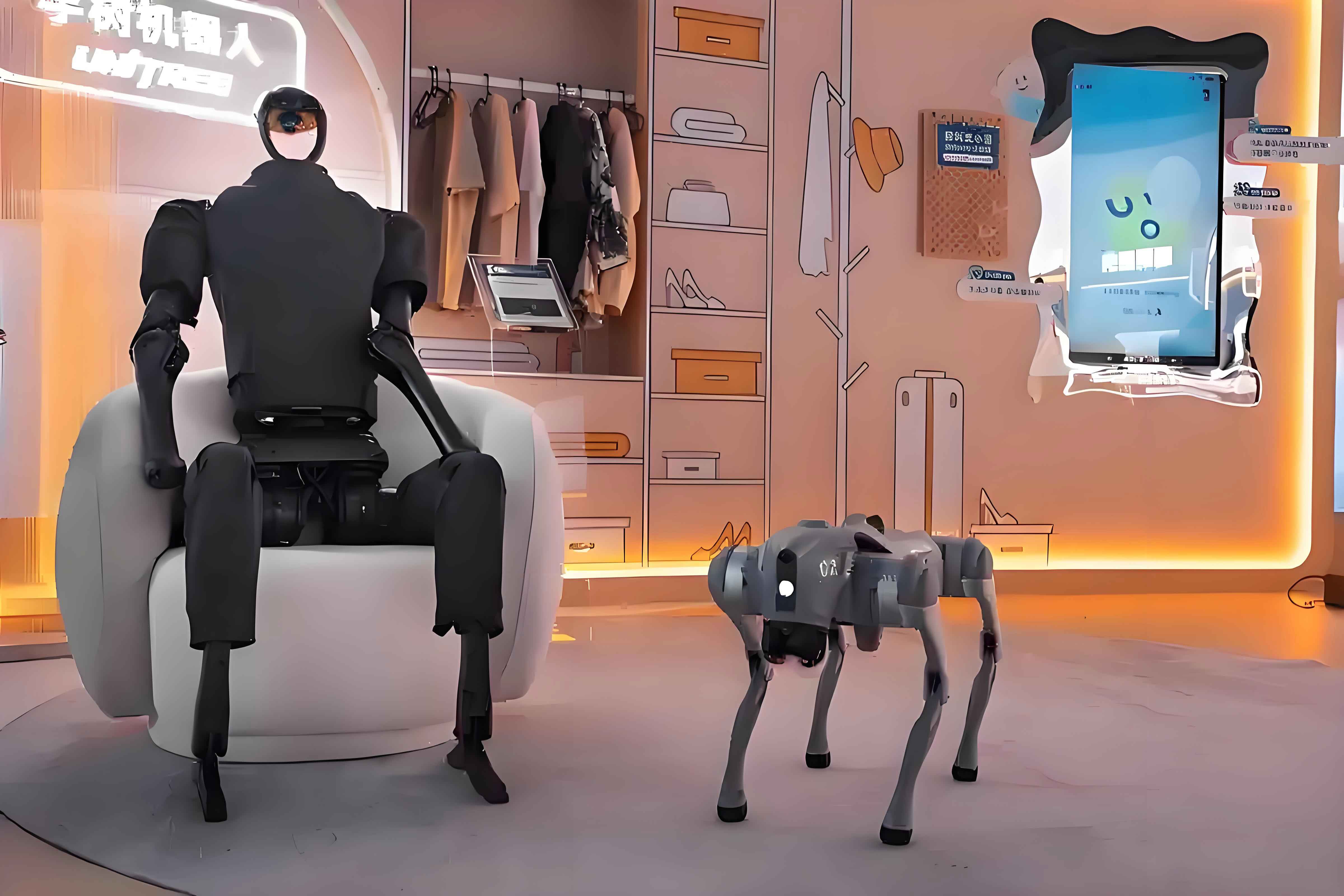
Turning to regional ecosystems, one coastal industrial hub in China stands out as an early mover in robotics. This region has cultivated a relatively complete industrial chain and a leading application market, providing a robust foundation for humanoid robot development. My assessment highlights several core advantages, summarized in the following table.
| Area of Strength | Specific Capabilities | Performance Metrics |
|---|---|---|
| Whole-Machine Development | Home to multiple companies that have launched humanoid robot整机 products, placing it in the domestic top tier alongside other major hubs. Expertise in本体运动控制 is particularly notable. | One locally developed humanoid robot set a world speed record for full-sized humanoid robots at 3.3 m/s, with potential exceeding 5 m/s. Seven firms in the region have unveiled整机 models. |
| Component Manufacturing | Strong supply chain for key humanoid robot零部件, leveraging a well-established automotive parts industry. Capabilities span integrated joints, reducers, lead screws, dexterous hands, and motors. | Leading suppliers produce一体化关节, RV reducers,灵巧手, and various电机. This ecosystem supports the国产化 of critical humanoid robot components. |
| Innovation and R&D Infrastructure | Concentration of prestigious universities and新型研发机构 focused on robotics research. High output of intellectual property in the humanoid robot domain. | Valid invention patents for humanoid robots rank third nationally, accounting for 14.7% of the total. Recent initiatives include establishing innovation centers and joint laboratories dedicated to humanoid robots. |
| Robotics Industry Cluster | Dense aggregation of enterprises across industrial, service,特种, and humanoid机器人 segments, supported by specialized industrial parks and towns. | The humanoid robot industry scale reached a notable value recently, ranking fifth in the country. Clusters are focused in key urban areas, fostering collaboration. |
The innovation prowess in this region can be partly explained by the research and development intensity. If $R$ represents R&D expenditure and $P$ the number of patents, a simple linear relationship might be assumed: $$ P = \alpha R + \beta $$ where $\alpha$ and $\beta$ are constants. For humanoid robot technologies, this region exhibits a high $\alpha$, indicating efficient translation of R&D into intellectual property.
From my viewpoint, to propel the humanoid robot industry forward, a multifaceted strategy is essential. I propose the following recommendations, grounded in the principles of systemic planning, technological攻关, and ecological cultivation.
First, robust top-level design is paramount. Governments should formulate detailed development roadmaps with clear阶段性目标和重点任务 for humanoid robot industry growth. Legal and regulatory frameworks must be前瞻性 studied to define the legal status of humanoid robots, delineate safety responsibilities, and establish flexible, prudent监管规则. This creates a stable environment for humanoid robot innovation.
Second, enhancing whole-machine and component synergy is critical. Regions should encourage differentiated and collaborative development among enterprises. Supporting the formation of innovation consortia that bring together整机 manufacturers,零部件 suppliers, academia, and research institutes can accelerate joint攻关. The table below outlines potential focus areas for整零协同.
| Collaboration Dimension | Objective | Expected Outcome |
|---|---|---|
| Integrated Joint Development | Co-design of humanoid robot整机 and key components like reducers, controllers, and sensors to optimize performance and reduce costs. | Faster iteration cycles and improved reliability of humanoid robot systems. |
| Supply Chain Localization | Strengthen domestic production of core components such as harmonic drives, ball screws, and force sensors specifically for humanoid robots. | Reduced import dependency, enhanced supply chain security for humanoid robot manufacturing. |
| Standardization Initiatives | Develop common interfaces and protocols for humanoid robot components to facilitate interoperability and modularity. | Lower barriers to entry for零部件 suppliers and faster integration for整机 assemblers. |
Third, intensifying key technology攻关 is non-negotiable. Humanoid robot advancement hinges on breakthroughs in multiple domains. Core areas include:
- Dynamic Control and Locomotion: Algorithms for stable bipedal walking and running, often based on models like the Linear Inverted Pendulum (LIP): $$ \ddot{x} = \omega^2 (x – p) $$ where $x$ is the center of mass position, $p$ is the foot placement, and $\omega$ is a constant related to gravity and leg length. This simplifies balance control for humanoid robots.
- AI and Perception: Integration of large AI models for natural interaction and environmental understanding. The training objective often involves minimizing a composite loss: $$ \mathcal{L} = \mathcal{L}_{\text{task}} + \lambda_1 \mathcal{L}_{\text{reg}} + \lambda_2 \mathcal{L}_{\text{safe}} $$ where $\mathcal{L}_{\text{task}}$ is task-specific loss (e.g., for object manipulation), $\mathcal{L}_{\text{reg}}$ is regularization, $\mathcal{L}_{\text{safe}}$ ensures safe operation, and $\lambda$’s are weighting parameters. This is crucial for intelligent humanoid robot behavior.
- Actuation and Power Systems: Development of high-torque density motors and efficient energy management. The torque output $\tau_m$ of a motor can be related to current $i$ and motor constant $K_t$: $$ \tau_m = K_t i $$ Optimizing $K_t$ and thermal management is vital for powerful and enduring humanoid robot actuators.
Establishing中试 platforms for humanoid robot technologies can bridge the lab-to-factory gap, accelerating the工程化 of innovations.
Fourth, a dual approach of investment attraction and capital injection is vital. Targeting upstream suppliers in the humanoid robot value chain for招商引资 can strengthen local ecosystems. Simultaneously, leveraging government-guided funds to establish dedicated humanoid robot子基金 can attract patient capital. If $F(t)$ represents the fund size dedicated to humanoid robots, and $G$ is government seed funding, a multiplier effect can be modeled: $$ F(t) = G \cdot (1 + m)^t $$ where $m$ is the annual multiplier from private co-investment. Regular forums and matchmaking events can amplify this effect for humanoid robot startups.
Fifth, innovating and deepening scenario applications is the ultimate test for humanoid robots. A “application牵引, scenario驱动” approach is necessary. The table below enumerates potential application domains and their value propositions for humanoid robot deployment.
| Application Domain | Potential Humanoid Robot Tasks | Key Performance Indicators (KPIs) |
|---|---|---|
| Manufacturing & Logistics | Assembly line work, parts handling, warehouse picking and packing, quality inspection. | Task completion time, error rate, payload capacity, uptime. |
| Healthcare & Elderly Care | Patient assistance, rehabilitation support, medication delivery, companionship. | Safety incidents, user satisfaction scores, interaction fluency. |
| Emergency Response & Inspection | Disaster site exploration, hazardous material handling, infrastructure inspection (e.g., pipelines, power lines). | Environment tolerance (e.g., heat, radiation), navigation accuracy in unstructured terrain, sensor data quality. |
| Retail & Hospitality | Customer service, guided tours, food preparation, cleaning. | Number of services per day, customer feedback, multi-tasking ability. |
| Domestic & Personal Service | Home cleaning, cooking assistance, childcare support, educational tutoring. | Autonomy level (hours without intervention), adaptability to home environments, cost-effectiveness. |
The economic value $V$ of deploying a humanoid robot in a scenario can be approximated by weighing benefits against costs: $$ V = \sum_{i} B_i – \sum_{j} C_j $$ where $B_i$ are benefits like labor savings or new revenue streams, and $C_j$ are costs including acquisition, maintenance, and energy. Piloting humanoid robots in diverse scenarios helps refine this value equation.
Sixth, constructing a high-quality industrial ecosystem is the bedrock for sustained success. This involves talent cultivation, policy incentives, and institutional innovation. Specifically:
- Talent Development: Attracting领军人才 in humanoid robot research and engineering, while fostering产教融合 through university-industry partnerships to train高技能人才. The talent growth rate $\gamma$ can be enhanced via targeted policies: $$ \gamma = \gamma_0 + \Delta \gamma_{\text{policy}} $$ where $\gamma_0$ is the baseline rate and $\Delta \gamma_{\text{policy}}$ is the policy-induced increase.
- Policy Support: Implementing tax incentives,首台套 subsidies for humanoid robot整机 and components, and establishing future industry investment growth mechanisms. A simple subsidy model for humanoid robot producers could be: $$ S = s \cdot Q $$ where $S$ is total subsidy, $s$ is per-unit subsidy, and $Q$ is production volume, stimulating scale-up.
- Collaborative Platforms: Creating industry alliances and knowledge-sharing networks to disseminate best practices and coordinate standards for humanoid robot development.
In conclusion, the era of humanoid robots is dawning with remarkable velocity. Through my analysis, I have highlighted the accelerative trends shaping the industry, the foundational advantages possessed by proactive regions, and a comprehensive strategic framework for fostering innovation. The journey ahead for humanoid robots will be defined by continuous technological refinement, savvy ecosystem orchestration, and relentless pursuit of real-world utility. As stakeholders navigate this complex landscape, a focus on systemic collaboration, deep technology攻关, and patient capital will be indispensable to unlocking the full potential of humanoid robots and solidifying a position at the forefront of this transformative field.