
The global manufacturing landscape is undergoing a profound transformation, accelerating towards intelligent and digital transformation. In this context, Intelligent Manufacturing (IM) has emerged as the core pathway driving a new industrial revolution, facilitating industrial upgrading, and enhancing international competitiveness. Fundamentally, IM involves the deep integration of new-generation information technologies with manufacturing technologies to achieve flexibility, precision, and intelligence in production processes. While foundational IM systems have taken shape, featuring smart factories and industrial internet platforms, the sector is at a critical juncture transitioning from primary to advanced stages, facing challenges like uneven intelligence levels and insufficient system integration capabilities. To realize the strategic vision of becoming a manufacturing powerhouse, it is imperative to transcend the boundaries of traditional automation and single-loop intelligent control by introducing more autonomous and adaptive intelligent systems.
Embodied Intelligence (EI), a frontier field at the intersection of artificial intelligence and robotics, is gradually becoming the key technological foundation supporting the high-level development of IM. Unlike traditional AI models that rely on static data analysis, EI emphasizes a closed-loop “perception-decision-action” capability, allowing machine systems to interact with the environment based on their physical form, enabling adaptive learning, cooperative operation, and flexible response to complex tasks. This paradigm shift equips manufacturing systems with unprecedented flexibility and autonomy. The integration of EI propels IM beyond conventional automated production towards a higher echelon of autonomous and cognitive manufacturing.
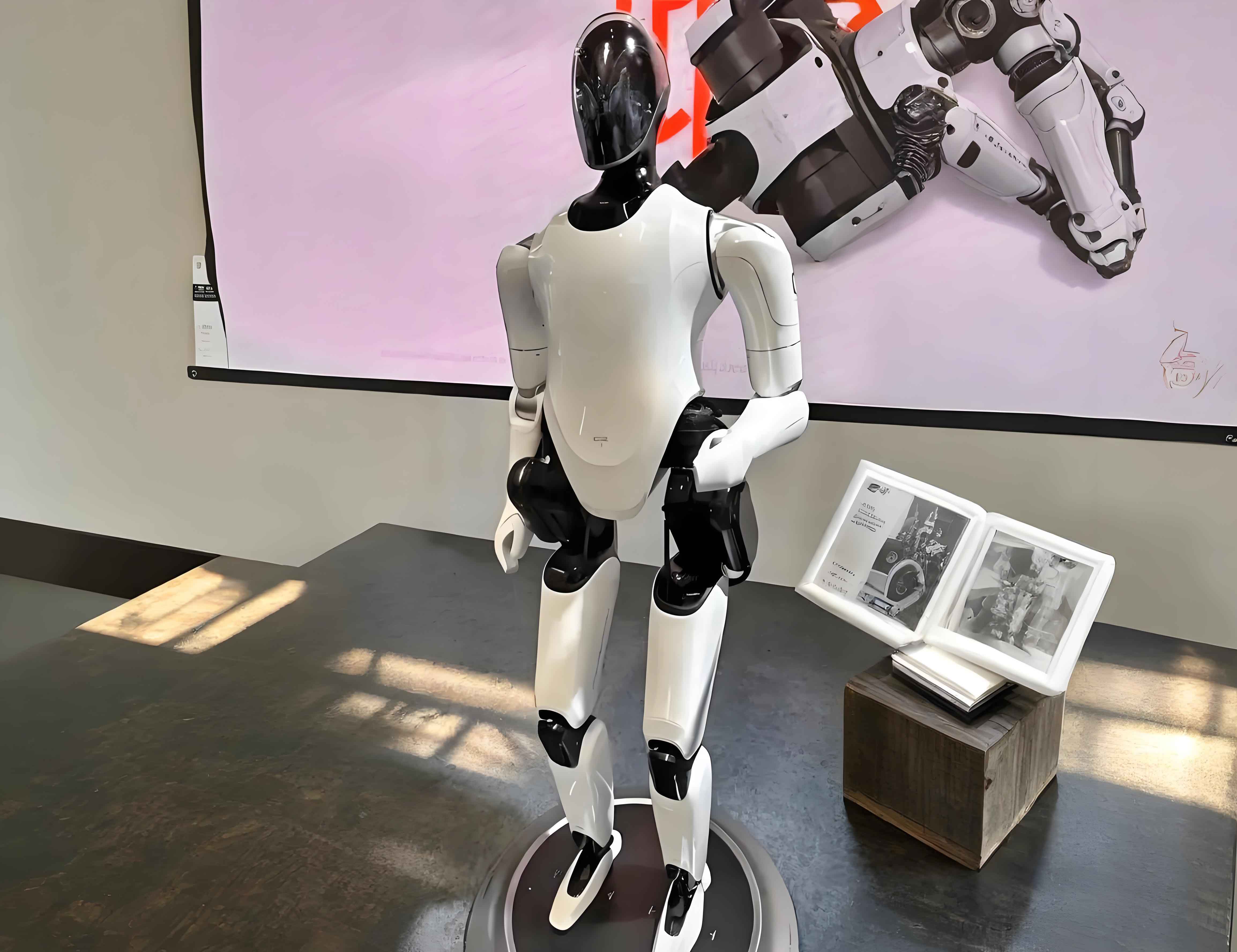
From smart assembly and predictive maintenance to unmanned logistics and intelligent inspection, embodied AI robots are demonstrating significant value. For instance, collaborative robots equipped with tactile perception can achieve micron-level precision in complex product assembly. However, as deployment deepens, challenges such as difficulties in multimodal data fusion, insufficient task generalization, and lack of ethical safety mechanisms persist. Given the high compatibility and vast potential of EI in manufacturing, it is crucial to conduct in-depth research into the coupling of EI and IM from perspectives of system architecture, key technology breakthroughs, and application expansion. This article aims to systematically explore this integration, providing theoretical and practical insights for constructing the next generation of highly autonomous, flexible, and trustworthy IM systems.
I. The Technical Evolution of Intelligent Manufacturing
The journey towards today’s smart factories can be categorized into three distinct evolutionary phases, each marked by a fundamental shift in technological paradigm and system capability. Embodied AI robots represent the vanguard of the most recent and advanced phase.
| Developmental Stage | Core Paradigm & Characteristics | Enabling Technologies | Inherent Limitations |
|---|---|---|---|
| Stage 1: Rule-Based Automated Manufacturing | Pre-programmed automation; Rigid, high-precision execution of repetitive tasks. | Programmable Logic Controllers (PLCs), CNC machines, SCADA systems. | Low flexibility, inability to handle variability, no learning or optimization capability. |
| Stage 2: Data-Driven Digital Intelligent Manufacturing | Information and data-driven; Real-time monitoring, dynamic optimization, and predictive analytics. | Sensor networks, Industrial IoT, Cloud Computing, Big Data Analytics, AI algorithms. | Reliance on predefined models, lacks high-level autonomous cognition and reasoning in unstructured settings. |
| Stage 3: Embodied-Intelligence-Empowered Intelligent Manufacturing | Machine embodiment and cognitive reasoning; Autonomous adaptation, decision-making, and human-like interaction. | Embodied AI robots, Foundation Models (LLMs/VLMs), Advanced force control, Cognitive architectures. | Faces challenges in multimodal fusion, safe deployment, and real-world generalization, but actively overcoming them. |
The first stage established the bedrock of repeatable precision. The second stage connected the physical and digital worlds, making processes visible and optimizable. The third stage, where embodied AI robots operate, is about creating cyber-physical systems that can understand, reason, and act within the complex, dynamic reality of a factory floor. This shift is akin to moving from a scripted actor to an improvisational partner that learns from every interaction.
II. The Technical Architecture for Embodied AI Robot-Driven Manufacturing
The integration of embodied AI robots into manufacturing necessitates a holistic technical architecture that bridges perception, cognition, and physical action. This system revolves around the embodied AI robot as the central agent, forming a closed-loop “Perceive-Decide-Act-Learn” interaction model involving humans, machines, and the environment.
II.1. Core Technological Elements of the Embodied AI Robot
The intelligence of an embodied AI robot in manufacturing is built upon several foundational technological pillars.
1. Multimodal Industrial Data Fusion and Perception: An embodied AI robot must perceive the world as a human operator does—integrating sight, sound, touch, and other senses. Technically, this involves fusing data from cameras (2D/3D), LiDAR, force/torque sensors, microphones, and inertial measurement units (IMUs). The fusion happens at different levels: data-level (raw signal combination), feature-level (combining extracted features like visual edges with force gradients), and decision-level (combining results from separate perception modules). A core challenge and active research area is achieving robust fusion. One common mathematical representation for feature-level fusion is:
$$ \mathbf{z} = f_{\theta}(\mathbf{x_v}, \mathbf{x_f}, \mathbf{x_a}) $$
where $\mathbf{z}$ is the unified perceptual representation, $f_{\theta}$ is a learned neural network (e.g., a Transformer-based encoder), and $\mathbf{x_v}$, $\mathbf{x_f}$, $\mathbf{x_a}$ are feature vectors from visual, force/tactile, and auditory modalities, respectively. This unified representation $\mathbf{z}$ is crucial for downstream cognitive tasks.
2. Foundation Model-Based Cognitive Manufacturing: Large Language Models (LLMs) and Vision-Language Models (VLMs) provide the cognitive engine for the embodied AI robot. They enable natural language instruction understanding, task planning, and causal reasoning. The technical framework operates in three layers:
- Perception & Semantic Grounding: Raw sensor data is mapped to a semantic space (e.g., “a metal bracket with a slightly bent edge at coordinates (x,y)”).
- Cognition & Reasoning: The foundation model, potentially augmented with a manufacturing-specific knowledge graph, reasons about the task. For example, given the instruction “Assemble the gearbox,” it decomposes this into a sequence of primitive actions, checks for missing parts, and infers potential issues from perceptual input.
- Decision & Code Generation: The reasoning output is transformed into executable code or low-level control commands for the robot. This can be represented as a policy $\pi$ generated by the model $M$:
$$ \pi = M(\text{“Assemble gearbox”}, \mathbf{z}, \mathcal{K}) $$
where $\mathcal{K}$ represents the manufacturing knowledge base. This allows an embodied AI robot to follow vague instructions like “tighten that bolt until it’s snug,” interpreting “snug” based on learned context and force feedback.
3. Advanced Force and Compliance Control: Precision assembly, polishing, and delicate handling require exquisite force control. An embodied AI robot employs impedance or admittance control strategies to behave not as a rigid position-controlled machine, but as a compliant partner. The core equation for impedance control is:
$$ \mathbf{M}_d \ddot{\mathbf{e}} + \mathbf{B}_d \dot{\mathbf{e}} + \mathbf{K}_d \mathbf{e} = \mathbf{F}_{ext} $$
where $\mathbf{e}$ is the pose error, $\mathbf{M}_d$, $\mathbf{B}_d$, $\mathbf{K}_d$ are the desired inertia, damping, and stiffness matrices, and $\mathbf{F}_{ext}$ is the external force measured by the robot’s sensors. By tuning these matrices, the embodied AI robot can behave as softly as a spring or as rigid as a tool, adapting its interaction dynamics in real-time based on the task, a capability essential for true human-robot collaboration.
4. Robust Motion Planning and Navigation: In cluttered, dynamic factories, an embodied AI robot must plan collision-free paths. While algorithms like Rapidly-exploring Random Trees (RRT*) or A* search are used, the integration with perception and real-time dynamics is key. The planning problem is often framed as optimizing a cost function $C(\tau)$ over a trajectory $\tau$:
$$ \tau^* = \arg\min_{\tau} \int_{t_0}^{t_f} ( w_{\text{path}} \cdot \text{Length}(\tau) + w_{\text{obst}} \cdot \text{CollisionCost}(\tau, \mathcal{O}_t) + w_{\text{dyn}} \cdot \text{DynamicsViolation}(\tau) ) dt $$
where $\mathcal{O}_t$ represents the dynamically updating map of obstacles from perception. Modern approaches use deep reinforcement learning to learn planning policies directly from sensor input, enabling the embodied AI robot to navigate complex, unseen environments.
II.2. A Layered Architectural Framework
These technological elements are integrated into a coherent, seven-layer architecture that governs an embodied AI robot system within a smart factory.
| Layer | Core Components & Function | Key Technologies for Embodied AI Robots |
|---|---|---|
| 1. Physical Layer | Robotic actuators (arms, AGVs, humanoids), sensors (vision, force, tactile), and embedded compute hardware. | High-DOF manipulators, sensitive tactile skins, edge computing modules. |
| 2. Data Layer | Acquisition, storage, and management of multimodal time-series data from the physical layer. | Time-synchronized data streams from all robot sensors; manufacturing execution system (MES) data. |
| 3. Algorithm Layer | The repository of intelligence: perception, planning, learning, and control algorithms. | Neural networks for perception, RL policies, motion planners, foundation model APIs. |
| 4. Perception Layer | Real-time processing of raw data to create a coherent understanding of the environment and self-state. | Multimodal fusion pipelines, object recognition, semantic segmentation, anomaly detection. |
| 5. Decision Layer | The “brain” that uses perceptual understanding to formulate goals, tasks, and high-level plans. | Task planning with LLMs, resource coordination, adaptive scheduling. |
| 6. Execution Layer | Translates decisions into low-level, safe, and precise control signals for the physical hardware. | Real-time controllers (force/position), safety-rated motion execution, human-robot interaction interfaces. |
| 7. Feedback & Learning Layer | Closed-loop system that monitors outcomes, evaluates performance, and enables continuous improvement. | Reinforcement learning from practice, digital twin simulation for training, predictive maintenance models. |
This architecture enables a single embodied AI robot or a fleet of them to operate autonomously while remaining integrated into the broader manufacturing ecosystem, learning from every task to become more proficient and resilient.
III. The Transformative Impact of Embodied AI Robots
The deployment of embodied AI robots is not merely an incremental improvement but a transformative force across the manufacturing value chain.
1. Revolutionizing Production Models: Embodied AI robots enable true flexible manufacturing. They can switch between different product variants with minimal re-programming, adapting their grip, tool path, and assembly strategy on the fly. For example, an embodied AI robot using vision and force feedback can assemble a family of circuit boards with slightly different component layouts, compensating for positional variances automatically. This drastically reduces changeover times and makes small-batch, customized production economically viable.
2. Supercharging Warehousing and Logistics: In logistics, the embodied AI robot takes the form of autonomous mobile robots (AMRs) with advanced manipulators. Unlike traditional automated guided vehicles (AGVs) that follow fixed paths, an AMR as an embodied AI robot can dynamically navigate a chaotic warehouse, identify and pick items of various shapes and sizes from shelves using its perception and manipulation skills, and deliver them precisely. This creates a fluid, responsive, and highly efficient material flow system.
3. Ensuring Unprecedented Quality and Maintenance: The role of the embodied AI robot in inspection and maintenance is profound. Equipped with multispectral cameras and ultrasonic sensors, it can perform detailed inspections, identifying surface defects, subsurface cracks, or loose fittings that are invisible to the human eye. For predictive maintenance, an embodied AI robot can be deployed to autonomously patrol factory floors, collecting vibration, thermal, and acoustic data from equipment, feeding it into analytics models to predict failures before they occur, and even performing simple interventions like tightening bolts.
4. Enabling Deep, Intuitive Human-Robot Collaboration (HRC): This is perhaps the most significant shift. An embodied AI robot designed for collaboration can understand human intent through gesture recognition, gaze tracking, and natural language. It can predict a human worker’s next move and adjust its own actions for safety and efficiency. For instance, in a cooperative assembly task, the human might handle the dexterous wiring while the embodied AI robot holds and positions a heavy component, adjusting its hold in real-time based on the human’s physical feedback. This symbiotic partnership leverages the strength, precision, and endurance of the robot with the creativity, problem-solving, and flexibility of the human.
IV. Application Challenges and Future Trajectories
Despite the promise, the widespread adoption of embodied AI robots faces significant hurdles that must be addressed.
| Key Challenge | Description & Impact | Potential Pathways Forward |
|---|---|---|
| Multimodal Data Scarcity & Complexity | Lack of large-scale, high-quality, labeled datasets combining visual, tactile, and force data from real manufacturing settings hinders training and validation of robust models. | Development of simulation-to-real (Sim2Real) techniques; creation of open-source, standardized industrial embodied AI datasets; federated learning across factories. |
| AI Hallucinations and Safety Risks | Foundation models powering cognition can generate incorrect or unsafe plans (“hallucinate”). In physical systems, this can lead to collisions, damage, or injury. | Developing “guardrail” models and verifiable safety filters; using hybrid symbolic-neural reasoning; extensive real-world testing and validation in controlled environments. |
| Hardware-Software Co-Design Bottlenecks | The physical design of an embodied AI robot (e.g., actuator stiffness, sensor placement) is often disconnected from the AI software, limiting optimal performance. | Advancing co-design methodologies where AI algorithms influence mechanical design and vice versa; development of more modular and reconfigurable robotic platforms. |
| High Integration Cost and Skill Gaps | Deploying and maintaining a fleet of sophisticated embodied AI robots requires significant capital investment and specialized skills in robotics and AI, which are in short supply. | Growth of Robotics-as-a-Service (RaaS) models; development of more intuitive, no-code/low-code programming interfaces for robot tasking; investment in workforce training. |
| Evolving Ethics and Regulatory Frameworks | Liability for accidents involving autonomous embodied AI robots, data privacy on shared workspaces, and job displacement concerns create regulatory uncertainty. | Proactive engagement between industry, academia, and policymakers to establish safety standards, certification processes, and ethical guidelines for embodied AI. |
Future Trajectories:
Looking ahead, the evolution of the embodied AI robot in manufacturing points toward several clear trends:
- Ubiquitous General-Purpose Agents: The future lies not in single-task robots but in general-purpose embodied AI robots that can be taught a wide variety of tasks through demonstration or language instruction, dramatically reducing deployment time for new applications.
- Swarm Intelligence and Multi-Robot Systems: Factories will see coordinated fleets of heterogeneous embodied AI robots (mobile, manipulator, humanoid) working in concert, dynamically allocating tasks among themselves for maximum throughput and resilience.
- Seamless Digital-Physical Fusion via Digital Twins: Every embodied AI robot will have a high-fidelity digital twin that mirrors its state in real-time. This twin will be used for ultra-realistic simulation, pre-training policies, predictive diagnostics, and remote teleoperation, blurring the line between the virtual and physical factory.
- Hyper-Adaptive and Self-Improving Systems: Through continuous reinforcement learning in both simulation and the real world, embodied AI robots will become systems that not only execute tasks but also continuously refine their own strategies, optimize energy consumption, and discover more efficient workflows without human intervention.
V. Strategic Recommendations for Advancement
To harness the full potential of embodied AI robots and navigate the outlined challenges, a concerted, multi-stakeholder effort is required.
1. Foster Cross-Disciplinary Research Consortia: Governments and industry leaders should establish and fund large-scale research initiatives that bring together roboticists, AI researchers, control theorists, and manufacturing engineers. The focus should be on fundamental breakthroughs in robust multimodal perception, safe human-aware planning, and efficient sim2real transfer for embodied AI robots.
2. Build Open Ecosystems and Benchmarking Standards: To overcome data scarcity and accelerate innovation, the community should develop open-source platforms, shared benchmark tasks (e.g., standardized assembly challenges), and public datasets for training and testing embodied AI robot capabilities. This will lower the barrier to entry and enable reproducible research.
3. Prioritize Safety and Certification from the Ground Up: Safety must be a first-principle design constraint, not an add-on. New international standards for the safety of learning-enabled, autonomous embodied AI robots operating in human-collaborative environments need to be developed. This includes certification processes for AI-driven decision modules.
4. Invest in the Workforce of the Future: As embodied AI robots become colleagues, the human workforce’s role will evolve towards supervision, task instruction, maintenance, and creative problem-solving. Massive investment in re-skilling and up-skilling programs is essential to ensure a smooth transition and to build the necessary talent pool to design, deploy, and manage these advanced systems.
5. Promote Gradual, Value-Driven Adoption: Encourage manufacturers to start with pilot deployments of embodied AI robots in well-defined, high-value applications (e.g., precision polishing, hazardous material handling) to demonstrate ROI and build internal expertise, before scaling to broader, more complex use cases.
In conclusion, the era of the embodied AI robot in intelligent manufacturing is dawning. This technology represents a paradigm shift from automated tools to intelligent, adaptive partners. While significant scientific and engineering challenges remain, the trajectory is clear. By addressing the technical bottlenecks, fostering collaborative ecosystems, and preparing our industries and workforce, we can steer this revolution towards creating manufacturing systems that are not only supremely efficient and flexible but also safer and more collaborative, ultimately unlocking new frontiers of productivity and innovation.