
As I observe the global technological landscape, it becomes increasingly clear that the embodied intelligence industry represents a pivotal frontier in the current wave of scientific and industrial revolution. Nations are strategically positioning themselves to dominate this emerging field, recognizing its potential to redefine economic and technological paradigms. From my analysis, adopting a “technology-economy” framework is essential to systematically unravel the intrinsic characteristics, developmental logic, and competitive dynamics of this sector. The evolution of embodied AI robot systems is not merely a linear technological advancement but a complex interplay of innovation, market forces, and ecosystem construction.
Defining the Embodied Intelligence Industry and Its Core Characteristics
Before delving into the mechanics, it is crucial to define the domain. I conceptualize the embodied intelligence industry as an emerging industrial cluster focused on intelligent systems that engage in deep, physical interaction with the world. It embeds artificial intelligence into physical carriers endowed with environmental perception, motion control, and autonomous decision-making, realizing an intelligent industrial form characterized by a “perception-cognition-action” closed loop. The central product of this industry is the embodied AI robot, a physical agent that operates in and adapts to real-world environments.
The development of this field can be segmented into distinct historical phases, each marking a significant evolution in the conception and capability of embodied AI robot technology.
| Development Phase | Key Drivers & Milestones | Industrial & Technological Focus |
|---|---|---|
| Nascent Stage (1945-1990) | Philosophical foundations (“embodiment”), early AI concepts, breakthroughs in computing hardware and sensors. | Conceptual exploration; early experimental robots (industrial arms, early humanoid prototypes); rule-based, behaviorist AI. |
| Deepening Stage (1991-2021) | Maturation of embodied cognition theory; breakthroughs in deep learning, reinforcement learning, and multimodal sensing. | Cross-disciplinary fusion; development of biomimetic and “AI+robot” systems; technological accumulation in perception, control, and learning algorithms for embodied AI robot platforms. |
| Holistic Integration Stage (2022-Present) | Advent of large foundation models (e.g., ChatGPT), leading to a leap in generalization and reasoning capabilities. | Deep fusion of AI models with robotics; application landing and commercial exploration; construction of a full industrial system around the embodied AI robot. |
From this evolution, I derive several defining “technology-economy” characteristics of the industry:
| Characteristic | Technological Manifestation | Economic Implication |
|---|---|---|
| Frontier Advancement & Disruptive Uncertainty | Continuous breakthroughs in sensors, AI algorithms, and robot structures. Multiple competing technical pathways (e.g., for the “robot brain”). | Potential to create new markets and obliterate existing business models. High uncertainty in which technologies and applications will achieve commercial dominance. |
| Technological Fusion & Industrial Synergy | Convergence of AI, robotics, materials science, and cognitive science within a single embodied AI robot platform. | Requires deep collaboration across previously separate industrial chains. Success depends on “industry-university-research-application” closed-loop systems. |
| Strategic Foresight & High-Growth Potential | Recognized as a core future industry by major economies, driving national-level R&D investment. | Projected to grow at exceptional compound annual rates, significantly outpacing the broader robotics sector, due to vast addressable markets across industries. |
The industry’s structure is typically viewed as a three-tiered ecosystem that supports the development and deployment of the embodied AI robot:
| Layer | Components | Function |
|---|---|---|
| Upstream (Infrastructure) | Core hardware: chips, sensors, actuators, motors, communication modules, power systems. | Provides the physical “body” and basic sensing/actuation capabilities for the embodied AI robot. |
| Midstream (Software & System Integration) | AI algorithms, operating systems, cloud platforms, middleware, simulation tools, system integration services. | Provides the “mind”—the intelligence, control systems, and integration framework that animates the embodied AI robot. |
| Downstream (Products & Applications) | Humanoid robots, specialized service robots, autonomous vehicles; Applications in manufacturing, logistics, healthcare, domestic service, public safety. | The final embodied AI robot products and their deployment across myriad scenarios, creating tangible economic value. |
The “Technology-Industry-Society” Mechanism of Development
The growth of the embodied intelligence industry is not accidental but follows a coherent logic. I propose a “Technology-Industry-Society” framework to explain its development mechanism, where internal and external forces interact dynamically.
1. Innovation Drive: The Fusion of Technological and Industrial Innovation
This is the core internal engine. It moves from point breakthroughs to systemic integration and finally to cross-domain knowledge spillover, fundamentally enabling new industrial forms centered on the embodied AI robot.
• Technology Cluster Innovation: Initially, multiple parallel technical paths compete. Over time, a dominant design for key components of the embodied AI robot (e.g., a specific actuator architecture or learning paradigm) emerges, around which a supportive cluster of complementary technologies coalesces. This cluster creates a reinforcing ecosystem of innovation.
• Technology System Integration: The true challenge and value lie in the seamless integration of hardware, software, and algorithms into a cohesive embodied AI robot system. This follows a logic of complementary and supermodularity, where the integrated whole is greater than the sum of its parts. The system’s performance can be modeled as a function of its integrated technological capital:
$$P_{robot} = f_{int}(K_{hardware}, K_{software}, K_{algorithm}) \quad \text{where} \quad \frac{\partial^2 P_{robot}}{\partial K_i \partial K_j} > 0 \ \text{for } i \neq j$$
Here, $P_{robot}$ is the performance of the embodied AI robot, and $K$ represents capital in hardware, software, and algorithms. The positive cross-partial derivative indicates supermodularity—investments in one area increase the marginal return on investments in another.
• Cross-Domain Technology Spillover: Technologies developed for one domain (e.g., computer vision for autonomous cars) rapidly spill over to empower embodied AI robot applications in others (e.g., robotic manipulation in factories). This is facilitated by the modularity of modern AI and the proliferation of open-source frameworks, dramatically lowering the barrier to entry and accelerating industry-wide progress.
2. Demand Pull: Scenario and Market Demand as Catalysts
Demand provides the critical selection environment and validation ground for technological iterations of the embodied AI robot.
• Scenario-Driven Demand: Specific, challenging application scenarios (e.g., unstructured warehouse logistics, elderly care) create precise technical requirements. These scenarios act as crucibles, forcing rapid iteration and improvement of the embodied AI robot‘s capabilities, moving it from lab prototypes to ruggedized, reliable products.
• Scale-Driven Demand: A large, diverse domestic market is a monumental advantage. It provides: 1) Diverse testing grounds for the embodied AI robot across countless edge cases; 2) Network effects, where the value of the robot platform increases with the number of users and developers, akin to Metcalfe’s Law: $$V \propto n^2$$ where $V$ is the platform’s value and $n$ is the number of connected nodes (robots, developers, users). 3) A virtuous cycle for要素 (Factors), attracting capital, talent, and generating massive, valuable training data.
• Industry Ecosystem Amplification: Demand is amplified through vertical (supply chain) and horizontal (cross-industry) synergy. A robust supply chain lowers costs and improves reliability for the embodied AI robot, while cross-industry collaboration (e.g., between robotics and automotive firms) unlocks new, hybrid applications.
3. Supply Creation: Generating New Demand Through Advanced Supply
Following Say’s Law, high-quality, innovative supply can create its own demand. This is evident in the embodied AI robot industry through three drivers:
• Technology-Driven Diverse Supply: Breakthroughs lead to new categories of embodied AI robot products (e.g., affordable bipedal robots), activating latent, unarticulated user needs. This initiates a positive feedback loop: $$S_{t+1} = S_t + \alpha (D_t – S_t)$$ where $S_t$ is supply sophistication at time $t$, $D_t$ is demand stimulated by that supply, and $\alpha$ is the rate of innovation. New supply stimulates intermediate goods demand (for sensors, chips), further fueling the industrial ecosystem.
• Competition-Driven High-Quality Supply: Intense rivalry among firms forces continuous improvement in the performance, cost, and usability of the embodied AI robot. This competitive pressure filters out inferior solutions and ensures that the market offerings genuinely solve user problems, thereby creating effective, sustainable demand.
• Efficiency-Driven High-Performance Supply: Optimization of the production process and resource allocation for the embodied AI robot lowers unit costs, making the technology accessible to a broader market. Furthermore, mass customization enabled by flexible embodied AI robot platforms allows for personalized solutions,挖掘ing deeper into niche demands.
4. Value Co-Creation: Policy and Capital Empowering the Ecosystem
The final piece of the mechanism is the socio-financial layer that enables and accelerates the above processes. The development of the embodied AI robot industry requires patient capital and supportive governance.
• Multi-Capital Empowerment: Government policies (R&D grants, tax incentives, national strategies) de-risk early-stage innovation. This public commitment signals the market and attracts substantial venture capital and corporate investment into embodied AI robot startups and projects, creating a powerful financial flywheel.
• Industry-University-Research-Application Collaborative Ecology: The complex challenges of building a capable embodied AI robot necessitate deep collaboration. This ecosystem connects fundamental research from academia, applied R&D from institutes, engineering and market insights from industry, and final validation from end-users. Knowledge flows through this network, accelerating the translation of science into commercially viable products.
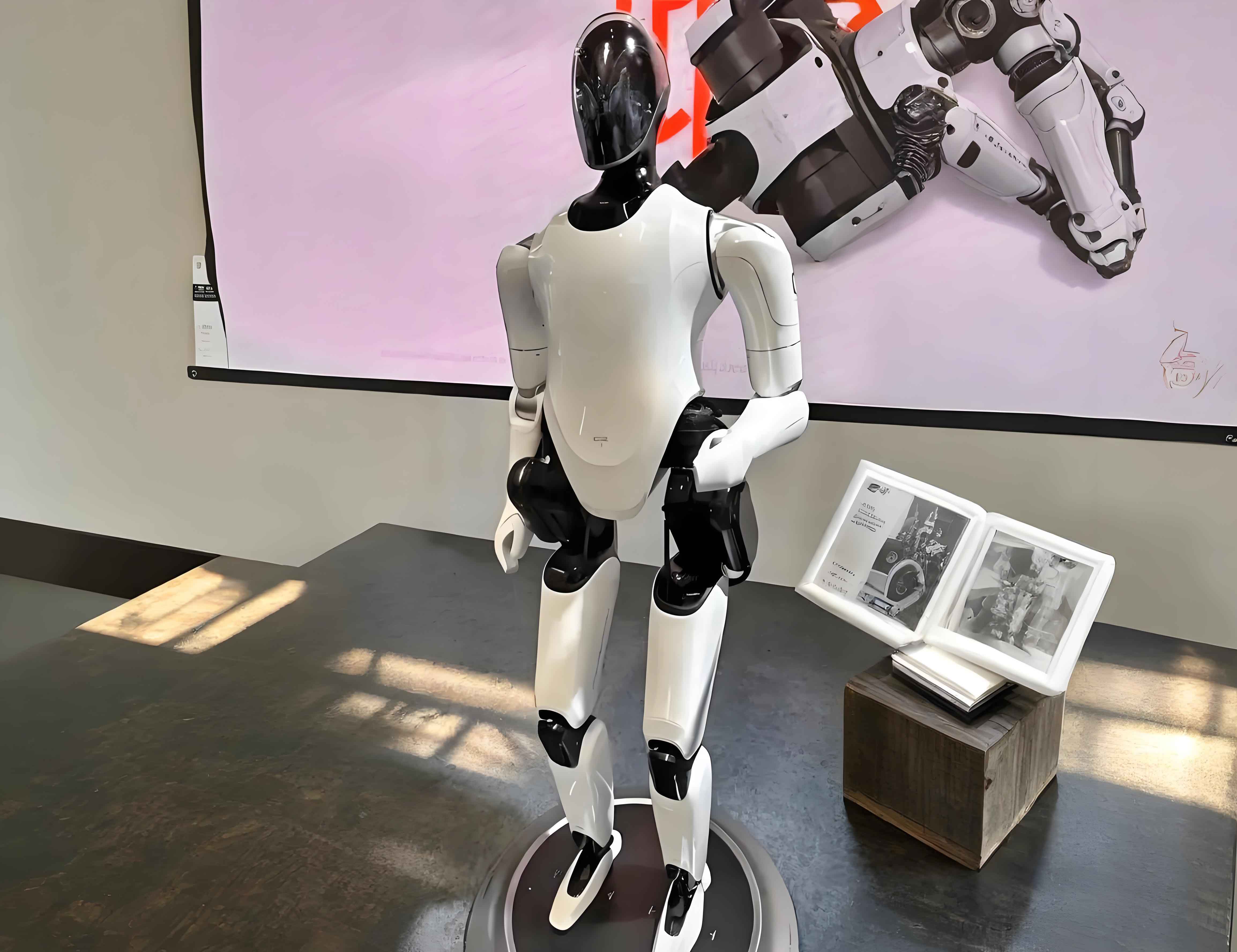
The figure above conceptually illustrates this synergistic ecosystem, where various actors and resources converge to co-create value around the core technology of the embodied AI robot.
A Comparative Analysis: Development Models and Paths
The global race in embodied intelligence is most vividly illustrated by the parallel yet distinct paths taken by the two leading powers. My analysis reveals a pattern of strategic divergence shaped by respective industrial bases and innovation systems.
| Dimension | Model & Path | Key Observations & Implications |
|---|---|---|
| Technology Drive | US: Algorithm & fundamental research leadership; high-performance system integration. China: Rapid quantitative catch-up in patents; strong software integration; cost-optimized hardware path (e.g., electric actuation). |
The US holds an edge in foundational breakthroughs and cutting-edge model development for the embodied AI robot “brain.” China excels in manufacturing scalability, cost-effective hardware for the embodied AI robot “body,” and applied AI integration. A bifurcation is emerging: high-end algorithmic sophistication vs. scalable, affordable hardware. |
| Development Direction | US: High value-added, innovation-driven (surgery, aerospace, advanced R&D). China: Scale application-driven (manufacturing automation, logistics, broad social services). |
Application focus diverges. The US targets premium, high-margin sectors. China leverages its vast manufacturing base and domestic market to drive volume and iterate quickly in diverse, often cost-sensitive, scenarios for the embodied AI robot. |
| Capital Investment | US: Venture capital-dominated, focused on foundational tech and moonshot startups. China: Policy-guided, with state and local funds catalyzing market response; focus on commercialization. |
US investment is high-risk, high-reward, betting on paradigm-shifting embodied AI robot technology. Chinese investment is more strategically channeled, aiming to build complete industrial chains and achieve rapid commercial rollout. |
| Talent Deployment | US: Maintains a strong pull for global顶尖 AI talent; leading in top-tier researchers. China: Produces a high volume of AI PhDs; rapidly growing pool of skilled researchers; strengthening vocational training for integration. |
The US benefits from a long-established “brain drain” dynamic for elite embodied AI robot researchers. China’s strength lies in the scale and speed of its talent pipeline, though attracting global顶尖 talent remains a challenge. |
Strategic Pathways for Advancement
Based on my analysis of the underlying mechanisms and the competitive landscape, I propose a multi-dimensional strategy to foster a robust and leading embodied intelligence industry ecosystem.
| Strategic Dimension | Concrete Actions | Expected Outcome |
|---|---|---|
| 1. Deepen Frontier Technology Fusion & Cost-Leadership | • Establish interdisciplinary research consortia for breakthrough innovation. • Fund scenario-specific technical攻坚 (e.g., dexterous manipulation in clutter). • Create “Embodied AI+” demonstration hubs for cross-sectoral application validation. |
Accelerated transition from technological catch-up to leadership in key integrative technologies for the embodied AI robot, enabling penetration into diverse, global markets. |
| 2. Construct an Enterprise-Led Collaborative Innovation System | • Designate “chain leader” enterprises to orchestrate upstream-downstream R&D. • Create open innovation platforms linking firms, universities, and research institutes. • Streamline IP and knowledge-sharing mechanisms within these consortia. |
A vibrant, self-sustaining innovation ecosystem where the embodied AI robot development cycle (research-prototype-product-market) is significantly shortened. |
| 3. Gradient Cultivation of Innovative Enterprises | • Implement tiered policy support:孵化 for startups, scaling aid for growth-stage firms, strategic partnership for leaders. • Foster a pipeline of specialized, innovative SMEs (Gazelles, Unicorns, “Little Giants”). • Encourage large firms to create venture arms or startup accelerator programs. |
A dynamic and resilient industrial base with a mix of agile innovators and scale champions, all contributing to the embodied AI robot ecosystem. |
| 4. Unclog the “Technology-Industry-Finance” Positive Cycle | • Develop specialized financial instruments (patient capital funds, VC/PE) for the long R&D cycles of embodied AI robot. • Build industrial clusters in key regions to achieve agglomeration economies. • Establish digital platforms for seamless information sharing among tech developers, manufacturers, and investors. |
A smooth flow of capital to innovation, and of innovation to commercialization, ensuring the embodied AI robot industry has the sustained resources needed for global competition. |
In conclusion, my analysis underscores that the embodied intelligence industry, with the embodied AI robot at its core, operates through a complex but understandable “Technology-Industry-Society” mechanism. Success is not guaranteed by technological prowess alone but by the careful cultivation of an entire innovation ecosystem that aligns R&D, market demand, industrial policy, and financial support. The strategic contest will be won by those who best master this holistic orchestration.