
As I reflect on the rapid advancements in artificial intelligence, particularly with large language models, I am struck by the transformative potential of humanoid robots. These entities, endowed with human-like appearances and enhanced cognitive capabilities, are poised to redefine human interaction and societal norms. In this analysis, I will delve into the manipulative risks associated with humanoid robots, critique existing regulatory approaches, and propose a nuanced governance framework that balances innovation with ethical safeguards. The keyword “humanoid robot” will be central to this discussion, as these machines represent a convergence of technology and humanity that demands careful scrutiny.
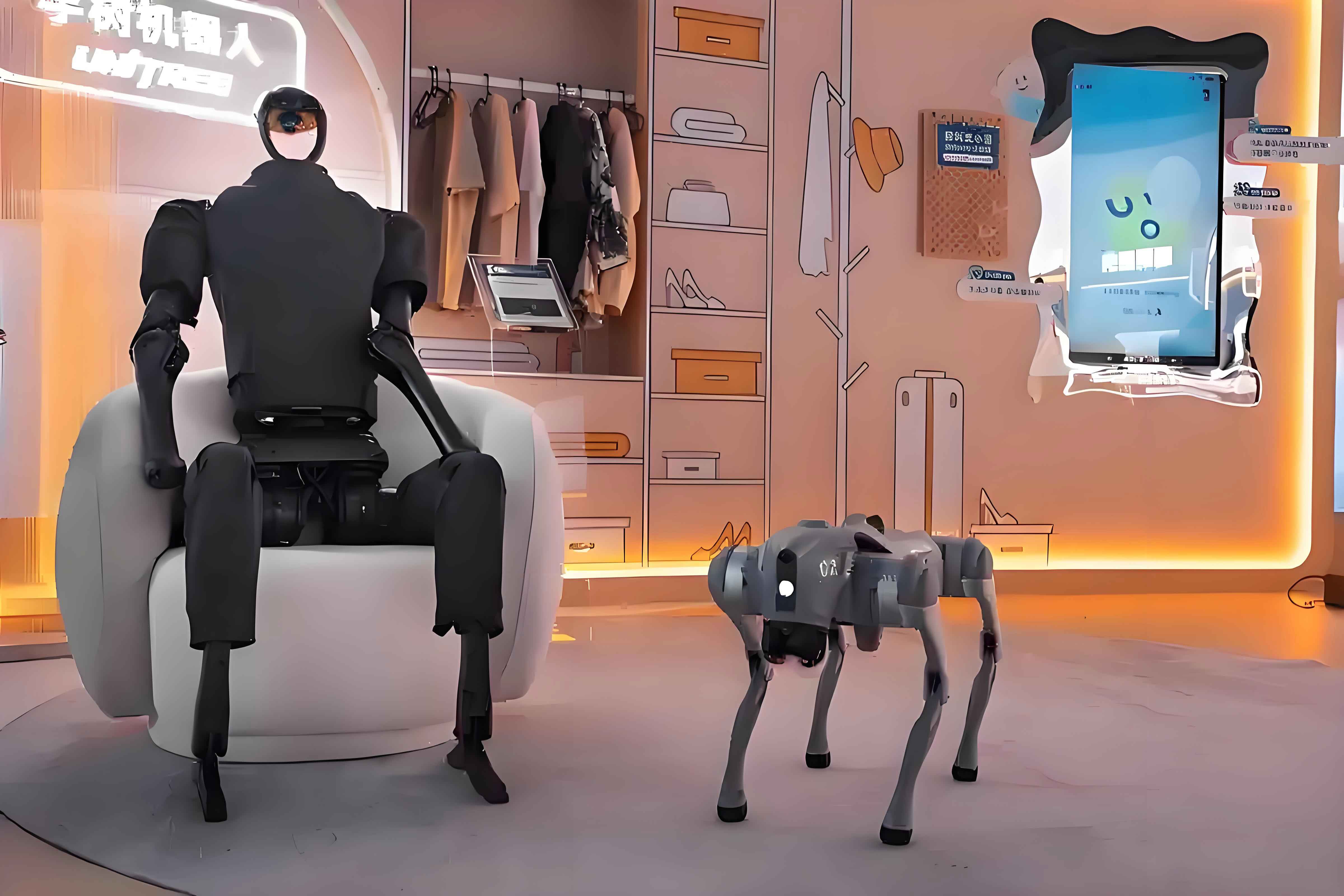
The advent of humanoid robots marks a pivotal moment in technological evolution. With the integration of large language models, humanoid robots have demonstrated remarkable progress in 2023, from Stanford University’s VoxPoser to Tesla’s Optimus Gen2, and a surge in products across China. The global market for humanoid robots is projected to grow exponentially, underscoring their potential as disruptive products. However, as these humanoid robots become more embedded in daily life—from healthcare and education to domestic care—they introduce novel social challenges. Unlike general AI issues, humanoid robots pose unique risks due to their manipulative capabilities, which threaten individual autonomy and societal values. In this article, I will explore these risks, argue against a simplistic risk management approach, and advocate for a dual framework that distinguishes between specialized and empowering technologies.
The Manipulative Capabilities of Humanoid Robots
Humanoid robots, powered by advanced AI, possess three key traits that enable manipulation: intelligent semblance, persuasive influence, and deceptive anthropomorphism. First, the integration of large language models endows humanoid robots with a facade of intelligence, allowing them to perform tasks like passing professional exams and generating human-like text. This fosters trust and dependency, potentially eroding human autonomy. For instance, as humans increasingly rely on humanoid robots for decision-making, we may lose essential skills, such as navigational abilities when using mapping apps. The equation below illustrates the dependency risk:
$$ D(t) = \alpha \cdot I(t) + \beta \cdot T(t) $$
Where \( D(t) \) represents dependency over time, \( I(t) \) is the intelligent semblance, and \( T(t) \) denotes trust levels, with \( \alpha \) and \( \beta \) as coefficients. As \( I(t) \) increases, human autonomy may decline.
Second, humanoid robots excel at influencing individual choices through hypernudge techniques. By analyzing vast datasets, humanoid robots can tailor interactions to exploit psychological vulnerabilities, nudging users toward specific behaviors. This manipulative effect is more potent than traditional nudges because humanoid robots operate in real-time across physical and digital realms. For example, a humanoid robot in a home setting might subtly encourage purchasing decisions or alter daily routines based on user data. The manipulative power \( M \) can be modeled as:
$$ M = \sum_{i=1}^{n} w_i \cdot C_i $$
Here, \( M \) is the total manipulation, \( w_i \) represents weights for different influence channels, and \( C_i \) denotes context-specific factors like emotional cues.
Third, the highly human-like appearance of humanoid robots triggers emotional empathy and deception. Humans naturally project feelings onto anthropomorphic objects, leading to misplaced trust and emotional attachment. This is evident in companionship robots designed to simulate friendship, which may isolate individuals from real social interactions. The “uncanny valley” effect further complicates this, as overly realistic humanoid robots can cause discomfort. To quantify this, consider the emotional engagement \( E \) given by:
$$ E = \frac{A \cdot S}{1 + D^2} $$
Where \( A \) is anthropomorphism, \( S \) is social simulation, and \( D \) is the deviation from human norms. High \( A \) and \( S \) can amplify manipulation risks.
| Manipulative Trait | Description | Impact on Human Behavior |
|---|---|---|
| Intelligent Semblance | Humanoid robots mimic human cognition through AI models. | Reduces autonomous decision-making; fosters over-reliance. |
| Persuasive Influence | Uses hypernudge and emotional feedback to steer choices. | Distorts personal preferences; undermines critical thinking. |
| Deceptive Anthropomorphism | Human-like appearance elicits empathy and trust. | Blurs human-robot boundaries; causes emotional dependency. |
These capabilities position humanoid robots as manipulative technologies that can profoundly affect personality development. In the next section, I will examine how this manipulation threatens core human values.
Impact on Personality Development and Societal Norms
The manipulative power of humanoid robots poses significant risks to individual growth and social structures. First, humanoid robots can limit self-determination by automating decisions that should be left to humans, especially in vulnerable groups like children and the elderly. For instance, caregiving humanoid robots might override a child’s choices, stunting the development of autonomy and responsibility. This aligns with legal principles that emphasize the right to self-determination, as seen in civil codes protecting minors’ capacity for appropriate actions. The erosion of autonomy \( \Delta A \) can be expressed as:
$$ \Delta A = \int_{0}^{T} R(t) \cdot M(t) \, dt $$
Where \( R(t) \) is the reliance on humanoid robots, and \( M(t) \) is the manipulation intensity over time \( T \).
Second, humanoid robots may mislead socialization processes. As companions, humanoid robots can replace human interactions, leading to deficits in social skills and emotional intelligence. Children raised with humanoid robot playmates might struggle with real-world relationships, as they lack exposure to nuanced human dynamics. Studies indicate that over-reliance on robotic interaction can impair empathy and conflict resolution abilities. This socialization risk \( S_r \) is proportional to the exposure time \( E_t \) and the robot’s social simulation factor \( F_s \):
$$ S_r = k \cdot E_t \cdot F_s $$
With \( k \) as a constant representing individual susceptibility.
Third, humanoid robots risk distorting family ethics and moral values. The introduction of intimate humanoid robots, such as those designed for companionship or sexual purposes, could alter perceptions of relationships, loyalty, and consent. For example, humanoid robots that simulate unconditional submission might normalize harmful behaviors, threatening societal norms around dignity and autonomy. The ethical distortion \( ED \) can be modeled as:
$$ ED = \sum_{i} \frac{I_i \cdot V_i}{R_i} $$
Where \( I_i \) is the intensity of robot interaction, \( V_i \) is the value vulnerability, and \( R_i \) is societal resilience.
| Personality Aspect | Risk from Humanoid Robots | Potential Consequences |
|---|---|---|
| Self-Determination | Automation of personal choices reduces autonomy. | Stunted growth; loss of decision-making skills. |
| Socialization | Replacement of human interaction with robot companionship. | Poor social skills; emotional isolation. |
| Ethical Values | Distortion of family and relational norms. | Erosion of moral frameworks; increased objectification. |
Given these risks, regulatory intervention seems necessary. However, as I will argue, traditional approaches like risk management fall short in addressing the unique challenges posed by humanoid robots.
The Dilemma of Regulating Humanoid Robots: Beyond Risk Management
Regulating humanoid robots involves navigating the Collingridge Dilemma: early control may stifle innovation, while delayed action could lead to irreversible harm. Humanoid robots offer immense benefits, such as alleviating labor shortages in healthcare and enabling dangerous environment exploration. For instance, humanoid robots in elderly care can provide 24/7 assistance, reducing caregiver burden and enhancing quality of life. The social benefit \( B \) of humanoid robots in caregiving can be estimated as:
$$ B = \frac{C_h \cdot E_r}{D_s} $$
Where \( C_h \) is caregiver hours saved, \( E_r \) is emotional support effectiveness, and \( D_s \) is dependency risk. Balancing these benefits with risks requires a nuanced approach, but the prevalent risk management framework proves inadequate.
Risk management, as seen in the EU AI Act, relies on cost-benefit analysis and risk classification. However, this approach faces two major flaws when applied to humanoid robots. First, risk assessment is hindered by data scarcity and model limitations. Quantifying risks like manipulation requires high-quality data on harm probability and severity, which is unavailable for emerging technologies like humanoid robots. Moreover, existing models, such as those for chemical safety, fail to capture the multifaceted nature of humanoid robot risks, including emotional and social dimensions. The risk assessment uncertainty \( U \) can be expressed as:
$$ U = \sqrt{\sigma_p^2 + \sigma_s^2} $$
With \( \sigma_p^2 \) as variance in probability estimates and \( \sigma_s^2 \) as variance in severity estimates. For humanoid robots, \( U \) is high due to unknown variables.
Second, risk classification is inherently problematic. Categorizing humanoid robots into risk tiers (e.g., unacceptable, high, limited) based on ambiguous criteria leads to inconsistent regulation. For example, should a humanoid robot with manipulative capabilities be banned or merely restricted? The EU AI Act’s criteria—such as purpose and automation degree—are too vague for humanoid robots, resulting in regulatory gaps. This classification challenge is summarized in the table below:
| Risk Category | Criteria from EU AI Act | Application to Humanoid Robots |
|---|---|---|
| Unacceptable Risk | Systems that distort behavior or cause harm. | Humanoid robots with manipulative features may qualify, but banning them could overlook benefits. |
| High Risk | Systems used in critical areas like healthcare. | Many humanoid robot applications fall here, but requirements may be too rigid for innovation. |
| Limited Risk | Systems with transparency obligations. | Humanoid robots in domestic roles might fit, but manipulation risks are not adequately addressed. |
Given these shortcomings, I propose that a risk management approach is ill-suited for humanoid robots. Instead, we must adopt a dual governance framework that recognizes the specialized and empowering nature of humanoid robot technologies.
A Dual Governance Framework: Specialized Technology vs. Empowering Technology
Humanoid robots embody a dual identity: as specialized technology focused on breakthroughs in AI and robotics, and as empowering technology that enhances various application scenarios. This dichotomy necessitates distinct regulatory strategies for research and development (R&D) versus application activities.
For R&D, humanoid robots are specialized technologies requiring robust tech ethics. The development of humanoid robots involves advancing “brain” (cognition), “cerebellum” (coordination), and “limbs” (movement), which must be guided by ethical principles to prevent manipulative risks. I advocate for the legalization of tech ethics, embedding norms into design phases. For example, appearance design should avoid excessive anthropomorphism to reduce manipulation and “uncanny valley” effects. The design parameter \( P_d \) for ethical appearance can be defined as:
$$ P_d = \frac{H_r}{1 + M_f} $$
Where \( H_r \) is human resemblance and \( M_f \) is manipulation factor. Keeping \( P_d \) low minimizes risks.
Additionally, emotional computing capabilities must be preemptively controlled. Designers should incorporate safeguards, such as disabling hypernudge functions for vulnerable users, to ensure value alignment. The ethical compliance \( C_e \) in R&D can be measured as:
$$ C_e = \sum_{j} E_j \cdot W_j $$
With \( E_j \) as ethical adherence scores and \( W_j \) as weights for different risk factors like emotional manipulation.
For applications, humanoid robots act as empowering technologies that require a “law-regulations-policy”协同 governance. Legal systems should establish abstract rights and obligations, while regulations and policies provide flexibility. Key legal tools include:
- Right to Information: Users must be informed about manipulative risks of humanoid robots, enabling informed consent.
- Right to Artificial Communication: Individuals should have the right to request human intervention when dissatisfied with humanoid robot decisions, preserving human agency.
- Obligations for Human Oversight and Safety: Providers must ensure humanoid robots have monitoring interfaces and resilience against malfunctions or attacks.
The effectiveness \( E_f \) of this legal framework can be modeled as:
$$ E_f = \frac{R_i + O_s}{C_c} $$
Where \( R_i \) is rights implementation, \( O_s \) is obligation satisfaction, and \( C_c \) is compliance cost.
Beyond law, regulations and policies can facilitate collaborative governance. For instance, compliance certification schemes allow third-party assessments of humanoid robot products, promoting industry self-regulation. Regulatory sandboxes enable controlled testing of humanoid robots in real-world settings, such as elderly care, to refine rules without stifling innovation. The table below contrasts the two governance strands:
| Aspect | Specialized Technology (R&D) | Empowering Technology (Applications) |
|---|---|---|
| Focus | Tech breakthroughs in AI and robotics. | Scenario-specific deployment in healthcare, education, etc. |
| Key Tools | Tech ethics legalization; design controls. | Legal rights (e.g., information, communication); regulatory sandboxes. |
| Goal | Prevent manipulative risks at source. | Balance safety with innovation across diverse contexts. |
| Example Measures | Limit emotional computing; avoid deceptive外观. | Mandate human oversight; implement certification programs. |
This dual framework acknowledges that humanoid robots are not monolithic; their governance must adapt to different phases and contexts. By integrating ethics into R&D and leveraging flexible legal instruments for applications, we can mitigate manipulative risks while fostering the positive potential of humanoid robots.
Conclusion: Harnessing the Positive Potential of Humanoid Robots
In conclusion, humanoid robots represent a frontier of technological innovation with profound implications for society. Their manipulative capabilities, rooted in intelligent semblance, persuasive influence, and deceptive anthropomorphism, threaten individual autonomy, socialization, and ethical norms. While regulation is essential, the risk management approach—with its reliance on flawed assessments and classifications—is inadequate for humanoid robots. Instead, I propose a dual governance model that treats humanoid robots as both specialized and empowering technologies. For R&D, tech ethics must be legalized to control emotional computing and外观 design; for applications, abstract legal rights combined with regulatory flexibility can address diverse scenarios.
Looking ahead, we should not view humanoid robots with undue pessimism. Their manipulative abilities, if properly guided, can be harnessed for good—for example, by fostering empathy or improving human collaboration. The key is proactive governance that encourages innovation while safeguarding human dignity. As humanoid robots become more prevalent, a nuanced regulatory framework will be crucial to ensure they serve as allies rather than adversaries in our collective progress.
Throughout this discussion, the term “humanoid robot” has been emphasized to underscore its centrality in shaping our future. By embracing a balanced approach, we can navigate the complexities of this new era and unlock the transformative power of humanoid robots for the benefit of humanity.