
The industrial landscape stands on the brink of a profound transformation, one driven not by mere automation but by the infusion of physical intelligence into the very fabric of production. From my observation, we are entering an era where machines do not just follow pre-programmed paths but perceive, understand, and interact with their environment. This is the promise of embodied intelligence—a field I believe is transitioning decisively from laboratory curiosity to factory-floor necessity. The journey from collaborative workspaces to fully autonomous facilities is not a distant dream but a structured evolution, fueled by technological convergence and economic pragmatism.
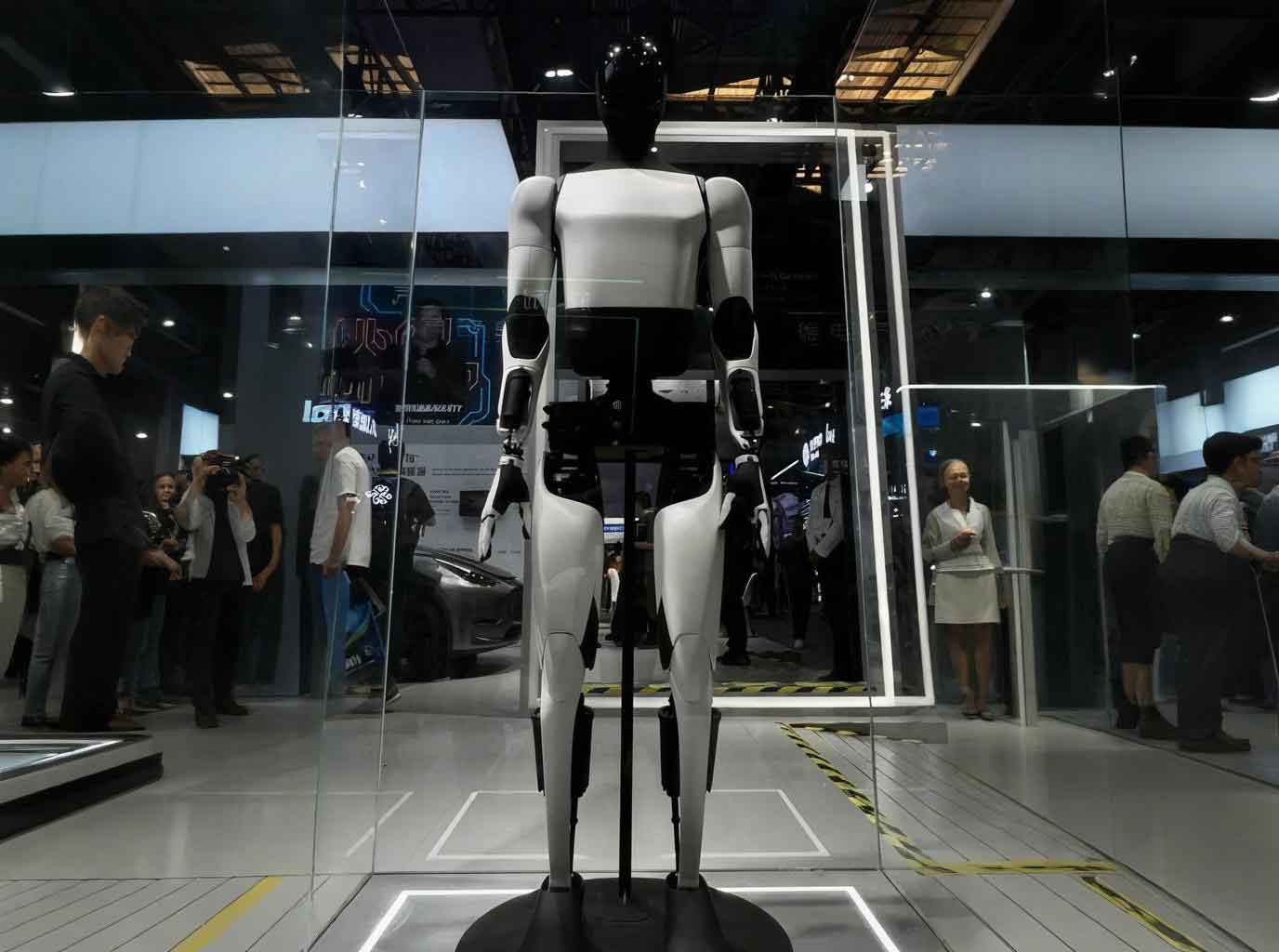
At its core, an embodied AI robot represents the fusion of cognitive capability with a physical form capable of action. It is about giving a machine a “brain” and a “body,” enabling it to make independent judgments, learn from interactions, and evolve within complex environments. The traditional barriers to this vision, particularly the immense computational cost of training sophisticated models, are rapidly crumbling. The advent of powerful, accessible foundation models has dramatically lowered the cost and increased the efficiency of data training and inference. This democratization of intelligence is accelerating the innovation cycle, making the development and practical deployment of embodied AI robot systems more feasible than ever before.
The industrial sector presents the most compelling and immediate arena for this technology. Here, the embodied AI robot is not intended to be a wholesale replacement for existing machinery but a versatile complement that unlocks new possibilities. I foresee humanoid and other advanced robotic forms becoming as commonplace as traditional robotic arms, serving as standard components of the intelligent factory. Their unique value lies in tackling tasks in extreme environments—areas with high temperatures, pressure, or toxicity—where human presence is untenable. However, the path to seamless integration is paved with significant challenges related to precision, rigidity, dynamic response, and, most critically, the algorithms for multi-sensor data fusion.
The primary mission of an embodied AI robot in a factory is not to “rule” the production line but to become a primary data acquisition agent. The most critical need for robotics combined with AI is the collection and annotation of complex, high-quality 3D data, which is scarce on the open internet. The perceptual demands in a factory often exceed those of autonomous driving. While a factory AGV might only need to avoid collisions, an embodied AI robot performing delicate assembly or quality inspection requires far superior 3D spatial awareness and hand-eye coordination. The current bottleneck for many AI companies lies in the meticulous adaptation to specific industrial scenarios. An embodied AI robot must be trained within the concrete context of a real manufacturing process to understand the myriad of nuanced tasks involved.
| Aspect | Traditional Industrial Robot | Embodied AI Robot |
|---|---|---|
| Core Function | Pre-programmed, repetitive motion | Perception, decision-making, adaptive action |
| Environmental Awareness | Limited, relies on fixed fixtures & precise positioning | High, uses multi-modal sensing to understand unstructured environments |
| Flexibility & Adaptability | Low, changeover requires re-programming | High, can learn new tasks and adjust to variations |
| Primary Data Role | Executor of process | Both executor and data generator for continuous learning |
| Human Interaction | Minimal, often isolated behind fences | Designed for safe and intuitive collaboration |
The Driving Forces: Lowering Barriers and Creating Demand
The recent surge towards industrial application is no accident. It is the result of a powerful confluence of factors: technological breakthrough, plummeting costs, and genuine market pull.
Democratization Through AI Models: For years, advanced robotics was dominated by proprietary algorithms requiring exhaustive environmental parameterization. An embodied AI robot needed thousands of pre-defined scenarios to handle real-world variability. The rise of large AI models has shattered this paradigm. These models endow the embodied AI robot with the ability to actively perceive and adapt, breaking down the traditional software barriers and drastically reducing development complexity.
The Cost Equation: Economics is the ultimate gatekeeper for industrial adoption. Historically, the cost of sophisticated robots was prohibitive. The industrial rule of thumb is compelling: when a robot’s price falls below two years of a worker’s salary, adoption becomes highly attractive. We are rapidly approaching this inflection point. Through supply chain maturity and design innovation, costs are descending from “luxury” levels to “commodity” ranges, making the embodied AI robot a financially viable proposition for widespread deployment.
Meeting Industrial Demand: The push for greater flexibility and resilience in manufacturing creates a perfect niche for embodied intelligence. Factories face increasingly complex product mixes and shorter lifecycles. An embodied AI robot, with its superior 3D perception and adaptive control, can switch tasks without the extensive re-engineering required by traditional automation. It provides a unique solution for tasks that are too variable for fixed automation but too tedious or dangerous for humans.
Technological Recombination as the Engine of Progress
From my analysis, the current wave of advancement is less about ground-breaking invention and more about the strategic recombination of mature technologies. The essence of an embodied AI robot—the deep integration of electromechanical systems with intelligent software—benefits from pre-existing ecosystems.
A pivotal shift has been the move from hydraulic to electric actuation. The widespread commercialization of electric vehicles has perfected reliable, cost-effective, and responsive motor-drive systems. Integrating these into robotics provides a crucial advantage: speed of response. The control loop from a computational chip to physical movement is dramatically shorter with electric drives, a necessity for an embodied AI robot that must react in real-time to a dynamic environment. While electric systems may have lower peak force output compared to hydraulics, this is often not a limiting factor for many precision assembly, inspection, and handling tasks common in factories.
This aligns with the view that technological progress is recursive. The future development of the embodied AI robot will likely consist of 90% engineering refinement and 10% novel algorithm creation. Rapid iteration in real industrial settings is key. We have seen this firsthand: early intelligent assembly robots could only perform simple tasks like screwdriving with frequent human oversight. Through iterative improvements in algorithms and sensors, they can now manage complex circuit board assembly, self-correcting based on real-time feedback. This continuous evolution turns the embodied AI robot from an auxiliary tool into a core component of production.
Framework and Direction of Evolution
The evolution of an embodied AI robot in industry can be framed within a “Perceive-Think-Act” cycle. Breakthroughs in any of these three areas catalyze progress.
$$ \text{Embodied Intelligence Loop: } \mathcal{R} = \Phi(P(\mathcal{S}), T(P), A(T)) $$
Where $\mathcal{R}$ is the robot’s successful action, $\Phi$ represents the integrated system, $P(\mathcal{S})$ is perception of state $\mathcal{S}$, $T(P)$ is thinking/planning based on perception, and $A(T)$ is the physical action resulting from the plan.
Perception: Moving beyond 2D vision to multi-modal sensing (3D vision, tactile, force-torque, audio). For instance, tactile feedback enables an embodied AI robot to manipulate delicate objects with human-like dexterity.
Thinking: Enhanced by models capable of reasoning, predicting outcomes, and understanding complex, implicit instructions. The integration of “chain-of-thought” reasoning allows an embodied AI robot to decompose problems step-by-step.
Acting: Achieved through advanced control algorithms that translate high-level plans into smooth, dynamic, and compliant physical movements.
The future trend points not towards a single, monolithic giant model, but towards specialized, efficient smaller models fine-tuned for specific industrial domains. These “small” models are not less intelligent for their purpose; they are more efficient, cost-effective, and easier to deploy at the edge. A model trained specifically for detecting micro-cracks on silicon wafers can outperform human inspectors in accuracy and consistency, all while running on modest hardware. This focus on vertical expertise is where the embodied AI robot will deliver immediate and measurable ROI.
| Feature | General-Purpose Large Model | Specialized Industrial Model |
|---|---|---|
| Parameter Scale | Hundreds of billions | Millions to low billions |
| Training Data | Massive, diverse, internet-scale | Focused, high-quality, domain-specific |
| Deployment Cost | Very High (cloud/expensive servers) | Low to Moderate (edge devices) |
| Inference Speed | Slower | Very Fast |
| Industrial Adaptability | Low, requires extensive fine-tuning | High, built for the task |
| Primary Value | Broad understanding, reasoning | Extreme reliability & precision on specific tasks |
The Human Engineer in the Age of Embodied AI
A common concern is the displacement of human expertise. While earlier automation (“machines replacing manual labor”) focused on the shop floor, embodied intelligence often targets cognitive tasks (“AI assisting or replacing engineering labor”). The rise of AI Agents, especially when coupled with a physical form, heralds a new phase where AI can execute multi-step workflows.
In engineering, AI agents powered by large models can already perform tasks like parameter optimization, preliminary design generation, and standard simulation checks with remarkable speed. However, their limitations are stark. An embodied AI robot or its digital twin cannot grasp nuanced business constraints, make ethical trade-offs, or exercise creative judgment in novel situations. It can generate a structurally sound design but cannot evaluate its aesthetic appeal, manufacturing cost viability, or environmental lifecycle impact without human-defined parameters.
The unique value of the human engineer remains irreplaceable. Engineers provide the crucial context, creativity, and ultimate responsibility. The future I envision is not one of replacement, but of powerful collaboration. The embodied AI robot acts as a “super-assistant” to the engineer. It handles dangerous, dirty, or monotonous physical tasks and performs tedious computational analyses. This frees the human expert to focus on higher-level innovation, strategic problem-solving, and system oversight. The synergy between human intuition and machine precision will define the next generation of manufacturing excellence.
| Domain | Human Engineer’s Primary Role | Embodied AI Robot’s Primary Role |
|---|---|---|
| Concept & Design | Creative ideation, defining requirements, ethical & business judgment. | Rapid prototyping, design space exploration, simulation based on constraints. |
| Process Planning | Strategic workflow design, exception handling protocols. | Generating optimal task sequences, real-time path planning. |
| Execution & Operation | Supervision, exception management, continuous improvement. | Precise, tireless execution of physical tasks in defined or learned domains. |
| Maintenance & Diagnostics | Complex fault diagnosis, root cause analysis, repair strategy. | Predictive monitoring, automated routine inspections, initial fault detection. |
A Three-Phase Roadmap to the Unmanned Factory
The widespread adoption of embodied intelligence in industry will be a phased journey, contingent on both technological maturity and economic adaptation. The ultimate success of an embodied AI robot hinges on it being a economically sensible solution, overcoming the “hidden costs” of integration and maintenance that often plague traditional robotics.
The evolution can be summarized in three distinct phases:
| Phase | Characteristic | Key Challenges | Human Role |
|---|---|---|---|
| Phase 1: Collaborative Coexistence | EIIR works alongside humans in shared spaces. Focus on safety, basic task execution with human guidance, and simple environmental understanding. | Safe physical interaction, reliable human intent recognition, cost-effective deployment for niche tasks. | Direct supervision, task programming, handling exceptions. |
| Phase 2: Intelligent Partnership | EIIR performs complex sequences autonomously, learns from feedback, and collaborates dynamically with humans and other machines. Advanced perception and decision-making. | Robust multi-modal fusion, learning efficiency in real-world settings, seamless integration with legacy systems. | High-level task delegation, quality assurance, system optimization, and training the AI. |
| Phase 3: Autonomous Operation | EIIR independently manages entire production cells or lines. Capable of full task understanding, predictive maintenance, and self-optimization. “Unmanned factory” segments become reality. | Generalizable intelligence across diverse tasks, long-term reliability without intervention, handling completely unforeseen events. | Strategic planning, factory design, and remote oversight. Phased exit from routine production frontline. |
This progression will be enabled by continuous advancements. We are moving towards integrated control platforms, multi-sensor fusion for unified scene understanding, and sophisticated “embodied” knowledge bases that allow an embodied AI robot to reason about physical cause and effect. The terminal form may also diversify; a single AI “brain” could orchestrate a heterogeneous fleet of robots (humanoid, mobile, arm-type) via a “one-brain-multiple-bodies” paradigm, optimizing the strengths of each form factor for different sub-tasks within a shared objective.
The core equation for adoption will always balance capability against total cost of ownership. The learning process of an embodied AI robot can be modeled as an optimization problem, minimizing error over time:
$$ \min_{\theta} \sum_{t=1}^{T} \mathcal{L}(y_t, \hat{y}_t) + \lambda \Omega(\theta) $$
where $\theta$ represents the robot’s policy parameters, $\mathcal{L}$ is the loss function comparing expected outcome $y_t$ to actual $\hat{y}_t$ at time $t$, and $\Omega(\theta)$ is a regularization term weighted by $\lambda$ to prevent overfitting to specific scenarios, ensuring the embodied AI robot generalizes well.
In conclusion, the era of embodied intelligence in industry is dawning. The embodied AI robot is more than just a new tool; it is a new category of production agent that blends sensing, analysis, and action. Its journey from a collaborative assistant to an autonomous production force will reshape manufacturing, making it more flexible, resilient, and efficient. This transition represents the true culmination of digital intelligence meeting the physical world, heralding a future where the factory itself becomes a living, learning system.