
As a researcher deeply immersed in the field of robotics, I have witnessed the transformative rise of embodied AI robots in the ongoing wave of technological revolution and industrial transformation. These robots, serving as the core execution equipment for intelligent manufacturing, are now a strategic frontier where nations fiercely compete. The convergence of mechanical design, AI large models, novel sensors, and biomimetic materials has propelled humanoid robots, often called the “crown jewel of manufacturing,” into the spotlight. This article synthesizes my observations and analysis on the current state and future trajectory of embodied AI robot technology and industry, drawing from extensive study and engagement with global developments.
The global landscape for embodied AI robots is characterized by rapid advancements and intense competition. The evolution can be segmented into distinct phases: foundational theory and prototype exploration (1960–2000), diversified technological development (2000–2020), and accelerated intelligence and industrialization (post-2020). Projections indicate a massive market potential, with estimates ranging from $38 billion by 2030 to visionary long-term forecasts in the trillion-dollar range, positioning embodied AI robots as the next-generation universal intelligent terminal.
Internationally, leading enterprises and research institutions are achieving breakthroughs. For instance, Boston Dynamics’ Atlas robot demonstrates dynamic balance and complex terrain adaptation, while Tesla’s Optimus focuses on industrial applications. Companies like Figure AI validate practical potential in logistics. Concurrently, national-level plans in South Korea, Japan, and the EU drive development to capture technological high ground. In parallel, my country exhibits a vibrant “blooming of a hundred flowers” in humanoid robotics. Products from companies such as Ubtech, Xiaomi, and Fourier continuously iterate in motion control and interaction. Academic institutions like Beijing University of Aeronautics and Astronautics, Tsinghua University, and Zhejiang University are pivotal in theoretical research and prototype development, with startups exploring commercial paths through differentiated technical routes.
To encapsulate the global competitive dynamics, the following table summarizes key players and focus areas:
| Region/Entity | Key Focus | Representative Examples | Strategic Emphasis |
|---|---|---|---|
| United States | Dynamic mobility, industrial integration | Boston Dynamics Atlas, Tesla Optimus | AI fusion, core algorithms |
| European Union | Collaborative research, ethical frameworks | Projects under Horizon Europe | Standardization, human-robot collaboration |
| Japan & South Korea | Humanoid precision, service robotics | National robotics strategies | High-performance actuators, sensors |
| My Country | Diverse innovation, commercialization | Various humanoid and quadruped robots | Core component indigenization, scene adaptation |
Technological breakthroughs are accelerating the development of embodied AI robots. Large-scale simulation training enables thousands of robots to be trained in parallel in virtual environments, drastically shortening development cycles. The synergy between cloud-based large models and edge computing enhances autonomous decision-making efficiency. For example, platforms like NVIDIA’s Isaac Lab simulate thousands of robots for algorithm training. Domestically, data collection centers support vertical scene adaptation for large models.
The operational paradigm of embodied AI robots relies on the perception-decision-execution closed loop. This path shares high commonality with smartphones and intelligent vehicles, suggesting replicable industrialization patterns. Enhancing perception and decision-making requires deep integration of multimodal large models. Systems integrating vision, LiDAR, tactile, and force sensors are crucial for unstructured environments. The establishment of innovation centers dedicated to embodied AI robots aims to tackle common challenges in motion control and perceptual interaction.
A critical focus is the breakthrough in domestic production of core components. While traditional “three major components”—reducers, servo motors, and controllers—are gradually being replaced locally, high-power-density joints, dedicated chips, and lightweight structural designs still rely on imports. The development of new sensors (e.g., multi-dimensional force control, flexible tactile) and long-endurance energy systems is key to improving overall performance. For instance, domestic seven-degree-of-freedom robotic arms reduce costs through modular design but require further optimization in dexterous hand grasping accuracy. Collaborative innovation across industry, academia, and research is the core path to breaking technological barriers.
The mathematical formulation of robot dynamics is fundamental to motion control. The equations of motion for an embodied AI robot with multiple degrees of freedom can be expressed using the Lagrangian formulation:
$$ L = T – U $$
where \( T \) is the kinetic energy and \( U \) is the potential energy. The Euler-Lagrange equations yield:
$$ \frac{d}{dt} \left( \frac{\partial L}{\partial \dot{q}_i} \right) – \frac{\partial L}{\partial q_i} = \tau_i $$
Here, \( q_i \) are the generalized coordinates, \( \dot{q}_i \) are the generalized velocities, and \( \tau_i \) are the generalized forces (torques). For an embodied AI robot with \( n \) joints, the dynamics can be written in matrix form:
$$ M(q)\ddot{q} + C(q, \dot{q})\dot{q} + G(q) = \tau $$
where \( M(q) \) is the inertia matrix, \( C(q, \dot{q}) \) represents Coriolis and centrifugal forces, \( G(q) \) is the gravitational vector, and \( \tau \) is the joint torque vector. This model underpins control strategies for balance and manipulation.
Future key challenges for embodied AI robots include: First, enhancing motion control capabilities such as balance on complex terrain and dexterous manipulation (bimanual grasping, fine operations). Second, breaking hardware bottlenecks like low-cost modular joints, high-efficiency drive systems (endurance optimization), and lightweight materials. Third, addressing intelligence shortcomings, primarily in perception abilities like vision-tactile fusion and electronic skin (multi-dimensional force feedback), and integrating AI large models (e.g., GPT-class models) for multi-task autonomous decision-making.
The integration of new-generation information technologies further drives the rapid development of embodied AI robots. This includes AI + embodied intelligence, where large models endow robots with natural interaction, scene understanding, and adaptive capabilities; breakthroughs in novel hardware like flexible sensors, biomimetic muscle actuators, and brain-inspired chips; and cloud-edge collaborative training with multi-robot cooperation (e.g., logistics clusters, UAV formations).
I conceptualize the technological architecture of embodied AI robots as a synergistic evolution of “brain” and “cerebellum.” The “brain” focuses on intelligent perception and decision-making, relying on multimodal environmental perception (vision, tactile, force fusion) and semantic scene understanding, combined with large models for natural language interaction and dynamic task planning. For example, generating a grasping path from a verbal command like “Please pass the tool” requires fusing visual localization and force control feedback. The “cerebellum” handles motion control and execution, necessitating breakthroughs in high-degree-of-freedom whole-body dynamics modeling, dynamic balance in unstructured environments, and bimanual dexterous operation.
At the hardware level, embodied AI robots face a triple challenge: drive systems, perception modules, and lightweight design. Drive systems must balance power density and cost, with mainstream approaches integrating high-torque motors and harmonic reducers, though hydraulic drives retain advantages in high-burst scenarios. Perception hardware depends on electronic skin, RGB-D cameras, and LiDAR fusion, aiming to achieve tactile-visual closed-loop control. Lightweighting employs carbon fiber skeletons and biomimetic muscle materials (e.g., shape memory alloys) to reduce overall weight while enhancing endurance.
Motion control technology presents three parallel pathways, as summarized in the table below:
| Pathway | Description | Advantages | Challenges |
|---|---|---|---|
| Model-Based Control | Relies on precise dynamic modeling | High stability, predictable performance | Sensitive to model inaccuracies |
| Reinforcement Learning | Uses simulation training for adaptation | Improved generalization, fall recovery | High computational cost, safety risks |
| Human Demonstration | Collects actions via exoskeletons or video imitation | Low programming barrier, intuitive | Scalability, transfer to new tasks |
The future likely trends toward a hybrid architecture: model control ensures baseline safety, while reinforcement learning enhances generalization. The mathematical basis for reinforcement learning in embodied AI robots often involves maximizing the expected cumulative reward:
$$ J(\theta) = \mathbb{E}_{\tau \sim p_{\theta}(\tau)} \left[ \sum_{t=0}^{T} \gamma^t r(s_t, a_t) \right] $$
where \( \tau = (s_0, a_0, s_1, a_1, \dots) \) is a trajectory, \( p_{\theta} \) is the policy parameterized by \( \theta \), \( r \) is the reward function, and \( \gamma \) is the discount factor. Policy gradient methods update parameters via:
$$ \nabla_{\theta} J(\theta) \approx \frac{1}{N} \sum_{i=1}^{N} \left( \sum_{t=0}^{T} \nabla_{\theta} \log \pi_{\theta}(a_t^i | s_t^i) \hat{A}_t^i \right) $$
where \( \hat{A}_t \) is an estimator of the advantage function.
Intelligent upgrading of embodied AI robots depends on the deep integration of multimodal large models and development toolchains. Large model empowerment manifests in vertical applications: language-action mapping, vision-tactile loops. However, low domestic toolchain adoption rates and high data annotation costs hinder industrialization. The perceptual fusion can be modeled using Bayesian frameworks:
$$ P(\text{State} | \text{Sensor Data}) \propto P(\text{Sensor Data} | \text{State}) P(\text{State}) $$
where multiple sensor modalities provide likelihoods \( P(\text{Sensor Data} | \text{State}) \) for state estimation.
Policy drivers play a crucial role in shaping the ecosystem for embodied AI robots. Internationally, initiatives like the U.S. National Robotics Initiative 2.0, EU’s Horizon Europe, Japan’s Robot Strategy, and South Korea’s Intelligent Robot Basic Plan all prioritize intelligent robotics, focusing on AI integration, core components, and industrial deployment. Competition centers on high-end sensors, dedicated chips, and autonomous decision algorithms.
In my country, the policy framework and actions are robust. The “14th Five-Year Plan for Robot Industry Development” outlines directions for technological攻关 and industrial chain upgrading. The “Guiding Opinions on the Innovative Development of Humanoid Robots” promotes the fusion of embodied AI and humanoid robot technology, proposing to build the “brain” and “cerebellum” and突破 key “limb” technologies. In 2023, humanoid robots were listed as one of four future industries in a innovation task initiative, emphasizing breakthroughs in servo motors, high-dynamic motion planning, and other bottleneck technologies. Subsequent implementation opinions support core components like servo motors and key technologies such as electronic skin, dexterous hands, and perceptual cognition.
| Policy Initiative | Primary Goals | Key Focus Areas |
|---|---|---|
| U.S. National Robotics Initiative 2.0 | Advance foundational robotics R&D | AI-robot synergy, collaborative systems |
| EU Horizon Europe | Foster innovation and ethical standards | Digital twins, human-centric robotics |
| My Country’s 14th Five-Year Robot Plan | Upgrade industry, achieve self-reliance | Core components, intelligent applications |
| Humanoid Robot Innovation Guidelines | Accelerate technology fusion | Brain-cerebellum architecture,关键部件 |
The development of embodied AI robots is a multidisciplinary fusion, driven by AI (large models), embodied intelligence, cloud platforms, new sensors, chips, and new materials. Typical application scenarios include high-risk environment operations (special robots), medical rehabilitation (intelligent prosthetics), logistics warehousing (AMR协同 control), and more. Representative directions that highlight前沿 trends include:
- Bionic Robots: Humanoid and quadruped robots serve as comprehensive platforms for validating intelligent technologies, advancing通用 capabilities in motion control and environmental adaptation.
- Autonomous Perception and Decision: Building an “intelligent brain” for real-time decision-making in complex environments (e.g., autonomous driving, industrial sorting).
- Cloud Group Control and Swarm Intelligence: Applications like UAV fleet performances and logistics robot集群调度 represent future重点 directions for embodied AI robots.
- Human-Machine Intelligence Fusion: Emerging fields like brain-computer interfaces and intelligent prosthetics (bio-mechatronic integration) assist aging societies and individuals with disabilities.
In summary, the前沿 trends in embodied AI robots encompass both technological hotspots and industrialization directions. Technologically, focus lies on dexterous operation large models (e.g., spatial intelligence combined with robotic arms), tactile feedback dexterous hands, and embodied navigation large models. Industrial applications are landing in humanoid robot mass production, low-altitude economy (UAV logistics), and universal robot “programming-free” intelligent agent development.
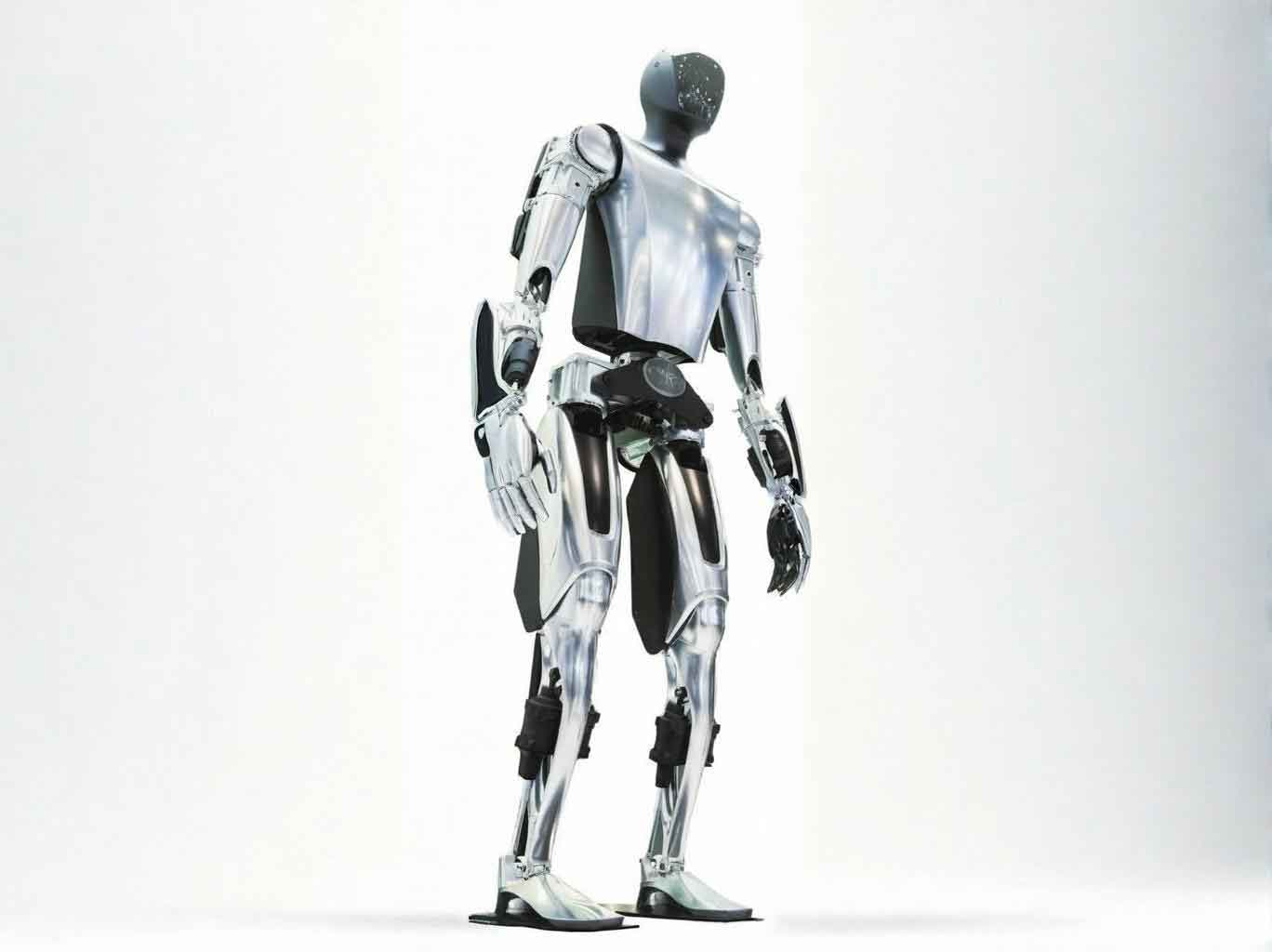
Looking at the future panorama, embodied AI robots are transitioning from laboratory breakthroughs to千行百业 (thousands of industries). In this wave, research laboratories play a vital role. Teams focus on bimanual dexterous operation and dynamic environment perception, achieving breakthroughs in domestic seven-DOF robotic arm control and human-robot co- planning, with staged成果 in safe operation in unstructured scenes and multi-sensor fusion. Publications such as “Intelligent Robot Innovation Hotspots and Trends,” “Collaborative Robot Technology and Applications,” “Introduction to Robotics and Its Applications,” and “Composite Robot Technology and Applications” contribute significantly to industry knowledge sharing and talent cultivation.
From an industrial chain perspective, upstream R&D in chips, sensors, and core components forms the foundation for technological突破. Midstream整机 integration enterprises must address issues like robot operating system development and缺失 toolchains, with increasing demand for low-code robot programming platforms and simulation training tools. Downstream application scene expansion injects momentum into commercialization. The规模化落地 of embodied AI robots requires technology iteration driven by scene demands. Short-term focus is on special fields:特种作业 (e.g., hazardous environment inspection, disaster relief) and commercial services (greeting guides, research exhibitions) are becoming hot spots for落地. In the medium term, industrial manufacturing scenes (e.g., new energy vehicle assembly, flexible production lines) are expected to see规模化应用. Long-term,攻克 personalized service scenes like home elderly care and medical nursing with complex demands is necessary.
In conclusion, embodied AI robots are at a critical juncture transitioning from technological突破 to规模化 application. The synergistic effect of policy guidance, technological iteration, and scene innovation will propel them into a new generation of strategic industry. In this global race, only by persisting in independent innovation while embracing open cooperation can one seize the initiative in the future landscape of intelligent robots. Humanoid robots are at a key turning point from laboratory breakthroughs to industrial落地, with technology fusion and scene expansion driving market爆发. Despite challenges in intelligent control, cost, safety, and ethics, through policy引导, ecological synergy, and continuous technological攻坚, my country has the potential to occupy a leading position in global humanoid robot competition. In the next decade, embodied AI robots may become the new “national-level” industry following smartphones and new energy vehicles, deeply integrated into every aspect of society and economy.
The journey ahead for embodied AI robots is both challenging and exhilarating. As we advance, continuous refinement of algorithms, hardware, and integration frameworks will be paramount. The embodied AI robot ecosystem must foster collaboration across borders and disciplines to address universal hurdles. I remain optimistic that with sustained effort, these intelligent entities will transcend their current limitations, becoming ubiquitous partners in progress, transforming industries, enhancing human capabilities, and redefining our interaction with technology. The true potential of embodied AI robots lies not merely in模仿 human form, but in augmenting human potential and tackling grand challenges with unprecedented dexterity and intelligence.