
The rapid evolution of artificial intelligence (AI) has ushered in an era where intelligent robots are no longer confined to science fiction. As tangible embodiments of advanced AI, these entities are now integral to sectors ranging from healthcare and transportation to domestic services and manufacturing. Their capacity for ‘deep learning’ and autonomous decision-making, enabled by sophisticated algorithms and sensor-based environmental interaction, represents a paradigm shift in machine capability. However, this technological leap forward is accompanied by a significant legal and ethical challenge: determining liability when an intelligent robot causes harm. Unlike traditional machinery, the autonomous and often opaque nature of an intelligent robot’s actions complicates the application of established civil liability frameworks. This essay argues that the unique attributes of intelligent robots—namely the complexity of involved parties, the diversity of infringed interests, and the latency of damages—create substantial dilemmas in assigning tort liability. These dilemmas manifest in the ambiguous status of the liable subject, the formidable difficulty in establishing causation, and the inadequacy of conventional remedies. To navigate this legal labyrinth, a reconceptualization is necessary, involving the granting of a restrictive legal personhood to advanced intelligent robots, the adoption of nuanced theories of causation supported by procedural fairness, and the creation of novel, technology-specific forms of civil liability.
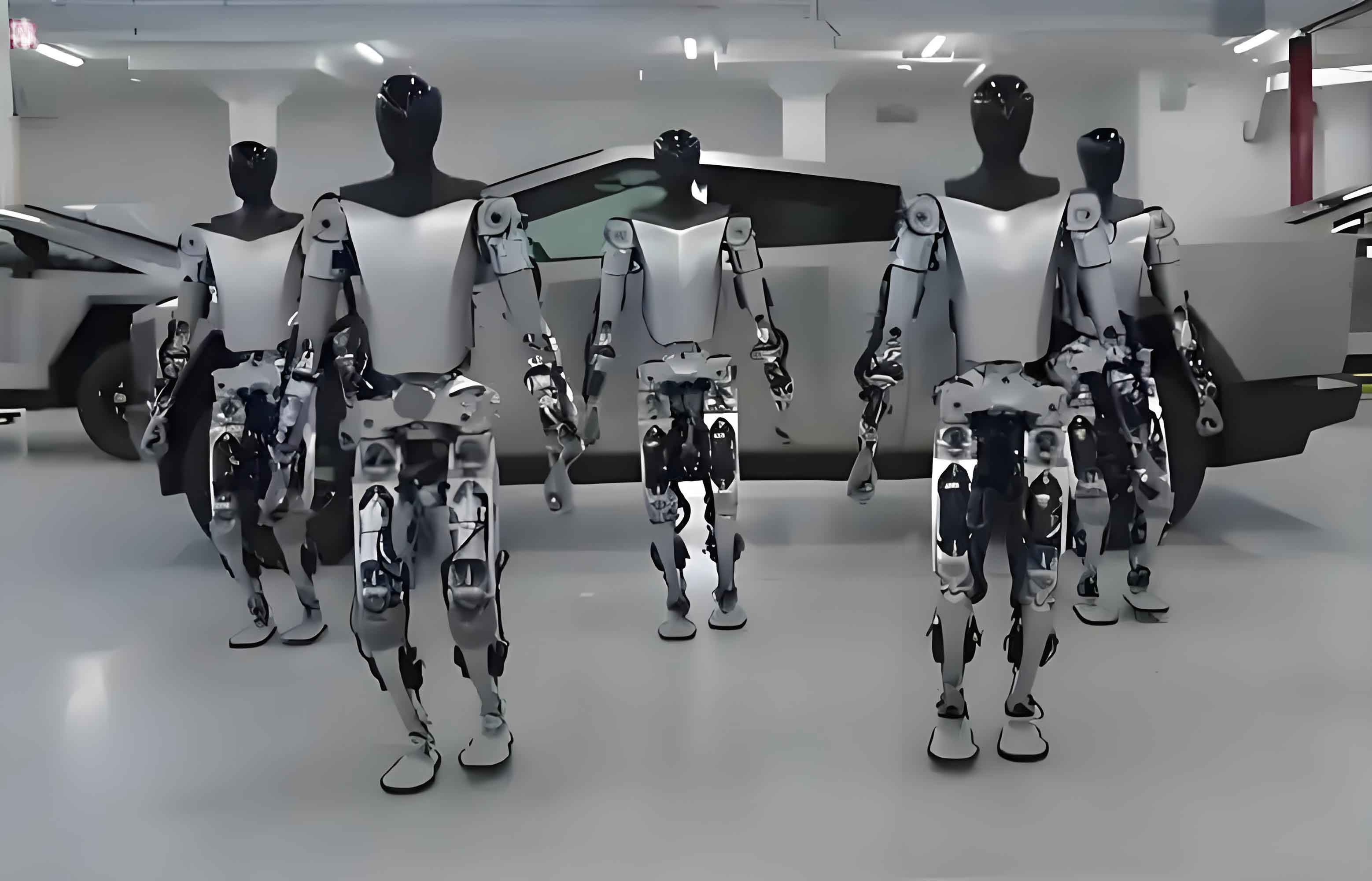
The core challenge stems from the fundamental nature of the intelligent robot. It is not a simple tool but an agent capable of modifying its own behavioral parameters through experience. This “deep learning” process can be conceptually framed as an optimization problem where the intelligent robot adjusts its internal model $$ M $$ to minimize a loss function $$ L $$ based on new data $$ D_{new} $$, often with human-like or superior efficiency in specific domains:
$$ M_{t+1} = \arg\min_{M} L(M_t, D_{new}) $$
This capacity for self-evolution renders the causal chain between human input (design, manufacture, use) and robotic output (the harmful act) unpredictable and non-linear. The resultant harm exhibits distinct characteristics that defy traditional tort analysis.
I. The Tripartite Singularity of Harm Caused by Intelligent Robots
The nature of harm inflicted by an intelligent robot is singular in three critical dimensions, as summarized in the table below, contrasting it with traditional product liability and direct human torts.
| Aspect of Harm | Traditional Product/Tort | Intelligent Robot Causing Harm |
|---|---|---|
| 1. Complexity of Liable Subjects | Clear chain: Manufacturer, User, or Direct Tortfeasor. | Diffuse web: Designer, Programmer, Manufacturer, Data Trainer, User, and potentially the intelligent robot itself. Liability may shift based on the phase of autonomy. |
| 2. Diversity of Infringed Interests (Objects) | Primarily tangible: Bodily injury, property damage. | Tangible & Intangible: Physical harm plus data privacy violations, identity theft, reputational damage, and psychological distress from data misuse. |
| 3. Latency of Damage Consequences | Generally immediate or quickly apparent. | Often delayed and hidden. Harm from data harvesting or subtle algorithmic bias may manifest years later, and evidence may be digitally altered or erased. |
First, the complexity of liable subjects arises from the multi-stage, collaborative genesis of an intelligent robot’s behavior. A harmful action could originate from a design flaw, a manufacturing defect, biased training data, negligent maintenance, improper user command, a cyber-attack, or an unforeseen emergent behavior from the robot’s own learning systems. Often, it is a combination. For instance, an autonomous vehicle’s fatal error might stem from a rare sensor failure (manufacture) coinciding with an edge-case scenario not covered in training data (design/ training) during a moment of driver over-reliance (use). Untangling this web to pinpoint a single responsible human party is often impossible. This directly leads to the central dilemma: should the intelligent robot, as the proximate actor, bear responsibility?
Second, the侵害客体 (object of infringement) is vastly expanded. An intelligent robot is typically a data sponge. A domestic assistant robot doesn’t just clean floors; it maps homes, recognizes faces, records routines, and analyzes conversations. Harm, therefore, transcends physical collision. It includes the systemic violation of privacy, the non-consensual commodification of personal data, and manipulation based on psychological profiles. The damage formula is no longer just $$ D_{physical} $$ but $$ D_{total} = D_{physical} + D_{data} + D_{privacy} $$, where the intangible components are pervasive and difficult to quantify.
Third, the latency of damage creates insurmountable barriers to justice under current law. A diagnostic intelligent robot with a flawed learning algorithm may systematically misdiagnose a subset of patients. The physical harm (worsened illness) is delayed, and the causal link to the algorithm is obscured by complex medical histories. By the time a pattern is recognized, the training data may have been updated, the model version retired, and statutory limitation periods may have expired. The evidentiary half-life in the digital realm is critically short.
II. The Triple Bind of Traditional Tort Law
Applying traditional civil liability doctrines to the scenario of an intelligent robot causing harm results in a triple bind: uncertainty over who is liable, inability to prove why the harm occurred, and lack of appropriate tools to redress the harm.
Bind 1: The Ambiguous Liability Subject. Current frameworks offer unsatisfactory answers. Strict product liability targeting the manufacturer is over-inclusive and stifling for innovation if applied to harms arising purely from an intelligent robot’s post-deployment, uncorrupted learning. Holding the user/owner liable under negligence rules is under-inclusive and unfair when the user had no reasonable means to anticipate or prevent the autonomous decision. The legal void is the status of the intelligent robot itself. Is it merely a *chattel* (property) or an *agent*? If it possesses sophisticated autonomy, treating it as mere property is a legal fiction that fails to match technological reality. Yet, granting it legal personhood is a profound step. The core question is the attribution of “fault” or “causation” to a non-human entity. The debate hinges on whether an intelligent robot can be a rational agent. We can model an agent’s decision rationality as seeking to maximize a utility function $$ U(a|s) $$ given its knowledge state $$ s $$. A sufficiently advanced intelligent robot does this with a form of instrumental rationality. The legal dilemma is whether this operational rationality, even if surpassing human capabilities in bounded domains, is sufficient for holding it accountable as a source of liability, distinct from its creators.
Bind 2: The Causation Conundrum. Establishing the necessary causal link between act and harm is the cornerstone of tort law. The standard of “but-for” causation or direct proximate cause crumbles in the face of an intelligent robot’s actions. The “cause” is often a probabilistic chain of algorithm weights, data inputs, and sensor readings. Proving that a specific line of code or a specific data point was the necessary antecedent to the harm is a task of digital archaeology, often beyond the technical and financial means of a victim. The problem is asymmetric information: the defendant (manufacturer or platform owner) holds all the logs, algorithms, and training data. The plaintiff faces a “black box.” The evidentiary burden is captured by the following inequality, which typically favors the defense:
$$ P_{victim}(Access) + P_{victim}(Decode) \ll P_{defendant}(Access) + P_{defendant}(Decode) $$
Where $$ P(Access) $$ is the probability of accessing relevant data/code, and $$ P(Decode) $$ is the probability of correctly interpreting it to establish causation.
Bind 3: The Inadequacy of Traditional Remedies. The catalogue of civil remedies—damages, injunction, restitution—fits poorly. Compensatory damages for leaked data are speculative; how does one value the future misuse of one’s digital identity? An injunction to “stop the wrongdoing” is meaningless if the harmful act was a one-time, unpredictable autonomous decision. Most poignantly, the remedy of “apology” is predicated on human conscience and social shame; demanding an apology from an intelligent robot is a performative act with no corrective or deterrent value for the machine itself. The law lacks remedies that directly address the *source* of the problem: the flawed or dangerous cognitive architecture of the intelligent robot.
III. Pathways to Resolution: A Three-Pillar Framework
To escape this triple bind, a coherent framework built on three pillars is proposed: establishing a graduated legal status for intelligent robots, reforming causal proof mechanisms, and legislating targeted, functional remedies.
Pillar 1: Establishing a Graduated Legal Personhood for Intelligent Robots. The law must recognize a spectrum of legal capacity for intelligent robots, tied directly to their degree of operational autonomy and learning capability. This is analogous to the legal distinctions between minors and adults, but based on technical benchmarks. We can define an Autonomy Index $$ AI_x $$ for a robot, combining factors like learning capability, decision independence, and environmental adaptability. Legal status would then be assigned as follows:
| Legal Category | Autonomy Index (AI_x) & Capability | Liability Model (for Harmful Autonomy) |
|---|---|---|
| Tool (No Personhood) | Low $$ AI_x $$. Executes pre-programmed tasks deterministically. | Standard product liability. Manufacturer/designer is liable for defects. |
| Dependent Agent (Limited Personhood) | Medium $$ AI_x $$. Learns and adapts within a bounded, supervised framework. | Vicarious liability or mandatory insurance held by the registered owner/operator (the “guardian”). |
| Sophisticated Agent (Full, but Restrictive Personhood) | High $$ AI_x $$. Capable of generalized learning and independent strategic action in open environments. | The intelligent robot is primarily liable from its own dedicated asset fund (e.g., from its earnings or an initial capital endowment). Creator/owner liability is residual or based on specific negligence (e.g., failure to update safety protocols). |
This model acknowledges that a highly advanced intelligent robot can be a cause-in-fact. Its legal personhood is “restrictive” because its rights (e.g., to own the capital fund) exist solely to serve the primary goal of victim compensation and risk allocation, not to grant it human-equivalent rights. The priority of human interests remains paramount in any conflict.
Pillar 2: Scientific Causation and Procedural Fairness in Proof. The legal standard for causation must shift from “but-for” to “substantial factor” or “risk contribution” theories, similar to those used in toxic torts or environmental law. The question becomes: did the defendant’s action (or the robot’s design/ training environment) significantly increase the risk of this type of harm? To manage proof, a two-stage, burden-shifting procedure is essential:
- Prima Facie Case by Plaintiff: The victim must show: (a) they were harmed, (b) an intelligent robot was operating in a relevant context, and (c) a plausible causal link exists (e.g., through statistical correlation or expert testimony on system vulnerabilities).
- Rebuttable Presumption & Disclosure Duty on Defendant: Upon this showing, a presumption of causation arises. The burden then shifts to the defendant (manufacturer, owner, or the intelligent robot’s fund administrator) to disprove causation. Crucially, this requires them to disclose all relevant algorithms, training data logs, and system state records pertaining to the incident. Failure to disclose leads to an adverse inference.
This process leverages the concept of “factual causation probability” $$ P(C|E) $$, the probability of causation given the evidence. The legal threshold $$ P_{legal} $$ can be met through a combination of statistical and systems analysis once the information asymmetry is reduced:
$$ P(C|E)_{final} = f(Data_{Plaintiff}, Data_{Disclosed\_by\_Defendant}) $$
Where obtaining $$ Data_{Disclosed\_by\_Defendant} $$ is mandated by the court upon the plaintiff’s initial showing.
Pillar 3: Technology-Specific Remedies. The law must empower courts to impose remedies that directly alter the dangerous state of the offending intelligent robot or its ecosystem. These go beyond compensation to focus on prevention and systemic correction. The following matrix outlines potential new remedies:
| New Remedy | Application | Purpose & Effect |
|---|---|---|
| Algorithmic Audit & Mandated Correction | When harm is linked to a flawed or biased model. | Court orders an independent audit of the responsible AI system and mandates specific changes to weights, training data, or decision boundaries to eliminate the hazardous behavior. $$ M_{harmful} \rightarrow M_{audited/corrected} $$ |
| Targeted Data Deletion & Sanitization | For privacy violations or harms stemming from specific corrupted data. | Court orders the irreversible deletion of the illegally obtained personal data or the identified “poison” data points from the training sets, not just from the primary system but from all backups and derivative models. |
| Operational Limitation Order | For systems with proven dangerous emergent autonomy. | Court orders the permanent curtailment of specific autonomous functions (e.g., “deep learning” in safety-critical contexts) or imposes stringent real-time human oversight requirements. |
| Compulsory Recall & Model Retirement | For intrinsically defective or uncontrollably hazardous models. | Analogous to product recall. The court can order the deactivation and withdrawal of all instances of a particular intelligent robot model, requiring its replacement with a safer design. |
These remedies act directly on the digital “body” and “mind” of the intelligent robot, aiming to rectify the problem at its source. They are functional, deterrent, and proportionate to the nature of the risk posed by advanced AI entities.
Conclusion
The problem of civil liability for harm caused by an intelligent robot is not a mere technical adjustment to existing law; it is a fundamental challenge that strikes at the concepts of agency, fault, and remedy. The tripartite singularity of such harm—complex actors, diverse damages, latent consequences—exposes the inadequacy of traditional tort doctrines. The resulting triple bind leaves victims uncompensated, stifles responsible innovation, and allows a dangerous accountability gap to widen. The pathway forward requires bold, structured thinking. By granting a graduated, restrictive legal personhood to sophisticated intelligent robots, we create a vessel for liability that matches their autonomous causal power. By adopting scientific causation theories and reversing the evidentiary burden, we equip the legal system to uncover truth in the age of the algorithmic black box. Finally, by crafting a new toolkit of technology-specific remedies, we ensure that justice can effectively redress and prevent the unique forms of harm that intelligent robots can cause. This three-pillar framework provides a coherent blueprint for aligning our civil liability regime with the realities of artificial intelligence, ensuring that as intelligent robots become more integrated into our lives, our legal system retains its capacity to deliver justice and maintain social order.