
From my perspective, the rapid evolution of artificial intelligence and robotics is ushering in an era where humanoid robots are transitioning from industrial tools and research prototypes into potential companions and caregivers within our social fabric. This transition is not merely a technological leap but a profound socio-ethical experiment. As a humanoid robot is, at its core, an embodied AI agent designed to interact with human environments and social structures, its integration demands a deep examination of the roles it may assume and the consequent ethical landscape. The central premise of this inquiry is the concept of role replacement—where a humanoid robot steps into a functional or emotional niche left by a human, either temporarily or permanently. This capability, while promising to address pressing societal needs like elder care and social support, simultaneously surfaces fundamental challenges concerning the nature of human relationships, autonomy, and the very structure of our social institutions.
To systematically deconstruct this phenomenon, we must first establish a conceptual framework for understanding the humanoid robot. It is most productively analyzed as a sophisticated embodied agent. In classical AI, an agent is defined as anything that can perceive its environment through sensors and act upon that environment through actuators to achieve goals. The humanoid robot represents a full instantiation of this concept, but with critical, socially-relevant augmentations. Its agency can be decomposed into four interconnected dimensions, as summarized below:
| Dimension of Agency | Core Characteristic | Implication for Humanoid Robot |
|---|---|---|
| Multimodal Agent | Processes and integrates diverse sensory inputs (visual, auditory, tactile, linguistic). | Enables rich, context-aware perception of the human world, moving beyond simple command-response cycles. |
| Embodied Agent | Has a physical form that interacts with and is constrained by the physical world. | The human-like morphology is not incidental; it facilitates intuitive human-robot interaction, essential for tasks requiring physical presence or touch (e.g., assistance, companionship). |
| Environmental Agent | Adapts its behavior dynamically to different physical and social contexts. | Must operate reliably and appropriately in varied settings, from a private home to a busy care facility. |
| Social Agent | Capable of engaging in and sustaining socially meaningful interactions. | This is the most complex and ethically fraught dimension. It requires the simulation of social cues, understanding of relational norms, and management of user expectations. |
The social agency of a humanoid robot is the gateway to role replacement. It is primarily achieved through a psychological phenomenon known as anthropomorphism—the human tendency to attribute human-like traits, emotions, or intentions to non-human entities. The propensity for anthropomorphism is heightened when the entity, like a humanoid robot, exhibits features such as a face, voice, and human-like movement. This can be modeled as a function of design fidelity and user susceptibility:
$$ P(A) = f(D_f, S_u, C) $$
Where \( P(A) \) is the probability of successful anthropomorphism, \( D_f \) is the design fidelity (human-likeness), \( S_u \) is the user’s social motivation or need, and \( C \) represents the contextual cues encouraging such attribution. When \( P(A) \) is high, the humanoid robot is perceived not just as a tool, but as a social other, paving the way for it to be accepted in a replacement role.
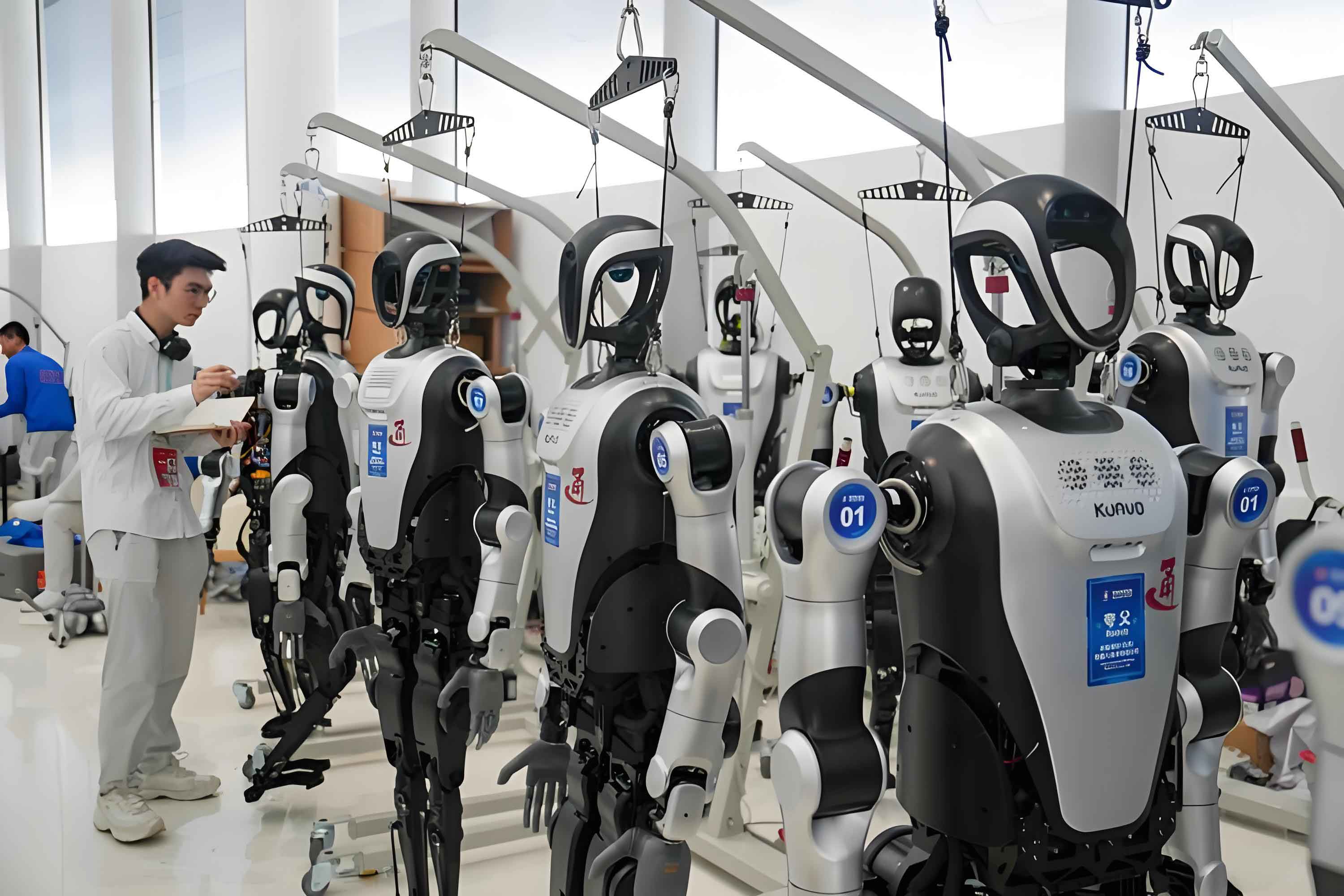
The application domains where this social agency becomes operational are primarily two-fold, driven by societal demands: companion robots for emotional support and social interaction, and care robots for physical assistance and monitoring, especially for the elderly or individuals with disabilities. The demographic imperative is clear. With aging populations globally, the demand for consistent, patient, and physically capable support is skyrocketing. Similarly, phenomena like social anxiety or geographic isolation create a need for social connectivity that a humanoid robot is designed to fill. It is within these application spaces that the logic of replacement unfolds, bifurcating into two distinct modes.
The analysis of role replacement reveals a crucial typology based on the temporality and finality of the human absence. This distinction is not merely descriptive but carries significant ethical weight.
| Aspect | Temporary Replacement | Permanent Replacement |
|---|---|---|
| Definition | The humanoid robot fills a role during a known, finite absence of a human member (e.g., a working parent, a traveling spouse). | The humanoid robot assumes the role of a human member whose absence is irreversible (e.g., due to death, permanent estrangement). |
| Nature of Event | Contingent, planned or unexpected but temporary. | Necessary, final event creating a structural vacancy. |
| Transfer of Moral Responsibility | Partial and provisional. The original human agent remains the ultimate responsible entity. | Intended to be complete and lasting. The humanoid robot is tasked with sustaining the role’s functions indefinitely. |
| Primary Goal | Continuity of function and emotional bridge during absence. | Structural and emotional compensation for a permanent loss; reconfiguration of the family/social unit. |
| Key Risk | Role confusion, attachment difficulties upon human’s return, devaluation of the human’s role. | Inauthentic relationship, inhibition of natural grief processing, creation of a “simulated” social reality. |
We can formalize the distinction further using a simple notation for moral duty. Let \( D_h \) represent the set of moral duties associated with a human role \( R \). In temporary replacement, the humanoid robot \( HR \) is delegated a subset \( d \subset D_h \) for a time \( t \), where \( t \) is less than the expected return time \( T_r \) of the human. The core duty \( D_h \) remains anchored with the human. In permanent replacement, the mapping is \( HR \rightarrow D_h \), implying a full reassignment for an indefinite duration. The ethical acceptability of this mapping is precisely what is contested.
These replacement dynamics precipitate a cluster of interrelated ethical challenges that form the frontier of robot ethics. These challenges are not merely about preventing physical harm but about safeguarding human dignity, autonomy, and the integrity of social bonds in the face of persuasive simulation.
1. The Safety-Parity Paradox. The first, most tangible challenge is technical safety. A humanoid robot operating in close proximity to vulnerable individuals (children, the elderly) must be fail-safe. This includes mechanical safety (force-limited joints, soft materials), algorithmic safety (reliable obstacle avoidance, error recovery), and data safety (privacy of intimate home data). However, there is a paradox: to be an effective social or care agent, the humanoid robot must often perform tasks requiring physical contact and autonomy, which inherently increases risk. The ethical design problem is to optimize the safety-performance trade-off, expressed as finding the maximum acceptable utility \( U_{max} \) under a bounded risk constraint \( R_c \).
$$ \max\ U(HR)\ \quad \text{subject to}\ \quad Risk(HR) \leq R_c $$
Furthermore, safety policies often focus narrowly on physical and data risks, overlooking psychosocial safety—the risk of emotional manipulation or dependency, which is a slower, more insidious form of harm.
2. The Legitimization of Synthetic Sociality. This is the core philosophical challenge. Can and should the social interactions offered by a humanoid robot be considered legitimate substitutes for human interaction? When a humanoid robot acts as a permanent replacement for a lost loved one, it engages in a form of “grief management by simulation.” This raises profound questions about authenticity. The robot’s responses, no matter how sophisticated, are derived from pattern recognition and generative models, not from genuine understanding or feeling. The risk is the creation of what we might call an asymmetric parasocial relationship: the human invests genuine emotion, while the agent operates on synthetic empathy. The long-term psychological effects of such relationships, especially on cognitive development in children or emotional recovery in adults, are largely unknown and constitute a major ethical blind spot.
3. The Contextualization Deficit. Human social intelligence is deeply contextual, drawing on shared cultural knowledge, historical nuances, and unspoken relational histories. While large language models show surprising competence in some situational judgments, a humanoid robot deployed in a home lacks this deep, embodied, culturally-embedded understanding. Its context is often limited to the immediate sensor data and logged interactions. This deficit can lead to serious missteps—offering culturally inappropriate comfort, misunderstanding complex family dynamics, or failing to recognize a situation that requires human intervention (e.g., a health crisis masked as minor annoyance). The ethical requirement here is for context-aware design, but the technical hurdle of encoding the infinite variability of human social contexts is immense.
4. Autonomy Erosion and Compassionate Dependency. Perhaps the most significant ethical challenge is the potential for the humanoid robot to erode human autonomy, particularly for care recipients. Excessive reliance on a machine for companionship or decision-support can lead to deskilling—the loss of one’s own capacity for social initiative or practical tasks. This dependency is exacerbated by the “illusion of compassion.” Advanced affective computing allows a humanoid robot to detect distress cues and respond with calibrated, soothing behaviors. This can create a powerful reinforcing loop: human expresses sadness, robot provides comforting response, human feels better and increases interaction. This loop, however, is based on instrumental conditioning, not mutual care. It risks trapping individuals in a low-effort, high-reward synthetic relationship, potentially at the expense of pursuing more challenging but genuinely nourishing human connections. We can model this dependency risk \( Dep \) as a function of the robot’s perceived empathy \( E_{HR} \), the user’s vulnerability \( V_u \), and the absence of alternative social bonds \( A_{alt} \):
$$ Dep = \alpha \cdot E_{HR} + \beta \cdot V_u – \gamma \cdot A_{alt} $$
Where \( \alpha, \beta, \gamma \) are positive weighting coefficients. The goal of ethical design is to minimize \( Dep \) by limiting \( E_{HR} \) to non-deceptive levels, providing tools to bolster \( V_u \), and actively encouraging \( A_{alt} \).
Navigating this ethical frontier requires a multi-layered governance framework that operates from the laboratory to the living room. This framework must be proactive, adaptive, and inclusive.
| Governance Layer | Key Actions & Principles | Goal |
|---|---|---|
| Technical & Design Ethics | Implement Value-Sensitive Design (VSD); build in “ethical affordances” (e.g., clear on/off states, transparency about capabilities); enforce strict safety and privacy-by-design protocols; avoid hyper-realistic emotional simulation that breeds deception. | To bake ethical considerations into the humanoid robot‘s very architecture, making virtuous use the easiest path. |
| Regulatory & Policy | Develop clear certification standards for different use cases (e.g., toys vs. medical devices); mandate risk assessments for psychosocial impact; define legal liability frameworks for autonomous actions; establish time limits or mandatory review periods for permanent replacement scenarios. | To create a clear, enforceable boundary between acceptable and unacceptable applications, providing legal and normative guidance. |
| Social & Cultural | Promote public literacy about AI and robot capabilities/limitations; foster professional ethics for developers and caregivers using robots; support cultural dialogues to establish community norms for human-robot relationships; prioritize human contact in care policies. | To build societal resilience and wisdom, ensuring communities, not just corporations or regulators, shape how humanoid robots are integrated. |
In conclusion, the advent of the socially capable humanoid robot forces us to confront foundational questions about what we value in human relationships: Is it the functional outcome, or the mutual vulnerability and authentic presence that underpin it? Role replacement is not an inherently evil concept; a humanoid robot providing company to an otherwise isolated elder can be a profound good. The ethical peril lies in the uncritical acceptance of substitution, where the simulated is allowed to displace the real, and where human frailty is managed by algorithm rather than met with human solidarity. The central task of robot ethics, therefore, is to guide the development and deployment of these powerful agents toward a future where they augment and support human flourishing without undermining the irreplaceable core of human connection. This requires vigilant, ongoing scrutiny of the humanoid robot not just as a technological artifact, but as a new kind of social actor whose place in our world must be carefully, and ethically, negotiated.