
As I delve into the dynamics of the global robotics sector, it becomes increasingly clear that the China robot domain stands at a pivotal crossroads. The rapid ascent of China as the world’s largest robotics market is a testament to its industrial ambitions, yet beneath this success lies a complex web of challenges that threaten sustainable growth. In this comprehensive analysis, I aim to explore the multifaceted nature of the China robot ecosystem, leveraging data, models, and critical observations to unpack the opportunities and hurdles. The journey of the China robot industry is not just a national narrative but a microcosm of the broader technological revolution shaping our future.
From my perspective, the China robot story began gaining momentum in the early 21st century, driven by manufacturing demands and economic shifts. The proliferation of robotics in China has been phenomenal, with market expansion outpacing many developed nations. However, I must emphasize that this growth is underpinned by significant vulnerabilities. The core of my discussion revolves around two primary axes: the internal technological frailties and the external market forces. To set the stage, consider the fundamental equation that often defines industrial progress: $$ G = I \times T \times M $$ where $G$ represents growth in the China robot sector, $I$ is innovation capacity, $T$ is technological infrastructure, and $M$ is market adoption. Currently, for the China robot landscape, $I$ and $T$ lag behind $M$, creating an imbalance that requires urgent addressing.
One cannot overlook the visual representation of this boom. The image below captures the essence of the China robot proliferation in modern factories:
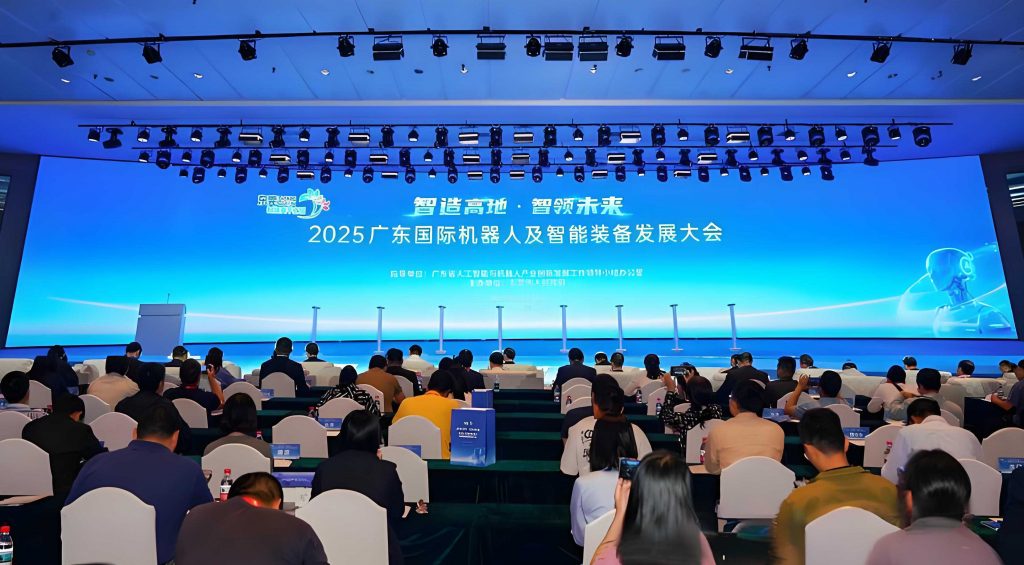
This scene symbolizes both the achievements and the underlying dependencies in the China robot narrative. As I analyze further, the intricacies of this industry unfold through various lenses.
Technological Foundations and the Innovation Gap
In my assessment, the China robot sector exhibits a paradoxical blend of advancement and stagnation. While specific domains like underwater and space robotics have seen breakthroughs, the overall technological base remains fragile. I attribute this to historical factors: the late start in industrial robot commercialization has hindered cumulative expertise. For instance, the research and development (R&D) intensity in the China robot field can be modeled as: $$ R\&D_{\text{China}} = \int_{0}^{t} k \cdot A(t) \, dt $$ where $k$ is the innovation coefficient and $A(t)$ represents adoption rate over time $t$. Compared to leaders like Japan or Germany, the China robot R&D trajectory shows a lower $k$ value, indicating weaker original contributions.
To quantify this gap, I have compiled data into Table 1, highlighting key technological metrics. The table underscores how the China robot industry often relies on iterative improvements rather than foundational inventions.
| Metric | China Robot Average | Global Leader Average | Gap (%) |
|---|---|---|---|
| System Design Innovation | Medium | High | 40% |
| Controller Precision | Low-Medium | High | 60% |
| AI Integration Level | Medium | Very High | 50% |
| Research Publication Impact | Growing | Established | 55% |
From this, I infer that the China robot ecosystem struggles with systemic integration. The lack of cohesive technology platforms means that advancements in one area, say, algorithms, do not seamlessly translate to hardware improvements. This fragmentation is exacerbated by the limited R&D investment. In my view, boosting innovation in the China robot sector requires a holistic approach, perhaps encapsulated by the formula: $$ I_{\text{new}} = \alpha \cdot C + \beta \cdot E $$ where $I_{\text{new}}$ is renewed innovation output, $\alpha$ and $\beta$ are weights for collaboration ($C$) and education ($E$) factors. For the China robot industry, enhancing $C$ through academia-industry ties and $E$ via specialized training could yield significant dividends.
The Dependency on High-Performance Components
Another critical aspect I have observed is the heavy reliance on imported high-performance components for the China robot manufacturing chain. This dependency not only inflates costs but also stifles long-term strategic autonomy. The issue is particularly acute in key parts like reducers, servo motors, and drives. Mathematically, this reliance can be expressed as a dependency ratio: $$ D = \frac{I_c}{T_c} \times 100 $$ where $D$ is the dependency percentage, $I_c$ is the import volume of critical components for China robot production, and $T_c$ is the total component usage. Recent estimates place $D$ above 70% for the China robot sector, a alarming figure that underscores vulnerability.
I believe this stems from the nascent stage of the China robot supply chain. Without scale, domestic component makers lack incentives to invest in high-precision manufacturing. Table 2 breaks down this import dependency, revealing how it permeates various tiers of the China robot value chain.
| Component Type | Import Share (%) | Primary Sources | Impact on China Robot Cost |
|---|---|---|---|
| Precision Reducers | 85% | Japan, Europe | High |
| Servo Motors | 80% | Germany, Japan | Medium-High |
| Drivers and Controllers | 75% | USA, Japan | Medium |
| Sensors and Vision Systems | 70% | Global | Medium |
In my analysis, this dependency creates a vicious cycle: high costs limit adoption of China robot solutions, which in turn reduces demand for domestic components. To break this, I propose a strategic model: $$ P_{\text{local}} = \frac{Q \cdot R}{C_{\text{prod}}} $$ where $P_{\text{local}}$ is the viability of local component production for China robot needs, $Q$ is the quality achieved, $R$ is the R&D investment, and $C_{\text{prod}}$ is the production cost. By enhancing $Q$ and $R$ while minimizing $C_{\text{prod}}$, the China robot industry can gradually reduce $D$. My projection is that with focused efforts, the China robot component self-sufficiency could improve significantly within 3-5 years, as economies of scale kick in.
Market Potentials and Strategic Imperatives
Despite these challenges, I am optimistic about the future of the China robot market. The sheer scale of industrial transformation in China offers unprecedented opportunities. Data indicates that the China robot adoption rate is accelerating, driven by labor cost rises and digitalization pushes. The market growth can be approximated by a logistic function: $$ N(t) = \frac{K}{1 + e^{-r(t – t_0)}} $$ where $N(t)$ is the number of robots deployed in China at time $t$, $K$ is the carrying capacity (market saturation), $r$ is the growth rate, and $t_0$ is the inflection point. For the China robot scenario, $K$ is immense, estimated in the millions, with $r$ increasing yearly.
To contextualize this, I have assembled Table 3, showcasing the application breadth of China robot solutions across industries. This diversity is a key strength, yet it also demands tailored approaches.
| Industry Sector | Adoption Rate (%) | Key China Robot Use Cases | Growth Potential |
|---|---|---|---|
| Automotive | 65% | Welding, Assembly | High |
| Electronics | 50% | PCB Handling, Testing | Very High |
| Logistics and Warehousing | 30% | AGVs, Sorting | High |
| Food and Beverage | 20% | Packaging, Palletizing | Medium-High |
| Chemicals | 15% | Hazardous Material Handling | Medium |
From my viewpoint, the China robot industry must leverage this market depth to drive innovation. The concept of “application-led innovation” is crucial: by deploying robots in diverse settings, the China robot ecosystem can gather data and insights to refine technologies. I see this as a feedback loop: $$ \text{Innovation} \leftarrow \text{Application} \rightarrow \text{Improvement} $$ where each deployment of a China robot system generates learning that fuels R&D. However, this requires lowering barriers to entry, such as cost and complexity. Here, I suggest a policy framework: $$ C_{\text{total}} = C_{\text{robot}} + C_{\text{integration}} + C_{\text{training}} $$ where $C_{\text{total}}$ is the total cost of ownership for a China robot system. By subsidizing $C_{\text{integration}}$ and $C_{\text{training}}$, authorities can boost adoption, thereby creating a virtuous cycle for the China robot market.
Integrative Strategies for Future-Proofing
In synthesizing my observations, I believe that the China robot industry’s success hinges on multipronged strategies. The challenges are interconnected, so solutions must be systemic. For instance, enhancing domestic capabilities in high-performance components will directly improve the competitiveness of China robot products. Similarly, fostering research clusters can elevate the China robot innovation index. I model this synergy as: $$ S = w_1 \cdot T + w_2 \cdot M + w_3 \cdot P $$ where $S$ is the overall strength of the China robot sector, $T$ is technological prowess, $M$ is market penetration, and $P$ is policy support, with weights $w_1, w_2, w_3$ adjusted dynamically.
One area I emphasize is the need for standardization in the China robot domain. Without common protocols, interoperability suffers, limiting scalability. A proposed standard adoption rate could be: $$ A_s = \frac{N_{\text{compliant}}}{N_{\text{total}}} \times 100 $$ where $A_s$ is the adoption rate of standards among China robot manufacturers. Higher $A_s$ can reduce integration costs and spur innovation. Moreover, international collaboration is vital; the China robot industry should not operate in isolation but engage in global knowledge exchanges to accelerate learning curves.
Looking ahead, I anticipate that the China robot landscape will undergo significant consolidation and specialization. As markets mature, niche applications will emerge, requiring tailored China robot solutions. The evolution can be depicted as a phase transition: $$ \text{Fragmentation} \rightarrow \text{Integration} \rightarrow \text{Specialization} $$ Currently, the China robot sector is in the fragmentation phase, but with concerted efforts, it can progress rapidly. My recommendations include increasing R&D tax incentives, establishing testbeds for China robot technologies, and promoting STEM education to build a skilled workforce. These steps, combined with the innate market dynamism, can propel the China robot industry to global leadership.
Conclusion: Navigating the Crossroads
In conclusion, my exploration of the China robot industry reveals a narrative of immense promise tempered by tangible hurdles. The journey from a volume market to a value leader is fraught with complexities, but not insurmountable. By addressing technological gaps, reducing import dependencies, and harnessing market forces, the China robot ecosystem can achieve sustainable growth. The formula for success, in my view, is: $$ \text{Success}_{\text{China robot}} = \text{Innovation} \times \text{Collaboration} \times \text{Market Access} $$ where each factor multiplies rather than adds, emphasizing their interdependence.
As I reflect on the future, the China robot story is far from over; it is entering a decisive chapter. With strategic vision and relentless execution, the China robot industry can not only overcome challenges but also set new benchmarks in the global robotics arena. The path forward requires patience, investment, and a unwavering commitment to excellence—a journey that I will continue to monitor with great interest, as the China robot revolution unfolds.