
As an industry analyst deeply immersed in the field of advanced robotics, I have witnessed the rapid evolution of humanoid robots, often hailed as the “crown jewel” of the robotics industry. These machines represent a convergence of cutting-edge technologies from information technology, manufacturing, materials science, energy systems, and life sciences. The rise of humanoid robots signifies a pivotal shift in modern technological innovation, driven by the fusion of informatization and industrialization. In this article, I will explore the immense potential of the humanoid robot sector, analyze the foundational elements in certain industrial regions, and propose strategic pathways to capitalize on this burgeoning market. My goal is to provide a comprehensive perspective on how to navigate the complexities of this field, leveraging data, formulas, and tables to elucidate key points.
The humanoid robot industry stands on the brink of widespread commercial adoption, with projections indicating that within the next 5-10 years, these robots will enter a mature phase of application. This optimism stems from three core drivers: technological advancements, policy support, and market demand. Let me delve into each of these aspects to underscore why humanoid robots are poised to transform our world.
First, technological progress has been a relentless force propelling humanoid robots forward. Over the years, breakthroughs in fundamental components, new materials, control theories, and recognition algorithms have laid a robust foundation. Notably, the advent of generative AI and large-scale models has accelerated the intelligence of humanoid robots, enabling capabilities such as autonomous learning and adaptive behavior. For instance, recent developments like the Optimus humanoid robot, ChatGPT, and SORA video generation models highlight the transition of humanoid robots from laboratory prototypes to产业化 products. The core of this advancement lies in the integration of AI, which can be modeled through learning algorithms. Consider the reinforcement learning framework often used for humanoid robot control:
$$ J(\theta) = \mathbb{E} \left[ \sum_{t=0}^{T} \gamma^t r(s_t, a_t) \right] $$
where \( J(\theta) \) represents the expected cumulative reward, \( \gamma \) is the discount factor, and \( r(s_t, a_t) \) is the reward at state \( s_t \) and action \( a_t \). This formula encapsulates how humanoid robots optimize their actions through trial and error, a key aspect of their autonomous operation. Moreover, advancements in hardware, such as actuators and sensors, have enhanced the physical capabilities of humanoid robots. For example, the torque output of a humanoid robot joint can be expressed as:
$$ \tau = K_t \cdot I $$
where \( \tau \) is the torque, \( K_t \) is the motor constant, and \( I \) is the current. Such improvements have made humanoid robots more dexterous and energy-efficient, paving the way for broader applications.
Second, policy support has become increasingly pivotal in shaping the humanoid robot landscape. Amid global technological competition, governments worldwide are recognizing the strategic importance of humanoid robots and are formulating supportive policies. These initiatives aim to foster systemic innovation, engineering development, and industrial deployment. For instance, national guidelines often emphasize research funding, standardization, and ecosystem building. The policy framework can be summarized as a multi-layered approach that incentivizes collaboration between academia and industry. To illustrate the impact, consider the following table outlining key policy areas and their potential effects on humanoid robot development:
| Policy Area | Objective | Expected Impact on Humanoid Robot Industry |
|---|---|---|
| Research & Development Grants | Accelerate innovation in AI and robotics | Increase in patents and prototype iterations |
| Tax Incentives | Lower costs for manufacturers and adopters | Higher adoption rates in industrial sectors |
| Standardization Programs | Ensure interoperability and safety | Reduced barriers to market entry |
| Talent Development Initiatives | Build skilled workforce | Improved R&D capabilities and maintenance |
These policies collectively create a conducive environment for humanoid robot enterprises to thrive, reducing uncertainties and encouraging investment.
Third, market demand is a powerful pull factor driving the adoption of humanoid robots. As economies grow, there is a rising emphasis on productivity, quality, and workplace safety. Simultaneously, demographic shifts such as aging populations and declining birth rates are creating labor shortages in sectors like elderly care, household services, and manufacturing. Humanoid robots offer unparalleled advantages in efficiency, precision, and risk mitigation, making them viable solutions to these challenges. The demand can be quantified through a simple economic model:
$$ D(p) = \alpha – \beta p + \gamma L + \delta A $$
where \( D(p) \) is the demand for humanoid robots, \( p \) is the price, \( L \) represents labor cost savings, \( A \) denotes aging population metrics, and \( \alpha, \beta, \gamma, \delta \) are coefficients. This equation highlights how factors like cost reduction and demographic pressures boost demand. In industrial settings, humanoid robots can perform repetitive or hazardous tasks, reducing human exposure to risks. For example, in quality inspection, a humanoid robot equipped with vision systems can achieve higher accuracy rates than human workers. Speaking of quality inspection, the integration of advanced sensors and AI is crucial for ensuring the reliability of humanoid robots. Below is an image that exemplifies such applications in robotics:
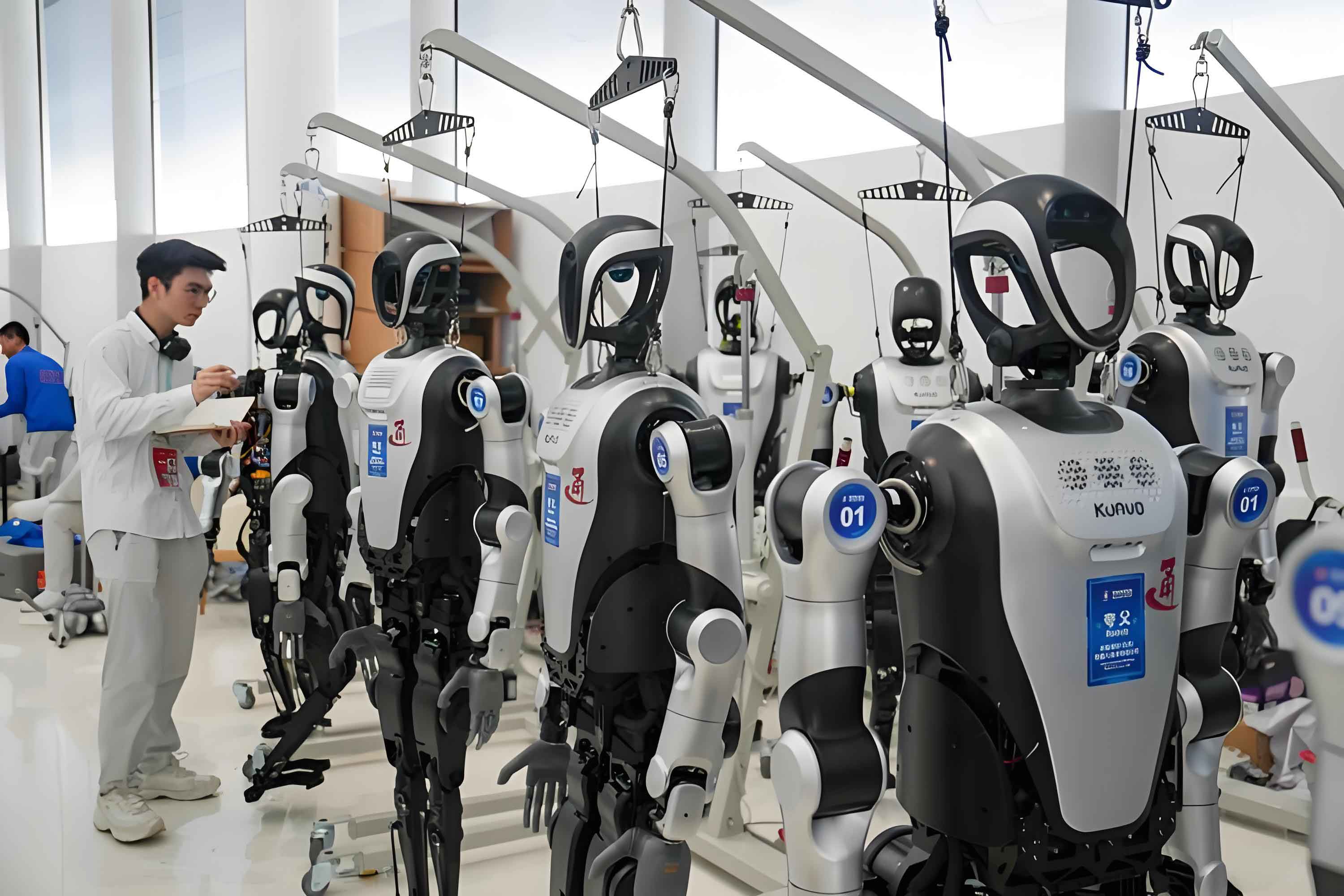
This visual underscores the practical use of humanoid robots in maintaining high standards, a key selling point for manufacturers.
Despite these favorable conditions, the journey toward a robust humanoid robot industry is fraught with challenges, particularly in regions with established but nascent robotics ecosystems. Based on my observations, many manufacturing hubs have made局部 breakthroughs in robotics, yet their overall strength remains limited. This paradox stems from several interrelated issues that hinder the transition to humanoid robots.
One major challenge is the slow transformation from industrial robots to humanoid robots. While some regions have an early start in industrial robot manufacturing, with companies achieving significant market share in domains like welding or协作 robots, the leap to humanoid robots is not straightforward. The fundamental reason lies in the divergent technological pathways: industrial robots often rely on pre-programmed tasks, whereas humanoid robots require autonomous learning capabilities. This shift necessitates a complete overhaul of software architecture and hardware design. For instance, the control system for a humanoid robot involves complex dynamics that can be modeled using the Lagrangian formulation:
$$ L = T – V $$
where \( L \) is the Lagrangian, \( T \) is the kinetic energy, and \( V \) is the potential energy of the humanoid robot system. Implementing such models in real-time requires advanced processors and algorithms, which many traditional industrial robot manufacturers lack. Consequently, the转型 to humanoid robots is slow, with few enterprises venturing into整机 production.
Another issue is the lack of precision in product development. Many regions boast strong manufacturing capabilities in core components such as sensors, reducers, motors, and lead screws. These parts are critical for humanoid robots, often accounting for a substantial portion of the total cost. However, the existing components are typically designed for general-purpose industrial applications, not specifically for humanoid robots. For example, while servo motors are widely produced, there is a shortage of specialized motors like hollow-cup motors or frameless torque motors that are essential for the compact and efficient joints of a humanoid robot. The cost breakdown of a typical humanoid robot illustrates this point:
| Core Component | Cost Percentage (%) | Description |
|---|---|---|
| Reducers (e.g., harmonic drives) | 30 | Used for precise motion control in joints |
| Servo Systems (motors & drives) | 25 | Provide actuation and torque |
| Controllers (hardware & software) | 15 | Manage AI algorithms and real-time processing |
| Sensors (vision, force, etc.) | 10 | Enable perception and interaction |
| Other (structure, battery, etc.) | 20 | Miscellaneous components and assembly |
As shown, reducers, servo systems, and controllers together constitute over 70% of the成本, highlighting the importance of mastering these components for humanoid robots. However, without tailored designs, local manufacturers struggle to compete in the high-end humanoid robot market.
Market penetration is also a hurdle, characterized by limited enterprise adoption. In regions with dense manufacturing clusters, there is vast potential for deploying humanoid robots in industrial settings such as assembly lines, logistics, and quality control. Yet, under economic uncertainties, many small and medium-sized enterprises are hesitant to invest in robotics due to concerns about upfront costs, talent shortages, and return on investment. As a result, humanoid robot applications often remain confined to service sectors like hospitality or cleaning,未能充分挖掘 the industrial potential. The adoption rate can be expressed through a diffusion model:
$$ \frac{dA(t)}{dt} = p \cdot (M – A(t)) + q \cdot A(t) \cdot (M – A(t)) $$
where \( A(t) \) is the number of adopters at time \( t \), \( M \) is the total market potential, \( p \) is the innovation coefficient, and \( q \) is the imitation coefficient. This Bass diffusion model suggests that without strong early adopters, the spread of humanoid robots may stagnate.
Furthermore, talent shortages exacerbate these challenges. While vocational education systems in some regions are well-developed, they often lack specialized programs in computer science, artificial intelligence, and optoelectronics—fields crucial for humanoid robot R&D. The output of graduates in these disciplines is insufficient to meet local industry needs. This gap weakens the innovation pipeline, forcing companies to rely on incremental improvements rather than groundbreaking advances. The talent deficit can be quantified as:
$$ S = D – L \cdot G $$
where \( S \) is the talent shortage, \( D \) is the demand for skilled professionals, \( L \) is the number of local graduates, and \( G \) is the quality factor (ranging from 0 to 1). A low \( G \) indicates that even existing graduates may not possess the requisite skills for humanoid robot development.
To overcome these barriers and seize the opportunities presented by humanoid robots, I propose a strategic framework centered on building five key bases. These bases are designed to leverage comparative advantages, foster innovation, and accelerate the integration of humanoid robots into various sectors. Each base addresses a specific aspect of the ecosystem, from component manufacturing to talent cultivation.
The first base is a growth hub for core component enterprises. Given the high cost share of components like reducers, servo systems, and controllers, there is immense room for cost reduction and import substitution. Regions with strong foundations in machinery, gears, bearings, and motors can pivot toward producing humanoid robot-specific parts. By organizing matchmaking events between component suppliers and整机 manufacturers, local companies can integrate into the supply chains of leading humanoid robot firms. This alignment can be incentivized through subsidies for participation in robotics exhibitions, fostering collaboration and knowledge exchange. The economic impact can be modeled as:
$$ \Delta C = \sum_{i=1}^{n} (c_i^{\text{import}} – c_i^{\text{local}}) \cdot v_i $$
where \( \Delta C \) is the cost savings from localizing component \( i \), \( c_i^{\text{import}} \) and \( c_i^{\text{local}} \) are the costs of imported and local components, respectively, and \( v_i \) is the volume. Over time, this can make humanoid robots more affordable and boost local industry.
The second base is an AI large model training ground. In the era of data intelligence, the value of operational data is paramount for refining the “小脑” (cerebellum) of humanoid robots—their泛化 execution capabilities. By deploying humanoid robots in diverse industrial scenarios, manufacturers can accumulate vast datasets to train and迭代 AI models. I recommend establishing “shared factories” where humanoid robot producers partner with user enterprises: the former提供 robots at low cost, and the latter提供 application scenarios for data collection. This symbiotic relationship accelerates model improvement, as described by the learning curve equation:
$$ P = P_0 \cdot N^{-b} $$
where \( P \) is the performance metric (e.g., error rate), \( P_0 \) is the initial performance, \( N \) is the number of training instances, and \( b \) is the learning rate. More data leads to better performance, enabling humanoid robots to handle complex tasks autonomously.
The third base is an incubator for startups. The humanoid robot industry is still in its growth phase, with ample opportunities for new entrants to disrupt the market. By targeting university spin-offs, talent teams, and early-stage companies, regions can foster a vibrant entrepreneurial ecosystem. Investment strategies should emphasize分散风险—allocating funds across multiple promising projects rather than concentrating on a few large ventures. The expected return can be calculated using a portfolio approach:
$$ E[R] = \sum_{j=1}^{m} w_j \cdot \mu_j $$
where \( E[R] \) is the expected return, \( w_j \) is the weight of investment in startup \( j \), and \( \mu_j \) is its expected growth rate. This approach increases the chances of nurturing high-growth “small but beautiful” projects that could become future leaders in the humanoid robot space.
The fourth base is a demonstration zone for humanoid robot applications. To build momentum, it is essential to showcase successful use cases in industries where humanoid robots can have immediate impact, such as automotive, leisure products, or hazardous materials handling. By designating示范企业 each year, regions can create标杆 scenarios that inspire others. Additionally, hosting robotics competitions, exhibitions, and forums can elevate the region’s profile in the global humanoid robot community. The effectiveness of such demonstrations can be measured through adoption metrics, as shown in the table below:
| Industry Sector | Potential Application | Expected Efficiency Gain (%) |
|---|---|---|
| Automotive Assembly | Precision welding and part handling | 20-30 |
| Logistics & Warehousing | Sorting and packaging tasks | 25-35 |
| Healthcare | Patient assistance and sanitation | 15-25 |
| Construction | Heavy lifting and inspection | 30-40 |
These gains highlight why humanoid robots are attractive for businesses seeking to enhance productivity.
The fifth base is a training center for applied talents. Since培养本土 R&D experts for humanoid robots is challenging due to limited higher education resources, the focus should shift toward实用型 skills. Vocational institutions can adjust their curricula to offer programs in system integration, installation, debugging, operation, and maintenance of humanoid robots. By aligning training with the needs of local enterprises, these centers can produce复合型人才 who bridge the gap between technology and implementation. The output of such training can be expressed as:
$$ T = \int_{0}^{t} f(s) \, ds $$
where \( T \) is the total talent output over time \( t \), and \( f(s) \) represents the rate of skill acquisition based on program effectiveness. This ensures a steady pipeline of technicians to support the deployment of humanoid robots.
In conclusion, the humanoid robot industry represents a transformative force with the potential to redefine production and daily life. Through technological innovation, supportive policies, and growing demand, humanoid robots are transitioning from niche experiments to mainstream solutions. However, realizing this potential requires addressing systemic challenges in transformation, product specialization, market adoption, and talent development. By strategically building bases for components, AI training, startup incubation, application demonstration, and talent training, regions can position themselves at the forefront of this revolution. As I reflect on these strategies, it is clear that collaboration and adaptability will be key to thriving in the dynamic landscape of humanoid robotics. The journey ahead is complex, but with concerted efforts, the vision of ubiquitous humanoid robots can become a reality, driving economic growth and societal progress.