
In the current era of global technological revolution and industrial transformation, I observe that humanoid robots are emerging as pivotal execution tools in intelligent manufacturing, representing a strategic domain where nations are intensively competing. This article delves into the technological advancements, industrial ecosystems, and future trajectories from my perspective, aiming to empower the growth of the humanoid robot sector. Based on comprehensive analyses and trends, I will explore how these machines are reshaping industries and society.
The global landscape for humanoid robots is rapidly evolving, with these systems often hailed as the “crown jewel of manufacturing” due to their integration of multidisciplinary technologies like mechanical design, AI large models, novel sensors, and biomimetic materials. From my analysis, the development stages of humanoid robots can be segmented into distinct periods: foundational theory and prototype exploration from 1960 to 2000, followed by diversified technological progress from 2000 to 2020, and an accelerated phase of intelligence and industrialization post-2020. Financial projections underscore this growth; for instance, Goldman Sachs estimates the global market for humanoid robots could reach $38 billion by 2030, while visionaries like Elon Musk predict long-term valuations exceeding $1 trillion, positioning humanoid robots as the next-generation universal intelligent terminals.
| Time Period | Development Phase | Key Achievements |
|---|---|---|
| 1960-2000 | Foundational Theory and Prototyping | Initial research in robotics, basic actuation systems |
| 2000-2020 | Technological Diversification | Advances in AI, sensor fusion, and material science |
| 2020 onwards | Intelligence and Industrialization | Integration with large-scale AI models, commercialization efforts |
Internationally, leading corporations and research institutions are making significant strides in humanoid robots. For example, companies in the United States have demonstrated dynamic balance and complex terrain adaptation through advanced prototypes, capturing global attention with feats like jumping and acrobatics. Similarly, other firms focus on industrial applications, such as automating tasks in electric vehicle manufacturing, which fuels imaginations about widespread产业化落地. In parallel, enterprises specializing in logistics have validated practical potential through dexterous manipulation in sorting scenarios. Nations like South Korea, Japan, and the European Union are driving humanoid robot development via national-level initiatives, aiming to secure technological leadership. Concurrently, my observations indicate a vibrant “blooming” trend in humanoid robots within other regions, exemplified by public displays during cultural events that spark widespread enthusiasm. Local products have iterated improvements in motion control and interaction, while academic institutions and startups contribute through theoretical breakthroughs and commercial explorations.
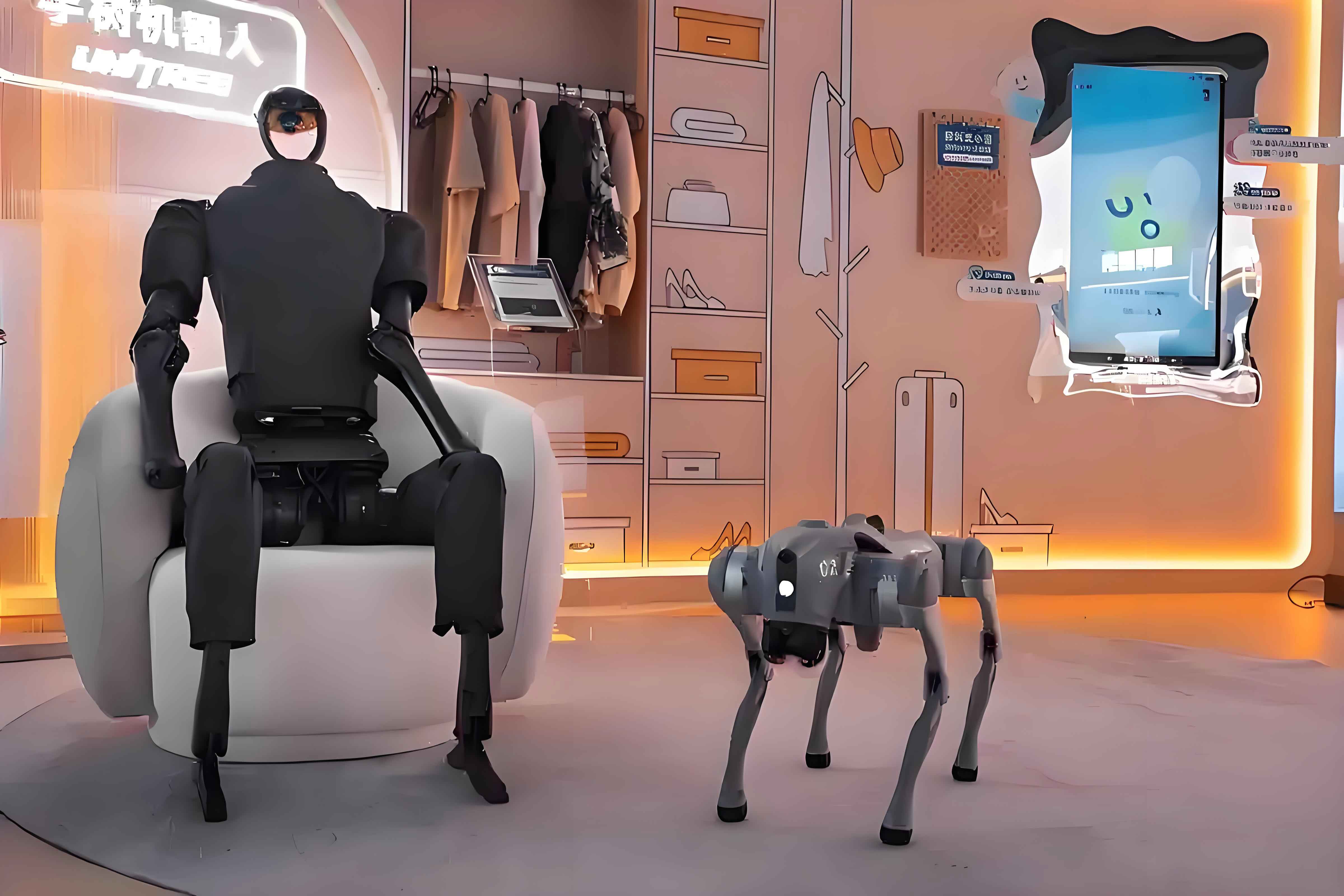
Technological breakthroughs are accelerating the development of humanoid robots, with large-scale simulation training playing a crucial role. In my view, leveraging AI large models for high-performance simulations enables thousands of quadruped or humanoid robots to train in parallel within virtual environments, drastically reducing development cycles. Moreover, the synergy between cloud-based large models and edge computing enhances autonomous decision-making efficiency for humanoid robots. For instance, simulation platforms allow simultaneous algorithm training for numerous robots, shortening iteration times, while data collection centers support scenario adaptation for vertical-specific models. The core operational framework of humanoid robots involves a perception-decision-execution closed-loop, enabling semi-autonomous or fully autonomous functionality. This technical pathway shares commonalities with smartphones and smart vehicles, suggesting potential replication of their industrialization trajectories. Enhancements in perception and decision-making rely on deep integration of multi-modal large models, where systems combining visual, laser, tactile, and force sensors are essential for adapting to unstructured environments. Innovation centers dedicated to embodied intelligence are tackling shared challenges in motion control and perceptual interaction.
From my analysis, the motion control of humanoid robots can be mathematically represented using dynamics equations. For example, the generalized dynamics for a humanoid robot with multiple degrees of freedom is given by:
$$ \tau = M(q)\ddot{q} + C(q,\dot{q})\dot{q} + g(q) $$
where \(\tau\) denotes the joint torque vector, \(M(q)\) is the inertia matrix, \(C(q,\dot{q})\) represents Coriolis and centrifugal forces, and \(g(q)\) accounts for gravitational effects. This formulation is critical for achieving stable locomotion and manipulation in humanoid robots.
Additionally, reinforcement learning approaches are being applied to humanoid robots for environment adaptation. The value iteration formula in reinforcement learning can be expressed as:
$$ V(s) = \max_a \sum_{s’} P(s’|s,a) [R(s,a,s’) + \gamma V(s’)] $$
where \(V(s)\) is the value function for state \(s\), \(a\) is the action, \(P(s’|s,a)\) is the transition probability, \(R(s,a,s’)\) is the reward, and \(\gamma\) is the discount factor. This enables humanoid robots to learn from simulations and improve their autonomy.
| Technical Challenge | Description | Current Solutions |
|---|---|---|
| Balance and Locomotion | Maintaining stability on complex terrains | Advanced control algorithms, sensor fusion |
| Dexterous Manipulation | Precise grasping and fine motor tasks | Multi-fingered hands, force feedback |
| Hardware Bottlenecks | High-power density joints, energy efficiency | Modular designs, lightweight materials |
| Intelligent Perception | Integration of vision, touch, and AI models | Multi-modal large models, electronic skin |
In terms of core components, I note that localization breakthroughs in traditional elements like reducers, servo motors, and controllers are progressing, yet challenges persist in high-power-density joints, specialized chips, and lightweight structural designs, which often depend on imports. The development of novel sensors, such as multi-dimensional force control and flexible tactile systems, along with long-endurance energy solutions, is key to enhancing the overall performance of humanoid robots. For example, domestically produced seven-degree-of-freedom robotic arms utilize modular designs to cut costs, but further optimization is needed in areas like precision grasping with dexterous hands. Collaborative innovation across academia, industry, and research is vital to overcoming these technical barriers.
Looking ahead, the key technical challenges for humanoid robots include, first, improvements in balance for complex terrain walking and dexterous manipulation involving dual-arm grasping and fine operations. Second, breakthroughs in low-cost modular joints, high-efficiency drive systems for better续航, and lightweight materials are necessary. Third, addressing intelligent shortcomings through visual-tactile fusion, electronic skin with multi-dimensional force feedback, and integrating AI large models to enable multi-task autonomous decision-making. The continuous evolution of information technologies further drives the rapid development of humanoid robots, including AI-powered embodied intelligence, where large models grant natural interaction, scene understanding, and adaptive capabilities. Advances in flexible sensors, biomimetic muscle actuation, and brain-inspired chips, coupled with cloud-based collaborative training and multi-robot coordination in logistics clusters or drone formations, are shaping the future.
I conceptualize the technological architecture of humanoid robots as a synergy between “brain” and “cerebellum.” The brain aspect focuses on intelligent perception and decision-making, relying on multi-modal environmental perception and semantic scene understanding, integrated with large models for natural language interaction and dynamic task planning. For instance, a verbal command like “please hand me the tool” can generate grasping paths by fusing visual positioning and force control feedback. The cerebellum component handles motion control and execution, requiring breakthroughs in full-body dynamics modeling for high degrees of freedom, dynamic balance in unstructured environments, and dexterous dual-arm operations.
At the hardware level, humanoid robots face triple challenges in drive systems, perception modules, and lightweight design. Drive systems must balance power density and cost, with mainstream approaches involving integrated high-torque motors and harmonic reducers, though hydraulic drives retain advantages in high-burst scenarios. Perception hardware depends on the fusion of electronic skin, RGB-D cameras, and LiDAR, aiming to achieve tactile-visual closed-loop control. Lightweighting efforts employ carbon fiber skeletons and biomimetic muscle materials like shape memory alloys to reduce overall weight while enhancing续航.
Motion control technologies for humanoid robots are evolving along three parallel paths: model-based control relying on precise dynamics modeling, reinforcement learning for improved environmental adaptability and self-recovery from falls, and human demonstration methods using exoskeletons or video imitation to generate action sequences and lower programming barriers. Each path has its strengths and weaknesses, and I anticipate a future shift toward hybrid architectures where model control ensures safety, and reinforcement learning boosts generalization.
Intelligent upgrades for humanoid robots depend on the deep integration of multi-modal large models and development toolchains. Large model empowerment is evident in vertical applications, such as language-action mapping and visual-tactile loops; however, low localization rates in toolchains and high data annotation costs still hinder industrialization. The following table summarizes the core aspects of intelligence in humanoid robots:
| Aspect | Role in Humanoid Robots | Examples |
|---|---|---|
| Brain (Cognition) | Perception, decision-making, task planning | Multi-modal AI, natural language processing |
| Cerebellum (Motion) | Locomotion, balance, manipulation | Dynamic control, reinforcement learning |
| Hardware Integration | Drive, sensors, lightweight structures | Electronic skin, carbon fiber materials |
Policy drivers are instrumental in advancing humanoid robots globally. Internationally, initiatives such as the National Robotics Initiative in the United States, Horizon Europe in the EU, and robotic strategies in Japan and South Korea designate intelligent robots as national priorities, emphasizing AI integration, core components, and industrial deployment. Competition centers on critical areas like high-end sensors, dedicated chips, and autonomous decision algorithms. In my assessment, regional policy frameworks and actions have been established in recent years, outlining roadmaps for robotic technology攻关 and industrial chain upgrades. Specific guidelines promote the fusion of embodied intelligence with humanoid robots, advocating for the development of “brain” and “cerebellum” functionalities and breakthroughs in “limb” key technologies. In unveiling initiatives for future industries, humanoid robots are highlighted as one of the top directions, focusing on overcoming bottlenecks in servo motors and high-dynamic motion planning. Implementation opinions for future industries further support humanoid robots as a core development area, backing advancements in electronic skin, dexterous hands, and perceptual-cognitive technologies.
| Country/Region | Policy Initiative | Key Focus Areas |
|---|---|---|
| United States | National Robotics Initiative | AI fusion, core components, industrialization |
| European Union | Horizon Europe | Research, innovation, and cross-border collaboration |
| Japan | Robot Strategy | Advanced applications, societal integration |
| South Korea | Intelligent Robot Basic Plan | Smart robotics for economic growth |
The development of embodied intelligent robots for humanoid applications is a multidisciplinary endeavor, driven by intersections of AI large models, embodied intelligence, cloud platforms, new sensors, chips, and novel materials. This convergence is propelling the intelligent upgrade of humanoid robots. Typical application scenarios include operations in high-risk environments, medical rehabilitation such as intelligent prosthetics, and logistics warehousing with autonomous mobile robot coordination. Several directions exemplify the forefront of humanoid robot development: first, biomimetic robots like humanoid and quadruped forms serve as comprehensive validation platforms for advancing general capabilities in motion control and environmental adaptation; second, autonomous perception and decision-making construct “intelligent brains” for real-time decisions in complex settings, such as unmanned driving and industrial sorting; third, cloud-based group control and swarm intelligence, demonstrated in drone formations and logistics robot集群调度, represent future priorities; fourth, human-machine intelligence fusion, an emerging field encompassing brain-computer interfaces and intelligent prosthetics with bio-mechatronic integration, aids aging societies and disability assistance.
In summarizing embodied intelligence trends, I identify technical hotspots and industrialization directions. Hotspots focus on dexterous manipulation large models combining spatial intelligence with robotic arms, tactile feedback dexterous hands, and embodied navigation large models. Industrial applications are materializing in mass production of humanoid robots, low-altitude economies like drone logistics, and the development of “programming-free” intelligent agents for general robots. The progression from laboratories to diverse industries is becoming a reality for humanoid robots.
From an industry chain perspective, upstream R&D in chips, sensors, and core components forms the foundation for technological breakthroughs. Midstream system integrators must address issues in robot operating system development and toolchain gaps, with growing demand for low-code programming platforms and simulation training tools for humanoid robots. Downstream application expansion injects commercial momentum. The规模化落地 of humanoid robots should be driven by scenario demands informing technological iterations. Short-term efforts concentrate on specialized fields, where特种作业 like hazardous environment inspection and emergency response, along with commercial services such as reception and exhibition guidance, are emerging as hotspots. Medium-term prospects include industrial manufacturing scenarios, such as electric vehicle assembly and flexible production lines, anticipated for large-scale use. Long-term goals involve tackling complex needs in personalized service scenarios like home-based elderly care and medical nursing.
In conclusion, embodied intelligent robots, particularly humanoid robots, are transitioning from technological breakthroughs to规模化应用的关键期. The协同效应 of policy guidance, technological iteration, and scenario innovation will propel them into a new strategic industry. In this global race, I believe that only by坚持自主创新与开放合作并举 can stakeholders seize opportunities in the future landscape of intelligent robots. Humanoid robots are at a pivotal juncture from laboratory advances to industrial deployment, with technological fusion and scenario expansion driving potential market explosions. Despite challenges in intelligent control, cost, safety, and ethics, through policy引导, ecological synergy, and sustained technological攻坚, there is potential for leadership in the global humanoid robot competition. Over the next decade, humanoid robots may emerge as the next “national-level” industry, following in the footsteps of smartphones and new energy vehicles, revolutionizing how we live and work.