
In the global race toward intelligent manufacturing, industrial robots stand as the core and carrier of advanced production systems. Nations worldwide have deployed strategic initiatives to dominate this high-tech frontier, with China emerging as a key player through robust market growth and policy support. However, a critical aspect often overlooked in fostering the China robot sector is the role of tariff policies, particularly in the context of global value chains where intermediate goods trade is pervasive. A recent study delves into this issue, examining how compound tariffs affect the effective protection rate (EPR) of China’s industrial robot industry, revealing nuanced insights that could shape future trade and innovation strategies.
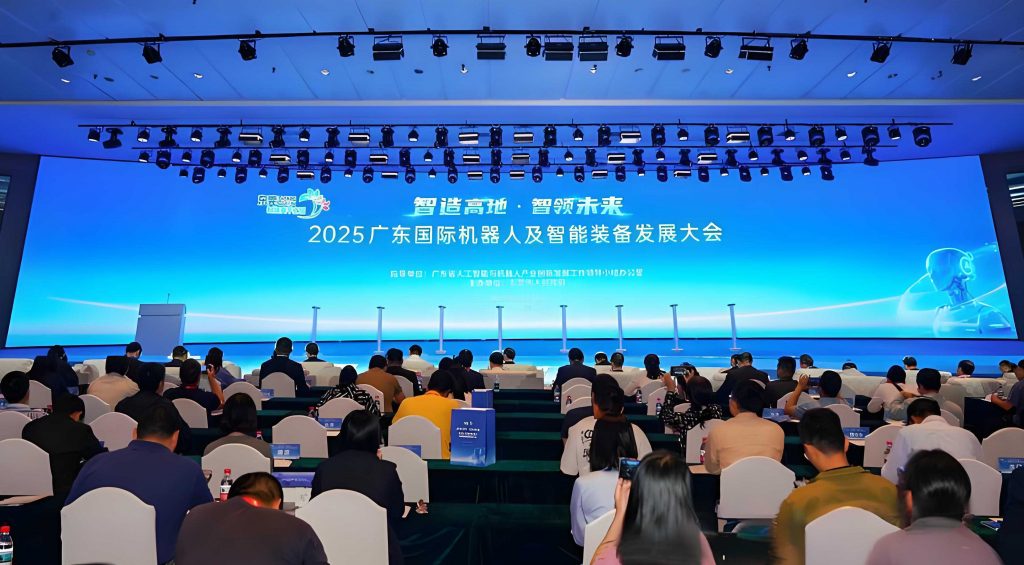
The China robot market has experienced exponential growth, driven by rising labor costs, aging demographics, and government initiatives like the “Guidance on Promoting Robot Industry Development.” According to the International Federation of Robotics (IFR), from 2008 to 2016, China’s industrial robot sales surged at an average annual rate of 36%, with 2016 sales surpassing the combined totals of Japan and Korea and nearing those of Europe and America. This expansion underscores the strategic importance of the China robot industry in the global manufacturing landscape. Yet, despite this progress, China’s robot density remains relatively low, indicating substantial room for future demand. To capitalize on this opportunity, domestic China robot manufacturers have relied heavily on importing key components—such as controllers, servo motors, and reducers—to rapidly assemble systems and capture market share. This import dependency, coupled with complex tariff structures, has profound implications for the industry’s competitiveness and protection levels.
Traditional analyses of tariff protection focus on nominal rates, but in an era of global value chains, the effective protection rate (EPR) offers a more accurate measure by accounting for tariffs on intermediate inputs. The EPR reflects how tariffs influence the value added in a specific production stage, rather than just the final product price. For the China robot industry, this is crucial because production involves multiple cross-border stages, with components often sourced from various countries subject to different tariff rates due to regional trade agreements. The study introduces a novel methodology for calculating EPR under compound tariffs—where multiple tariff rates apply to the same product based on its origin—and applies it to China’s robot sector, shedding light on policy effectiveness and challenges.
The research builds on the standard EPR formula for single tariffs, which considers the nominal tariff on final goods (T) and intermediate inputs (ti), along with input coefficients (ai). Under compound tariffs, however, these rates vary by import source, necessitating a weighted average approach. The study proposes using import shares as weights to compute average tariffs for final robots and key components. Specifically, for the China robot industry, the weighted average tariff for final products (T) is derived from import shares (Mj) and applicable rates (Tj) from different countries, while for key components like reducers, servo drives, and controllers, the weighted average tariff (ti) is based on shares (mij) and rates (tij). The resulting EPR formula for compound tariffs is:
ERP = (Σj MjTj – Σi ai Σj mij tij) / (1 – Σi ai)
This framework allows for a nuanced assessment of how China’s tariff policies, influenced by free trade agreements (FTAs) with countries like South Korea and Switzerland, impact the protection of its robot manufacturing. Data for the analysis were sourced from China’s Customs Tariff Schedules, United Nations Comtrade statistics, and industry reports, ensuring accuracy without fabrication.
The China robot industry’s import landscape reveals significant reliance on key components. From 2008 to 2017, imports of controllers, servo motors, and reducers grew substantially, as shown in Table 1. This trend highlights the intermediate goods intensity of China’s robot production, making tariff structures a pivotal factor in value-added calculations.
| Year | Controllers (HS 853710) | Servo Motors (HS 903289) | Reducers (HS 848340) | Total |
|---|---|---|---|---|
| 2008 | 2.88 | 2.25 | 1.91 | 7.04 |
| 2009 | 2.54 | 2.63 | 1.60 | 6.77 |
| 2010 | 3.35 | 3.74 | 2.14 | 9.23 |
| 2011 | 3.72 | 4.54 | 2.50 | 10.76 |
| 2012 | 3.56 | 3.77 | 2.05 | 9.38 |
| 2013 | 3.90 | 3.77 | 2.00 | 9.67 |
| 2014 | 4.57 | 4.08 | 2.22 | 10.87 |
| 2015 | 4.25 | 3.56 | 1.75 | 9.56 |
| 2016 | 4.54 | 3.61 | 1.40 | 9.55 |
| 2017 | 4.82 | 4.05 | 1.73 | 10.60 |
China’s tariff regime for robots and components features compound rates due to FTAs, as illustrated in Table 2. For instance, final products like spraying robots (HS 842489) have a Most-Favored-Nation (MFN) rate of 0%, while key components such as reducers (HS 848340) face MFN rates of 8% and lower preferential rates from FTA partners. This tariff downgrading—where final goods have lower rates than intermediates—can erode effective protection for the China robot industry, as per the EPR theory.
| HS Code | Product Description | 2017 MFN | 2017 Korea FTA | 2017 Switzerland FTA | 2018 MFN | 2018 Korea FTA | 2018 Switzerland FTA | 2019 MFN | 2019 Korea FTA | 2019 Switzerland FTA |
|---|---|---|---|---|---|---|---|---|---|---|
| 842489 | Spraying robots | 0 | 0 | 0 | 0 | 0 | 0 | 0 | 0 | 0 |
| 842890 | Handling robots | 5 | 4 | 3 | 5 | 3.6 | 2.5 | 5 | 3.3 | 2 |
| 847950 | Multi-functional robots | 0 | 0 | 0 | 0 | 0 | 0 | 0 | 0 | 0 |
| 848640 | IC factory handling robots | 0 | 0 | 0 | 0 | 0 | 0 | 0 | 0 | 0 |
| 851521 | Resistance welding robots for auto lines | 10 | 8.5 | 10 | 10 | 8 | 0 | 10 | 7.5 | 0 |
| 851531 | Arc welding robots for auto lines | 10 | 8.5 | 2 | 10 | 8 | 0 | 10 | 7.5 | 0 |
| 851580 | Laser welding robots for auto lines | 8 | 3.2 | 5.9 | 8 | 1.6 | 5.3 | 8 | 0 | 4.8 |
| 848340 | Precision reducers | 8 | 6.3 | 4.8 | 8 | 5.7 | 4 | 8 | 5.2 | 3.2 |
| 903289 | Servo motor drives | 7 | 5.6 | 7 | 7 | 5.1 | 2.5 | 7 | 4.6 | 7 |
| 853710 | Robot controllers | 5 | 3.5 | 3 | 5 | 3 | 2.5 | 5 | 2.5 | 2 |
Applying the compound tariff EPR methodology, the study calculated effective protection rates for seven types of China robot final products from 2009 to 2017, using two scenarios for input coefficients (Scenario A: high estimates; Scenario B: low estimates). The results, summarized in Table 3, categorize robots based on their EPR outcomes, revealing critical insights for the China robot industry’s trade policy.
| HS Code | Product Description | Scenario | 2009 | 2010 | 2011 | 2012 | 2013 | 2014 | 2015 | 2016 | 2017 |
|---|---|---|---|---|---|---|---|---|---|---|---|
| 842489 | Spraying robots | A | -25.22 | -25.35 | -25.04 | -25.18 | -25.18 | -24.19 | -24.20 | -24.21 | -24.21 |
| B | -12.31 | -12.33 | -12.15 | -12.27 | -12.27 | -11.80 | -11.81 | -11.81 | -11.81 | ||
| 842890 | Handling robots | A | -3.32 | -3.32 | -3.33 | -3.33 | -3.33 | -3.21 | -3.07 | -3.06 | -3.06 |
| B | 0.89 | 0.89 | 0.90 | 0.89 | 0.90 | 0.84 | 0.77 | 0.76 | 0.76 | ||
| 847950 | Multi-functional robots | A | -26.57 | -26.59 | -26.59 | -26.23 | -26.16 | -24.28 | -24.22 | -24.20 | -24.20 |
| B | -13.35 | -13.37 | -13.37 | -13.24 | -13.91 | -11.88 | -11.82 | -11.79 | -11.79 | ||
| 848640 | IC factory handling robots | A | -25.86 | -25.87 | -25.88 | -25.87 | -25.87 | -24.93 | -24.25 | -24.22 | -24.22 |
| B | -12.94 | -12.96 | -12.97 | -12.96 | -12.96 | -12.01 | -11.88 | -11.83 | -11.83 | ||
| 851521 | Resistance welding robots for auto lines | A | 17.32 | 17.33 | 17.32 | 17.33 | 17.33 | 18.25 | 18.53 | 18.86 | 18.86 |
| B | 12.28 | 12.28 | 12.28 | 12.28 | 12.28 | 12.14 | 12.37 | 13.80 | 13.80 | ||
| 851531 | Arc welding robots for auto lines | A | 19.14 | 19.15 | 19.15 | 19.15 | 19.15 | 20.21 | 20.47 | 20.68 | 20.70 |
| B | 13.40 | 13.40 | 13.39 | 13.39 | 13.39 | 14.42 | 14.64 | 14.88 | 14.89 | ||
| 851580 | Laser welding robots for auto lines | A | 4.28 | 4.28 | 4.27 | 4.27 | 4.27 | 5.13 | 6.22 | 6.22 | 6.26 |
| B | 4.31 | 4.30 | 4.30 | 4.30 | 4.30 | 5.15 | 6.25 | 6.25 | 6.30 |
The findings highlight three distinct categories within the China robot industry, based on EPR outcomes:
- Negative Effective Protection: Products like spraying robots (HS 842489), multi-functional robots (HS 847950), and IC factory handling robots (HS 848640) exhibit negative EPRs, primarily because their final product tariffs are zero or low, while key component tariffs are higher. This tariff downgrading discourages domestic value addition, posing a challenge for the China robot sector’s upstream development.
- Positive and High Effective Protection: Resistance welding robots (HS 851521) and arc welding robots (HS 851531) for automobile production lines show positive EPRs, often exceeding nominal rates, as final product tariffs are higher than those for components. This structure benefits downstream assembly in the China robot industry but may not incentivize component innovation.
- Low or Variable Effective Protection: Handling robots (HS 842890) and laser welding robots (HS 851580) have low EPRs, sometimes negative under Scenario A, due to narrow gaps between final and intermediate tariffs. This reflects the sensitivity of the China robot industry to tariff differentials and import sources.
Over time, EPRs for the China robot industry remained relatively stable, with slight improvements around 2014-2015 attributable to FTAs with Switzerland and South Korea. These agreements lowered weighted average tariffs for key components by increasing import shares from these partners, thereby enhancing effective protection for some final products. This underscores the role of regional integration in shaping the China robot industry’s competitiveness.
The study identifies a policy dilemma for China’s robot sector: maintaining tariffs on key components reduces the EPR of final robot products, hindering market expansion, while eliminating such tariffs could dampen domestic R&D motivation for components, perpetuating reliance on imports. This quandary is acute for the China robot industry, which seeks to climb the global value chain from assembly to innovation. To address this, the research proposes shifting from tariff protection to research subsidies for key components. In economic theory, subsidies avoid the consumption distortions associated with tariffs and do not negatively impact downstream EPRs. For the China robot industry, this means supporting R&D through national programs like the National Key R&D Plan or National Natural Science Foundation, which aligns with WTO rules and reduces trade friction risks. Such an approach could bolster the China robot industry’s effective protection while fostering indigenous innovation in critical areas like reducers, servo systems, and controllers.
In conclusion, the analysis of compound tariffs reveals nuanced impacts on the China robot industry’s effective protection rates. The China robot market’s growth trajectory depends not only on domestic demand but also on astute trade policies that balance protection and innovation. By adopting weighted tariff calculations and considering FTA effects, policymakers can better assess and enhance the China robot sector’s competitiveness. Recommendations include pursuing additional FTAs with robot powerhouse nations like Japan, Germany, and Sweden to lower component tariffs further, and substituting tariffs with targeted R&D subsidies to overcome the dual challenges of protection and technological dependency. As the China robot industry evolves, these insights will be crucial for shaping a resilient and advanced manufacturing ecosystem, ensuring that China remains at the forefront of the global robotics revolution.
The future of the China robot industry hinges on strategic policy adjustments that account for global value chain complexities. With continued focus on effective protection mechanisms and innovation incentives, the China robot sector can transcend current limitations, driving sustainable growth and technological leadership in the era of intelligent manufacturing. This study serves as a timely reminder that in the high-stakes arena of industrial robotics, tariff policies are not merely trade tools but pivotal levers for national industrial strategy, demanding careful calibration to secure the China robot industry’s long-term prosperity.