
As an expert deeply immersed in the evolution of intelligent systems, I have witnessed firsthand the transformative potential of embodied AI robots. These entities, which integrate artificial intelligence with physical forms to interact dynamically with their environments, represent a paradigm shift from purely digital algorithms to systems that can perceive, reason, and act in the real world. The convergence of AI with robotics is not merely a technological advancement; it is a fundamental reimagining of how machines can augment human capabilities and address complex societal challenges. In this article, I will delve into the multifaceted landscape of embodied AI robots, analyzing their development, applications, and the pivotal role that communication operators play in enabling their widespread adoption. Through detailed examinations, including tables and mathematical formulations, I aim to provide a comprehensive perspective on this burgeoning field.
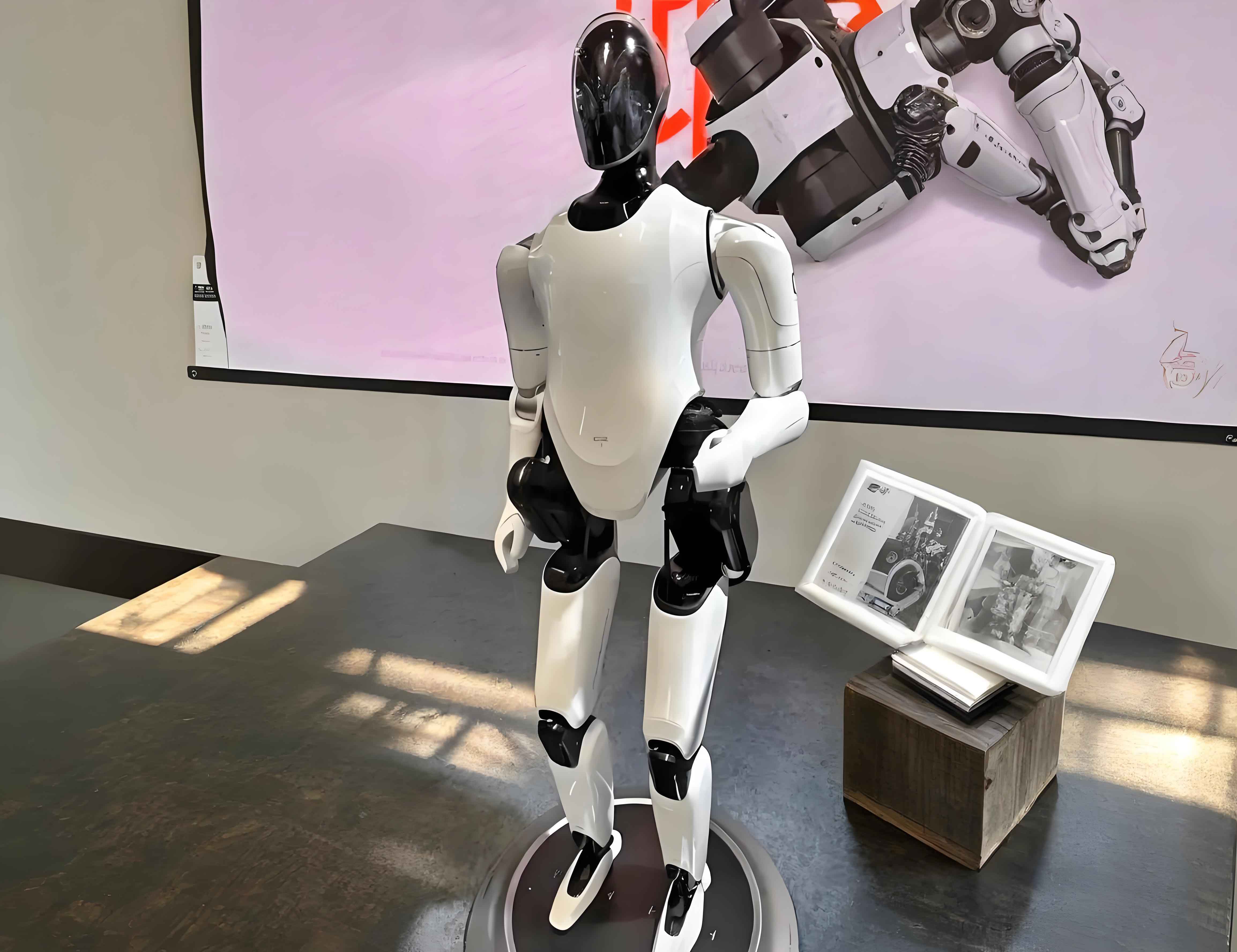
The concept of embodied AI robots stems from the idea that intelligence emerges from the interaction between a physical body and its surroundings. Unlike traditional AI, which often operates in isolated digital realms, embodied AI robots leverage sensors, actuators, and advanced algorithms to navigate and manipulate physical spaces. This embodiment allows for a more holistic form of intelligence, akin to human cognition, where learning occurs through continuous feedback loops with the environment. The rise of large language models and multimodal AI has further accelerated this trend, enabling embodied AI robots to understand natural language, recognize objects, and execute complex tasks with unprecedented precision. For instance, in industrial settings, embodied AI robots can autonomously perform quality inspections, while in healthcare, they might assist with patient monitoring or rehabilitation exercises. The integration of these capabilities into physical platforms marks a significant leap toward general artificial intelligence, where machines can adapt to diverse scenarios without extensive reprogramming.
To understand the trajectory of embodied AI robots, it is essential to trace their historical roots. The notion of embodied intelligence dates back to Alan Turing’s early musings on machine intelligence, but it gained substantive traction in the 1980s with Rodney Brooks’ “subsumption architecture,” which emphasized reactive behaviors over symbolic reasoning. This laid the groundwork for robots that could operate in real-time based on sensory inputs. In recent decades, advancements in computer vision, sensor technologies, and reinforcement learning have propelled the field forward. For example, the development of platforms like NVIDIA’s Isaac Gym has enabled large-scale simulation training for embodied AI robots, allowing them to learn through billions of trials in virtual environments. Moreover, the fusion of large models, such as PaLM-E, with robotic systems has bridged the gap between language understanding and physical action, empowering embodied AI robots to follow complex instructions and make context-aware decisions. These milestones underscore the rapid evolution from simple automated machines to sophisticated agents capable of autonomous interaction.
The technological underpinnings of embodied AI robots are complex and interdisciplinary. At their core, these systems consist of several key components: hardware platforms (e.g., humanoid robots, drones, or industrial arms), sensory systems (e.g., cameras, LiDAR, tactile sensors), decision-making algorithms (often powered by AI models), and control mechanisms for precise movement. The synergy between these elements is critical for effective operation. For instance, the perception module must process multimodal data in real-time, which can be represented mathematically as:
$$ P(t) = f(S_v(t), S_a(t), S_t(t), \ldots) $$
where \( P(t) \) denotes the perceptual state at time \( t \), and \( S_v, S_a, S_t \) represent visual, auditory, and tactile sensory inputs, respectively. The decision-making process often involves reinforcement learning frameworks, where an embodied AI robot learns optimal policies through reward maximization. This can be modeled as:
$$ \pi^* = \arg\max_{\pi} \mathbb{E} \left[ \sum_{k=0}^{\infty} \gamma^k R(s_k, a_k) \right] $$
where \( \pi^* \) is the optimal policy, \( \gamma \) is a discount factor, and \( R \) is the reward function based on state \( s_k \) and action \( a_k \). Additionally, control algorithms ensure stable locomotion and manipulation, often using dynamics equations like:
$$ \tau = M(q)\ddot{q} + C(q, \dot{q})\dot{q} + g(q) $$
where \( \tau \) represents joint torques, \( M \) is the inertia matrix, \( C \) captures Coriolis forces, \( g \) is gravity, and \( q \) denotes joint angles. To summarize these technologies, I present a table categorizing the key areas:
| Component | Technologies | Role in Embodied AI Robots |
|---|---|---|
| Hardware | Actuators, joints, power systems | Provides physical form and mobility |
| Sensors | Vision, LiDAR, IMU, tactile | Gathers environmental data for perception |
| AI Brain | LLMs, reinforcement learning, computer vision | Enables reasoning, planning, and adaptation |
| Control System | PID controllers, model predictive control | Executes precise movements and actions |
The applications of embodied AI robots are vast and growing, spanning multiple sectors. In industrial automation, these robots are revolutionizing manufacturing by handling tasks such as assembly, welding, and logistics with high efficiency and accuracy. For example, in automotive plants, embodied AI robots can collaborate with human workers to streamline production lines, reducing errors and increasing throughput. In the service sector, embodied AI robots are deployed for customer interaction, delivery, and cleaning, enhancing operational scalability. Healthcare is another promising domain, where robots assist in surgery, eldercare, and telemedicine, offering consistent support and reducing caregiver burden. To illustrate the market potential, consider the following table projecting adoption rates across industries:
| Application Domain | Key Use Cases | Estimated Growth Rate (2024-2030) |
|---|---|---|
| Industrial Manufacturing | Quality inspection, material handling | 16% annually |
| Commercial Services | Retail assistance, hospitality, logistics | 32% annually |
| Healthcare | Surgical aid, rehabilitation, monitoring | 25% annually |
| Consumer Electronics | Home assistants, entertainment robots | 50% annually |
The expansion of embodied AI robots is further evidenced by their integration into smart cities and infrastructure projects, where they monitor utilities, manage traffic, and enhance public safety. Each deployment underscores the versatility of embodied AI robots in adapting to diverse environments, from controlled factories to dynamic urban settings.
The ecosystem supporting embodied AI robots is intricate, involving numerous stakeholders from research to deployment. A holistic view of the industry chain reveals interconnected layers: upstream suppliers provide core components like chips, sensors, and software algorithms; midstream integrators design and assemble the robots themselves; and downstream users apply them in various scenarios. This chain is crucial for scaling production and innovation. For instance, advancements in semiconductor technology directly impact the computational power of embodied AI robots, enabling more complex AI models to run on-edge. Similarly, progress in battery technologies enhances their operational endurance, a key factor for mobile platforms. To visualize this structure, I include an industry map that highlights the flow from components to end-users, emphasizing the collaborative nature of the field.
This diagram encapsulates the synergy required to bring embodied AI robots to market, from foundational hardware to innovative applications. Notably, communication operators emerge as enablers in this chain, providing connectivity and services that bridge gaps between disparate elements.
Despite the promise, embodied AI robots face significant hurdles that must be addressed for mainstream adoption. Infrastructure limitations pose a primary challenge, as many current deployments rely on ad-hoc networks like Wi-Fi, which lack the reliability and coverage needed for large-scale operations. In factories or urban areas, intermittent connectivity can disrupt the real-time data exchange essential for embodied AI robots, leading to operational failures. Technologically, the fusion of multimodal sensors remains imperfect; discrepancies between visual, auditory, and tactile data can cause misinterpretations, especially in unstructured environments. This is compounded by the computational complexity of decision algorithms, which often struggle with real-time processing under resource constraints. A mathematical representation of this bottleneck can be expressed as:
$$ T_{process} = \frac{D_{sensor}}{C_{edge}} + \frac{D_{cloud}}{B_{network}} $$
where \( T_{process} \) is the total processing time, \( D_{sensor} \) is sensor data volume, \( C_{edge} \) is edge computing capacity, \( D_{cloud} \) is cloud data load, and \( B_{network} \) is network bandwidth. If \( T_{process} \) exceeds allowable latency, the embodied AI robot may lag in responses. Cost is another barrier; high expenses for advanced components and custom software development make embodied AI robots prohibitively expensive for small businesses or households. For example, a humanoid robot can cost tens of thousands of dollars, limiting its accessibility. Moreover, safety and ethical concerns arise regarding data privacy and autonomous decision-making. As embodied AI robots collect vast amounts of environmental data, including personal information, robust encryption and governance frameworks are necessary to prevent breaches. Ethically, dilemmas such as prioritization in collision avoidance scenarios require careful algorithmic design to align with societal values. These challenges necessitate collaborative solutions, where stakeholders like communication operators can leverage their expertise to mitigate risks.
Communication operators are uniquely positioned to catalyze the growth of embodied AI robots due to their comprehensive assets and experience. Their network infrastructure, including widespread cellular coverage and emerging 5G-A technologies, offers low-latency, high-bandwidth connectivity essential for real-time control and data transmission. In remote or dense urban areas, this ensures that embodied AI robots remain consistently online, enabling seamless operations. For instance, in agricultural settings, robots monitoring crops can relay high-resolution imagery via operator networks to cloud servers for analysis, facilitating timely interventions. Operators also possess substantial computing resources through distributed data centers and edge nodes, which can offload processing from robot hardware. This is critical for complex AI inferences; by leveraging operator-managed cloud platforms, embodied AI robots can access scalable computational power without on-device limitations. The cost efficiency of this model can be approximated as:
$$ C_{total} = C_{robot} + \alpha \cdot C_{cloud} + \beta \cdot C_{network} $$
where \( C_{total} \) is the total cost of ownership, \( C_{robot} \) is the robot hardware cost, \( C_{cloud} \) and \( C_{network} \) are operator-provided service costs, and \( \alpha, \beta \) are utilization factors. By optimizing these parameters, operators can help reduce overall expenses. Data is another strength; operators accumulate vast datasets from diverse user bases, which can be anonymized and utilized to train AI models for embodied AI robots, improving their contextual understanding and performance. Security-wise, operators have established protocols for cybersecurity and data protection, ensuring that sensitive information gathered by robots is safeguarded against threats. Finally, operators’ extensive service and maintenance networks enable reliable support for robot deployments, from initial setup to ongoing troubleshooting. These advantages collectively empower operators to act as foundational pillars for the embodied AI robot ecosystem.
In terms of industry positioning, communication operators can assume three pivotal roles to drive the adoption of embodied AI robots. First, as infrastructure providers, they can develop specialized networks and facilities tailored to robotic needs, such as dedicated frequency bands or localized edge computing hubs. This includes creating testing environments where embodied AI robots can be validated under real-world conditions before deployment. For example, operators might establish innovation labs that simulate factory floors or public spaces, allowing developers to refine algorithms without physical risks. Second, as holistic solution providers, operators can integrate robots with complementary services like IoT platforms and analytics tools, delivering end-to-end systems to clients. In smart city projects, this could involve deploying fleets of embodied AI robots for surveillance and maintenance, coupled with operator-managed dashboards for centralized control. Third, as comprehensive service operators, they can offer lifecycle management, including remote monitoring, software updates, and repair services, ensuring long-term reliability. By acting as intermediaries between robot manufacturers and end-users, operators simplify adoption and enhance trust. This tripartite role is summarized in the table below:
| Role | Key Activities | Impact on Embodied AI Robots |
|---|---|---|
| Infrastructure Provider | Deploying robust networks, edge computing, testing sites | Ensures reliable connectivity and scalable resources |
| Solution Integrator | Combining robots with cloud AI, data analytics, security | Delivers turnkey systems for diverse applications |
| Service Operator | Offering maintenance, updates, customer support | Reduces operational burdens and enhances uptime |
Looking ahead, the future of embodied AI robots hinges on strategic initiatives that communication operators can champion. Technological innovation should be accelerated through focused R&D investments in areas like AI-chip co-design and adaptive algorithms. For instance, developing energy-efficient processors specifically for embodied AI robots could extend battery life and reduce costs. Collaboration across the industry chain is equally important; operators can facilitate partnerships between hardware vendors, software developers, and academic institutions to address common challenges. Standardization efforts led by operators can establish interoperability protocols, allowing different embodied AI robots to communicate seamlessly within shared ecosystems. This includes defining data formats and API specifications, which can be modeled as:
$$ \text{Interoperability Score} = \sum_{i=1}^{n} w_i \cdot \text{Compliance}_i $$
where \( w_i \) represents weights for various standards, and \( \text{Compliance}_i \) measures adherence levels. Talent cultivation is another priority; operators can launch training programs and research grants to nurture experts in robotics and AI, ensuring a skilled workforce. Finally, investment synergies, such as venture funding for startups in the embodied AI robot space, can spur innovation while generating returns. By embracing these strategies, operators will not only bolster their own transformation into tech-driven enterprises but also propel the entire field toward sustainable growth.
In conclusion, embodied AI robots represent a frontier where intelligence meets physicality, offering transformative potential across industries. As an observer and participant in this evolution, I believe that communication operators are indispensable enablers, leveraging their networks, computing prowess, data assets, and operational expertise to overcome existing barriers. Their roles as infrastructure builders, solution architects, and service managers create a robust foundation for scaling embodied AI robot deployments. While challenges persist—from technical intricacies to ethical considerations—the collaborative efforts of operators, manufacturers, and policymakers can pave the way for a future where embodied AI robots enhance productivity, safety, and quality of life. By continuing to innovate and adapt, operators will not only capture new revenue streams but also contribute to the advancement of intelligent systems that benefit society as a whole. The journey of embodied AI robots is just beginning, and with the support of communication operators, it promises to redefine our interaction with technology in the physical world.