
As I delve into the dynamics of global manufacturing, I observe a fascinating interplay between traditional machinery and cutting-edge automation. The extruder market, for instance, has long been a cornerstone of industrial production, serving as a critical link in assembly lines and independent operations. Its evolution over the past five decades mirrors the broader narrative of product design and molding advancements. However, the true transformative force in today’s industrial landscape is undeniably the China robot sector. This article explores how the China robot industry is reshaping manufacturing, facing significant challenges, and paving the way for a smarter future. I will use tables and formulas to summarize key trends, emphasizing the pivotal role of China robot technologies in this journey.
The extruder market, while integral to sectors like food, consumer goods, pharmaceuticals, and refractory materials, faces inherent limitations due to its dependence on downstream markets. As these markets saturate, growth stagnates—a phenomenon already evident in Europe and America. In contrast, the China robot industry represents a paradigm shift, driven by automation and intelligence. From my perspective, the future of manufacturing hinges not on standalone devices like extruders but on integrated robotic systems that enhance flexibility, efficiency, and adaptability. The China robot revolution is at the heart of this transition, offering both immense opportunities and daunting hurdles.
To understand the scale of the China robot market, let’s examine its growth trajectory. According to industry data, the number of enterprises in China’s robotics sector surged dramatically in recent years. Below is a table summarizing this expansion:
| Year | Number of Robot Enterprises in China | Annual Growth Rate (%) | Key Drivers |
|---|---|---|---|
| 2014 | ~800 (estimated from policies) | N/A | Initial policy support |
| 2015 | Increased significantly | ~55% in output value | Capital influx, local subsidies |
| 2016 | 4,325 | 12.58% (from previous year) | Widespread industrial parks |
This table highlights the rapid proliferation of China robot firms, fueled by governmental incentives and investment. The growth rate can be modeled using a simple formula: $$ \text{Growth Rate} = \frac{N_t – N_{t-1}}{N_{t-1}} \times 100\% $$ where \( N_t \) represents the number of enterprises in year \( t \). For instance, from 2015 to 2016, the growth in enterprise count was approximately 12.58%, reflecting a booming yet potentially overheated market. As I analyze this, it’s clear that the China robot ecosystem is expanding at an unprecedented pace, but sustainability remains a concern.
The influx of foreign players has further intensified competition. Giants like KUKA, Fanuc, ABB, and Yaskawa have established robust presences in China, adapting through localization strategies. Initially entering via代理商模式 (agent models), they now operate研发 centers (R&D centers), engineering hubs, and production facilities. To quantify their impact, consider their market share adjustments. For example, ABB offers a wide range of robots, while KUKA has leveraged price reductions to capture more of the China robot market. This competition drives innovation but also pressures domestic China robot manufacturers to elevate their game. Below is a table comparing key foreign and domestic China robot entities:
| Company Type | Examples | Market Strategy in China | Impact on China Robot Industry |
|---|---|---|---|
| Foreign Robots | ABB, KUKA, Fanuc, Yaskawa | Price adjustments, local production | Increased technology transfer, heightened competition |
| Domestic China Robot Brands | Siasun, Guangzhou CNC, Efotech | R&D focus, government subsidies | Gradual market share gains, innovation in automation |
From my viewpoint, the coexistence of these players creates a dynamic landscape where the China robot sector must navigate both collaboration and rivalry. The公式 for market penetration by domestic China robot brands can be expressed as: $$ P_d = \frac{S_d}{S_t} \times 100\% $$ where \( P_d \) is the penetration rate, \( S_d \) is the sales volume of domestic China robot units, and \( S_t \) is the total robot sales in China. In 2015, domestic China robot brands accounted for about 15% of demand, indicating room for growth amid foreign dominance.
Policy support has been a cornerstone of the China robot boom. From 2014 to 2015, nearly 80 robotics-related policies were enacted, leading to over 42 planned or built industrial parks. Local governments offer perks like free land use and subsidies up to 20% per robot. This can be modeled with a subsidy effect formula: $$ \text{Effective Cost} = C \times (1 – s) $$ where \( C \) is the initial robot cost and \( s \) is the subsidy rate (e.g., 0.2 for 20%). Such incentives lower barriers for China robot adoption, but as I see it, they also risk creating bubbles if not paired with rigorous standards. The俄罗斯机器人协会 data notes a 17% compound annual growth rate in industrial robot supply from 2000 to 2015, with robot density reaching 49 per 10,000 workers in China. This density metric is crucial: $$ \text{Robot Density} = \frac{R}{W} \times 10,000 $$ where \( R \) is the number of industrial robots and \( W \) is the workforce size. For the China robot market, enhancing this density is key to competing globally.
However, the China robot industry faces stark challenges. Intelligentization—the integration of AI, machine learning, and advanced sensors—remains a hurdle. Many domestic China robot firms lag in core technologies like precision control and adaptive algorithms. From my analysis, the gap can be represented by a technology readiness index: $$ \text{TRI} = \sum_{i=1}^{n} w_i \cdot T_i $$ where \( w_i \) are weights for components (e.g., vision systems, grippers) and \( T_i \) are scores from 1 to 10. For China robot systems, TRI often trails behind foreign counterparts, necessitating focused R&D. Moreover, the market’s过热隐忧 (overheating concerns), as highlighted by industry experts, stem from speculative investments rather than substantive innovation. I believe that sustainable growth for China robot requires balancing scale with quality, akin to the extruder market’s lesson on downstream dependence.
Looking ahead, the China robot sector holds the potential to redefine manufacturing. As noted in international reports, automation is reducing labor dependency in factories worldwide. In China, this shift is accelerating, with China robot solutions enabling smarter production lines. The future industrial模样 (industrial模样) will likely feature collaborative robots (cobots) working alongside humans, driven by IoT and data analytics. For instance, in extrusion processes, China robot arms could handle material feeding and quality inspection, enhancing efficiency. To illustrate this convergence, consider a productivity公式: $$ \text{Overall Equipment Effectiveness (OEE)} = A \times P \times Q $$ where \( A \) is availability, \( P \) is performance, and \( Q \) is quality. Integrating China robot systems can boost all three factors, as shown in the table below:
| Manufacturing Aspect | Without China Robot | With China Robot Integration | Improvement (%) |
|---|---|---|---|
| Availability (A) | 85% (downtime due to manual errors) | 95% (automated monitoring) | 11.76 |
| Performance (P) | 90% (speed limits) | 98% (optimized cycles) | 8.89 |
| Quality (Q) | 88% (defect rate) | 99% (precision control) | 12.5 |
| Overall OEE | 67.32% | 92.07% | 36.8 |
This table underscores how China robot adoption can transform operations. As I reflect on this, the visual representation of robots in action becomes pivotal. For example, in advanced China robot applications, vision systems enable real-time adjustments. Here, an image captures the essence of this progress:
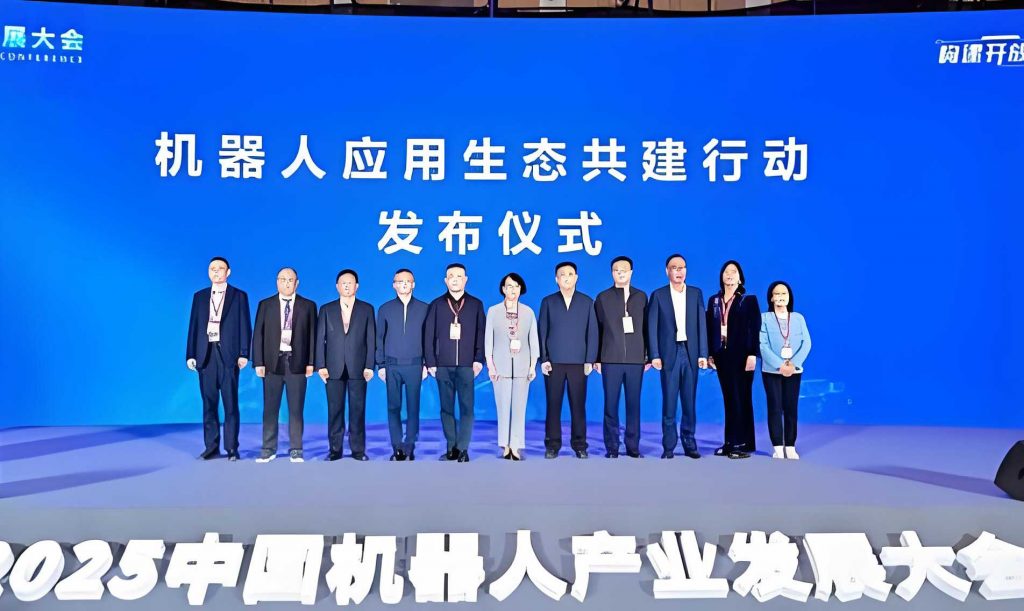
The image above symbolizes the rapid deployment of China robot technologies across factories, highlighting their role in modern industrialscapes. From my perspective, such advancements are not just about replacing labor but augmenting human capabilities. The China robot industry must focus on user-friendly interfaces and robust售后服务 (after-sales services), much like the extruder market’s pivot toward technical support. In fact, for China robot manufacturers, offering comprehensive maintenance networks could be a differentiator in an increasingly competitive arena.
To delve deeper into the economic impact, let’s model the market growth for China robot. Using a compound annual growth rate (CAGR) approach: $$ \text{CAGR} = \left( \frac{V_f}{V_i} \right)^{\frac{1}{n}} – 1 $$ where \( V_i \) is the initial market value (e.g., 16.4 billion CNY in 2015 for domestic output), \( V_f \) is the future value, and \( n \) is the number of years. Assuming a conservative 20% annual growth for China robot sales, the market could double in under four years. However, this hinges on overcoming challenges like technology gaps and overcapacity. I estimate that the demand for China robot units will rise exponentially, driven by sectors like automotive, electronics, and logistics. The formula for demand projection is: $$ D_t = D_0 \cdot e^{rt} $$ where \( D_t \) is demand at time \( t \), \( D_0 \) is initial demand (e.g., 65,000 units in 2015), \( r \) is the growth rate (e.g., 0.17 for 17%), and \( e \) is Euler’s number. This yields a curve that underscores the China robot market’s potential, albeit with risks of volatility.
In conclusion, the China robot industry stands at a crossroads. While it embodies the promise of Industry 4.0—with intelligent machines revolutionizing production—it must address issues of quality, innovation, and sustainability. From extruders to autonomous robots, the evolution of manufacturing equipment reflects a broader quest for efficiency. As I see it, the key to success lies in fostering a holistic ecosystem where China robot developers collaborate with end-users, policymakers, and researchers. By emphasizing core technologies and after-market services, the China robot sector can transcend current limitations and lead the global charge toward smarter manufacturing. The journey ahead is fraught with challenges, but for China robot, the opportunities are as vast as the industrial landscape it aims to transform.