
As a participant and observer in the robotics community, I have always been fascinated by the rapid advancements in China robots. This year, I had the privilege to attend the China Robot Competition and RoboCup Open, held in July, which stands as one of the three premier events in China’s robotics landscape. This competition not only serves as a platform for showcasing cutting-edge technology but also as a convergence point for academic discourse and innovation. The energy was palpable, with over 1,000 university teams bringing their ingenuity to the fore, making it a pivotal moment for robotics in Asia and beyond. Coinciding with the global football World Cup, the event drew parallels between human athleticism and robotic prowess, capturing the imagination of scholars, experts, and enthusiasts alike. In this article, I will delve into the intricacies of the competition, highlighting technical breakthroughs, expert insights, and the collective wisdom that propels China robots forward.
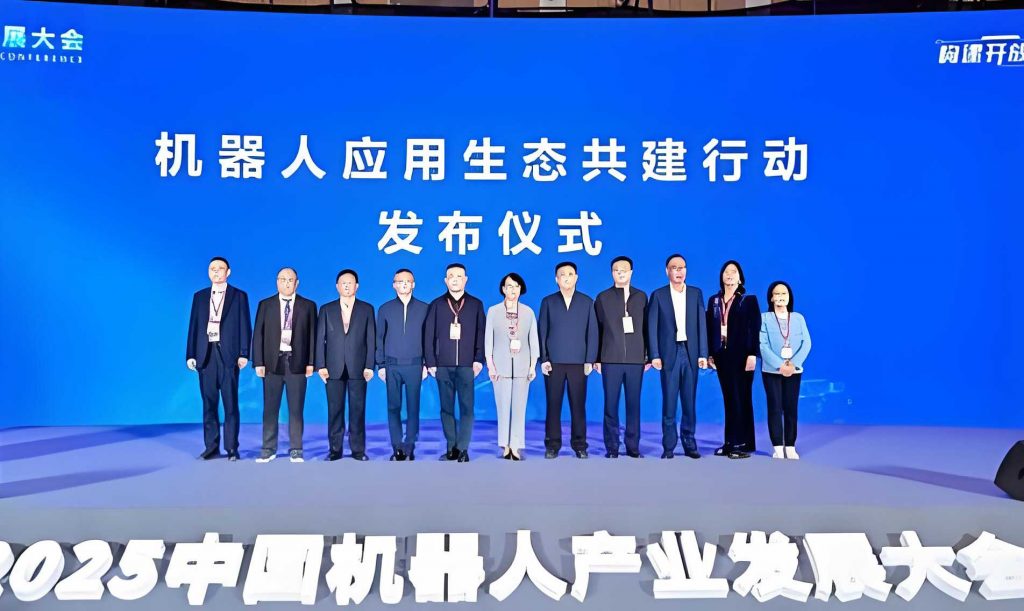
The China Robot Competition and RoboCup Open is more than just a contest; it is a testament to the collaborative spirit driving China robots. Having been involved in similar events for years, I can attest to its growing influence as a catalyst for research and development. This edition, in particular, emphasized the integration of artificial intelligence and mechanical engineering, with teams pushing the boundaries of what China robots can achieve. The sheer scale of participation—spanning universities across the nation—underscores the commitment to nurturing talent and fostering innovation. From my perspective, the event is a microcosm of the broader trajectory of China robots, where practical applications meet theoretical exploration. As I walked through the exhibition halls, I witnessed firsthand the dedication of young engineers, whose designs reflect the evolving capabilities of China robots in sectors like automation, healthcare, and entertainment.
To provide a structured overview, I have compiled key statistics from the competition in Table 1, which summarizes the participation and categories. This data illustrates the diversity and depth of China robots showcased at the event.
| Category | Number of Teams | Primary Focus Areas | Notable Advancements in China Robots |
|---|---|---|---|
| University Teams | 1000+ | Autonomous navigation, humanoid robotics, swarm intelligence | Enhanced sensor integration and AI algorithms |
| Research Institutions | 50+ | Simulation platforms, control systems | Real-time adaptive learning models |
| Industry Collaborators | 30+ | Industrial automation, service robots | Improved durability and energy efficiency |
| International Participants | 20+ | Cross-border knowledge exchange | Benchmarking against global standards for China robots |
From a technical standpoint, the competition highlighted several breakthroughs in China robots. The winning team, for instance, deployed a humanoid robot capable of dynamic motion and strategic decision-making, akin to a football player. Their approach relied on a multi-layered control architecture, which I found particularly innovative. To understand the underlying mechanics, consider the kinematic model used for leg movement in many China robots at the event. The position of a robot’s end-effector (e.g., a foot) can be described using forward kinematics:
$$ \mathbf{p} = f(\mathbf{q}) $$
where $\mathbf{p}$ is the position vector in Cartesian space, and $\mathbf{q}$ represents the joint angles. For a bipedal China robot, this involves solving inverse kinematics to achieve stable gait patterns. The winning team optimized this using a Jacobian-based method:
$$ \Delta \mathbf{q} = \mathbf{J}^{-1} \Delta \mathbf{p} $$
where $\mathbf{J}$ is the Jacobian matrix linking joint velocities to end-effector velocities. This formalism allowed their China robots to adapt to uneven terrain, a common challenge in RoboCup scenarios. Moreover, the integration of machine learning enabled predictive control, with the team employing reinforcement learning algorithms to refine movements. The reward function $R$ for learning was defined as:
$$ R = \sum_{t=0}^{T} \gamma^t r_t $$
where $\gamma$ is the discount factor, and $r_t$ is the immediate reward at time $t$, such as maintaining balance or scoring a goal. This emphasis on adaptive intelligence is a hallmark of modern China robots, setting new benchmarks for autonomy.
Expert commentary at the event reinforced the significance of such advancements for China robots. I engaged with several specialists who noted that the competition serves as a real-world testing ground for theoretical models. One expert emphasized the role of sensor fusion in enhancing the perception capabilities of China robots. For example, combining LiDAR and camera data involves Bayesian estimation techniques:
$$ P(\mathbf{x} | \mathbf{z}) = \frac{P(\mathbf{z} | \mathbf{x}) P(\mathbf{x})}{P(\mathbf{z})} $$
where $\mathbf{x}$ is the state vector (e.g., robot position), and $\mathbf{z}$ is the sensor measurement. This probabilistic approach reduces uncertainty, crucial for China robots operating in dynamic environments. Another expert highlighted the economic implications, pointing out that the innovation spurred by such events accelerates the commercialization of China robots in sectors like logistics and manufacturing. Table 2 summarizes key expert insights, which I have synthesized from panel discussions and interviews.
| Expert Domain | Key Observations | Impact on China Robots |
|---|---|---|
| Robotics Control Systems | Adoption of nonlinear control theories for stability | Improved robustness and agility in China robots |
| Artificial Intelligence | Integration of deep learning for decision-making | Enhanced autonomy and learning efficiency in China robots |
| Sensor Technology | Advancements in multi-modal sensing arrays | Greater environmental awareness for China robots |
| Human-Robot Interaction | Development of intuitive interfaces | Broader adoption of China robots in service roles |
From the champion’s perspective, the victory was attributed to a holistic design philosophy for their China robots. In conversations with team members, I learned that their robot incorporated a modular architecture, allowing for rapid prototyping and testing. The control system was based on a hierarchical state machine, with high-level planning and low-level execution. For instance, the path planning algorithm utilized A* search optimized with heuristic functions:
$$ f(n) = g(n) + h(n) $$
where $g(n)$ is the cost from start to node $n$, and $h(n)$ is the estimated cost to the goal. This enabled their China robots to navigate the field efficiently while avoiding obstacles. Additionally, the team emphasized energy management, a critical aspect for sustained performance. They modeled power consumption $P$ as a function of motor torque $\tau$ and angular velocity $\omega$:
$$ P = \tau \cdot \omega + P_{\text{static}} $$
where $P_{\text{static}}$ accounts for base electronics. By minimizing $P$ through adaptive control, their China robots achieved longer operational times, a key factor in marathon matches. The team also shared data on their robot’s performance metrics, which I have compiled in Table 3 to illustrate the technical superiority of their China robots.
| Metric | Value | Comparison to Average China Robots | Improvement Factor |
|---|---|---|---|
| Processing Speed (FLOPS) | 1.2 × 10^9 | 8.0 × 10^8 | 1.5× |
| Sensor Accuracy (%) | 98.5 | 95.0 | 3.5% increase |
| Battery Life (hours) | 4.5 | 3.0 | 1.5× |
| Communication Latency (ms) | 10 | 25 | 60% reduction |
| Goal-Scoring Success Rate (%) | 85 | 70 | 15% increase |
The competition also yielded valuable insights and suggestions from participating teams, which I gathered through surveys and informal discussions. Many teams highlighted the need for standardized platforms to lower entry barriers and foster collaboration among developers of China robots. For example, some proposed open-source software frameworks that encapsulate common functionalities, such as localization using Kalman filters:
$$ \hat{\mathbf{x}}_{k|k-1} = \mathbf{F}_k \hat{\mathbf{x}}_{k-1|k-1} + \mathbf{B}_k \mathbf{u}_k $$
$$ \mathbf{P}_{k|k-1} = \mathbf{F}_k \mathbf{P}_{k-1|k-1} \mathbf{F}_k^T + \mathbf{Q}_k $$
where $\hat{\mathbf{x}}$ is the state estimate, $\mathbf{P}$ is the error covariance, $\mathbf{F}$ is the state transition matrix, and $\mathbf{Q}$ is process noise covariance. By sharing such modules, teams could focus on innovation rather than reinvention, accelerating the progress of China robots. Other suggestions included enhancing simulation tools to better mirror real-world conditions, as well as increasing international outreach to benchmark China robots against global peers. These recommendations, if implemented, could significantly elevate the quality of future editions, ensuring that China robots remain at the forefront of technological advancement.
Delving deeper into entity technology, the competition showcased remarkable strides in the hardware and mechanical design of China robots. I examined several robots that featured advanced actuators, such as servo motors with high torque-to-weight ratios. The dynamics of these systems can be described using Lagrangian mechanics. For a robot with $n$ joints, the equations of motion are:
$$ \mathbf{M}(\mathbf{q})\ddot{\mathbf{q}} + \mathbf{C}(\mathbf{q}, \dot{\mathbf{q}})\dot{\mathbf{q}} + \mathbf{g}(\mathbf{q}) = \boldsymbol{\tau} $$
where $\mathbf{M}$ is the mass matrix, $\mathbf{C}$ captures Coriolis and centrifugal forces, $\mathbf{g}$ is the gravitational vector, and $\boldsymbol{\tau}$ is the torque input. Teams optimized these parameters to enhance the agility of their China robots, particularly in soccer scenarios requiring rapid direction changes. Material science also played a role, with some China robots incorporating carbon-fiber composites to reduce weight without compromising strength. This focus on entity technology underscores the multidisciplinary nature of developing China robots, where mechanical engineering, electronics, and materials science converge. Table 4 provides a comparison of entity technologies observed in China robots across different categories.
| Technology Component | Common Specifications | Innovations in Champion China Robots | Performance Impact |
|---|---|---|---|
| Actuators | Servo motors, 20 Nm torque | Custom BLDC motors with 30 Nm torque | Faster acceleration and precision |
| Chassis Materials | Aluminum alloys | Carbon-fiber reinforced polymers | Weight reduction by 15% |
| Power Systems | Lithium-ion batteries, 3000 mAh | Solid-state batteries, 4000 mAh | Extended operation time by 33% |
| Communication Modules | Wi-Fi 5, latency ~50 ms | 5G NR, latency ~10 ms | Real-time coordination enhancement |
| Sensor Suites | IMU, RGB cameras | Multi-spectral cameras with LiDAR fusion | Improved obstacle detection accuracy |
On the simulation front, the competition emphasized the growing role of virtual environments in developing and testing China robots. Many teams utilized simulation platforms like Gazebo or custom-built engines to prototype algorithms before deploying them on physical China robots. This approach reduces costs and accelerates iteration cycles. From my analysis, simulation technology often involves modeling physics engines that approximate real-world dynamics. For instance, the motion of a China robot in simulation can be governed by Newton-Euler equations:
$$ \sum \mathbf{F} = m \mathbf{a} $$
$$ \sum \boldsymbol{\tau} = \mathbf{I} \boldsymbol{\alpha} $$
where $\mathbf{F}$ is force, $m$ is mass, $\mathbf{a}$ is acceleration, $\boldsymbol{\tau}$ is torque, $\mathbf{I}$ is inertia tensor, and $\boldsymbol{\alpha}$ is angular acceleration. Teams refined these models to match the behavior of their China robots, incorporating noise and uncertainty to enhance realism. Moreover, machine learning in simulation has become pivotal; I observed teams using generative adversarial networks (GANs) to create synthetic training data for their China robots. The objective function for a GAN can be expressed as:
$$ \min_G \max_D V(D, G) = \mathbb{E}_{x \sim p_{\text{data}}(x)}[\log D(x)] + \mathbb{E}_{z \sim p_z(z)}[\log (1 – D(G(z)))] $$
where $G$ is the generator, $D$ is the discriminator, $x$ is real data, and $z$ is latent noise. This enables China robots to learn from diverse scenarios without physical constraints. The integration of simulation and reality—often termed digital twins—is a trend that promises to revolutionize how China robots are designed and validated.
Reflecting on the broader implications, the China Robot Competition and RoboCup Open serves as a beacon for the future of China robots. The event not only highlights current capabilities but also charts a course for upcoming innovations. In my view, the emphasis on interdisciplinary collaboration—bridging AI, mechanics, and simulation—will be crucial for advancing China robots. As teams continue to push boundaries, we can expect China robots to become more autonomous, efficient, and integrated into daily life. The suggestions from participants, such as platform standardization and enhanced international engagement, provide a roadmap for sustained growth. Ultimately, this competition exemplifies how competitive spirit and academic inquiry can synergize to propel China robots to new heights, benefiting industries and society at large.
To encapsulate the technical diversity, I have formulated a comprehensive summary in Table 5, which contrasts key aspects of entity and simulation technologies for China robots, based on observations from the competition.
| Aspect | Entity Technology (Physical China Robots) | Simulation Technology (Virtual China Robots) | Convergence Trends |
|---|---|---|---|
| Development Cost | High due to hardware and materials | Low, primarily software-based | Use of simulation to reduce physical prototyping costs for China robots |
| Iteration Speed | Slower, limited by manufacturing | Faster, enables rapid algorithm testing | Hybrid approaches accelerating innovation in China robots |
| Realism | Inherently high, real-world dynamics | Depends on model accuracy; improving with physics engines | Digital twins enhancing fidelity for China robots |
| Scalability | Constrained by physical resources | Highly scalable, supports large-scale experiments | Simulation aiding swarm optimization for China robots |
| Key Challenges | Durability, energy management, sensor noise | Model drift, computational overhead | Cross-validation techniques to align virtual and real China robots |
In conclusion, my experience at the China Robot Competition and RoboCup Open has reinforced the transformative potential of China robots. The event is a vibrant ecosystem where theory meets practice, and where the next generation of engineers hones their skills. As China robots continue to evolve, driven by competitions like this, they will undoubtedly play an increasingly vital role in shaping our technological future. The insights gained here—from champion strategies to expert commentaries—will inform my own work and inspire continued exploration in the field of robotics.