
As I reflect on the rapid evolution of industrial automation, I am struck by the transformative role of China robots in shaping the future of manufacturing. Industrial robots, defined as programmable automated machines designed for industrial tasks, have evolved from simple mechanical arms to sophisticated systems capable of complex operations. Their ability to perform repetitive, hazardous, and precision-driven tasks has revolutionized production lines worldwide. In this analysis, I will explore the development, applications, and economic significance of industrial robots, with a particular emphasis on the burgeoning influence of China robots. The integration of robotics into manufacturing is not merely a trend but a fundamental shift towards smarter, more efficient industrial practices.
The concept of industrial robots dates back to the mid-20th century, with the first practical robot emerging in the United States in 1961. This innovation sparked a global race towards automation, leading to significant advancements in countries like Japan and Germany. Japan, often called the “Robot Kingdom,” leveraged robotics to address labor shortages and boost productivity, while Germany mandated robot use in dangerous environments, fostering technological growth. Today, these nations lead in robot density and innovation. However, the landscape is shifting, with China robots rapidly gaining prominence. China’s journey began in 1972, but it was during the reform and opening-up period that robotics research accelerated, supported by national initiatives like the “Seventh Five-Year Plan.” This groundwork has positioned China robots as key players in the global automation arena.
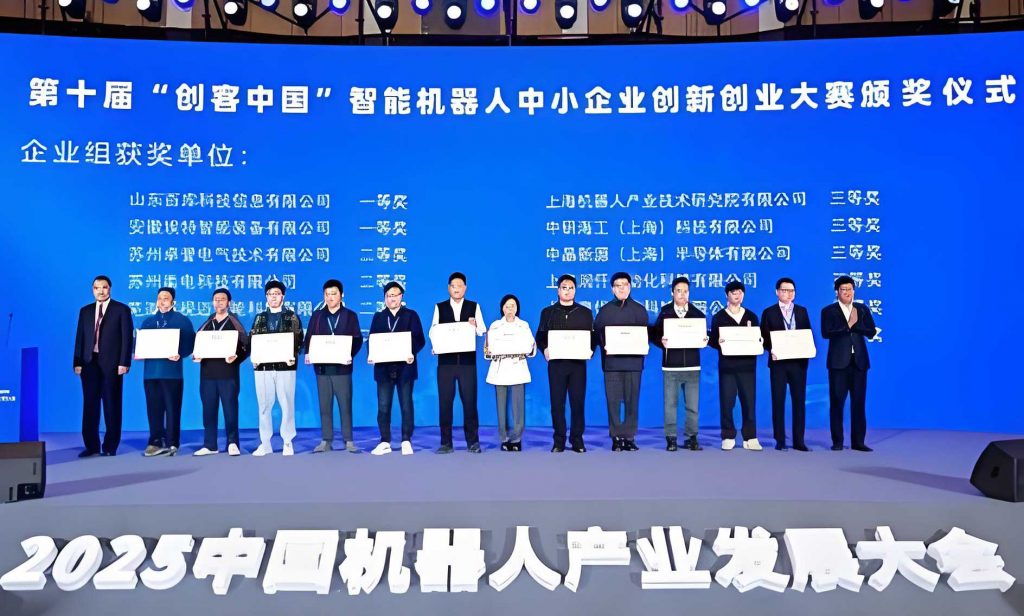
In examining the global development of industrial robots, I observe distinct regional trajectories. The United States pioneered early robotics, focusing on military and aerospace applications, while Japan embraced robots for consumer electronics and automotive manufacturing. Germany excelled in precision engineering, using robots to maintain high-quality standards in industries like automotive and machinery. These countries benefited from robust R&D investments and supportive policies. Conversely, the rise of China robots represents a more recent but explosive growth pattern. Driven by domestic demand and government support, China robots have expanded from basic models to advanced systems incorporating artificial intelligence and IoT connectivity. This progression underscores the strategic importance of China robots in enhancing industrial competitiveness.
To better understand the spread of robotics, I have compiled a table comparing key metrics across major economies, highlighting the position of China robots:
| Country | Robot Density (per 10,000 workers) | Primary Application Sectors | Annual Growth Rate (2020-2025) |
|---|---|---|---|
| Japan | 385 | Automotive, Electronics | 5% |
| Germany | 346 | Automotive, Machinery | 6% |
| United States | 228 | Aerospace, Logistics | 7% |
| China | 246 | Automotive, Electronics, Metalworking | 15% |
This table illustrates the rapid ascent of China robots, with a density approaching that of leaders and a growth rate far exceeding others. The expansion of China robots is fueled by factors such as labor cost increases, quality demands, and national strategies like “Made in China 2025.” As I delve deeper, it becomes clear that China robots are not just imitations but innovators, adapting to local needs and driving global trends.
The applications of industrial robots are vast, and China robots exemplify this diversity. In manufacturing, China robots are deployed for welding, painting, and assembly, ensuring consistency and efficiency. For instance, robotic welding in automotive plants reduces defects and increases throughput, with China robots achieving precision levels of ±0.1 mm. In logistics, smart mobile robots, such as AGVs, automate material handling in warehouses, enhancing supply chain agility. The adaptability of China robots extends to harsh environments like nuclear facilities or high-noise areas, where human labor is impractical. To quantify these benefits, I often use productivity formulas. For example, the output gain from robot implementation can be expressed as:
$$P_r = P_h \times \alpha + \beta \times t$$
where \(P_r\) is robot-assisted production output, \(P_h\) is human-only output, \(\alpha\) is an efficiency multiplier (typically >1 for China robots), \(\beta\) is a time-based improvement factor, and \(t\) is operational time. This formula captures how China robots boost productivity beyond human capabilities. Another critical metric is cost-effectiveness. The return on investment (ROI) for China robots can be modeled as:
$$ROI = \frac{S – C}{I} \times 100\%$$
where \(S\) represents savings from reduced labor and waste, \(C\) is maintenance costs, and \(I\) is initial investment. In many cases, China robots achieve ROI within 2-3 years, making them attractive for small and medium enterprises. The versatility of China robots is further evidenced in sectors like electronics, where they perform delicate tasks like circuit board assembly, and in healthcare, where they assist in sterile environments.
Beyond applications, the advantages of China robots are multifaceted. They enhance safety by taking over dangerous jobs, thus reducing workplace accidents. Quality control improves due to robotic precision, leading to fewer defects and higher customer satisfaction. Moreover, China robots enable 24/7 operation, crucial for meeting global demand. As I analyze these benefits, I recognize that China robots are integral to smart manufacturing initiatives. They facilitate data collection and analysis, enabling predictive maintenance and optimized production schedules. For example, in a digital twin setup, China robots simulate processes to identify bottlenecks, expressed as:
$$E_{sys} = \sum_{i=1}^{n} \frac{R_i \times U_i}{D_i}$$
where \(E_{sys}\) is system efficiency, \(R_i\) is robot performance metrics, \(U_i\) is utilization rate, and \(D_i\) is downtime. China robots often exhibit high \(U_i\) and low \(D_i\), contributing to overall plant efficiency. This technological edge positions China robots as catalysts for Industry 4.0 adoption.
The significance of China robots for equipment manufacturing cannot be overstated. They represent a synergy of human ingenuity and machine endurance, addressing limitations in both. In China’s context, robots are pivotal for upgrading traditional industries, such as textiles and machinery, to high-value sectors. The deployment of China robots in assembly lines has reduced reliance on manual labor, while increasing output consistency. For instance, in automotive manufacturing, China robots handle tasks from stamping to final inspection, ensuring uniformity across millions of units. This reliability translates to competitive advantages in global markets. Furthermore, China robots foster innovation in ancillary fields, like sensor technology and software development, creating a robust ecosystem. As I assess this impact, I see China robots as enablers of sustainable manufacturing, reducing energy consumption and waste through optimized processes.
Economically, China robots are a powerhouse driving national growth. Initially, high costs hindered adoption, but economies of scale and technological advances have made China robots more accessible. The shift is evident in the declining cost-per-unit ratio relative to labor wages. To illustrate, consider the labor-robot cost parity model:
$$C_r = C_l \times \frac{1}{\gamma} + \delta$$
where \(C_r\) is robot operational cost, \(C_l\) is labor cost, \(\gamma\) is a productivity factor (often >1 for China robots), and \(\delta\) is depreciation. As labor costs rise in China, \(C_r\) becomes competitive, accelerating robot deployment. This alignment has spurred demand for China robots across industries, from agriculture to aerospace. The economic contribution of China robots extends to GDP growth, with estimates suggesting that a 10% increase in robot density correlates with a 0.5% rise in manufacturing GDP. This relationship can be approximated as:
$$\Delta GDP_m = k \times \ln(R_d)$$
where \(\Delta GDP_m\) is the change in manufacturing GDP, \(k\) is a constant (around 0.2 for China), and \(R_d\) is robot density. China robots, therefore, are not just tools but strategic assets fueling economic modernization. Additionally, they stimulate domestic consumption by creating high-skilled jobs in robotics maintenance and programming, offsetting displacement effects. The global reach of China robots is expanding through exports, enhancing trade balances and technological diplomacy.
Looking ahead, the future of China robots is intertwined with national development goals. Innovation remains central, with research focusing on AI integration, collaborative robots (cobots), and autonomous systems. China robots are poised to lead in emerging fields like service robotics for elderly care and public services, reflecting societal needs. The convergence of 5G and robotics will enable real-time control and swarm intelligence, opening new applications. In my view, the trajectory of China robots will redefine global manufacturing norms, emphasizing flexibility and resilience. For example, in post-pandemic supply chains, China robots offer agility to adapt to disruptions, modeled as:
$$R_{res} = 1 – \frac{T_d}{T_t}$$
where \(R_{res}\) is resilience factor, \(T_d\) is downtime due to shocks, and \(T_t\) is total operational time. China robots, with their modular designs, minimize \(T_d\), ensuring continuity. This capability underscores why China robots are critical for long-term industrial strategy.
To encapsulate the multifaceted impact of China robots, I present a table summarizing key economic and technological indicators:
| Aspect | Impact of China Robots | Quantitative Measure |
|---|---|---|
| Productivity | Increase in output per hour | 30-50% gain in automotive sectors |
| Quality | Reduction in defect rates | Up to 90% improvement in electronics |
| Cost Savings | Lower labor and operational costs | ROI of 20-30% annually |
| Innovation | Patents and R&D output | Over 10,000 robotics patents filed yearly |
| Global Market Share | Export volume of robotic systems | Growing at 20% CAGR |
This table reinforces the transformative role of China robots across dimensions. As I conclude, I am convinced that the era of China robots is not just imminent but already unfolding, with profound implications for industrial modernization. The advancement of China robots symbolizes a leap towards autonomous, intelligent manufacturing, aligning with global sustainability goals. In essence, the proliferation of China robots is a testament to human ingenuity, driving progress through technology. The journey ahead will likely see China robots becoming ubiquitous, from factories to homes, shaping a future where automation and humanity coexist synergistically. The continued evolution of China robots will undoubtedly cement their status as indispensable pillars of economic and technological prowess.