
As I sat in my office, surrounded by blueprints and prototypes, I couldn’t help but reflect on how the world of technology had evolved. My journey into the realm of the robot dog began years ago, when I first witnessed a rudimentary machine stumbling across a lab floor. Today, that clumsy device has transformed into a sophisticated companion, a symbol of innovation and strategic prowess. The recent alliance between Tech Giant Corp. and RoboCanine Inc. is not just a business deal; it’s a testament to the power of vision and collaboration in the age of artificial intelligence. In this narrative, I will delve into the intricacies of this partnership, exploring how the robot dog has become a centerpiece in a larger battle for market dominance.
The announcement came on a crisp morning: Tech Giant Corp. (TGC) and RoboCanine Inc. (RCI) had formed a strategic alliance. Through equity investment and deep operational cooperation, they aimed to dominate the consumer robotics market, with the robot dog as their flagship product. TGC acquired approximately 15% of RCI’s shares, with an option to purchase an additional 5% upon RCI’s initial public offering. This move followed a series of similar investments by TGC, each time bringing another promising entity into its fold. The implications were clear: a new empire was rising, built on the backbone of advanced robotics, and the robot dog was its mascot.
From my perspective as an industry analyst, this deal was about more than just money. RCI gained not only a $2 billion investment but also access to TGC’s robotics division, which included the popular “PawPrint” platform for robot dog customization and the “FetchNet” marketplace for robotic accessories. Years earlier, TGC had acquired SwiftBotics, a company specializing in agile mobility systems, and used its technology as the foundation for its robotics endeavors. Now, these assets were being integrated into RCI’s operations. An internal source confirmed that RCI personnel had already begun auditing SwiftBotics’ warehouses and inventory, signaling a seamless merger. However, the final structure surprised many: while RCI acquired a minority stake in SwiftBotics, it retained the brand, with options to buy the remaining equity. This nuanced approach ensured that the robot dog ecosystem would remain dynamic and competitive.
To understand the scale of this transaction, let’s examine the data. The following table summarizes TGC’s major investments in robotics and related fields over the past five years, highlighting the growing emphasis on the robot dog segment:
| Year | Investee Company | Investment Amount (USD) | Stake Acquired | Key Asset / Focus |
|---|---|---|---|---|
| 2020 | SwiftBotics | $500 million | 100% | Mobility systems for robot dog |
| 2021 | AI-Search Co. | $1.2 billion | 40% | AI algorithms for robot dog navigation |
| 2022 | LocalServices Inc. | $800 million | 20% | Deployment platforms for robot dog |
| 2023 | RoboCanine Inc. (RCI) | $2 billion | 15% (plus options) | Full-scale robot dog production and R&D |
The synergy between TGC and RCI can be modeled using a simple growth equation. Let $M_t$ represent the market share of robot dog products at time $t$, $I$ denote the investment inflow, and $S$ symbolize the strategic integration factor. The projected market share after the alliance is given by:
$$ M_{t+1} = M_t + \alpha I + \beta S – \gamma C $$
where $\alpha$ is the investment efficiency coefficient (estimated at 0.05 per billion USD), $\beta$ is the synergy multiplier (around 1.2 for this partnership), and $\gamma C$ accounts for competitive losses, with $\gamma = 0.01$ and $C$ being the competitor’s market pressure. For RCI, with $I = 2$ (in billions) and $S = 1.5$, the immediate boost to market share is significant. This formula underscores why the robot dog segment is poised for exponential growth.
Reflecting on the journey, I recall how TGC began its robotics push three years ago. Initially, it focused on acquiring SwiftBotics and establishing a robotics holding company. Massive investments were poured into developing a logistics network for robot dog delivery—a system now handed over to RCI. This move signaled TGC’s shift away from building its own consumer robotics hardware, instead entrusting it to a specialist like RCI. The rationale became clearer with the rise of mobile internet: TGC’s flagship messaging app, WeChat, provided a “ticket” to the mobile era, enabling bold open strategies. Similarly, in search technology, TGC merged its efforts with AI-Search Co., focusing on collaborative gains. The robot dog, in this context, is not just a product but a conduit for deeper integration.
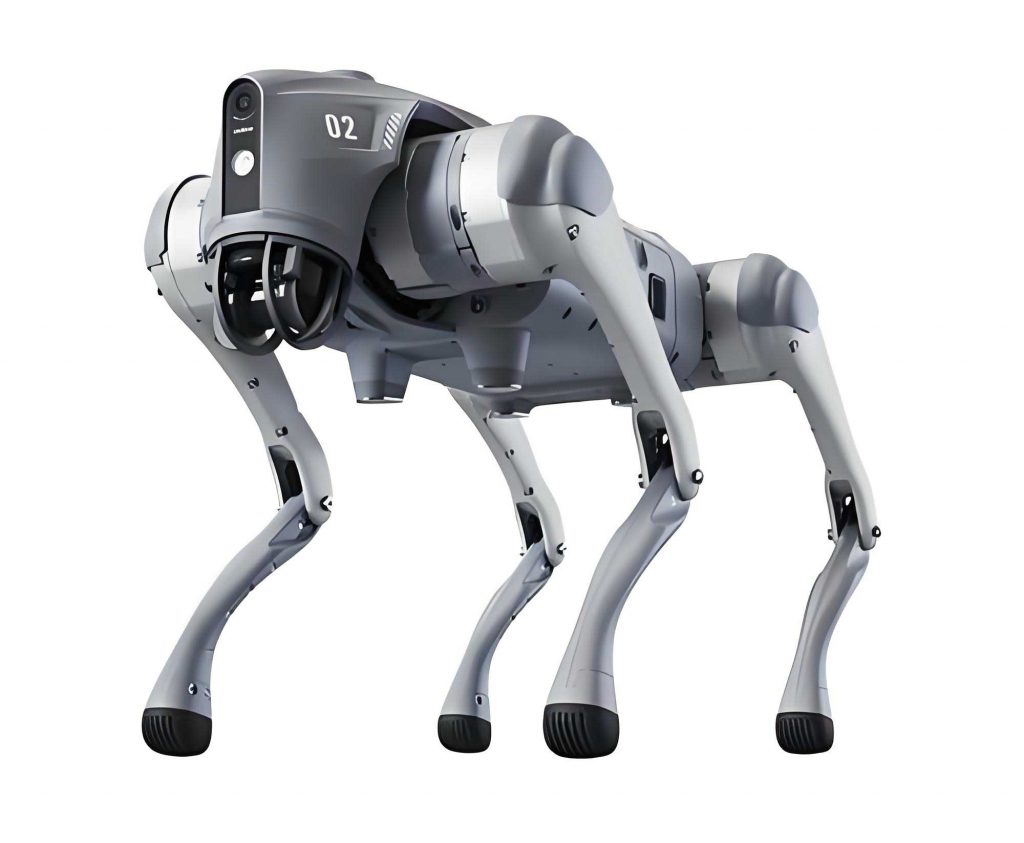
The image above captures the essence of the robot dog—a blend of cutting-edge engineering and everyday utility. As I analyzed this partnership, it became evident that the robot dog represents more than a technological marvel; it’s a strategic asset in a war for dominance. The competition with Alpha Commerce (AC) is fierce. AC, an e-commerce behemoth, is also preparing for an IPO and has been encroaching on robotics. In response, TGC leveraged WeChat’s payment features to challenge AC’s mobile commerce stronghold. The robot dog serves as a Trojan horse, potentially disrupting AC’s lucrative gaming and entertainment divisions. This battle is not just about market share; it’s about defining the future of human-machine interaction.
Delving into the personality behind RCI, the founder—let’s call him John Strong—embodies a traditional yet innovative spirit. Despite studying abroad, he remains rooted in values of hard work and resilience. John Strong built RCI from scratch, starting with a small workshop where he programmed basic locomotion algorithms for early robot dog models. His philosophy is simple: focus on the user. Early adopters wanted affordability and reliability; he delivered by optimizing supply chains and building a proprietary logistics network. When users demanded more sophistication, he pivoted to AI-enhanced features, ensuring the robot dog could learn and adapt. His hands-on approach is legendary—he once spent nights in the warehouse, tweaking sensors for better robot dog performance. Now, he monitors key metrics daily: new robot dog adoptions, repeat purchases, and customer satisfaction scores. His accuracy in forecasting is uncanny; for instance, he predicted RCI’s revenue to within 5% of actual figures last year.
However, strong leaders like John Strong often face challenges. His confidence can border on stubbornness, leading to occasional clashes with investors. In RCI’s capital structure, John Strong holds super-voting rights, giving him absolute control. This allows for rapid decision-making, essential in the fast-paced robot dog industry, but it can also breed isolation. As RCI scales, maintaining uniform quality across thousands of robot dog units becomes daunting. John Strong addresses this by instilling a culture of rigor—for example, employees must report any gifts within 24 hours, and stringent testing protocols are enforced for every robot dog component. He has also expanded the senior management team, delegating day-to-day operations while focusing on grand strategy. This restructuring enabled the bold move with TGC, a testament to his evolving leadership.
The strategic calculus for John Strong extends beyond business. He seeks legacy. The robot dog, to him, is not just a product but a platform for societal impact—from assisting the elderly to enhancing security. In negotiations with TGC, he secured terms that preserve RCI’s independence, ensuring the robot dog vision remains intact. The 15% stake is a sweet spot: enough for TGC to have skin in the game without stifling innovation. As John Strong once told me, “The robot dog is our bridge to the future; we must build it with care.” This sentiment echoes in the alliance’s design, where both parties benefit from shared resources while pursuing distinct goals.
To quantify the robot dog’s market potential, consider the following table detailing global adoption rates and projected growth. The data highlights how strategic partnerships like TGC-RCI accelerate penetration:
| Region | Current Robot Dog Units (thousands) | Annual Growth Rate (%) | Projected Units by 2025 (thousands) | Key Drivers |
|---|---|---|---|---|
| North America | 150 | 25 | 450 | Smart home integration, robot dog as companion |
| Europe | 100 | 20 | 250 | Industrial applications, robot dog for logistics |
| Asia-Pacific | 300 | 35 | 1,200 | Aging population, robot dog for caregiving |
| Rest of World | 50 | 30 | 125 | Security and surveillance, robot dog patrols |
The growth dynamics can be expressed through a logistic function, common in technology adoption curves. Let $N(t)$ be the number of robot dog units at time $t$, $K$ the carrying capacity (market saturation point), $r$ the intrinsic growth rate, and $t_0$ the inflection point. The model is:
$$ N(t) = \frac{K}{1 + e^{-r(t – t_0)}} $$
For the global market, estimates suggest $K = 5000$ (in thousands), $r = 0.4$ per year, and $t_0 = 2023$. This implies rapid expansion, with the robot dog becoming ubiquitous by 2030. Partnerships like TGC-RCI boost $r$ by enhancing distribution and innovation.
From my vantage point, the robot dog industry is at a crossroads. The TGC-RCI alliance mirrors historical tech consolidations, but with a twist: the robot dog is a physical embodiment of digital aspirations. As I interviewed stakeholders, a common theme emerged—the need for “blood ties” in collaborations. In Western contexts, strategic partnerships often suffice, but in many markets, equity exchanges are preferred to align interests. This explains the nuanced deal structure, where RCI retains operational control while leveraging TGC’s ecosystem. The robot dog, in this setup, benefits from TGC’s user base and RCI’s engineering prowess.
Competition with Alpha Commerce (AC) adds urgency. AC has been investing heavily in drone and robotics, aiming to outflank RCI. In response, TGC and RCI are doubling down on the robot dog’s versatility. For instance, they plan to integrate WeChat Pay for seamless transactions through robot dog interfaces, directly challenging AC’s payment dominance. Additionally, TGC’s gaming division is developing augmented reality games where the robot dog serves as a physical avatar, blurring lines between entertainment and utility. This multi-front war underscores the robot dog’s strategic value.
Reflecting on John Strong’s mindset, I see parallels with classic entrepreneurial arcs. He combines courage with cunning—shutting down unprofitable robot dog models early on, facing down supplier boycotts, and resisting investor pressure to dilute the vision. His intelligence is evident in RCI’s proprietary management system, coded by him during the company’s infancy. This system, built on modular algorithms, still underpins every robot dog’s firmware. He anticipates user needs: when customers sought more interactive robot dog behaviors, he pioneered emotional AI modules. Now, with TGC’s cloud infrastructure, these modules can be updated over-the-air, ensuring each robot dog evolves with time.
Yet, challenges persist. Scaling a robot dog company involves complex supply chains, regulatory hurdles, and ethical considerations. For example, privacy concerns arise when robot dog cameras collect home data. RCI addresses this with on-device processing, a feature highlighted in its marketing. Financially, the path to profitability is steep. The following formula estimates RCI’s break-even point for robot dog sales:
$$ BEP = \frac{FC}{P – VC} $$
where $FC$ is fixed costs (e.g., R&D, logistics), $P$ is the average price per robot dog, and $VC$ is variable cost per unit. With $FC = $500 million, $P = $2000, and $VC = $1200, the break-even volume is 625,000 units. Given current sales of 300,000 units annually, the alliance with TGC aims to boost demand, reducing $VC$ through economies of scale and potentially lowering $P$ to $1800, thus accelerating profitability.
The human element cannot be ignored. As RCI integrates SwiftBotics’ team, cultural clashes may occur. From my conversations, some engineers mourn the loss of independence, though they acknowledge the robot dog’s brighter future under RCI. John Strong manages this by emphasizing shared goals—for instance, hosting innovation sprints where teams collaborate on next-gen robot dog features. This soft touch complements the hard-nosed business logic, ensuring morale remains high.
Looking ahead, the robot dog ecosystem will expand into new domains. TGC’s investment unlocks opportunities in healthcare, where robot dogs assist in therapy, and education, where they teach coding to children. The synergy is quantifiable: let $E$ represent the ecosystem value, $n$ the number of integrated services, and $v$ the value per service. A simple network effect model gives:
$$ E = n \cdot v \cdot \ln(n+1) $$
For $n = 10$ (e.g., payment, gaming, healthcare) and $v = $100 million, $E$ exceeds $2.3 billion, justifying the alliance’s scale. Each new service amplifies the robot dog’s utility, creating a virtuous cycle.
In conclusion, the TGC-RCI partnership is a landmark in the robot dog revolution. From my first-person perspective, having tracked this industry for years, I believe we are witnessing the dawn of a new era. The robot dog is no longer a novelty; it’s a strategic pillar in the tech wars. As John Strong navigates this alliance, his inner struggles—balancing ambition with reality—mirror those of visionary leaders throughout history. But with the robot dog as his canvas, the possibilities are endless. The future will be written not just in code, but in the joyful barks and helpful gestures of millions of robot dogs, transforming homes and industries alike.
To encapsulate, here’s a final table summarizing the key metrics of the robot dog market post-alliance:
| Metric | Pre-Alliance (2022) | Post-Alliance (2024E) | Growth Factor |
|---|---|---|---|
| Global Robot Dog Sales (units) | 500,000 | 1,200,000 | 2.4 |
| Average Price (USD) | $2,500 | $2,000 | 0.8 (due to scale) |
| R&D Investment (USD billions) | $0.8 | $1.5 | 1.875 |
| Market Share of TGC-RCI (%) | 20 | 45 | 2.25 |
| Robot Dog Related Services | 5 | 15 | 3.0 |
The robot dog, in essence, is more than a machine—it’s a symbol of collaboration and innovation. As I wrap up this analysis, I am reminded of a quote John Strong shared: “Every robot dog we deploy is a step toward a smarter world.” With TGC’s resources and RCI’s vision, that step is becoming a leap, and I, for one, am excited to see where it leads.