
The concept of Embodied Artificial Intelligence, signifying AI that possesses a physical “body” and learns through direct interaction with its environment, has moved from theoretical discourse to a pivotal national strategy. The formal inclusion of embodied AI in the government work report marks a definitive turning point. As a researcher deeply embedded in this field, I observe an industry undergoing a triple leap in technology, application, and ecosystem, rapidly transitioning from controlled labs to complex, real-world deployment. The robot is the quintessential vessel for embodied AI. This article, from the perspective of intelligent robotics development, will dissect the current industrial landscape, competitive dynamics, and application scenarios, projecting the future trajectory of the embodied AI industry.
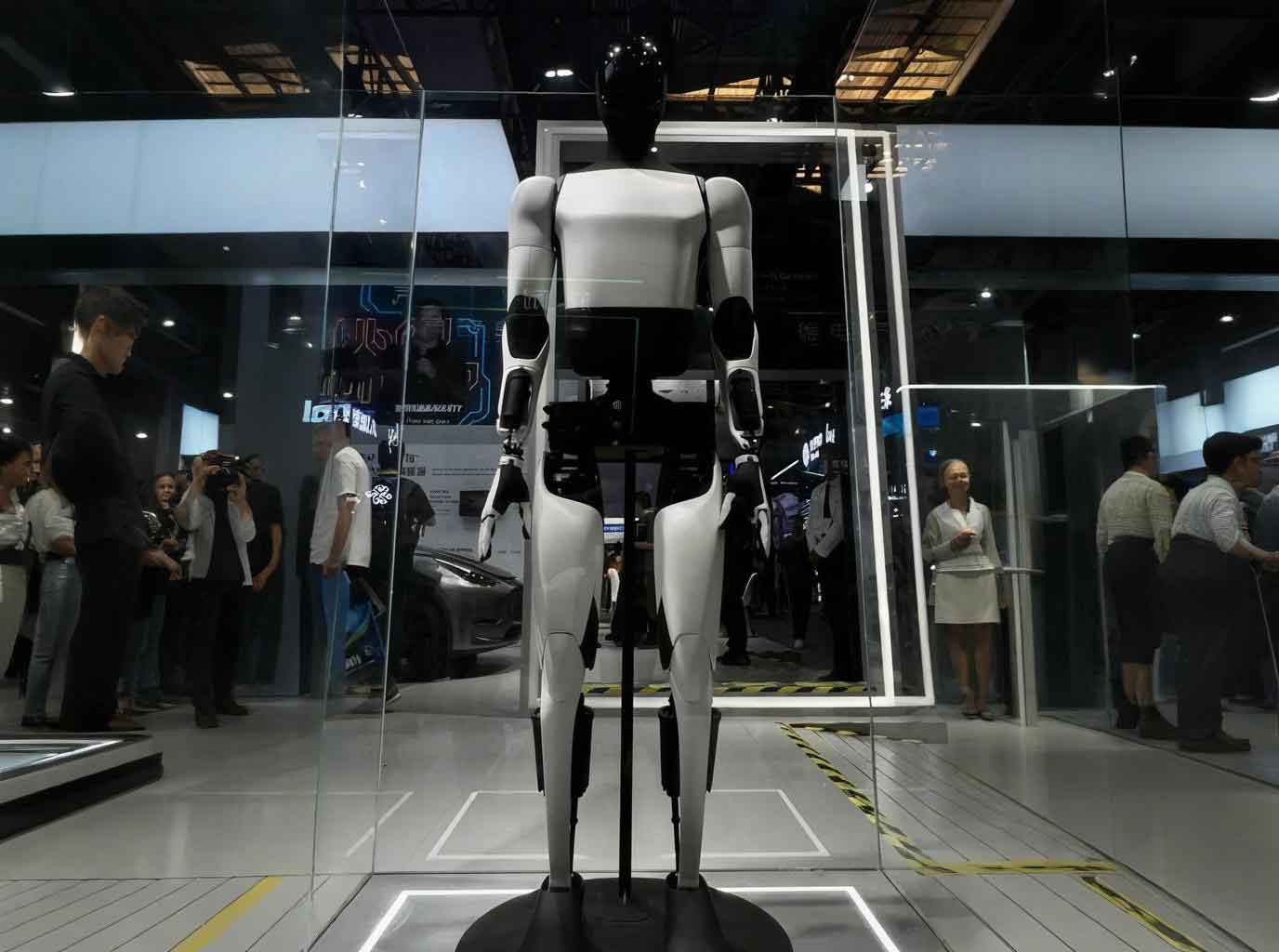
The development of an embodied AI robot can be conceptualized as the integration of its “brain,” “body,” and “sensory” systems. The intelligence emerges from their continuous interaction:
$$ \mathcal{I}_{embodied} = f(\mathcal{B}_{rain}(\theta, D), \mathcal{P}_{hysics}(\phi), \mathcal{S}_{ensors}(\xi), \mathcal{E}_{nvironment}) $$
where $\mathcal{B}_{rain}$ represents the AI model parameterized by $\theta$ and trained on data $D$, $\mathcal{P}_{hysics}$ denotes the kinematic and dynamic model of the robot body with parameters $\phi$, $\mathcal{S}_{ensors}$ is the perceptual model, and $\mathcal{E}_{nvironment}$ is the external world. The embodied intelligence $\mathcal{I}_{embodied}$ is not a function of the brain alone but a complex outcome of this coupled system.
Industrial Landscape: Explosive Growth and Deepening Integration
Propelled by a dual-engine of policy support and capital influx, the intelligent robotics sector is experiencing explosive growth. Projections indicate the industry scale will approach the threshold of 4000 billion units during the “15th Five-Year Plan” period. The industrial chain has matured, achieving comprehensive layout from core components to complete machines, with upstream and downstream sectors demonstrating deep integration and collaborative development.
Two primary forces accelerate this expansion: cost reduction and scenario proliferation. On one hand, the decreasing cost of core components drives down the price of whole machines, effectively stimulating market demand. For instance, the starting price for some commercial humanoid platforms has reached the level of tens of thousands of dollars. Data reveals significant production growth across categories: industrial robot output surged 35.6% year-over-year in the first half of 2025, while service robot production grew by 25.5%. Key component suppliers, especially in the humanoid segment, report revenue growth between 50% and 100%, with advanced manipulator sales doubling. On the other hand, the exploration of novel application scenarios further propels the industry. The service robot market, for example, maintains strong demand, with annual production exceeding expectations.
Innovation demands are driving unprecedented integration across the value chain. A complete ecosystem encompassing core components,整机 manufacturing, system integration, and scenario-specific solutions is now in place.
| Chain Segment | Focus | Key Trends | Status & Metric |
|---|---|---|---|
| Upstream (Body & Senses) | Core Components (Actuators, Sensors, Controllers) | 1. Accelerated intelligence penetration. 2. Proliferation of modular design. 3. Local supply chain shifting to high-value domains. |
Localization rate for some critical components reached ~40% in 2024. |
| Midstream (Brain) | Software & Intelligence (AI Models, OS, Data, Cloud) | 1. Divergence in technical paths (model-first vs. data-first). 2. Development of unified “wisdom core” platforms. 3. Fierce debate on open-source strategies. |
Industry in a period of technical divergence; consensus on data/model priority is critical. |
| Downstream (Application) | 整机 & Scenario Integration | 1. Product diversification (Industrial, Service, Special, Humanoid). 2. Path: Industrial → Commercial Service → Home Service. 3. Deepening upstream-downstream collaboration. |
Industrial applications dominate; service sector expanding; humanoids in infancy. |
The midstream, responsible for the “brain” of the embodied AI robot, is currently the epicenter of strategic debate. The industry is grappling with a fundamental equation for achieving general-purpose intelligence:
$$ \text{Capability}_{robot} \propto \mathcal{L}(\text{Model Architecture}, \text{Data Scale}, \text{Compute}) $$
While some argue the primary bottleneck is architectural innovation ($\frac{\partial \mathcal{L}}{\partial \text{Architecture}}$ is large), others contend that without massive, high-quality embodied data, model performance plateaus well before human-level proficiency. This ongoing debate between model-centric and data-centric approaches will significantly influence the pace of development for the next generation of embodied AI robots.
Competitive Landscape: Global Rivalry and Domestic Clusters
As the industry enters high-growth phase, global competition intensifies, forming a distinct hierarchy: “U.S. and China leading, Europe-Japan-Korea following, emerging markets catching up.”
The U.S. and China, as the two core poles, exhibit complementary strengths. China’s advantage lies in its formidable hardware supply chain and vast, iterative application scenarios. Statistics show a dominant share in the global supply of robotic “body” components and an overwhelming presence in commercial service robot deployments. Industrial robots are applied across a vast spectrum of economic categories. The U.S., leveraging long-term technological积淀, maintains a leading position in foundational research and algorithmic innovation. It hosts a majority of the world’s leading AI “brain” companies and has established significant standard and technology barriers.
Other regions are carving out niches: Europe emphasizes compliance-driven development in high-precision fields; Japan and Korea focus on affective interaction and bio-inspired robotics; emerging markets are pursuing strategic, resource-driven deployments in industrial, medical, and logistical domains.
Domestically, policy drive remains strong, fostering a “R&D-Manufacturing-Application” collaborative innovation pattern through ecosystem and cluster development. Over a dozen provincial-level regions have issued specialized robotics policies, offering support in R&D, ecosystem building, and finance. Major innovation centers are being established, creating a full-chain innovation ecology.
This has led to the formation of three primary industrial clusters, each with a distinct character:
| Cluster | Core Advantages | Representative Focus | Collaborative Model |
|---|---|---|---|
| Beijing-Tianjin-Hebei | Policy & Research Resources | Demonstration applications, foundational technology sharing,联盟 building. | Industry-academia-research alliances focused on vertical sector ecosystems. |
| Yangtze River Delta | Concentration of Leading Enterprises | High-end R&D (Shanghai), application expansion & smart manufacturing (Jiangsu, Zhejiang). | Inter-city differentiated分工 for efficient resource allocation across the value chain. |
| Pearl River Delta | Supply Chain & Manufacturing Prowess | Volume manufacturing, competitive product development, vertical supply chain integration. | Hosts the highest number of robotics firms nationally; leads in industrial robot output. |
The competitive dynamics for embodied AI robot supremacy can be modeled as a multi-variable optimization problem where each region maximizes its utility based on factor endowments:
$$ U_{region} = \max_{I_R, I_M, I_A} \left[ \alpha \cdot S_{supplychain} + \beta \cdot ln(T_{tech}) + \gamma \cdot A_{app} – C(I_R, I_M, I_A) \right] $$
subject to regional constraints. Here, $I_R, I_M, I_A$ represent investments in Research, Manufacturing, and Application, respectively; $S$, $T$, $A$ are strengths in supply chain, technology, and application; and $\alpha, \beta, \gamma$ are weighting coefficients unique to each region’s strategy.
Scenario Applications: Expanding Depth and Breadth
The application of embodied AI robots is advancing in both depth and breadth across three major fronts.
1. Industrial Robots: From Automation to Swarm Intelligence. The nation is the world’s largest producer and consumer of industrial robots, leading global sales for over a decade. Applications are expanding from repetitive tasks in electronics and automotive to higher-value domains like lab research and medical assistance. The key trend is the shift from isolated automation to connected, collaborative, and intelligent systems. The concept of “group intelligence” for multiple embodied AI robots is emerging, described by metrics like collective task efficiency:
$$ \eta_{swarm} = \frac{\sum_{i=1}^{N} T_{task,i}}{N \cdot T_{time} + \mathcal{C}_{communication}(N) + \mathcal{C}_{coordination}(N)} $$
where efficiency increases with the number of agents $N$ but is tempered by the costs of communication and coordination. Telecom operators are seizing this opportunity by offering integrated “network + platform” solutions, leveraging 5G private networks and large models to create industrial embodied AI platforms that enable multi-robot coordination, human-robot collaboration, and self-learning decision-making.
2. Home Robots: From Concept to Practical Service. Development is uneven across sub-domains. Companion robots are the most mature, evolving from functional tools to AI emotional partners, leading consumer sales in the category. In the context of an aging population, eldercare robots represent a new frontier, with products for assisted mobility, nursing, and therapy seeing accelerated deployment. However, large-scale adoption faces challenges modeled by an adoption barrier function:
$$ B_{adoption} = \frac{C_{cost} \cdot \Delta_{tech-gap}}{\mu_{user-adapt} \cdot S_{subsidy}} $$
High cost ($C_{cost}$), technology adaptability gaps ($\Delta_{tech-gap}$), and the “digital divide” among seniors ($1/\mu_{user-adapt}$) currently outweigh subsidy effects ($S_{subsidy}$), slowing普及. Domestic chore robots remain largely in the prototype stage, with significant gaps to overcome before becoming genuine household assistants.
3. Humanoid Robots: From Showpiece to Deliverable Product. This segment is crossing a critical chasm. Major整机 manufacturers are reporting significant order and delivery volume surges, with some orders valued in the tens of millions of dollars and roadmaps targeting delivery scales in the tens of thousands within a few years. This signals a transition from “lab samples” to “commercial products.” Analysis of scenario maturity reveals a clear sequence for the embodied AI robot in humanoid form:
| Rank | Application Scenario | Current Maturity | Time to Scale (Est.) |
|---|---|---|---|
| 1 | Industrial General Operation | Pilot/Initial Deployment | 0-5 years |
| 2 | Automotive Manufacturing & Sorting | Pilot/Initial Deployment | 0-5 years |
| 3 | Power Inspection | Pilot/Initial Deployment | 0-5 years |
| 9 | Home Service | Research/Prototype | 5-10+ years |
The industrial domain is unequivocally the “first battlefield” for scaled humanoid deployment. The growth trajectory can be modeled as a phased logistic function:
$$ N(t) = \frac{K_{industrial}}{1 + e^{-r_i(t-t_0)}} + \frac{K_{commercial}}{1 + e^{-r_c(t-t_1)}} + \frac{K_{home}}{1 + e^{-r_h(t-t_2)}} $$
where $N(t)$ is the global stock of humanoid robots, $K$ are carrying capacities for each sector, $r$ are growth rates, and $t_{0,1,2}$ are phase delay parameters with $t_0 < t_1 < t_2$. Projections suggest an average annual growth rate exceeding 50% in industrial and commercial services over the next five years, with global stock potentially surpassing 2 million units by 2035, marking a paradigmatic shift for the embodied AI robot industry.
Future Outlook and Critical Challenges
The embodied AI robot industry has achieved breakthroughs in core technologies—”brain” intelligence, “body” dexterity, and “sensory” perception—and is now marching toward diversified application. However, significant hurdles remain that must be overcome to sustain this momentum. The overall progress function faces several limiting factors:
$$ \frac{dP}{dt} = \omega_1 I_{tech} + \omega_2 I_{std} + \omega_3 I_{comp} + \omega_4 I_{data} – \delta P $$
Here, the rate of progress $dP/dt$ depends on investments in technology convergence ($I_{tech}$), standard systems ($I_{std}$), core component autonomy ($I_{comp}$), and data ecosystem ($I_{data}$), but is hampered by a decay term $\delta P$ representing market and integration friction.
Key challenges include: 1) The lack of a universal technical platform leading to fragmented development; 2) An immature standardization and certification system; 3) Insufficient autonomy in high-end core components; and 4) Limited openness of high-value application scenarios for real-world testing and iteration.
To address these, the next phase must focus on cultivating capabilities in standard building, core algorithm R&D, high-quality embodied data accumulation, and key component breakthroughs. This requires constructing enterprise-led, university- and research institute-supported innovation consortia to drive collaborative R&D. A strategic, top-down approach to统筹 data ecology resources is paramount to fill the critical data gap for training robust embodied AI robots. Furthermore, telecom operators should be supported in leveraging their integrated computing-network advantages to meet the demanding “device-edge-cloud-intelligence” needs of next-generation robots. Finally, the nation’s vast and rich industrial and potential domestic application bases must be actively opened as “testing grounds,” using demonstration effects to accelerate technology iteration and pave the way for sustainable commercialization of the embodied AI robot.