
As I delve into the evolution of artificial intelligence, I observe a paradigm shift from disembodied, symbolic approaches toward a more integrated, physical interaction with the world. This shift is encapsulated in the rise of embodied intelligence, a field that emphasizes how intelligence emerges from the continuous interplay between an agent’s body and its environment. In this article, I will explore the development trends of embodied intelligence technology, systematically analyzing its theoretical foundations, core concepts, and key technological pathways. My focus is on how embodied AI robots are transforming from mere data processors to adaptive, interactive entities capable of cognitive emergence through real-world engagement.
The journey of embodied intelligence begins with a critique of traditional AI. For decades, AI research predominantly followed a symbolic paradigm, where intelligence was equated with logical reasoning and knowledge representation, detached from physical embodiment. However, as I reflect on the limitations of such systems—their inability to handle dynamic, unstructured environments and their lack of common-sense reasoning—it becomes clear that a new approach was needed. The embodied paradigm, inspired by biological systems, posits that intelligence is not just computed but enacted through sensory-motor interactions. This perspective, championed by pioneers like Rodney Brooks, argues that “the world is its own best model,” advocating for AI systems that learn and adapt through direct experience. Today, embodied AI robots represent a convergence of robotics, cognitive science, and machine learning, driving advancements toward artificial general intelligence (AGI).
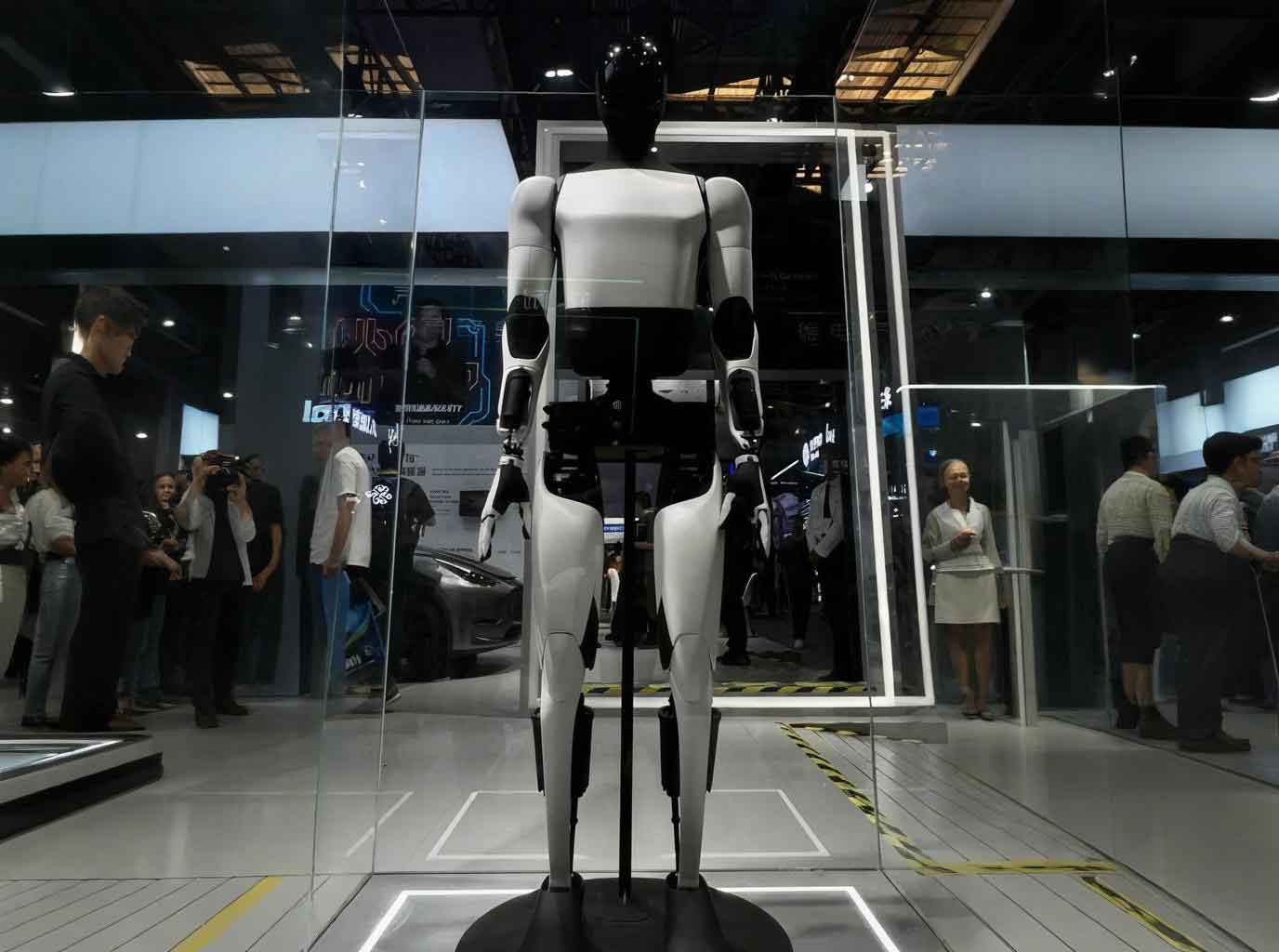
To understand the current trends, I first trace the historical development of embodied intelligence. The concept can be traced back to Alan Turing’s early ideas on “child machines” that learn through interaction, but it gained momentum in the 1980s with the behavior-based AI movement. This era emphasized decentralized control and real-time feedback loops, laying the groundwork for modern embodied AI robots. The advent of deep learning in the 2010s further accelerated progress, enabling sophisticated perception and control. More recently, the integration of large language models (LLMs) and vision-language models (VLMs) has opened new frontiers for generalist embodied AI robots capable of understanding natural language and performing diverse tasks. Table 1 summarizes key milestones in this evolution.
| Stage | Time Period | Main Theories or Technologies | Representative Figures or Systems | Core Characteristics and Impact |
|---|---|---|---|---|
| Germination | 1950s | Turing test, child machine concepts | Alan Turing | Initial linkage of intelligence to behavior, embryonic embodied ideas. |
| Symbolism | 1960s-1970s | Expert systems, symbolic AI | McCarthy, Minsky, Newell & Simon | Reliance on logic and knowledge bases, disembodied, struggled with dynamic environments. |
| Embodied Turn | 1980s-1990s | Behavior-based AI, distributed control | Rodney Brooks, Genghis/Cog robots | Emphasis on body-environment coupling, perception-action loops without central knowledge. |
| Deep Learning Rise | 2012 onward | CNNs, RNNs, Transformers | Hinton, LeCun, et al. | Leap in perception capabilities, deeper integration of sensing and motion. |
| Modern Multimodal/Large Models | 2020 onward | LLMs, VLMs, foundation models | OpenAI, Google DeepMind, et al. | Language and vision fusion, enabling generalist reasoning for embodied AI robots. |
At the heart of embodied intelligence are several core concepts that distinguish it from traditional AI. As I analyze these, I see how they collectively define the operational framework for embodied AI robots. First, embodiment asserts that the physical body is not merely a tool but an integral part of cognition. The morphology of an embodied AI robot—its shape, materials, and actuators—directly influences its perception and behavior. This leads to the principle of morphological computation, where the body itself processes information, reducing computational load. For example, the dynamics of a legged embodied AI robot can be described by equations of motion that couple body geometry with environmental forces:
$$ M(q)\ddot{q} + C(q, \dot{q})\dot{q} + G(q) = \tau + J^T F_{ext} $$
Here, \( q \) represents joint angles, \( M \) is the inertia matrix, \( C \) captures Coriolis forces, \( G \) is gravity, \( \tau \) are joint torques, and \( F_{ext} \) are external forces. This equation highlights how an embodied AI robot’s physical structure interacts with its environment to generate motion.
Second, situatedness emphasizes that intelligence is context-dependent, emerging from ongoing interaction with a specific environment. An embodied AI robot must continuously adapt to changing conditions, such as varying lighting or obstacle layouts. This requires real-time perception and decision-making, often modeled through reinforcement learning where the robot learns a policy \( \pi(a|s) \) that maps states \( s \) (e.g., sensor readings) to actions \( a \) (e.g., motor commands) to maximize cumulative reward \( R \):
$$ \pi^* = \arg\max_\pi \mathbb{E}\left[ \sum_{t=0}^\infty \gamma^t R(s_t, a_t) \right] $$
where \( \gamma \) is a discount factor. This formulation underscores how an embodied AI robot learns from its situated experiences.
Third, sensorimotor coupling refers to the tight feedback loop between perception and action. In an embodied AI robot, sensors (e.g., cameras, lidars, tactile sensors) provide streams of data that are processed to generate motor commands, which in turn alter the sensor inputs. This closed-loop system can be represented as a dynamic process:
$$ s_{t+1} = f(s_t, a_t), \quad a_t = \pi(s_t) $$
where \( f \) is the environment dynamics. This coupling enables real-time adaptation, such as adjusting grip force based on tactile feedback during manipulation tasks.
Fourth, developmental and adaptive learning highlights how embodied AI robots can acquire skills over time through exploration and interaction. Inspired by human cognitive development, these robots often use self-supervised or imitation learning to build internal models. For instance, a robot might learn a forward model \( \hat{f} \) to predict outcomes of actions:
$$ \hat{s}_{t+1} = \hat{f}(s_t, a_t) $$
and refine it through experience. This continuous learning allows embodied AI robots to improve their performance and generalize to novel tasks.
Moving to current research areas, I identify several dominant trends that are shaping the future of embodied AI robots. These encompass advancements in robotics hardware, perception, control, and integration with AI models.
Embodied Robot Systems and Physical Control Capabilities: The physical platform of an embodied AI robot is crucial for its capabilities. Research focuses on locomotion (e.g., bipedal walking, quadrupedal running), navigation, safety control, and dexterous manipulation. For example, modern embodied AI robots employ model predictive control (MPC) for dynamic stability, optimizing a cost function over a horizon \( N \):
$$ \min_{a_{t:t+N}} \sum_{k=t}^{t+N} \ell(s_k, a_k) \quad \text{subject to} \quad s_{k+1} = f(s_k, a_k), \quad a_k \in \mathcal{A} $$
where \( \ell \) is a stage cost and \( \mathcal{A} \) defines action constraints. This enables agile movements in complex terrains. In manipulation, embodied AI robots use force-control algorithms to handle delicate objects, often integrating tactile sensors for feedback. Table 2 summarizes key technologies in this domain.
| Technology Area | Description | Example Methods | Application in Embodied AI Robots |
|---|---|---|---|
| Locomotion Control | Enabling stable and adaptive movement in various environments. | Reinforcement learning, MPC, zero-moment point control | Humanoid robots walking on rough terrain; quadrupeds navigating stairs. |
| Safety Control | Ensuring safe interaction with humans and environments. | Collision detection, force limiting, safe reinforcement learning | Industrial cobots working alongside humans; service robots in homes. |
| Navigation and Exploration | Autonomous path planning and environment mapping. | SLAM, deep reinforcement learning, frontier-based exploration | Autonomous drones surveying areas; mobile robots in warehouses. |
| Dexterous Manipulation | Precise handling and manipulation of objects. | Imitation learning, tactile feedback control, grasp planning | Robotic hands assembling electronics; robots performing surgical tasks. |
Multimodal Perception and Environment Mapping: An embodied AI robot relies on multiple sensory modalities to perceive its surroundings. This includes visual, tactile, auditory, and proprioceptive data. Fusion techniques combine these inputs to create rich environmental representations. For instance, a robot might use a Bayesian approach to fuse sensor data:
$$ p(x|z_1, z_2) \propto p(z_1|x) p(z_2|x) p(x) $$
where \( x \) is the state (e.g., object position), and \( z_1, z_2 \) are measurements from different sensors. Advances in neural radiance fields (NeRF) and 3D Gaussian splatting enable detailed 3D scene reconstruction, enhancing an embodied AI robot’s spatial understanding. Semantic mapping further allows robots to interpret environments in terms of human-readable concepts, facilitating task execution.
Generalist Manipulation: Vision-Language Model-Driven Embodied AI: A transformative trend is the integration of large foundation models, such as LLMs and VLMs, with embodied AI robots. These models enable robots to understand natural language instructions and perform a wide range of tasks without task-specific training. For example, a robot equipped with a VLM can process an image \( I \) and a language command \( L \) to generate an action sequence \( A \):
$$ A = \text{VLM}(I, L) $$
Systems like RT-2 and OpenVLA exemplify this approach, allowing embodied AI robots to execute commands like “pick up the red cup” in zero-shot settings. This capability is pushing embodied AI robots toward general-purpose autonomy, where one model can handle diverse manipulation tasks across environments.
Developmental Embodied Learning and Cognitive Construction: Beyond static control, embodied AI robots are increasingly designed to learn and develop over time. This involves strategies from developmental robotics, where robots acquire skills through autonomous exploration and social interaction. Techniques like meta-learning enable quick adaptation to new tasks. The meta-learning objective can be formulated as:
$$ \min_\theta \sum_{\mathcal{T}_i} \mathcal{L}_{\mathcal{T}_i}(f_{\theta_i’}) \quad \text{with} \quad \theta_i’ = \text{Update}(\theta, \mathcal{D}_{\mathcal{T}_i}) $$
where \( \theta \) are meta-parameters, \( \mathcal{T}_i \) are tasks, and \( \mathcal{D} \) is task-specific data. This allows an embodied AI robot to learn how to learn, improving efficiency in novel situations.
Human-Robot Interaction and Social Embodied Intelligence: For embodied AI robots to coexist with humans, they must exhibit social intelligence. This includes recognizing human gestures, understanding emotions, and adhering to social norms. Research in this area leverages multimodal perception—combining speech, vision, and touch—to enable natural interactions. For instance, a robot might use a neural network to estimate human intent \( y \) from multimodal inputs \( X \):
$$ y = \text{NN}(X_{\text{visual}}, X_{\text{audio}}, X_{\text{tactile}}) $$
Such capabilities are vital for applications in healthcare, education, and companion robotics, where embodied AI robots act as caregivers or tutors.
Looking ahead, the application prospects for embodied AI robots are vast. I see them transforming sectors such as domestic service (e.g., assisting with chores and elder care), healthcare (e.g., rehabilitation robots and surgical assistants), industrial automation (e.g., flexible manufacturing and logistics), education (e.g., interactive tutors for children), and extreme environments (e.g., search-and-rescue missions). In each domain, the embodied AI robot’s ability to adapt, learn, and interact physically provides unique value over traditional automated systems.
However, several challenges remain. As I analyze these, I note that they span technical, ethical, and practical dimensions. Technically, achieving real-time, low-power control for complex embodied AI robots is difficult, often requiring hardware-software co-design. Robustness and generalization are also issues; an embodied AI robot trained in one environment may fail in another due to distribution shifts. Safety and ethics are critical, as embodied AI robots operate alongside humans, raising concerns about privacy, accountability, and unintended harm. Moreover, long-term autonomous learning faces hurdles like catastrophic forgetting and sample inefficiency. Social acceptance hinges on making embodied AI robots behave in predictable, trustworthy ways.
Despite these challenges, future trends point toward exciting advancements. I anticipate deeper integration of neuromorphic computing with embodied AI robots, enabling brain-inspired, energy-efficient processing. The fusion of large models with robotic control will continue, leading to more capable generalist embodied AI robots that can reason and plan across domains. Adaptive morphology—where robots can modify their body structure—may emerge, enhancing versatility. Furthermore, embodied AI robots will likely become key components in metaverse and digital twin applications, bridging physical and virtual worlds. Finally, swarm robotics could see embodied AI robots collaborating in large numbers, achieving collective intelligence through decentralized algorithms.
In conclusion, embodied intelligence represents a fundamental shift in AI, one that I believe is essential for achieving AGI. Through my exploration, I have highlighted how embodied AI robots leverage embodiment, situatedness, sensorimotor coupling, and developmental learning to interact intelligently with the world. The trends indicate rapid progress in robotics hardware, multimodal perception, foundation model integration, and social interaction. While challenges persist in control, generalization, safety, and ethics, the trajectory is clear: embodied AI robots are poised to become ubiquitous, transforming industries and daily life. As research advances, I expect these systems to become more autonomous, adaptive, and collaborative, ultimately realizing the vision of intelligent machines that truly understand and inhabit our physical reality.