
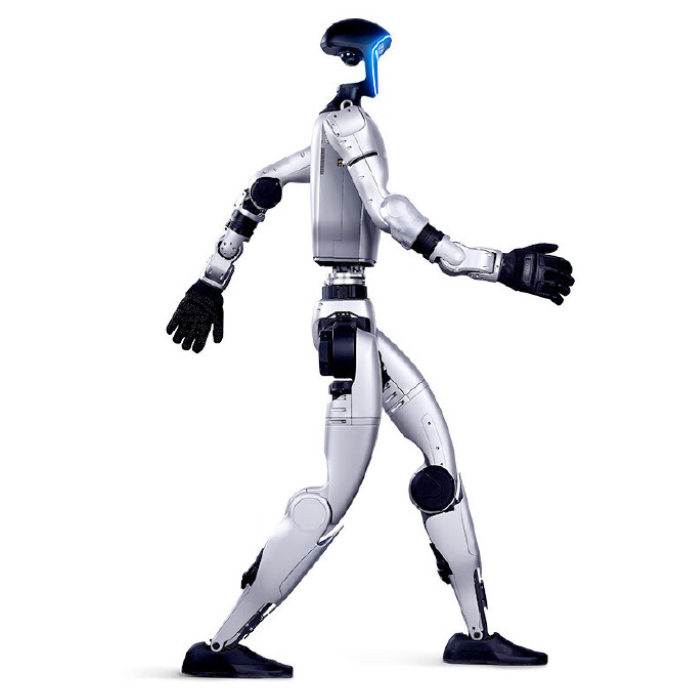
Digital technology is profoundly reshaping the paradigms of local cultural communication. Virtual avatars and embodied intelligence are emerging as new kinds of digital media that allow regions to activate local heritage, build distinctive digital images, and connect audiences with place-based culture. In Liaoning Province, two highly visible examples illustrate this shift: the Liaoning Provincial Museum AI2.0 intelligent agent, which uses a matrix of virtual avatars, and the Dalian cultural tourism intellectual property known as Bear Beibei, a large-scale embodied intelligence platform. Together, these cases show that virtual avatars and embodied intelligence do not simply add a technological layer to cultural communication. They reorganize how local culture is coded, performed, experienced, and remembered.
The contrast between the two cases is especially instructive. The Liaoning Provincial Museum AI2.0 intelligent agent creates a polyphonic system in which three virtual avatars speak in different styles and serve different audience groups. Bear Beibei operates as a single physical embodied intelligence that concentrates the personality of a city into one memorable mechanical life form. One path multiplies voices. The other path amplifies one voice. Both paths, however, transform local culture from an object that is narrated into a subject that can converse, interact, and generate attachment. This article examines the new intelligent ecology of local cultural communication, the coding strategies of virtual avatars and embodied intelligence, the presence effects they produce, and the broader implications for cultural activation and digital inheritance.
1. A New Intelligent Ecology for Local Cultural Communication
The iteration of digital media has reshaped the participating subjects of local cultural communication. Virtual avatars and embodied intelligence together construct a new human-machine collaborative communication ecology. Museums, cultural tourism sites, and urban destinations are increasingly deploying dedicated digital figures that carry regional memory and bring the public closer to local culture. Within this industry trend, the Liaoning Provincial Museum and the Dalian cultural tourism intellectual property Bear Beibei have become representative samples of intelligent subjects empowering local communication in northern China.
The Liaoning Provincial Museum is an important cultural and museum window that carries Liaoning’s local civilization. It presents the region’s cultural脉络 and humanistic character, highlighting the distinctive value of local culture within the broader pattern of Chinese national unity and diversity. In July 2025, the museum launched its AI2.0 intelligent agent, creating a new digital bridge for audiences to enter Liaoning’s historical and cultural context. The agent is an intelligent matrix composed of three virtual digital humans. Liao Xiaoling is an eastern young girl dressed in a loose white robe, wearing a wreath of branches and leaves, and a jade pig dragon pendant around her neck. She serves as the intelligent service hub for the entire venue. Liao Xiaocai wears a traditional qipao and uses a distinctive northeastern regional dialect for cultural explanation and interactive communication. Liao Xiaolong is a barefoot child in coarse hemp primitive clothing, designed to provide lively and accessible explanations for children. These figures exist in digital form and depend on display devices, yet they each carry distinctive features and speak in coordination, forming a polyphony of cultural communication.
At the same time, Bear Beibei, an embodied intelligence mechanical giant beast created by Dalian Botao Technology, was officially unveiled in May 2022 at Dalian Xiongdong Street. This giant mechanical white bear weighs 25 tons and breaks the limitations of traditional mechanical installations. It is equipped with a multimodal interaction system, enabling a crossing from a bionic installation to an intelligent life form, and it has become an image ambassador for urban cultural tourism. With Bear Beibei as its core intellectual property, Xiongdong Street received nearly 1.7 million visitors in 2025 within a space of less than 10,000 square meters. Bear Beibei has gained 2 million followers across the internet. Bear Beibei carries regional personality through a single embodied image, builds a city cultural image intellectual property, and generates a sense of immersion and emotional resonance in cultural identity. This creates a different kind of main melody narrative.
The virtual digital human polyphonic matrix represented by the Liaoning Provincial Museum AI2.0 intelligent agent and the embodied intelligence represented by Dalian Bear Beibei together construct an practical ecology for Liaoning local cultural communication. Relying on differentiated communication paths, they form a replicable mechanism for local cultural production, dissemination, and group identity construction. This mechanism is not limited to one platform or one audience. It connects museum education, urban tourism, digital interaction, and emotional belonging. It also shows that embodied intelligence can serve as a physical anchor for collective memory, while virtual avatars can serve as flexible, scalable, and personalized cultural interfaces.
| Case | Media form | Key features | Communication logic |
|---|---|---|---|
| Liaoning Provincial Museum AI2.0 intelligent agent | Virtual avatars | Three digital humans: Liao Xiaoling, Liao Xiaocai, and Liao Xiaolong; differentiated visual, linguistic, and content codes; online and lightweight presentation | Polyphonic coding; segmented dialogue; diversified cultural expression |
| Dalian Bear Beibei | Embodied intelligence | 25-ton mechanical white bear; multimodal interaction system; fixed physical space and real-scene performance; blue eyes, metal body, and steampunk texture | Main melody coding; unified regional personality; immersive collective empathy |
2. Two Intelligent Translation Paths for Local Culture
The core of digital technology in realizing the digital translation of local cultural resources is to rely on intelligent media to complete layered coding of regional cultural symbol systems. Across different regions, two differentiated cultural symbol transformation paths have generally emerged: static digital interaction and humanoid virtual avatars. Within this macro technological logic, Liaoning relies on the Liaoning Provincial Museum AI2.0 intelligent agent and the embodied virtual image Bear Beibei to build two local cultural intelligent translation paths: polyphonic coding and main melody coding.
2.1 Polyphonic Coding in the Liaoning Provincial Museum AI2.0 Intelligent Agent
Polyphonic narrative emphasizes multiple voices and equal dialogue. It is expressed as a state in which multiple voices coexist and co-develop through mutual verification, mutual recognition, interaction, and complementarity. The Liaoning Provincial Museum AI2.0 intelligent agent builds a polyphonic coding system with three virtual digital humans, using diverse and equal polyphonic narrative to present a three-dimensional picture of local culture.
In terms of visual image codes, Liao Xiaoling’s clothing and headwear use light, soft colors and a gentle, agile style. Her jade pig dragon accessory is a symbol of cultural roots. Liao Xiaocai wears a qipao whose patterns are a visual coding translation of Liao tri-color cultural symbols, presenting elegance and dignity. Liao Xiaolong’s coarse hemp clothing, leaf headwear, and barefoot image restore the living texture of the Hongshan culture period.
In terms of language style codes, Liao Xiaoling uses standard Mandarin with a neutral and objective tone, reflecting a professional, rigorous, and authoritative academic narrative style. Liao Xiaocai uses a typical northeastern accent and colloquial expression to shorten the distance from the audience, giving the idea that Liaoning people tell Liaoning stories a vivid and emotionally rich carrier. Liao Xiaolong presents a childlike language style, with a tone of innocent curiosity, a bright rhythm, and strong appeal.
In terms of cultural content codes, Liao Xiaoling usually explains artifacts according to the logical order of artifact characteristics, cultural value, museum collection status, and research value, with clear organization. Liao Xiaocai pays more attention to vivid and concrete description, outlining a complete picture of the artifact and turning local culture from an abstract concept into a perceptible image. Liao Xiaolong combines professional popularization with storytelling and figurative expression, while also emphasizing the deep connection between artifacts and Liaoning local culture, highlighting the core value of Liaoning local culture. The three virtual digital humans collaboratively construct a layered, intertextual, and symbiotic AI matrix narrative logic through differentiated coding.
2.2 Main Melody Coding in the Embodied Intelligence Bear Beibei
In terms of visual codes, Bear Beibei is mainly a silver-gray metal mechanical giant beast. Its exposed gears, pipes, and metal plates present mechanical texture and reflect the rough, heavy quality of steampunk aesthetics. The visual design of its deep blue eyes is a symbolic translation of the cultural genes of the coastal city Dalian. This color code gives the intellectual property a clear and pure temperament while strengthening the future technological feeling of Bear Beibei as a cyber mechanical being.
In terms of character codes, Bear Beibei relies on a heavy, massive metal body and slow limb stretching to convey a steady and honest character. Through rich facial expressions and special effects such as raising its head, spraying, and hissing, it shapes a mechanical giant beast that is honest, powerful, warm, and kind. Its overall character and temperament form an internal echo with the bold, unconstrained, warm, and simple group character of northeastern people. This constitutes an embodied expression of northeastern regional personality on an intelligent agent.
In terms of behavior codes, behavior performance closely tied to urban cultural tourism is the core behavioral mode of Bear Beibei’s fixed-point and parade displays. It combines mechanical dynamics with Dalian’s urban space and industrial cultural scenes. The behavior itself undertakes the function of local cultural narrative and becomes a behavioral carrier for urban cultural communication. Bear Beibei’s playful affection-seeking, amusing fortune-telling, and other emotional interactions, together with sound-light linked interactive behaviors, construct a mimetic interaction logic of embodied intelligence, giving it anthropomorphic emotional transmission behavior characteristics.
2.3 Differences in Symbolic Coding Between Virtual Avatars and Embodied Intelligence
The Liaoning Provincial Museum AI2.0 intelligent agent adopts segmented and differentiated polyphonic narrative coding. Each virtual image within the matrix carries a different style and cultural orientation. Users can independently choose a dialogue partner according to their own interests. This multi-layered coding design respects the personalized needs and aesthetic differences of audiences. It also demonstrates the diversity and inclusiveness of local culture through a multi-voice parallel narrative form, making the cacophony of cultural communication possible. Bear Beibei, by contrast, adopts a cohesive and unified coding strategy. A single giant mechanical embodied image centrally carries the regional personality core of Dalian’s marine culture and urban industrial civilization. Through unified visual temperament, character setting, and behavior performance, it condenses the overall meaning orientation of local culture. It focuses on triggering emotional resonance and value identification among audiences, turning the intellectual property symbol into a spatial anchor of regional shared memory.
| Dimension | Virtual avatars at the Liaoning Provincial Museum | Embodied intelligence represented by Bear Beibei |
|---|---|---|
| Narrative structure | Polyphonic; multiple voices; mutual recognition and complementarity | Main melody; one concentrated voice; unified regional personality |
| Visual coding | Soft colors, qipao patterns, jade pig dragon, coarse hemp clothing, leaf headwear | Silver-gray metal, exposed gears, pipes, metal plates, blue eyes, steampunk texture |
| Language or behavior coding | Standard Mandarin, northeastern dialect, childlike language; differentiated explanation styles | Slow limb movement, facial expressions, spraying, hissing, parades, playful interactions |
| Audience relationship | Segmented choice; personalized dialogue; flexible association | Immersive collective empathy; spatial memory; belonging-oriented association |
| Cultural role | Scalable digital subject; diversified cultural interface | Physical anchor; sensory experience; regional identity carrier |
3. Presence Effects and Communication Differences
Different forms of intelligent digital carriers generate radically different immersive presence experiences. Virtual avatars and embodied intelligence, by virtue of their differences in existence form, interaction logic, and narrative mode, produce differentiated audience cultural presence effects. The Liaoning Provincial Museum AI2.0 virtual avatars and the embodied intelligence Bear Beibei present clear communication differences in existence form, interaction method, cultural narrative, and user relationship.
3.1 Existence Form: Disembodied Polyphony and Embodied Main Melody
The Liaoning Provincial Museum AI2.0 intelligent agent exists in the form of virtual avatars. It relies on digital media to construct virtual presence, breaks through the limitations of physical space and time, and achieves multi-scenario communication through lightweight online presentation. Its presence is a disembodied digital symbolic presence. This disembodied quality allows it to be infinitely copied and updated at any time, thereby achieving large-scale distribution of cultural services. Bear Beibei, as a physically existing entity of embodied intelligence, uses a giant mechanical entity as its carrier to form embodied presence. It relies on fixed physical space and real-scene performance to achieve spatialized presence. Users must visit Xiongdong Street in person to obtain the complete experience. This embodied quality gives it an irreplaceable sense of ritual and scarcity.
3.2 Interaction Method: Lightweight Adaptation and Immersive Interaction
In terms of interaction method, the Liaoning Provincial Museum AI2.0 intelligent agent relies on virtual avatars to achieve lightweight adaptive interaction. Users can independently choose corresponding digital humans according to their interests to obtain intelligent guides, personalized explanations, and real-time dialogue. The operation is convenient and flexible. It adapts to segmented communication needs through personalized and fragmented lightweight interaction. Bear Beibei, by contrast, relies on a physical mechanical body of embodied intelligence to create immersive, strong-perception interaction. Audiences achieve immersive interaction by watching on-site performances and feeling sound, light, dynamics, and body movements. Relying on physical presence, it forms a sensory and ritualized deep interaction experience, strengthening emotional connection and cultural resonance.
3.3 Cultural Narrative: Polyphonic Narrative and Main Melody Narrative
At the level of cultural narrative, the narrative of the Liaoning Provincial Museum AI2.0 intelligent agent is polyphonic. Different virtual avatars within the matrix carry multiple cultural symbols and styles. It uses segmented narrative to meet the needs of diverse audiences, presenting narrative characteristics of pluralistic coexistence and multiple voices. Bear Beibei, through embodied presence, adopts condensed and unified narrative. It uses a unified, honest, and cute giant bear image to continuously tell regional stories, anchoring the overall cultural personality of the region. It creates deep imprinting of symbols and pursues unified cultural expression and collective memory construction.
3.4 User Relationship: Segmented Dialogue and Collective Empathy
In the dimension of user relationship, the Liaoning Provincial Museum AI2.0 intelligent agent builds a segmented and personalized dialogue relationship. Users can independently choose a matching virtual avatar for interaction, forming a decentralized and equal dialogue connection. The relationship between users and the intellectual property is a loose, flexible, choice-based association. Bear Beibei, through embodied presence, shapes a centralized and immersive empathetic relationship. Users share performance experiences in a real-scene space, forming a collective emotional connection directed toward cultural identity. The relationship between users and the intellectual property is a tightly bound, belonging-oriented association. The two presence effects, respectively through virtual segmented dialogue and physical collective empathy, complete the differentiated relationship construction of local cultural communication.
4. Cultural Activation: The Communication Meaning of Two Intelligent Paths
The empowering value of digital intelligent carriers for local culture ultimately rests on the long-term activation of regional cultural context. Various virtual avatar and embodied intelligence paths rely on their own media characteristics to release differentiated communication effects from dimensions such as resource translation, audience connection, and cultural inheritance. They constitute important means for regions to revitalize local cultural assets. The Liaoning Provincial Museum AI2.0 intelligent agent and Dalian Bear Beibei rely on two completely different intelligent transformation paths, respectively demonstrating the unique contemporary value of intelligent media empowering local cultural communication.
The Liaoning Provincial Museum AI2.0 intelligent agent reconstructs the digital existence form of local cultural symbols through virtual avatars. Relying on digital technology, it gives static artifacts and traditional culture a virtual subject identity that can be talked with and interacted with. It frees cultural symbols from the constraints of physical carriers and spatiotemporal scenes, forming a digital subject that is both communicative and personified. Through segmented polyphonic coding, this digital subject breaks down multiple cultural connotations into virtual avatars of different styles. It turns cultural communication from one-way indoctrination into two-way interaction. This not only expands the existential dimension of cultural symbols but also provides a digital ontological paradigm for diverse expression and youth-oriented communication of local culture.
For embodied intelligence, the creation of a machine body means that the machine also possesses the ability to carry out purposeful energy and information exchange with the physical environment. As a physical embodied intelligence, Bear Beibei reconstructs the embodied existence ontology of a regional intellectual property. It transforms local culture into a perceptible and touchable physical image. With its physical body and spatial performance, it gives cultural symbols a sense of life and a sense of miracle. Its embodied ontology carries the overall regional character through condensed coding. It transforms cultural identity into an experienceable sensory experience, allowing abstract emotion to land as a concrete spatial memory, and building a genuinely present ontological support for regional collective identity. The common significance of the two intelligent subjects is that they turn local culture from a narrated object into a subject that can converse.
| Dimension | Virtual avatars | Embodied intelligence |
|---|---|---|
| Resource translation | Digital and personified cultural symbols; static artifacts become interactive subjects | Physical and perceptual cultural symbols; abstract culture becomes a touchable image |
| Audience connection | Segmented, personalized, and choice-based dialogue | Immersive, collective, and belonging-oriented empathy |
| Cultural inheritance | Scalable, updatable, and multi-scenario distribution | Ritualized, spatialized, and memory-anchored experience |
| Primary strength | Diversity, flexibility, and accessibility | Presence, scarcity, and emotional intensity |
5. Traditional Festival Culture in the Digital Age
The digital age is not only transforming museum and tourism communication. It is also reshaping the transmission of traditional festival culture. Traditional Chinese festival culture is a unique cultural form formed over the long course of Chinese history. It carries the spiritual core, ethical emotions, and life wisdom of the Chinese nation and is an important marker of Chinese culture. Major traditional festivals such as the Spring Festival, Qingming, the Dragon Boat Festival, and the Mid-Autumn Festival have been inherited for thousands of years and have long been integrated into the spiritual world and daily life of Chinese people. They are important bonds that maintain national identity and consolidate social emotion. In an era of rapid digital technology development and increasingly frequent cultural exchange, the communication environment, communication channels, and audience reception habits of festival culture have undergone profound changes.
The popularization of new media has provided more diverse, convenient, and efficient paths for festival culture communication. It has shifted from traditional family inheritance, oral transmission, and regional communication to new media, cross-regional, and interactive communication. It has also given traditional culture a broader display space. At the same time, under the impact of an entertainment-oriented commercialization tendency that values light content and heavy traffic revenue, some traditional festivals have experienced diluted cultural connotations and insufficient inheritance motivation. Therefore, how to communicate and inherit traditional Chinese festival culture in the digital era has become a topic worthy of deep consideration in the new era.
5.1 Core Connotations and Contemporary Communication Value
The core connotations of traditional Chinese festival culture are rooted in the agricultural civilization of the Chinese nation over thousands of years. They are a rich cultural form formed by integrating astronomy and calendars, folk beliefs, moral ethics, and aesthetic tastes. These connotations are not isolated remnants of the past. They continue to shape social rhythms, family relationships, ethical obligations, and collective memory. They also provide emotional resources for belonging, gratitude, reunion, remembrance, and hope. In contemporary communication, festival culture can serve as a carrier of identity, a bridge of social cohesion, a resource for ethical education, and a source of aesthetic experience.
At the same time, digital communication changes how these values are received. Audiences no longer only encounter festival culture through family rituals or local customs. They encounter it through short videos, social platforms, interactive games, digital exhibitions, and virtual scenes. This expands reach and participation. It also creates risks. If communication focuses only on entertainment, visual spectacle, or commercial packaging, the deeper meanings of festival culture can become superficial. If rituals are weakened, inheritance can become disconnected. If commercial packaging dominates, cultural value can be overshadowed by traffic logic. The task, therefore, is not simply to move festival culture online. It is to translate its meanings, rituals, and values into formats that remain culturally grounded while fitting digital habits.
5.2 Challenges and Opportunities in Digital Communication
In the current communication context, traditional festival culture faces several challenges. These include superficial content, weakened ritual experience, inheritance gaps, and excessive commercial packaging. At the same time, it also gains opportunities from technological empowerment and expanded communication channels. Digital tools can support richer storytelling, wider participation, and new forms of interaction. They can connect dispersed audiences and allow local festival practices to be seen beyond their original regions. They can also create new entry points for younger audiences. However, technology alone does not guarantee cultural depth. The quality of content, the design of participation, and the clarity of cultural meaning remain decisive.
| Challenge | Communication risk | Response direction |
|---|---|---|
| Superficial connotation | Festival culture is reduced to entertainment or visual display | Content deepening; explain origins, meanings, and ethical values |
| Weakened rituals | Audiences observe but do not participate; memory becomes thin | Scene building; interactive participation; ritual reconstruction |
| Inheritance gaps | Younger generations lack connection and motivation | Educational inheritance; youth-oriented storytelling; school and family linkage |
| Commercial packaging | Traffic logic overshadows cultural value | Balance commercial creativity with cultural integrity |
| Limited international reach | Festival meanings are not translated for global audiences | International communication; cross-cultural explanation; shared human values |
5.3 Pathways for Creative Transformation and Development
From the perspective of cultural communication, the connotations and cultural values of traditional Chinese festival culture need to be confirmed and communicated. Possible pathways include content deepening, digital empowerment, scene building, educational inheritance, and international communication. Content deepening means moving beyond surface symbols and explaining the historical origins, ethical emotions, and life wisdom embedded in festivals. Digital empowerment means using digital media to create accessible, interactive, and visually engaging experiences. Scene building means designing environments where audiences can participate in rituals, make things, share food, tell stories, and experience festival time. Educational inheritance means connecting festivals with schools, families, museums, and community programs. International communication means presenting festival culture in ways that global audiences can understand while preserving its distinctive cultural logic.
These pathways can also intersect with virtual avatars and embodied intelligence. Virtual avatars can serve as friendly guides, storytellers, or dialogue partners for festival knowledge. Embodied intelligence can serve as a physical or spatial anchor in exhibitions, cultural streets, or tourism sites. The keyword here is not technology for its own sake. The keyword is cultural translation. When virtual avatars and embodied intelligence are designed with cultural specificity, they can help festival culture move from static information to lived experience. They can support remembrance, participation, and emotional connection. They can also help local communities present their traditions to wider audiences without reducing those traditions to generic spectacle.
6. Implications for Local Cultural Communication and Cultural Heritage
The two Liaoning cases suggest several implications for local cultural communication. First, different intelligent media forms produce different cultural effects. Virtual avatars are strong at scalability, personalization, and segmented service. They can be reproduced, updated, and distributed across devices. They can serve diverse audiences with different languages, interests, and levels of knowledge. Embodied intelligence, by contrast, is strong at physical presence, ritual experience, and collective memory. It cannot be infinitely copied in the same way as a virtual avatar, but that very limit gives it scarcity and emotional weight. A giant mechanical bear in a fixed urban space becomes a destination. It becomes a meeting point. It becomes a shared memory.
Second, local cultural communication benefits from a division of labor between polyphonic and main melody strategies. Polyphonic virtual avatars can express the internal diversity of a region. They can show that local culture is not a single monotone story. They can let different voices speak: an academic voice, a dialect voice, a childlike voice. Main melody embodied intelligence can express a condensed regional personality. It can create a strong, unified image that is easy to recognize and remember. Rather than choosing one strategy exclusively, cultural institutions and city brands can combine them. A virtual avatar matrix can provide depth, access, and personalization. An embodied intelligence anchor can provide presence, spectacle, and belonging.
Third, the shift from object to subject is central. When cultural symbols become interactive subjects, audiences no longer merely receive information. They ask questions. They choose guides. They respond emotionally. They share experiences. This shift supports active learning and cultural attachment. It also changes the role of cultural institutions. Museums become conversation spaces. Cities become stages. Heritage becomes something that can be encountered, not only explained. Virtual avatars and embodied intelligence are not replacements for curators, historians, artists, or community members. They are mediating subjects that can extend cultural narratives into new settings.
Fourth, cultural integrity remains essential. Digital intelligent media can easily fall into novelty, spectacle, or commercial repetition. If virtual avatars and embodied intelligence are not grounded in careful cultural research, they may reproduce stereotypes or flatten complex meanings. The Liaoning examples indicate that effective communication depends on coding choices. Visual details, language styles, movement patterns, and interaction behaviors all carry cultural meaning. The jade pig dragon, qipao patterns, northeastern dialect, and childlike explanation are not decorative additions. They are cultural codes. The metal body, blue eyes, slow movement, and playful interactions of Bear Beibei are also cultural codes. Each code connects technology to regional identity.
7. Conclusion
Digital technology is reshaping local cultural communication by introducing new intelligent subjects. Virtual avatars and embodied intelligence are two especially significant forms. The Liaoning Provincial Museum AI2.0 intelligent agent demonstrates how a polyphonic matrix of virtual avatars can serve diverse audiences, express multiple cultural voices, and provide lightweight, scalable, and interactive cultural services. Dalian Bear Beibei demonstrates how embodied intelligence can concentrate regional personality into a physical, immersive, and memorable urban image. One path creates a digital conversation space. The other creates a spatial emotional anchor. Together, they show that local culture can be activated through both dispersion and condensation, through many voices and through one powerful voice.
The broader lesson is that embodied intelligence and virtual avatars are not merely technical upgrades. They are new cultural forms. They change how local heritage is translated, how audiences participate, and how collective identity is constructed. They also raise important questions about cultural depth, commercial pressure, ritual reconstruction, and inheritance across generations. For traditional festival culture and other forms of intangible heritage, digital tools can expand reach and participation, but they must be guided by cultural meaning. Content deepening, digital empowerment, scene building, educational inheritance, and international communication are not separate tasks. They are connected dimensions of a larger effort to keep cultural memory alive in the digital age.
In this context, embodied intelligence offers a distinctive advantage. It can make culture physically present. It can turn abstract stories into encounters. It can create a sense of scale, texture, sound, and movement. Virtual avatars offer a complementary advantage. They can make culture flexible, personal, and always available. When embodied intelligence and virtual avatars are designed together, they can form a layered communication ecosystem: one layer for access, dialogue, and diversity; another layer for presence, ritual, and shared memory. The future of local cultural communication will depend not only on how advanced these technologies become, but on how thoughtfully they are embedded in regional narratives. The goal is not to replace local voices with machines. The goal is to let virtual avatars and embodied intelligence carry local voices into new spaces, new audiences, and new forms of cultural life.