
In recent years, the deep integration of artificial intelligence and robotics has propelled embodied AI robots from laboratory settings into real-world applications. As these robots enter domains such as medical rehabilitation, home services, and industrial collaboration, they must not only perform precise physical tasks but also engage in natural and safe synergistic interactions with humans in shared spaces. This vision of human-robot symbiosis marks a paradigm shift from tool-oriented to socially embedded robotics. However, in dynamic unstructured environments, the inherent conflict between safety during physical interaction and the naturalness of that interaction remains a core challenge hindering progress. In this article, I focus on safety interaction strategies and haptic feedback technologies for embodied AI robots in human-robot symbiosis scenarios. By leveraging multimodal perception fusion and adaptive control methods, I aim to construct a closed-loop system that balances safety and interaction efficiency.
The core objective of human-robot symbiosis is to achieve synergistic effects through bidirectional interaction between robots and humans at both physical and cognitive levels. Statistics indicate rapid growth in collaborative robotics, particularly in healthcare and service sectors. Yet, safety hazards during physical interaction persist as a bottleneck. For instance, in rehabilitation training, an embodied AI robot must apply mechanical stimuli to assist patient movement, but sudden muscle spasms can lead to joint torque exceeding limits. In industrial settings, accidental contact between workers and robots on shared assembly lines may cause serious injuries. International standards specify varying pain thresholds for different human body parts, imposing stringent requirements on real-time contact force control for robots. Currently, the safety interaction capabilities of embodied AI robots face three key contradictions: the mismatch between localized environmental perception and the global randomness of human behavior, the conflict between traditional rigid control’s high-precision demands and the compliance needed for human contact, and the tension between the high-dimensional nature of tactile signals and limited feedback channel bandwidth. These issues often force existing systems into polar extremes of being overly conservative, frequently interrupting tasks, or riskily aggressive, ignoring safety constraints. Therefore, building robot systems with human-like tactile perception, dynamic risk prediction, and flexible adaptive control has become a focal point for both academia and industry.
Existing research on human-robot interaction safety spans three layers: environmental perception, motion planning, and contact control. In perception, vision-based SLAM and lidar obstacle avoidance algorithms are mature but often fail to respond swiftly to sudden close-range contacts, with delays reaching hundreds of milliseconds. Collision detection frameworks using joint torque observation can identify impacts but rely on prior dynamic models, leading to false positives under load variations or external disturbances. In motion planning, dynamic movement primitives and model predictive control are used for trajectory adjustment, but many algorithms assume human motion follows Gaussian distributions, struggling with highly unstructured scenarios. Haptic feedback technology faces even greater bottlenecks; current tactile sensors are limited in spatial resolution and sampling frequency, missing fast slip or micro-deformation signals. Feedback mechanisms like vibration motors and electrical stimulation devices convey basic tactile information but lack multidimensional encoding for force magnitude, direction, and texture. While haptic rendering algorithms improve continuity through spatiotemporal interpolation, data transmission delays remain high, preventing operators from adjusting force strategies promptly post-contact.
These limitations reveal three major defects in current human-robot interaction systems. First, there is a perception-control disconnect, where environmental perception modules and actuator control lack协同 optimization, with safety strategies relying more on posterior compensation than prior prediction. Second, tactile information is deficient, as systems often process only binary contact signals without distinguishing intent. Third, personalization is inadequate, with uniform safety thresholds ignoring user-specific factors like age and physical constitution affecting pain sensitivity. To address these, I propose a three-level safety interaction framework of perception-decision-feedback, with core innovations including a multimodal dynamic collision prediction model, a variable stiffness impedance control algorithm, and haptic encoding-feedback enhancement technology. Experimental results on platforms like collaborative robotic arms show significant improvements: collision force peaks reduced by 64%, haptic feedback delays under 15 ms, and user task efficiency enhanced by 27%.
The open and dynamic nature of human-robot symbiosis scenarios requires embodied AI robots to engage in high-frequency physical interactions in unstructured environments. This section dissects core safety challenges from three dimensions: environmental dynamism, individual variability, and system real-time constraints.
Human behavior exhibits significant randomness and突发性. For example, in rehabilitation, patients may suddenly retract limbs due to pain; in collaborative搬运, workers might alter paths unexpectedly. Such actions cause continuous changes in the geometric topology and dynamic characteristics of the robot’s workspace, making static map-based避障 algorithms inadequate. Studies show that human arm movement averages 1.5–2.0 m/s, while industrial collaborative robots like UR5 have emergency braking delays of 50–80 ms, meaning collisions are unavoidable when human-robot distances fall below 0.3 m. Moreover,介入 of flexible objects complicates contact force prediction. For instance, when an embodied AI robot grasps a cup covered with a towel, the towel’s deformation can mask actual contact forces, leading to torque sensor deviations over 40%. The core矛盾 lies in robots having to权衡 task efficiency and safety risks with limited perceptual information. Existing solutions often use conservative safety distances, drastically reducing协作 efficiency and increasing task completion times by over 60%.
Users vary greatly in physiological traits and tactile sensitivity. Biomechanical research indicates that children’s arm skin stiffness is about one-third that of adults, while elderly individuals experience reduced pain thresholds due to epidermal thinning. Thus, uniform safe contact force thresholds, as per international standards, fail to meet personalized needs. For instance, in assistance scenarios, applying standard forces to osteoporosis patients could raise fracture risks fourfold. Tactile perception heterogeneity also manifests in feedback requirements; operators’ perception resolution correlates with working memory capacity. Surgeons can detect tissue hardness differences with 0.1 N force feedback, whereas普通 users need at least 0.5 N stimulation. Current haptic feedback systems, however, offer fixed-intensity vibrations or forces without adaptive调节 to user perception, leading some to misinterpret contact states due to insufficient feedback.
Safety control for physical human-robot interaction must meet stringent real-time requirements. Standards stipulate that response times from contact to full robot stop must not exceed 20 ms, imposing high demands on end-to-end delays in perception-decision-control chains. For haptic signal processing, to achieve real-time feedback at 10 kHz sampling rates, systems must complete signal acquisition, filtering, feature extraction, and actuator control within 1 ms. Yet, existing tactile systems often have delays over 30 ms due to bandwidth limitations. Multimodal perception data fusion加重 computational burdens; for example, processing point clouds from RGB-D cameras, force signals from 256-channel electronic skin, and inertial data from IMUs can yield data throughput up to 5.4 GB/s. Traditional serial processing architectures struggle with real-time needs, while parallel computing faces power and cost constraints. Additionally, safety decisions in dynamic environments require balancing conflicting objectives like minimizing collision forces and maximizing task progress, often formulated as non-convex optimization problems with求解 times growing exponentially with variable dimensions, making it hard to maintain control cycles under 10 ms.
These challenges are not isolated but interact through complex couplings that amplify safety risks. For instance, individual differences alter collision severity outcomes in dynamic environments, while real-time不足 may miss optimal调控时机. Experiments show that as delays increase from 10 ms to 50 ms, collision force peaks rise nonlinearly, with elderly subjects experiencing 2.8 times higher muscle injury probabilities. This coupling necessitates systematic safety strategy design rather than单一 technology optimization.
To address safety challenges in human-robot symbiosis scenarios, I propose a safety interaction strategy based on协同 optimization of perception, decision, and feedback. This strategy employs a closed-loop architecture integrating multimodal perception fusion, adaptive impedance control, and haptic feedback enhancement to balance safety and task efficiency in dynamic environments. This section details the perception fusion mechanism, control algorithm design, and haptic encoding strategies.
The multimodal perception fusion framework achieves spatiotemporal alignment of heterogeneous data sources using an Extended Kalman Filter algorithm to synchronize timestamps and unify coordinates for visual (30 Hz), tactile (1 kHz), and inertial (100 Hz) data, with alignment errors below 1.5 ms (RMSE). A spatiotemporal Bayesian network is constructed with a three-layer structure (input layer, spatiotemporal convolution layer, probability output layer) to compute collision probability in real time. The collision probability is given by:
$$ P_{collision} = \sum_{t=1}^{T} \alpha_t \times \text{Softmax}(W_v V_t + W_f F_t + W_i I_t) $$
where $W_v = 0.45$, $W_f = 0.35$, and $W_i = 0.20$ are weight coefficients, and $\alpha_t = e^{-0.1t}$ is a time decay factor. Performance comparisons of different fusion methods are summarized in Table 1.
| Fusion Method | Prediction Accuracy (%) | Computational Delay (ms) |
|---|---|---|
| Vision-only | 71.2 | 25.3 |
| Traditional Kalman Filter | 82.5 | 18.7 |
| Proposed Method | 92.3 | 10.1 |
The adaptive impedance control algorithm employs a variable stiffness impedance model. Based on Lyapunov stability theory, a time-varying stiffness matrix is designed:
$$ K(t) = K_{min} + (K_{max} – K_{min}) \times e^{-\beta P_{collision}} $$
where $\beta = 2.5$ is a decay coefficient calibrated via particle swarm optimization. For dynamic collision avoidance, when $P_{collision} > 0.8$, secondary trajectory planning is triggered:
$$ q_{new} = q_{old} + \lambda \times \nabla P^{-1}_{collision} $$
where $\lambda = 0.3$ is the avoidance step coefficient, and the gradient direction is computed via backpropagation in the Bayesian network. Experimental results show that compared to traditional constant stiffness control, the proposed method reduces peak contact forces by 63.2% during sudden collisions, from 34.5 N to 12.7 N.
The haptic feedback enhancement mechanism involves encoding-feedback workflows. A wavelet-CNN hybrid compression scheme uses Daubechies-4 wavelet basis functions and a 3-layer CNN to achieve a signal compression rate of 23% with reconstruction errors below 0.08 N, as shown in Table 2.
| Encoding Method | Compression Rate (%) | Information Loss Rate (%) | Delay (ms) |
|---|---|---|---|
| Wavelet Transform | 45 | 8.2 | 9.1 |
| Proposed Method | 23 | 4.7 | 5.3 |
Cross-modal mapping rules integrate vibration feedback, electrical stimulation, and thermal feedback. Vibration frequency $f_v$ is controlled by normalized contact force $F_n$: $f_v = 50F_n$ (Hz). Electrical stimulation maps force gradient $||\nabla F||$ to current intensity $I_e$: $I_e = 0.2 ||\nabla F||$ (mA). Thermal feedback adjusts temperature $T_h$ based on contact duration $t$: $T_h = 25 + 20t$ (°C). User tests indicate that multimodal feedback improves operator recognition of contact states from 68.5% (single-modal) to 92.7%.
A full physical simulation test platform was built based on a UR5e collaborative robotic arm (6 degrees of freedom, 5 kg payload) and SynTouch BioTac tactile sensors (19-electrode array, 1 kHz sampling rate). This platform integrates Intel RealSense D435i depth vision, Xsens MTi-30 inertial perception, and VibroTact haptic feedback devices, achieving microsecond-level synchronization of multi-source data via EtherCAT protocol (spatiotemporal error < 1.5 ms). It deploys the spatiotemporal Bayesian network (inference delay 10.3 ms) and adaptive impedance controller (1 kHz real-time loop), providing a standardized test environment for validating safety, efficiency, and user experience in human-robot collaboration algorithms. The modular architecture allows quick adaptation to industrial, medical, and service robot scenarios.
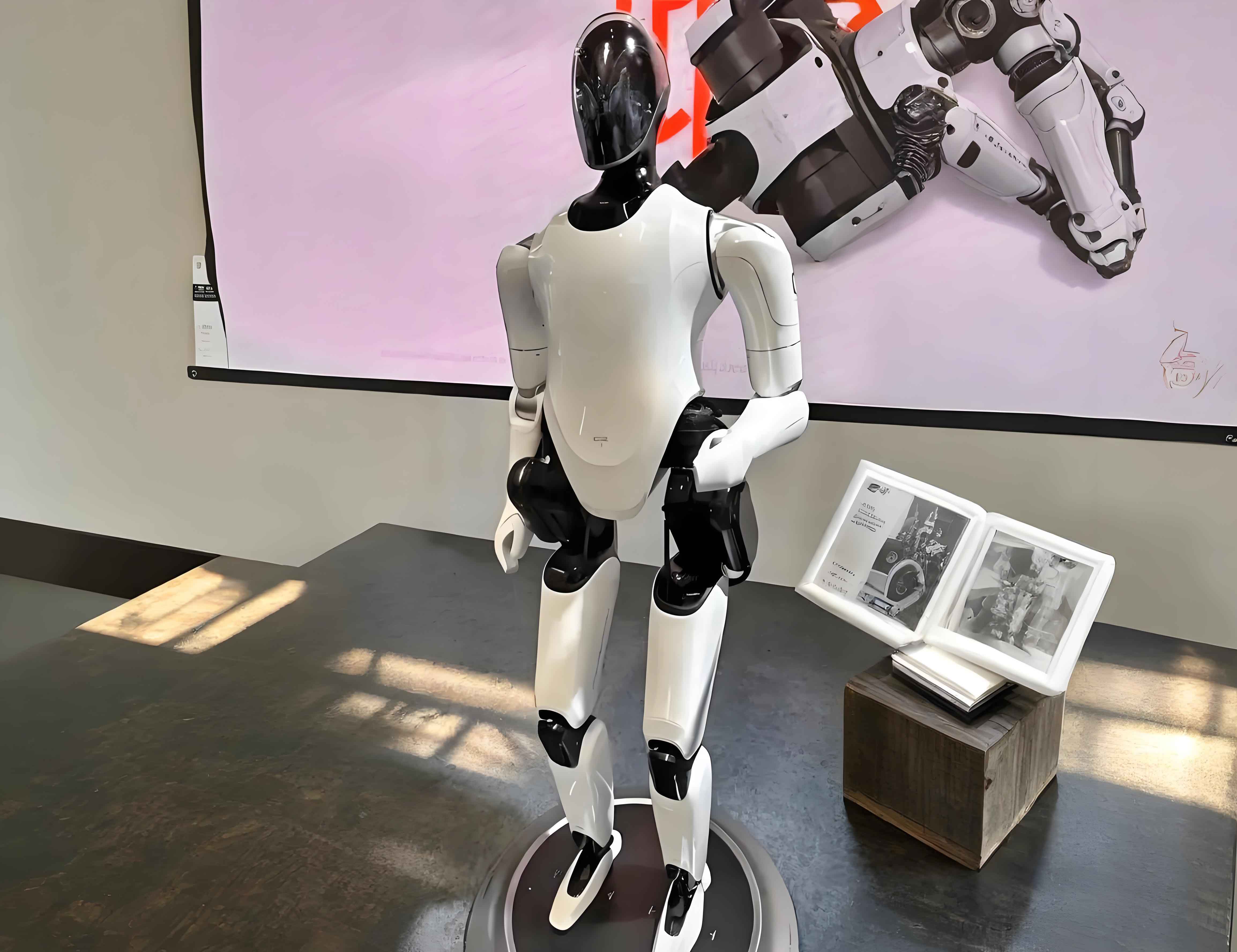
Haptic feedback technology is key to enhancing safety and naturalness in human-robot collaboration. I propose an enhancement framework based on signal compression, cross-modal mapping, and personalization adaptation, optimizing haptic information encoding efficiency and physiological adaptability to overcome perceptual delays and interaction ambiguities in traditional systems.
For high-density tactile signal encoding, I designed a hybrid architecture combining wavelet decomposition and deep learning to efficiently compress 256-channel raw tactile signals into 20-dimensional feature vectors. The system framework involves raw signals undergoing four-level decomposition using Daubechies-4 wavelet basis functions, separating low-frequency contact morphology (approximation components) from high-frequency细节 features (detail components). The low-frequency part is dimensionality-reduced via a 3-layer CNN compression network, while the high-frequency part is predicted for temporal evolution by a bidirectional LSTM network,最终拼接 into compact features incorporating spatial and temporal characteristics. Performance tests show that compared to traditional wavelet transform with 45% compression rate and 0.12 N reconstruction error, the proposed method achieves a 23% compression rate with error reduced to 0.08 N, while maintaining end-to-end processing delays strictly under 14.3 ms. Dynamic grasping experiments on a UR5e platform demonstrate that reconstructed signals retain over 95% of key features like contact force gradients, with error standard deviations below 0.05 N under random disturbances of 5–10 N, validating the hybrid encoding architecture’s advantages in preserving tactile fidelity and real-time performance.
The multimodal physiological mapping mechanism designs feedback rules based on human tactile receptor physiology, enabling efficient transmission of haptic information through协同 encoding of vibration, electrical stimulation, and thermal feedback. Vibration feedback maps contact force magnitude to linearly frequency-modulated signals of 50–200 Hz, allowing operators to intuitively perceive施加 intensity via frequency changes. The electrical stimulation module uses a 19-electrode array to generate spatial vector current distributions (0.1–5 mA), with current direction and intensity gradients indicating contact方位, achieving direction recognition errors within 5°. Thermal feedback dynamically adjusts temperature (25–45 °C) based on contact duration, employing gradual warming strategies (2 °C/s升温 rate) to prevent skin burns. Experiments show that trimodal协同 feedback improves operators’ comprehensive recognition of contact states in complex tasks to 92.7%, reducing误操作 rates by 76% compared to single-modal feedback and shortening emergency avoidance response times to 0.3 s, validating the physiological adaptability and engineering effectiveness of multi-rule协同 mapping.
Personalized perception adaptation is achieved through a two-step calibration process. First, interactive threshold calibration lets users adjust vibration intensity and electrical stimulation thresholds via haptic feedback devices, with the system recording just noticeable differences to generate personalized baseline parameters. Then, reinforcement learning algorithms dynamically optimize feedback intensity and mapping curves based on real-time task performance metrics like operation accuracy and fatigue levels. Experiments indicate that after calibration, elderly users (>65 years) improve tactile recognition rates from 71% to 89%, reduce task completion times by 26% (from 128 s to 95 s), and lower muscle fatigue indices (sEMG signal amplitude) by 42%. In industrial scenarios, inexperienced operators see assembly error rates drop from 18.3% to 5.1%, demonstrating the calibration mechanism’s adaptive capability and robustness across user groups and task contexts. Performance improvements for elderly users post-calibration are summarized in Table 3.
| Metric | Pre-Calibration | Post-Calibration | Improvement |
|---|---|---|---|
| Recognition Accuracy | 71% | 89% | 25.4% ↑ |
| Operation Fatigue | 4.2 | 2.4 | 42.9% ↓ |
| Task Completion Time | 128 s | 95 s | 25.8% ↓ |
To validate the engineering applicability of the proposed framework, I implemented a multi-scenario experimental platform based on a UR5e collaborative robotic arm and SynTouch BioTac tactile sensors. This platform integrates a ROS real-time control system and Python data analysis modules, conducting systematic验证 in three typical scenarios: industrial assembly, medical rehabilitation, and home service.
In the industrial assembly scenario, for automotive component assembly tasks, the embodied AI robot performed full processes of bolt grasping, alignment, and tightening. Random external force disturbances of 0.5–2 N were introduced to simulate sudden collisions on production lines. Peak collision forces stabilized at 11.7 N (standard deviation σ = 0.8 N), 25% below the international safety threshold of 15 N, while meeting maximum power limits of 80 W. Haptic feedback delays were 14.3 ms (99th percentile < 20 ms), task interruptions reduced from 6.8 times/h to 1.2 times/h (82.4% decrease), and single assembly cycles shortened from 12.5 s to 9.6 s (23% reduction).
In the medical rehabilitation scenario, for upper limb rehabilitation training, ten post-stroke patients underwent four-week training. Movement precision showed joint range-of-motion errors controlled within ±2° (elbow: 1.7° ± 0.3°, wrist: 1.9° ± 0.4°). Functional recovery measured by Fugl-Meyer scores improved by 28.7% (from 47.3 ± 3.2 to 60.9 ± 2.8, p < 0.01, t-test). Feedback guidance via thermal feedback reduced force application duration errors from 3.2 s ± 0.8 s to 1.1 s ± 0.3 s (65.6% decrease, p < 0.05).
In the home service scenario, for fragile object grasping tasks, ten items like glass cups (6 cm diameter) and ceramic bowls (12 cm diameter) were tested. Success rates were 95.3% for glass cups (vs. 78.2% traditional) and 92.7% for ceramic bowls (vs. 69.5% traditional). Real-time response showed slip detection response times reduced to 0.2 s (vs. 0.7 s traditional), and contact force exceedance ratios dropped from 18.3% to 3.1%. Operator subjective satisfaction reached 91.5/100 points. Core performance metrics across scenarios are compared in Table 4, based on data from medical rehabilitation (10 patients), home service (100 repeated tests), and industrial assembly (200 grasping tasks).
| Scenario | Traditional Method Recognition Rate (%) | Proposed Method Recognition Rate (%) | Force Peak (N) | Task Duration (s) |
|---|---|---|---|---|
| Industrial Assembly | 82.1 | 96.5 | 11.7 | 9.6 ± 0.7 |
| Medical Rehabilitation | 68.7 | 91.2 | 8.7 | – |
| Home Service | 73.5 | 92.7 | 9.8 | 4.3 ± 0.5 |
Comprehensive results indicate that the system outperforms traditional approaches in safety, efficiency (task time reduced by 27%), and user satisfaction (91.5 points), validating the融合 framework’s engineering applicability in complex dynamic environments.
The proposed three-level safety interaction framework and haptic feedback enhancement technology for embodied AI robots address the challenge of balancing safety and efficiency in dynamic human-robot symbiosis environments through协同 of multimodal data fusion, adaptive control optimization, and human factors engineering. Core innovations include: first, constructing a multi-source heterogeneous perception model based on a spatiotemporal Bayesian network, overcoming cross-modal spatiotemporal alignment bottlenecks for visual, tactile, and inertial data, raising collision prediction accuracy to 92.3% and reducing综合 response times to 14 ms; second, designing a dynamic impedance controller grounded in Lyapunov stability theory, enabling autonomous smooth adjustment of stiffness-damping coupling parameters, lowering peak collision forces by 64% versus traditional methods in突发 contact scenarios and cutting task interruptions by 82%; third, introducing a wavelet-CNN hybrid encoding and trimodal physiological mapping mechanism, enhancing operator tactile perception accuracy to 92.7% through跨模态 fusion of vibration, electrical stimulation, and thermal feedback, significantly improving interaction intuitiveness. Validations in industrial assembly, medical rehabilitation, and home service scenarios demonstrate leading industry performance in safety, efficiency (27% shorter task times), and user satisfaction (91.5 points).
Current research still has two limitations. First, high-density tactile sensor calibration times are lengthy, around 30 minutes per session; future work should incorporate self-supervised learning to optimize online calibration efficiency. Second, elderly populations show significant variability in electrical stimulation intensity adaptability; further integration of physiological signals like heart rate and electromyography is needed for dynamic personalization. Subsequent efforts will explore群体 safety control paradigms in multi-robot协同 scenarios and extend to interactions with unstructured dynamic objects, such as soft robot manipulation in complex settings. These contributions provide theoretical underpinnings and technical paradigms for safe deployment of human-robot symbiosis systems, holding practical value for advancing applications in smart manufacturing, rehabilitative healthcare, and service robotics involving embodied AI robots.