
The world is witnessing a profound technological shift. No longer confined to research papers and controlled laboratory environments, humanoid robots are stepping into our daily lives and public consciousness. This transition, while exhilarating, is fraught with complexity. Public perception oscillates between awe at their potential and anxiety over their implications. In this critical juncture, I believe public relations (PR) serves as the indispensable bridge, translating technical jargon into human narratives, mitigating ethical apprehensions, and steering the industry’s evolution from being purely “technology-driven” to becoming authentically “value-driven.” My experience in technology communications has solidified my view that strategic PR is not merely an auxiliary function but a core strategic pillar for the sustainable integration of humanoid robots into our social fabric.
The journey begins with perception management. The highly anthropomorphic nature of humanoid robots inherently triggers the “uncanny valley” effect and deep-seated ethical concerns. A purely technical, specification-focused communication strategy is insufficient and can even be counterproductive. Here, the power of narrative comes to the forefront. Consider a recent half marathon featuring humanoid robots. When one participant suffered a technical malfunction—its head detached mid-race—the instinct might have been to downplay the incident. Instead, a sophisticated PR narrative reframed this “failure.” It was portrayed not as a weakness, but as an embodiment of “mechanical perseverance,” a poignant moment where a machine demonstrated a uniquely “human” trait like resilience. This narrative alchemy transformed a potential public relations setback into a compelling story that fostered empathy and curiosity, effectively lowering the barrier of public anxiety.
This incident underscores a fundamental PR formula for the humanoid robot sector: the transformation of technical events into relatable value propositions.
$$ \text{Public Perception} = \frac{\text{Technical Capability} \times \text{Narrative Value}}{\text{Ethical Anxiety} + \text{Uncanny Valley Effect}} $$
By amplifying the numerator (narrative value) and proactively addressing the denominator, PR can significantly tilt public perception toward acceptance and enthusiasm.
The strategic role of PR extends far beyond crisis management into active brand and ecosystem building. I have observed its multi-faceted impact, which can be summarized in the following table:
| PR Domain | Core Objective | Practical Mechanism | Exemplary Outcome |
|---|---|---|---|
| Cognitive Enhancement | Demystify technology, build familiarity & trust. | Storytelling, scenario-based demonstrations, educational content. | Shifting public view from “threatening automation” to “capable assistant.” |
| Brand Value Construction | Translate technical specs into tangible market & social value. | Showcasing real-world applications (e.g., factory training, public services). | Establishing brand as “pioneer in intelligent manufacturing” or “safety innovator.” |
| Ecosystem Collaboration | Foster industry alliances and accelerate R&D commercialization. | Hosting industry summits, facilitating academia-industry partnerships. | Creating platforms for shared innovation, setting industry standards. |
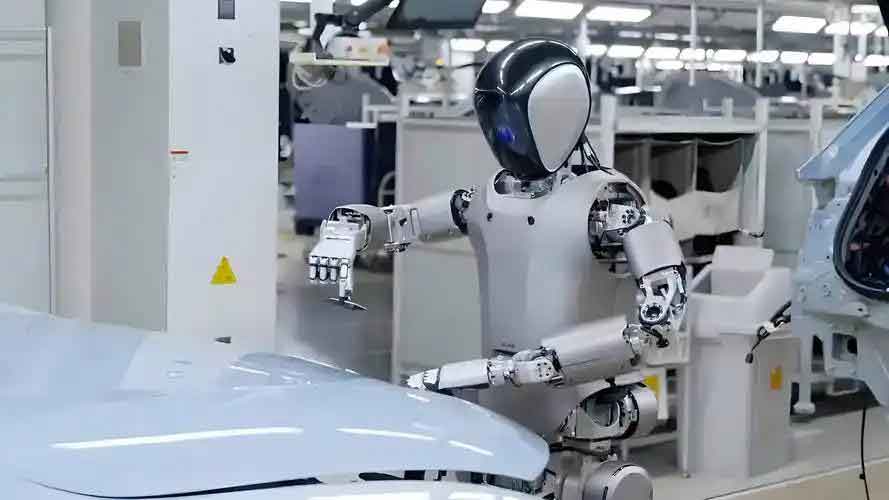
For instance, the demonstration of an industrial humanoid robot successfully conducting training tasks within an automotive factory does more than prove dexterity. It validates a value proposition—enhanced efficiency and flexibility in complex environments—solidifying the company’s position at the forefront of industrial innovation. Similarly, international expositions are not just trade shows; they are curated PR platforms that position a city or a nation as a hub for dialogue, attracting global developers and investors, thereby creating a virtuous cycle of “technology showcase – ecosystem co-creation.”
Practical Pathways for Humanoid Robot Public Relations
Theoretical frameworks must be grounded in actionable strategies. Based on analysis of successful campaigns, I propose a multi-channel approach to humanoid robot PR, focusing on several key operational areas.
1. Content Creation and High-Impact Storytelling
Content is the primary vehicle for shaping understanding. The goal is to bridge the gap between engineering excellence and public comprehension.
- Educational & Engaging Content: Producing high-quality documentaries, explainer videos using CGI, and even interactive web platforms that detail the mechanics, AI, and potential of humanoid robots. The viral success of certain robotics companies’ video channels, showcasing awe-inspiring agility and mobility, demonstrates the power of visual proof in capturing global imagination and sparking media discourse.
- Cultural & Event Integration: Embedding humanoid robots within cultural and sporting events provides a relatable, high-exposure context. A stellar example is the choreographed dance performance of robotic arms during a major national broadcast’s New Year’s Eve gala. The fusion of precise mechanical movement with artistic light design transcended the “industrial tool” stereotype, forging a new perception of “future artistic partner.” This achieves a dual penetration: technical admiration and emotional resonance.
2. Strategic Media Relations and Credibility Building
Earned media remains a cornerstone of credibility. A layered media strategy is essential.
| Media Tier | Target Audience | PR Tool | Objective |
|---|---|---|---|
| Technical & Trade Press | Industry insiders, investors, developers | White papers, deep-dive technical briefings, peer-reviewed article placements. | Establish thought leadership and technical authority. |
| Mainstream Business & Tech Media | Business leaders, policymakers, educated public | Exclusive launch coverage, CEO profiles, trend analysis features. | Drive broad market awareness and shape economic narrative. |
| Public Interest & Broadcast Media | General public | Documentary features, news segments on application case studies. | Build general familiarity and social license to operate. |
A global product launch for a flagship humanoid robot, coordinated with synchronized reveals across major media outlets, creates a news cyclone that defines the product’s entry into public consciousness. Furthermore, promoting verified application case studies—such as a humanoid robot performing dangerous high-altitude maintenance on power lines—does more than showcase utility. It builds a credible narrative as an “industrial safety guardian,” a story that actively contributes to standard-setting discussions and paves the way for scaled adoption.
3. Social Media and Community-Driven Advocacy
The interactive nature of social platforms allows for direct public engagement and community building.
- Platform-Specific Narratives: Sharing bite-sized breakthroughs, behind-the-scenes development logs, and user-generated content on platforms like YouTube, LinkedIn, and Twitter/X. A company can transform into a “网红品牌” (internet-famous brand) in the humanoid robot space by consistently publishing creative, accessible content that highlights personality and progress.
- Interactive Co-Creation: Leveraging social features to host programming challenges, design contests, or Q&A sessions with engineers. This not only boosts engagement and loyalty but also serves as a rich source for uncovering innovative use-cases and unmet user needs, creating a feedback loop for product development. The engagement can be modeled as a growth function:
$$ \text{Community Strength}(t) = \int_0^t [\text{Content Quality} + \beta \cdot \text{User Interaction}] \cdot e^{\alpha \cdot \text{Network Effect}} \, dt $$
where \(\alpha\) and \(\beta\) are positive constants amplifying network effects and interaction value.
4. Social Responsibility and Purpose-Driven Initiatives
Demonstrating societal benefit is a powerful reputational asset. PR must highlight these contributions.
- Educational Outreach: Organizing school visits, community workshops, and university partnerships to demystify robotics and inspire future generations. This plants seeds for long-term acceptance and talent pipeline development.
- Purposeful Applications: Proactively deploying humanoid robots in assistive roles—such as rehabilitation therapy for stroke patients or providing social companionship for the elderly—conveys “technological warmth.” Partnering with non-profits to donate capabilities or technology for educational equity or environmental monitoring projects tangibly demonstrates corporate citizenship, building immense public goodwill.
Innovative Directions for Future PR Strategy
As the technology matures, PR strategies must evolve in sophistication and foresight. I propose several innovative frontiers for humanoid robot public relations.
1. Constructing Multi-Dimensional Industry Ecosystems
PR must move beyond promoting single entities to fostering entire ecosystems.
- Open-Source Advocacy: Championing and managing the narrative around open-source platforms. PR campaigns can highlight developer success stories from hackathons or collaborative projects, framing the ecosystem as a democratizing force for innovation. This shifts the brand image from a closed competitor to an open industry leader.
- Application Case Library: Developing and publicly promoting a dynamic, visually engaging “典型应用案例库” (Typical Application Case Library). This repository, showcasing quantified benefits across sectors (e.g., 30% efficiency gain in logistics, 40% risk reduction in hazardous inspection), provides concrete evidence of social value, guides R&D, and attracts potential enterprise clients.
2. Implementing Layered and Data-Driven Communication
Precision and personalization will become paramount.
| Strategy Layer | Tactical Example | Expected Impact |
|---|---|---|
| Cross-Domain Collaboration | Co-branding with educational STEM kits; featuring humanoid robots in popular media or with cultural IP. | Embed robotics in lifestyle/learning, building emotional affinity beyond utility. |
| Data-Optimized Messaging | Using sentiment analysis and engagement data to tailor messages: efficiency data for B2B, companionship stories for B2C. | Higher conversion rates, improved message resonance, efficient resource allocation. |
| Value-Centric Narrative | Crafting campaigns around themes like “Technology for Educational Equity,” highlighting robots in remote schools. | Builds brand purpose, fosters deep trust and positive emotional association. |
3. Expanding Communicative Boundaries with Virtual Integration
The convergence of physical humanoid robots with the digital world opens new PR dimensions.
- Virtual Embodiment: Deploying humanoid robot avatars or digital twins as virtual hosts, guides, or influencers on metaverse platforms and social media. This breaks geographical limits, allowing for constant, scalable interaction with a global audience.
- Immersive Experience: These virtual entities can offer personalized, immersive interactions—touring a virtual factory, customizing a product, or providing interactive learning. This deepens user understanding and comfort with the technology’s capabilities.
- Emotional Bonding: Continuous interaction with a consistent virtual persona can foster a sense of relationship and loyalty, effectively humanizing the technology. This emotional equity translates directly into robust brand defense and advocacy.
The relationship between physical (R) and virtual (V) presence can be seen as complementary:
$$ \text{Total Brand Impact} = \sqrt{ \text{Impact}(R)^2 + \text{Impact}(V)^2 + 2 \cdot \rho_{R,V} \cdot \text{Impact}(R) \cdot \text{Impact}(V) } $$
where \(\rho_{R,V}\) is the correlation coefficient representing strategic synergy between real and virtual campaigns.
4. Elevating Crisis PR with Proactive Ethical Foresight
The most advanced PR strategy for humanoid robots is anticipatory and ethically grounded.
- Ethical Frameworks & “White Papers”: Proactively publishing and communicating clear ethical guidelines—”Ethical White Papers”—that define principles for safety, privacy, fairness, and human oversight. This demonstrates maturity and responsibility, building trust before a crisis hits.
- Structured Public Dialogue: Initiating and facilitating ongoing conversations with ethicists, sociologists, policymakers, and citizen groups through salons, forums, and inclusive workshops. This transparent engagement demystifies the technology’s trajectory and incorporates diverse perspectives into its development.
- Dynamic Monitoring & Adjustment: Implementing real-time舆情分析 (public opinion analysis) systems specifically tuned to ethical concerns and societal impact. This allows for the early detection of shifting public sentiments, enabling proactive strategy adjustments rather than reactive crisis management. The goal is a transition from a passive to an active, guiding role in the societal discourse surrounding humanoid robots.
In conclusion, the integration of humanoid robots into society is as much a communications challenge as it is an engineering one. From my vantage point, effective public relations is the crucial catalyst that can align technological advancement with human values, turning potential fear into fascination, and abstract capability into tangible, trusted benefit. The future of this industry will be written not only in lines of code and mechanical actuators but also in the compelling, responsible, and empathetic stories we choose to tell about it.