
As I reflect on the evolution of manufacturing, it is clear that intelligent manufacturing serves as a crucial engine for implementing innovation-driven development strategies. It represents the inevitable path for transitioning from a manufacturing giant to a manufacturing powerhouse. Robotized intelligent manufacturing leverages the advantages of robots—compliance, flexibility, openness, easy reconfiguration, and parallel collaborative operations—to integrate human wisdom and experiential knowledge into manufacturing activities such as perception, decision-making, and execution. By endowing robotized manufacturing equipment with online learning and knowledge evolution capabilities, and through human-machine collaboration, it expands, extends, and partially replaces the mental labor of human experts in manufacturing processes. This enhances the adaptability and autonomy of manufacturing equipment and systems. Robotized intelligent manufacturing is a cutting-edge direction in intelligent manufacturing, has become a hotspot in manufacturing research, and holds the potential to bring about industrial transformation. Ultimately, through ubiquitous robots, ubiquitous sensing, and ubiquitous intelligence, we can achieve ubiquitous manufacturing.
In my view, intelligent manufacturing plays a pivotal role in the manufacturing sector. There is a strong emphasis on advancing manufacturing, with the scale of manufacturing leading the world for a decade, and the variety and quantity of products also ranking first globally. Manufacturing accounts for about one-third of the national economy, but the critical question is how to evolve from a manufacturing giant to a manufacturing powerhouse. This requires deep contemplation and strategic planning.
The development of manufacturing in our context has gone through three stages: the “Twelfth Five-Year Plan” emphasized high-precision digital manufacturing; the “Thirteenth Five-Year Plan” focused on digital and intelligent manufacturing; and the “Fourteenth Five-Year Plan” highlights high-performance intelligent manufacturing. The trend is shifting from high-precision to high-performance, and from digitalization to intelligence. In the future, through deep integration with information technology, ubiquitous manufacturing, intelligence, and sensing will emerge across the industry.
The development of intelligent manufacturing exhibits five key trends, which I summarize below.
| Trend Number | Description |
|---|---|
| 1 | Robots resonate strongly with disciplines such as mechanical materials, mathematics and mechanics, information sensing, and biomedicine, leading to a new generation of “co-robots” capable of natural interaction with the environment, humans, and other robots. |
| 2 | The continuous integration of intelligent manufacturing technology, robotics, and information technology fosters the emergence of advanced manufacturing technologies, breeding new manufacturing principles and concepts. Representative examples include special energy-field manufacturing and precision/ultra-precision manufacturing, which form the foundation of intelligent manufacturing. Intelligent manufacturing is increasingly based on internet technologies like big data and cloud computing, characterized by digital twins, smart workshops and factories, and human-machine collaboration. |
| 3 | The deep integration of new-generation information technology and manufacturing triggers significant changes in manufacturing equipment, systems, and models. Manufacturing modes are evolving toward human-robot coexistence, ubiquitous manufacturing, and unmanned manufacturing. The integration of co-robots, AI big data, and human-computer interaction technology will enhance the compliance and human-robot coexistence capabilities of intelligent manufacturing systems. Through ubiquitous sensing, full-scene, real-time multi-modal fusion perception and “plug-and-play” ubiquitous manufacturing for large, complex, and small-batch multi-variety parts will become feasible. Future intelligent equipment will trend toward self-decision, self-evolution, and autonomous control. |
| 4 | Artificial intelligence drives the evolution of manufacturing systems. The fusion of new-generation AI technology and advanced manufacturing technology promotes new hotspots in self-decision, self-learning, and self-evolution. Industrial transformation centered on intelligent services is the theme of new-generation intelligent manufacturing. New-generation cloud services and industrial intelligence networks are also vital supports for new-generation manufacturing systems, with self-decision optimization driving intelligent upgrades in workshops and factories. |
| 5 | Robotized intelligent manufacturing becomes the main focus of intelligent manufacturing. Utilizing the dexterity, compliance, and collaboration of robots, human wisdom and knowledge can be embedded into manufacturing processes, enabling manufacturing in unstructured environments. Through multi-robot collaboration mechanisms, human, machine, and environment coexistence is achieved. |
From the perspective of our intelligent manufacturing system architecture, developing intelligent manufacturing requires starting from the mechanisms, evolution laws, and operating principles of human-machine and multi-machine collaboration. Simultaneously, breakthroughs in key technologies are needed to form priority development areas that support major national strategic demands.
The architecture of intelligent manufacturing primarily follows five development directions, as outlined in the table below.
| Direction | Focus Areas |
|---|---|
| 1 | Human-robot-environment coexistence manufacturing in unstructured environments. This involves multi-modal perception of manufacturing states and human-robot coordinated control, enabling full-scene multi-modal perception and multi-source data fusion. |
| 2 | Robotized intelligent manufacturing in extreme operating environments. In harsh conditions, robots must replace humans for high-repetition tasks or tasks across scales that humans cannot adapt to. |
| 3 | Ubiquitous manufacturing with integrated ubiquitous information perception and operation. This includes multi-modal information perception and state monitoring of machining systems, regulation mechanisms for machining dynamics and performance, and new principles and modes for multi-machine collaborative autonomous manufacturing. |
| 4 | Full-life-cycle green and low-carbon manufacturing. Emphasizing energy saving, new materials, green processing techniques, energy-saving management, and recycling/rem manufacturing. |
| 5 | Full-factor and full-process interconnected manufacturing. While interconnectivity transforms manufacturing modes, it raises issues like personal privacy protection, requiring research into active security systems. |
Globally, there is high importance attached to robotized intelligent manufacturing. For instance, strategic roadmaps focus on robotics and advanced manufacturing technologies. In our context, the emphasis is on achieving human-machine-environment coexistence, aligning with broader goals for technological advancement.
Robotized manufacturing is an international hotspot in intelligent manufacturing. In recent years, through the integration of robotics mechanics and processing technology, significant progress has been made in large component manufacturing technologies and equipment. This includes work on robotic machining systems for complex surfaces, with applications in aerospace, wind power, and transportation sectors. The development of China robots is central to these efforts, showcasing innovation and scalability.
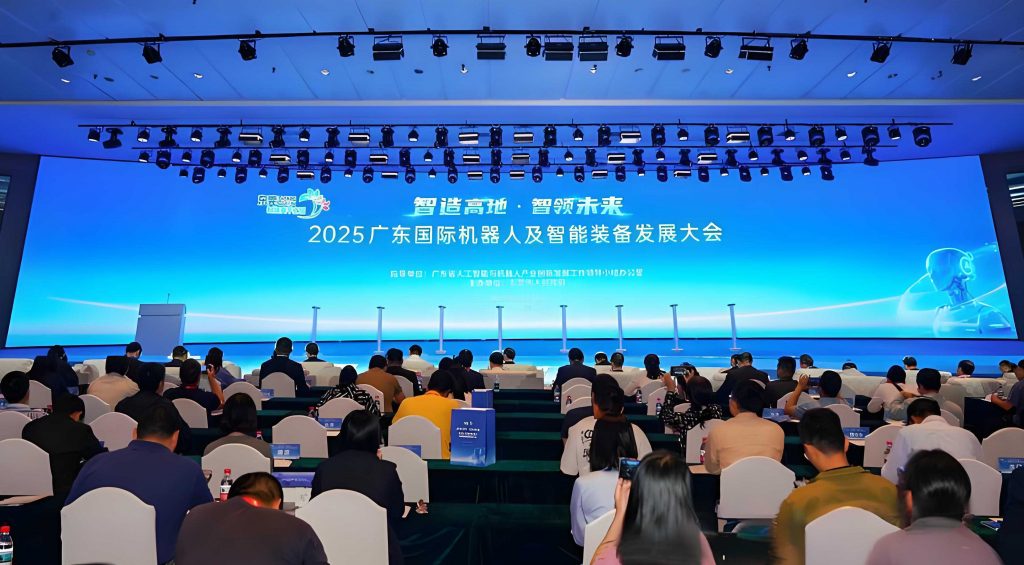
In my research journey, since exploring intelligent 4M systems, our team has addressed challenges in large complex surface machining accuracy, developed robotic machining equipment and autonomous industrial software for CNC machining, and implemented them in enterprises. Over the years, we have participated in national research plans, shifting from digital manufacturing to robotic machining, and recently focusing on foundational science centers for robotized intelligent manufacturing. The scientific essence of robotized intelligent manufacturing is to enable individual robots to act as skilled craftsmen, multiple robots to achieve multi-machine collaboration, and human-machine natural interaction. The goal is to establish a theoretical system for robotized intelligent manufacturing, achieve robotic machining accuracy of 30μm, and develop major equipment for robotized intelligent manufacturing.
Key research directions include robotized complex surface manufacturing, robotized large component manufacturing, and robotized functional structure manufacturing. Large complex surfaces are characterized by超大尺寸, complex shapes, and stringent requirements, making their intelligent manufacturing a significant demand and an internationally recognized challenge. For example, machining thin-walled parts involves issues like deformation, vibration, and processing efficiency, which are perennial themes in manufacturing.
For a long time, the full-surface machining of large components, such as aircraft skins, wind tunnels, and high-speed rail structures, relied on manual labor, leading to poor environments, low efficiency, inconsistency, and lack of closed-loop quality control. This underscores the urgent need for robotized intelligent manufacturing using advanced China robots.
Several challenges exist in realizing robotized intelligent manufacturing. First, robotic machining equipment: existing CNC equipment and industrial robots struggle to meet the needs of efficient, high-quality manufacturing for large complex components. Designing robot bodies with high flexibility, precision, stiffness, and suitability for large complex structures is crucial—ensuring “high-speed without vibration” and “heavy-load without sagging.” Additionally, achieving high-precision machining through hand-eye coordination and compliant control technologies is essential.
Second, full-scene measurement technology: large complex components have large sizes, complex surfaces, weak structural texture features, and non-Lambertian specular reflections, making traditional measurement methods inadequate for cross-scale detection. Overcoming challenges like calibration and stitching for超大 weak-structure high-reflection surface measurement systems to achieve full-scene high-precision in-situ measurement and quality assessment is key.
Third, autonomous tracking control: due to large component sizes and lack of positioning benchmarks, parallel machining involves multi-robot trajectory interference and machining vibration coupling, posing challenges for multi-robot autonomous positioning and control. Achieving fast and accurate autonomous positioning and control for multiple mobile machining robots in large workspaces is necessary.
Fourth, integrated measurement-modeling-machining technology: both geometric and non-geometric errors of robots affect output accuracy. The challenge is to realize contour error measurement, modeling, and compensation for complex surface parts.
In our work, we have established an error compliance compensation mechanism and precision control theory for超大尺寸 spatial robotic mobile machining, enabling multi-robot collaborative in-situ manufacturing of large complex components. For example, in a 100-meter超大尺寸 space, using technologies like lidar, we control the position accuracy of mobile robots to within ±5mm. In the 2-meter operational space of robotic arms, through point cloud servo technology, accuracy of ±1mm is achieved. In the 40mm interaction space, via end-effector force control, precision is refined to ±50μm. Achieving micron-level machining for large components requires iterative evolution across motion space, operational space, and interaction space.
Mathematically, the error compensation can be modeled as a function of positional deviations. For instance, the overall error $$ \Delta P $$ in robotic machining can be expressed as:
$$ \Delta P = f(\Delta G, \Delta N, \Delta E) $$
where $$ \Delta G $$ represents geometric errors, $$ \Delta N $$ non-geometric errors, and $$ \Delta E $$ environmental factors. Through adaptive algorithms, we minimize $$ \Delta P $$ to achieve desired tolerances.
In vision-guided robotic machining path planning, we invented precise calibration and tool trajectory generation technologies for measurement-machining robot systems, solving path planning challenges for deformable component robotic milling. Related work has been published in journals like IEEE Transactions on Robotics, contributing to the advancement of China robots in precision applications.
For robotized measurement, operation, and machining integration, we攻克了三大核心技术: full-scene cross-scale measurement, large-range autonomous tracking and positioning, and high-precision adaptive machining. This enables全域 high-quality manufacturing of large complex components. Traditionally, machining accuracy relied on machine tool rigidity, guides, and spindles; now, through AI, big data, and perception, comparable accuracy can be achieved.
We also proposed a data-driven information-physical system dynamic mechanism modeling method—IHYDE. This method elucidates the coupling dynamics and switching logic under physical and information flows, enabling decoupling of dynamic data. It provides universal theoretical support for modeling and simulation in various intelligent manufacturing scenarios. The dynamics can be represented as:
$$ \dot{x} = A x + B u + f(x, u, \theta) $$
where $$ x $$ is the state vector, $$ u $$ the control input, $$ \theta $$ parameters, and $$ f(\cdot) $$ captures nonlinear couplings. The IHYDE framework identifies $$ f(\cdot) $$ from data, enhancing model fidelity.
Addressing the limitations of existing intelligent diagnosis models, we developed a通用端到端深度神经网络框架 for heterogeneous sensor signals. This framework explains accuracy variations due to temporal dependencies and provides a通用 AI diagnosis framework for manufacturing systems, ensuring operational efficiency and reliability. For a time-series signal $$ s(t) $$, the model learns features $$ \phi(s) $$ for fault detection:
$$ y = \text{softmax}(W \phi(s) + b) $$
where $$ y $$ is the fault probability distribution, and $$ W, b $$ are learnable weights.
In cutting-edge technologies, we invented a soft robot that exhibits生物-like dexterity and excellent environmental adaptability, with work published in Science Robotics. This innovation aligns with the development of next-generation China robots for versatile applications.
Additionally, we independently developed Turboworks software, which solves numerous mathematical problems and offers adaptive machining capabilities. It plays a significant role in second-order large cycloid machining and engine manufacturing. For deformation control and adaptive machining, we have extensive applications, such as in large blade deformation control. On the Turboworks platform, we achieved batch production of the largest规格 titanium alloy blades in our context, greatly improving deformation control effects.
Digital twin technology has also shown excellent application results. For instance, in machine tool manufacturing, digital twin systems are installed, allowing real-time data reading and online simulation to avoid人为-set machining errors. This exemplifies how China robots integrate digital and physical realms for smarter manufacturing.
In large wind turbine blade manufacturing, our robotic intelligent manufacturing system was selected as one of the top ten advances in intelligent manufacturing. This achievement is now applied to high-speed rail body manufacturing, utilizing adaptive machining technology for full-surface point cloud stitching and surface grinding/polishing. We are currently researching吸附式机器人磨抛技术 to provide new solutions for large aircraft skin activation.
Our innovations in large complex surface robotic machining include four key technologies:全域 measurement, shape-adaptive compliance, intelligent process planning, and equipment integration. Using these, we delivered multiple production lines and machining measurement systems, all successfully applied to batch production. This earned recognition through awards, marking the formation of autonomous core competitiveness in large surface machining technology, a testament to the capabilities of China robots.
Looking ahead, future research focuses on three main directions, as summarized in the table below.
| Direction | Key Challenges and Goals |
|---|---|
| 1. Big Data-Driven and Mechanism Modeling | Extracting and refining massive real-world data into trustworthy mechanistic models to empower traditional industries. |
| 2. Hand-Eye-Brain Coordination | Developing AI chips suitable for industrial scenes that integrate algorithms into hardware for practical application, moving beyond theoretical advances. |
| 3. Robotized Intelligent Manufacturing Clusters | Enabling anytime, anywhere machining and swarm capabilities,类似 “ant colony”协作 for large-scale tasks, potentially inspired by autonomous drone clusters. |
Mathematically, big data modeling can involve extracting latent variables $$ z $$ from data $$ D $$ using probabilistic frameworks:
$$ p(z | D) = \frac{p(D | z) p(z)}{p(D)} $$
where $$ p(z) $$ is a prior, and $$ p(D | z) $$ the likelihood. This supports mechanistic insights from data.
For hand-eye-brain coordination, the challenge is to implement real-time control laws, such as:
$$ u(t) = K_p e(t) + K_i \int e(t) dt + K_d \frac{de(t)}{dt} $$
where $$ e(t) $$ is the error signal, and $$ K_p, K_i, K_d $$ are gains optimized via AI chips for industrial robustness.
In robotized intelligent manufacturing, the future envisions meeting requirements for on-demand machining. For example, in aerospace cabin processing, robots must perform unmanned operations over large areas with precision “carving.” Beyond that, swarm machining capabilities,类似 “ants gnawing bones,” could revolutionize efficiency. The potential of fully autonomous robot clusters, akin to drones in modern conflicts, warrants exploration. Historically, it was “fixed machine tools with flowing workpieces”;未来, it may be “workpieces are fixed, and machine tools are flowing.” Replicating machine tool capabilities, imitating human skills, and creating collective intelligence are future trends for China robots.
The evolution of robots has progressed from zero-dimensional fixed manipulators, to one-dimensional mobile manipulators, two-dimensional omnidirectional mobile manipulators, and now three-dimensional爬壁加工 robots. Future developments will likely yield全域 multi-habitat machining robots, breaking through constraints of scale, geography, and time, giving rise to a new generation of robots.
In engineering, science is paramount—mathematicians, physicists, chemists, mechanicians, and life scientists form the heart and brain of innovation. The critical questions are: how to transform knowledge into capability to serve engineering, and how to turn engineering needs into universal phenomena distilled into scientific principles? These are issues to ponder in the coming decades.
Converting knowledge into capability is a long-term endeavor for scholars in engineering and technological sciences. Technology originates from science and applies to engineering. Advancing high-end manufacturing to world-class levels and forming autonomous, controllable core technologies are our future goals. Through persistent efforts in robotized intelligent manufacturing, particularly with the rise of China robots, we can drive innovation, enhance competitiveness, and contribute to global industrial progress. The integration of ubiquitous robots, sensing, and intelligence will redefine manufacturing, making it more adaptive, efficient, and sustainable. As we continue to explore, the synergy between human expertise and robotic precision will unlock new frontiers, ensuring that manufacturing not only meets today’s demands but also shapes tomorrow’s possibilities.