
As a researcher deeply embedded in the field of intelligent systems, I view the emergence of the embodied AI robot as the most significant frontier in our journey from virtual intelligence to physical agency. An embodied AI robot represents the convergence of artificial intelligence, robotics, and cognitive science, emphasizing that intelligent behavior arises not merely from computational algorithms but from the dynamic coupling of a physical body, its sensory apparatus, and its environment through perception and action. This paradigm shift from “disembodied” to “embodied” intelligence is creating agents capable of complex, adaptive interaction with the real world. The developmental trajectory of embodied AI can be summarized in four key phases, as outlined in Table 1.
| Phase | Timeframe | Core Paradigm | Key Technological Enablers |
|---|---|---|---|
| Perception-Action Coupling | 1980s-1990s | Behavior-based robotics, reactive systems | Simple sensors, behaviorist control architectures |
| System Integration | 2000s onward | Environmental modeling, task execution | Embedded computing, multi-modal sensors |
| Learning-Driven Adaptation | 2010s onward | Data-driven policy learning | Deep reinforcement learning, imitation learning |
| Virtual-Physical Fusion | 2020s onward | Generalization and semantic understanding | Large-scale simulation, cross-modal models (e.g., VLMs), foundation models |
The core functional loop of a modern embodied AI robot can be mathematically conceptualized as a continuous cycle:
$$ \text{State}_{t+1} = f(\text{State}_t, \text{Action}_t) $$
$$ \text{Action}_t = \pi(\text{Observation}_t) $$
$$ \text{Observation}_t = g(\text{State}_t, \text{Sensor Noise}) $$
Where $f$ represents the environment dynamics, $\pi$ is the robot’s policy (decision-making function), and $g$ is the sensor model. The goal is to learn an optimal policy $\pi^*$ that maximizes cumulative reward. This closed-loop “perception-cognition-action” architecture is what enables the sophisticated behaviors we see today, from dancing robots on grand stages to autonomous vehicles navigating city streets. These applications signify a critical transition of the embodied AI robot from laboratory settings into public life.
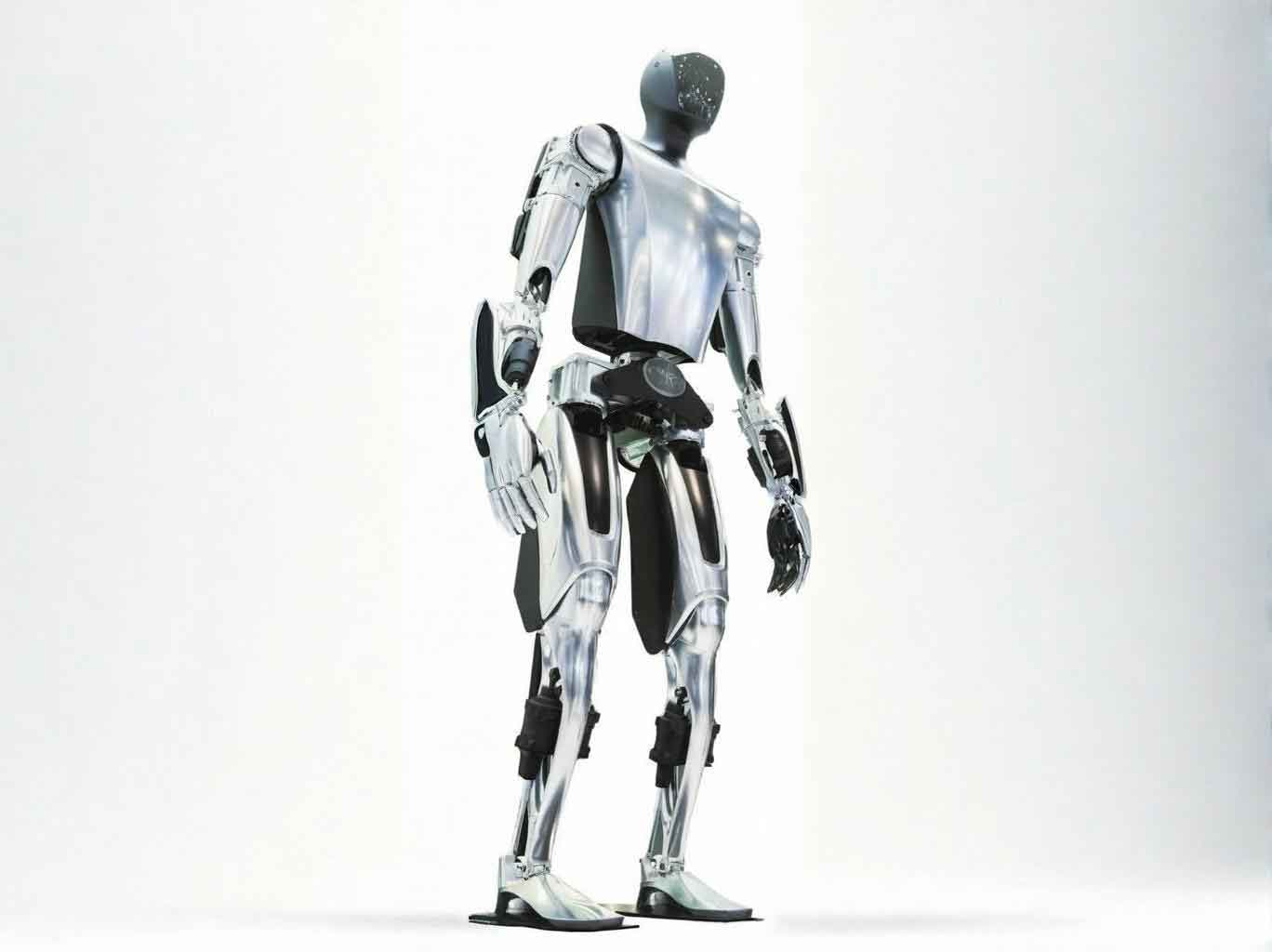
However, this very integration of a powerful cognitive engine with a physical actuator is the source of profound and multi-dimensional safety risks. The pervasive deployment of embodied AI robots necessitates a rigorous, systematic analysis of these hazards. I categorize the primary risks into three interconnected dimensions: Operational & Physical Safety Risks, System & Interaction Security Risks, and Autonomy, Ethics & Governance Risks. A comprehensive taxonomy is presented in Table 2.
| Risk Dimension | Specific Risk Category | Vulnerability Source | Potential Impact |
|---|---|---|---|
| Operational & Physical Safety | Bodily Injury | Perception error, control instability, actuator failure | Physical harm or death to humans |
| Infrastructure & Asset Damage | Path planning faults, erroneous force application | Property destruction, service disruption | |
| Environmental & Resource | Large-scale deployment, high energy consumption, poor EoL management | Pollution, resource depletion, ecological damage | |
| System & Interaction Security | Communication & Control Integrity | Network attacks, protocol vulnerabilities, signal jamming | System hijacking, malicious control, operational failure |
| Data Privacy & Sensor Security | Insufficient data governance, adversarial examples, side-channel attacks | Privacy breaches, surveillance, perception spoofing | |
| Software Robustness & Vulnerability | Software bugs, poor system integration, lack of fail-safes | System freeze, denial-of-service, unpredictable behavior | |
| Autonomy, Ethics & Governance | Unpredictable Behavior & Ethical Conflict | Model opacity, value misalignment, edge-case scenarios | Ethical violations, loss of trust, public backlash |
| Liability Attribution & Legal Gap | Distributed agency (manufacturer, programmer, operator, user) | Legal uncertainty, impeded accountability, stifled innovation | |
| Technology Misuse & Malicious Deployment | Weaponization, repurposing for crime, dual-use nature | Physical attacks, social destabilization, new forms of warfare |
Deep Dive into Risk Dimensions
1. Operational & Physical Safety Risks of the Embodied AI Robot
The physical instantiation of intelligence is the primary differentiator and the primary source of tangible hazard. An embodied AI robot operates in the same physical space as humans and critical infrastructure.
Bodily Injury Risk: This is the most direct threat. A failure in the perception-decision-action loop can have immediate physical consequences. Consider a collaborative robot (cobot) arm in a factory. Its policy $\pi$ might generate an action based on an erroneous observation $o_t$ where a human hand is misclassified as a workpiece component. The resulting action $a_t$ could involve high-speed or high-force movement leading to impact. The risk function $R_{\text{injury}}$ can be modeled as proportional to the kinetic energy involved and the probability of misclassification:
$$ R_{\text{injury}} \propto P(\text{Misclassification}) \times \frac{1}{2} m v^2 $$
where $m$ is the effective mass and $v$ the velocity of the robot appendage. Historical incidents in robotic surgery underscore this, where technical malfunctions have directly led to patient harm, highlighting that no domain is immune when an embodied AI robot is involved.
Infrastructure & Asset Risk: Beyond human injury, the embodied AI robot can cause significant property damage. An autonomous mobile robot (AMR) in a warehouse mis-mapping its environment could collide with racking, causing structural damage and inventory loss. A drone inspecting power lines with a faulty stability algorithm could crash into the very infrastructure it is meant to monitor. The financial risk $R_{\text{asset}}$ aggregates potential costs from repair, replacement, and operational downtime.
Environmental & Resource Security Risk: The lifecycle of a mass-deployed embodied AI robot fleet poses sustainability challenges. The manufacturing process consumes rare-earth elements for motors and magnets. Operational energy demand, especially for computationally intensive real-time perception, can be substantial. End-of-life disposal of complex composites and batteries presents ecological hazards. We must evaluate the total carbon footprint $C_{\text{total}}$ of an embodied AI robot:
$$ C_{\text{total}} = C_{\text{manufacturing}} + \int_{0}^{T} P_{\text{operational}}(t) \cdot CI_{\text{grid}}(t) \, dt + C_{\text{disposal}} $$
where $P_{\text{operational}}$ is power draw, $CI_{\text{grid}}$ is the carbon intensity of the electricity grid, and $T$ is the operational lifetime. Incidents like autonomous maritime vessel collisions also introduce direct environmental risks such as oil spills, linking operational failure to ecological damage.
2. System & Interaction Security Risks
An embodied AI robot is not an isolated system; it is a networked cyber-physical entity. This connectivity is a critical attack surface.
Communication & Control Integrity Risk: The link between the robot’s sensors, processor, and actuators, and potentially a remote control center, must be secure. Attacks like replay attacks, man-in-the-middle (MitM) interventions, or jamming can lead to catastrophic failure. For instance, if the control signal $a_t$ is intercepted and replaced by a malicious signal $a’_t$, the robot’s behavior is fully compromised. The integrity of a signed control command can be verified, but vulnerabilities in key management or protocol implementation can break this trust. Demonstrated attacks on connected vehicles—where researchers remotely unlocked and started cars via cryptographic flaws—are direct analogs for any networked embodied AI robot.
Data Privacy & Sensor Security Risk: The embodied AI robot is a pervasive data collection platform. Its cameras, microphones, and LiDAR constantly map its surroundings, inevitably capturing sensitive personal and environmental data. Breaches, like the transmission of private indoor footage from domestic robots to third-party cloud servers, are severe violations. Furthermore, the perception system itself is vulnerable. Adversarial attacks can fool the vision model of an embodied AI robot. By adding a carefully crafted perturbation $\delta$ to an input image $x$, an attacker can cause misclassification:
$$ \text{Model}(x + \delta) = y_{\text{target}} \quad \text{where} \quad \text{Model}(x) = y_{\text{true}}, \quad ||\delta||_p < \epsilon $$
This could make a security robot ignore a weapon or cause an autonomous vehicle to misread a stop sign. This creates a dual risk: privacy loss from data leakage and physical safety compromise from perception manipulation.
Software Robustness & Vulnerability Defense Risk: The complexity of software stacks in an embodied AI robot—from low-level firmware and real-time operating systems to middle-ware and high-level AI models—guarantees the existence of bugs and vulnerabilities. A memory leak in a navigation module, a race condition in task scheduling, or an unhandled exception in the object recognition pipeline can lead to system freezes or uncontrolled actions. The infamous incidents where fleets of autonomous vehicles lost connectivity and stalled in traffic, or where social robots repeatedly failed in dynamic public settings, are testaments to software robustness challenges. Formal verification of all components is impractical, making robust fault-detection, isolation, and recovery (FDIR) mechanisms essential.
3. Autonomy, Ethics & Governance Risks
As the decision-making autonomy of the embodied AI robot increases, we encounter novel challenges that transcend traditional engineering safety.
Unpredictable Behavior & Ethical Conflict Risk: Machine learning policies, particularly deep reinforcement learning models, can be opaque and may develop strategies that are effective but unexpected or ethically questionable. In a critical edge-case—like an unavoidable accident scenario—what ethical frame does the embodied AI robot use? Should it prioritize occupant safety over pedestrian safety? Minimize the sum of kinetic energy in collisions? The “trolley problem” becomes a practical software requirement. An incident where an autonomous vehicle, after a collision, attempted a “minimal risk condition” maneuver and inadvertently dragged a pedestrian, illustrates the horrific consequences of an ethically unaligned or poorly tested decision logic in an embodied AI robot.
Liability Attribution & Legal Gap Risk: When a traditionally human-operated machine causes harm, liability chains are well-established. With an autonomous embodied AI robot, the chain is fractured. Is the manufacturer liable for a design flaw in the algorithm? Is the software developer liable for a bug? Is the owner/operator liable for improper maintenance or deployment context? Is the user liable for misuse? Current legal frameworks are ill-equipped to apportion responsibility for actions initiated by an “artificial agent.” This legal vacuum creates uncertainty for developers, insurers, and victims, potentially stifling innovation and undermining justice.
Technology Misuse & Malicious Deployment Risk: The core capabilities of an embodied AI robot—perception, navigation, manipulation—are dual-use. The same technology that enables a search-and-rescue drone can be weaponized. We have already seen the use of commercially available drones modified for offensive purposes in conflict zones and by criminal organizations. The advent of “lethal autonomous weapon systems” (LAWS) represents an extreme point on this spectrum, where the decision to apply lethal force is delegated to an algorithm. The risk equation here is societal and strategic, threatening global security norms and destabilizing geopolitical balances.
A Strategic Mitigation Framework: Technical and Governance Measures
Addressing these multidimensional risks requires a holistic, layered defense strategy spanning technology, operations, and policy. The following integrated framework provides a path forward.
A. Hardening the Cyber-Physical Infrastructure:
For any deployed fleet of embodied AI robots, the foundational layer must be secure.
- Zero-Trust Architecture for Robotics: Implement dynamic identity verification and enforce strict least-privilege access controls for every component and communication session. The embodied AI robot should not inherently trust any network or command source.
- AI-Driven Network Monitoring: Deploy systems that use machine learning to establish baselines of normal communication patterns for the embodied AI robot fleet. Anomalies indicative of DDoS attacks, data exfiltration, or command injection can be detected in real-time. A simple anomaly score $S$ can be computed based on traffic features:
$$ S(\mathbf{f}_t) = || \mathbf{f}_t – \mathbf{\mu}_{\text{normal}} ||_{\Sigma^{-1}} $$
where $\mathbf{f}_t$ is the feature vector (packet frequency, destination entropy, etc.) at time $t$, and $\mathbf{\mu}_{\text{normal}}, \Sigma$ are the mean and covariance of the normal traffic distribution.
- Secure Network Slicing & E2E Encryption: Isolate robot control traffic on dedicated, logically separated network slices. Apply strong end-to-end encryption (e.g., using post-quantum cryptography primitives) to all sensor data and control commands.
B. Ensuring Data and Interaction Security:
- Federated Learning for Privacy: To train and improve shared models without centralizing sensitive data, use federated learning. Each embodied AI robot performs local training on its own data and shares only model updates. The global model update is an aggregation (e.g., Federated Averaging):
$$ w_{t+1} \leftarrow \sum_{k=1}^{K} \frac{n_k}{n} w_{t+1}^k $$
where $K$ is the number of robots, $n_k$ is the number of data points on robot $k$, $n$ is the total data points, and $w_{t+1}^k$ is the local model update.
- Homomorphic Encryption & Secure Multi-Party Computation (MPC): For operations that require centralized sensitive data, use homomorphic encryption to allow computations on encrypted data, or MPC to jointly compute a function over private inputs from multiple parties without revealing them.
- Physical Consistency Checks & Adversarial Defense: Implement runtime monitors that check the physical plausibility of perceptions and actions. For example, an action trajectory predicted by the policy $\pi$ can be validated against kinematics and dynamics constraints before execution. Use adversarial training to improve model robustness: train the perception model on examples $x + \delta$ to increase its resilience.
C. Building a Proactive Governance and Collaborative Ecosystem:
Technical measures are insufficient without a supportive governance structure.
- Mandatory Safety & Security Certification: Establish industry-wide standards mandating comprehensive safety cases for embodied AI robots. Deployment should require submission of a security white paper and independent penetration test reports. A certification lifecycle should be defined.
- Dynamic Liability Frameworks & Insurance Models: Policymakers must work with technologists and legal experts to develop new liability frameworks. These could be based on risk-sharing pools, mandatory insurance linked to robot autonomy levels, or adaptations of product liability laws that clearly define responsibilities across the value chain.
- Ethical-by-Design & Value Alignment: Integrate ethical reasoning modules and value specification languages into the development process of the embodied AI robot. Techniques like constitutional AI, where models are trained to follow a set of guiding principles, should be explored for physical AI systems.
- Threat Intelligence Sharing Consortiums: Foster collaboration between manufacturers, cloud providers, telecom operators, and security researchers. A shared platform for anonymized threat intelligence—such as new attack signatures, vulnerability disclosures, and incident reports—is vital for collective defense.
- International Norms on Misuse: Advocate for and participate in global dialogues to establish norms and potentially treaties governing the military and malicious use of embodied AI robots, akin to efforts for chemical weapons bans.
The journey of the embodied AI robot into our social and physical fabric is inevitable and holds tremendous promise. However, its defining characteristic—the fusion of cognition with physical action—is also the root of its unique and severe risk profile. A failure in software now has kinetic consequences. A data breach now invades our physical sanctuaries. An ethical lapse in code can lead to tangible harm. Addressing these challenges is not a secondary concern but the primary enabler for sustainable and trustworthy adoption. By implementing a rigorous, multi-layered mitigation framework that combines hardened infrastructure, advanced cryptographic and AI security techniques, and forward-looking collaborative governance, we can steer the development of the embodied AI robot towards a future that maximizes its benefits while robustly safeguarding against its inherent dangers. The safety of the embodied AI robot is the foundation upon which its successful integration into human society will be built.