
In recent years, the field of artificial intelligence has rapidly evolved from virtual environments to physical interactions, marking the dawn of embodied intelligence. As an researcher in this domain, I have witnessed how embodied AI robots—intelligent agents with physical forms—are revolutionizing the way we perceive, decide, and act in three-dimensional spaces. This paradigm shift, rooted in early concepts like Rodney Brooks’ “subsumption architecture,” emphasizes that intelligence emerges from real-time interactions between the body and environment, rather than relying solely on symbolic reasoning. Today, embodied AI robots are transitioning from lab prototypes to industrial applications, as seen in events like the 2025 Beijing Humanoid Robot Half-Marathon, where adaptability was prominently showcased. In this article, I delve into the critical aspects of standardization and evaluation methodologies for embodied AI robots, drawing from current research and practices to outline a comprehensive framework. The integration of large-scale pre-trained models, hardware innovations, and software platforms has accelerated progress, but challenges such as fragmentation, high costs, and ethical concerns persist. Through this exploration, I aim to contribute to the development of robust standards and评测 systems that can guide the future of embodied AI robots.
The evolution of embodied AI robots is driven by multidimensional breakthroughs. For instance, open-source models like DeepSeek have lowered development barriers, while companies such as Unitree dominate the global market for quadruped robots. Platforms like NVIDIA Isaac Gym enable parallel training of millions of agents, and collaborations like OpenAI-Figure have achieved semantic-level human-robot interactions. These advancements endow embodied AI robots with active environmental modification capabilities, positioning them as a key path toward artificial general intelligence. Globally, China has emerged as a leader, with embodied AI included in national strategies and patent applications accounting for over 26% of the worldwide total. Industrial applications span manufacturing, services, and healthcare, exemplified by human-robot协同 production lines and widespread deployment of service robots. However, without unified standards, the growth of embodied AI robots faces obstacles like non-standardized hardware, inefficient multimodal algorithms, and模糊 ethical boundaries. Thus, in this article, I analyze the synergy between technological evolution, standard construction, and evaluation verification, proposing actionable insights for the community.
Standardization is pivotal for the maturation of embodied AI robots, as it ensures interoperability, safety, and scalable adoption. From my perspective, the current landscape reveals both progress and gaps. Domestically, initiatives like the “Embodied Intelligence Development Report” by China Academy of Information and Communications Technology highlight the need for unified standards to address fragmentation. The “National Artificial Intelligence Industry Comprehensive Standardization System Construction Guide (2024 Edition)” incorporates embodied AI as a key component, promoting standards for multimodal interaction, autonomous learning, and simulation. Industry alliances, such as the AIIA Embodied Intelligence Working Group, have released version 1.0 of the standard system, including specifications for overall architecture and home companion robots. Additionally, datasets like “RoboMIND” and standards like “Artificial Intelligence Embodied Intelligence Data Collection Specification” are fostering data sharing. Internationally, organizations like ISO/IEC JTC 1 are advancing standards for functional safety, such as ISO/PAS 21448 for autonomous vehicles, which applies to embodied AI robots. IEEE is developing protocols for heterogeneous robot communication, while platforms like NVIDIA Omniverse provide仿真 environments for evaluation. Meta AI’s datasets support multimodal research, and UL standards like UL 3300 establish safety requirements for robots. Despite these efforts, systemic standards for areas like multimodal interaction and collective intelligence remain lacking, and evaluation tools need continuous updates to keep pace with technological advances.
The core需求 for standardizing embodied AI robots stem from their complexity and diverse applications. Based on my analysis, I identify several key needs. First, technical harmonization is essential to unify hardware configurations, software architectures, and communication protocols, reducing integration costs. Second, a performance evaluation system must be built to objectively assess the intelligence levels of embodied AI robots, guiding R&D and user selection. Third, safety and ethical safeguards are crucial, as these robots operate in physical spaces involving human coexistence and privacy concerns. Fourth, industrial ecosystem construction relies on standards to enable collaboration across supply chains. However, challenges abound. The high technical complexity of embodied AI robots, spanning AI, robotics, and sensors, complicates standard coordination. Rapid technological evolution, with并存 approaches like rule-based control and learning-based intelligence, requires flexible yet consistent standards. Diverse application scenarios—from homes to factories—demand adaptable frameworks. Moreover, the absence of authoritative benchmarks and high-quality datasets hampers validation, while international coordination is difficult due to varying interests. To address these, I propose strategies like strengthening data resources, aligning standards with technology development, establishing multi-level standard systems, and enhancing global cooperation.
In designing standards and evaluation systems for embodied AI robots, I adhere to principles that balance comprehensiveness and practicality. Drawing from existing frameworks, I outline five key principles. First, comprehensiveness and specificity must coexist: evaluation should cover core能力 dimensions like perception, cognition, decision-making, and interaction, while allowing task-specific metrics for different scenarios. Second, objectivity and quantifiability are vital; all metrics should be measurable with unified units and benchmark environments to ensure reproducibility. Third, interpretability and predictability enable the system to reveal bottlenecks, such as shortcomings in perception or planning, for continuous improvement. Fourth, dynamic expansion and iterative updates are necessary to accommodate evolving technologies, like incremental learning or cross-platform migration. Fifth, safety, ethics, and compliance must be embedded to ensure lawful and可控 behavior. These principles guide the structuring of key technical dimensions for embodied AI robots, which I summarize in the following table and formulas.
| Core Technology Dimension | Description | Representative Evaluation Metrics | Typical Scenarios |
|---|---|---|---|
| Multimodal Perception and Semantic Modeling | Processing data from vision, audio, touch, etc., to build environmental semantics. | Visual recognition rate, semantic mapping accuracy, multimodal fusion response time. | Navigation robots, logistics sorting. |
| Task-Driven Hierarchical Decision and Action Control | Decomposing tasks from language instructions and executing via perception-decision-action chains. | Task planning success rate, causal reasoning accuracy, response latency. | Service robots, autonomous inspection. |
| Morphology-Driven Behavior Generation and Low-Power Control | Coupling form and control for energy-efficient and robust actions, e.g., in soft robots. | Action precision, execution energy consumption, terrain adaptability. | Soft robots, biomimetic platforms. |
| Adaptive Learning and Knowledge Transfer | Accumulating knowledge through interaction and transferring across tasks. | Transfer success rate, historical knowledge retention rate, learning sample efficiency. | Cross-environment task migration, multi-task agents. |
| Multimodal Human-Robot Interaction and Social Behavior Perception | Interacting via language, gestures, and understanding social contexts. | Natural language understanding rate, intent recognition accuracy, multi-turn dialogue completion rate. | Companion robots, social assistants. |
| System Integration and Cross-Platform Hardware-Software Synergy | Integrating modules like sensing and execution for scalable systems. | Platform compatibility, module interoperability failure rate, deployment stability score. | Multi-vendor hybrid deployment platforms. |
| Agent Communication Protocols and Interoperability Mechanisms | Enabling task distribution and state synchronization in multi-agent systems. | Communication latency, semantic synchronization success rate, task state consistency. | Multi-robot collaboration, swarm deployments. |
| Ethical Compliance and Functional Safety Mechanisms | Ensuring explainable behavior, privacy, and safety in operations. | Collision rate, emergency response delay, privacy data isolation score. | Public service robots, security systems. |
To quantify these metrics, I propose formulas that can be used in evaluation. For example, the success rate for task planning in embodied AI robots can be defined as:
$$ \text{Task Success Rate} = \frac{N_{\text{successful}}}{N_{\text{total}}} \times 100\% $$
where \( N_{\text{successful}} \) is the number of successfully completed tasks and \( N_{\text{total}} \) is the total tasks attempted. Similarly, energy efficiency for低功耗 control can be expressed as:
$$ \text{Energy Efficiency} = \frac{\text{Task Output}}{\text{Energy Input}} $$
where Task Output might be measured in completed actions per joule. For multimodal fusion, the response time can be modeled as:
$$ T_{\text{response}} = \sum_{i=1}^{n} w_i \cdot T_i $$
with \( T_i \) being the processing time for each modality and \( w_i \) as weighting factors based on importance. These formulas help standardize the assessment of embodied AI robots across different platforms.
In terms of evaluation methods, several benchmarks and platforms have emerged to test embodied AI robots. From my review, I highlight prominent approaches. The Tong General Intelligence Evaluation Platform, developed by institutions like Beijing Institute for General Artificial Intelligence, uses a DEPSI (Dynamic Embodied Physical and Social Interactions) environment to assess multidimensional abilities, including perception, motion, and social interaction. It features a high-performance simulation engine and evaluation toolkit, providing a holistic view of embodied AI robot capabilities. The ADeLe (Annotated Demand Levels) method, proposed by Microsoft Research Asia, employs 18 general ability scales annotated from 0 to 5 to predict and explain AI system performance. By leveraging GPT-4o to annotate tasks, it offers insights into需求 intensity for specific abilities in embodied AI robots. Simulation environments and comprehensive benchmarks are also crucial. AI Habitat offers realistic indoor 3D environments for navigation and grasping tasks. BEHAVIOR-1K, from Stanford University, includes 1,000 daily activities in diverse settings, evaluating household service robots on complex tasks. Domestically, GRUtopia 2.0 integrates modular frameworks for various embodied tasks, while RoboMIND provides datasets and评测 for multiple robot本体 in scenarios like kitchens and offices. The following table summarizes these platforms for embodied AI robot evaluation.
| Evaluation Method/Platform | Key Features | Focus Areas for Embodied AI Robots |
|---|---|---|
| Tong General Intelligence Evaluation Platform | DEPSI environment, multidimensional ability assessment, simulation engine. | Perception, cognition, social interaction, learning. |
| ADeLe (Annotated Demand Levels) | 18 ability scales, GPT-4o annotation, demand level prediction. | Cognitive abilities, knowledge domains, external干扰 factors. |
| AI Habitat | Realistic 3D environments, physics engine, navigation and manipulation tasks. | Indoor navigation, object interaction. |
| BEHAVIOR-1K | 1,000 everyday activities, diverse home/office scenes, realism emphasis. | Household service tasks, continuous operation. |
| GRUtopia 2.0 | Modular framework, automated scene generation, standardized asset library. | Navigation, operation, motion control across scenarios. |
| RoboMIND | Multi-robot support, five major scenarios (e.g., kitchen, industrial), fine-grained analysis. | Operational能力 in varied environments. |
The practical application of these evaluation methods in real-world scenarios demonstrates their value for embodied AI robots. In service robotics, for instance, home companion robots require assessment on dialogue, emotion陪伴, and item delivery. Standards like “Capability Requirements and Evaluation Methods for Home Companion Robots” provide frameworks with metrics for perception, interaction, and safety, enabling cross-brand comparisons. In smart manufacturing, embodied AI robots协同 with humans on assembly lines, where evaluation includes precision, speed, and safety compliance. International standards such as ISO 10218-2 and ISO/TS 15066 guide协作 robot safety, ensuring that embodied AI robots operate without hazards. In smart cities, applications range from autonomous vehicles to delivery robots, with SAE levels (L0-L5) defining autonomy boundaries. Evaluation covers感知, decision-making, and redundancy design, helping regulators approve deployments. To illustrate the industrial impact of embodied AI robots, consider the following image that captures their role in modern settings:
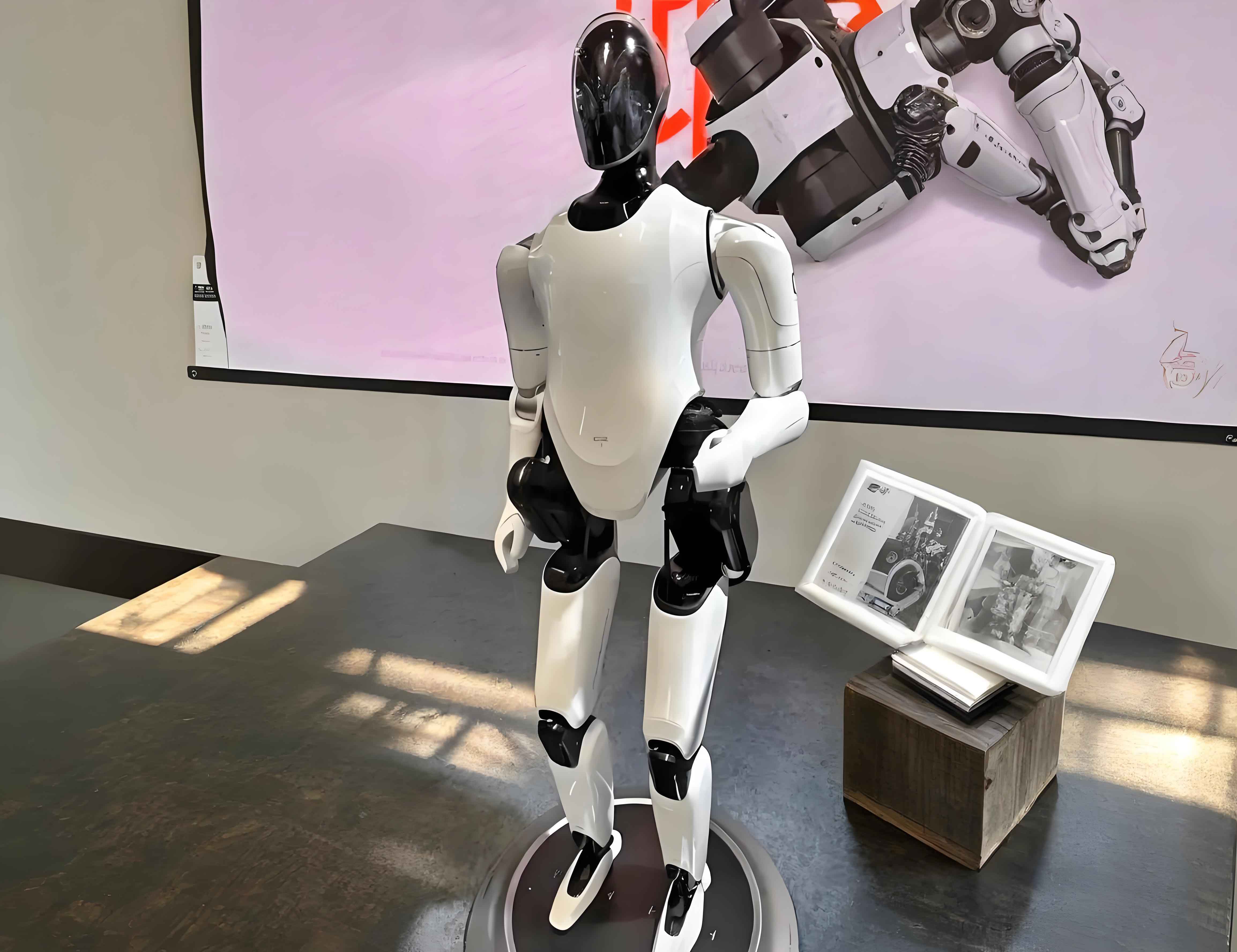
This visual underscores how embodied AI robots are transforming sectors like manufacturing, where standardization and evaluation are critical for integration. Through these practices, we can ensure that embodied AI robots meet performance and safety standards, fostering trust and adoption.
Looking ahead, the future of embodied AI robot standardization and evaluation holds both promise and challenges. In my view, several directions should be prioritized. First, domain-specific standard clusters need refinement, with clear ability gradations and testing methods for different types of embodied AI robots. Second, authoritative benchmarking platforms must be developed to enhance objectivity and reproducibility, possibly through open-source initiatives. Third, international alignment is essential; I advocate for integrating domestic evaluation成果 into global bodies like ISO, IEEE, and ITU to avoid fragmentation. Fourth, emerging技术融合, such as large models and digital twins, should be incorporated into standards to keep pace with innovations in embodied AI robots. Fifth, ethical and legal frameworks must advance in parallel, addressing issues like accountability and privacy to ensure社会 acceptance. As embodied AI robots evolve toward “multi-form协同,” standards will serve as the bedrock for high-quality development. By promoting制度先行, technical synergy, and global collaboration, we can shape a resilient ecosystem for embodied AI robots, driving progress toward artificial general intelligence.
In conclusion, the journey of embodied AI robots from概念 to reality hinges on robust standardization and evaluation. Through this article, I have explored the current landscape, principles, methods, and applications, emphasizing the need for cohesive frameworks. While初步 standards exist, gaps in multimodal interaction and群体 intelligence persist, requiring ongoing efforts. By leveraging tables, formulas, and platforms, we can build systematic approaches to assess and enhance embodied AI robots. I believe that with concerted action from researchers, industry, and policymakers, we can unlock the full potential of embodied AI robots, creating a future where intelligent physical agents thrive in harmony with human society. The path forward involves continuous iteration, guided by the principles outlined here, to ensure that embodied AI robots not only perform tasks but do so safely, efficiently, and ethically.