
In recent years, the embodied AI robot industry has experienced explosive growth, and as its core component, the embodied intelligent controller sector has also achieved leapfrog development. Statistical analysis by industry institutions indicates that the smart controller industry has maintained an average annual compound growth rate of 12.5% over the past five years. As the “neural hub” connecting the physical and digital worlds, breakthroughs in embodied intelligent controller technology directly determine whether robots can cross the critical point from “skilled workers” to “intelligent artisans”. From my perspective, this evolution is not just about hardware upgrades but a fundamental reshaping of how embodied AI robots perceive, decide, and act in complex environments.
The development of embodied intelligent controllers is centered around integrating perception, decision-making, and execution functions, constructing a complete intelligent system for robots. Essentially, the embodied intelligent controller serves as both the “wise brain” and “motion center” of an embodied AI robot. In our research and development efforts, we have focused on multi-dimensional breakthroughs since early layout phases. For instance, our Galaxy series embodied intelligent operating system, launched recently, incorporates a real-time operating system that achieves microsecond-level jitter control (e.g., ≤ 15μs under full load) and nanosecond-level interrupt response (e.g., <100ns), ensuring precise synchronization of multi-modal data acquisition, processing, and control. This system supports hard real-time synchronization of data from 12 GMSL cameras, force/tactile sensors, and other multi-modal inputs, thereby reducing perception and execution error rates. Additionally, technologies like EtherCAT (Ethernet for Control Automation Technology) enable multi-master station synchronization with a minimum control cycle of 125μs and data synchronization accuracy at the nanosecond level, allowing efficient coordination of all joints and sensors in an embodied AI robot.
Traditional architectures, such as X86 combined with AI chips, often suffer from network latency and system jitter issues. In our heterogeneous computing architecture, these problems have been fundamentally resolved. We pioneered an end-to-end coordination mechanism integrating “cerebrum and cerebellum,” which decouples GPU-driven intelligent decision-making from CPU-controlled motion execution through a real-time operating system, elevating system interaction speeds to the nanosecond level. This architectural innovation compresses control latency in embodied AI robots, providing technical assurance for complex tasks like hand-eye coordination. The improvement can be modeled by the latency reduction formula: $$ \Delta L = L_{\text{traditional}} – L_{\text{new}} $$ where $$ L_{\text{new}} \approx \frac{1}{f_{\text{sync}}} + t_{\text{int}} $$ with \( f_{\text{sync}} \) being synchronization frequency and \( t_{\text{int}} \) as interrupt time. For example, if traditional latency is 1ms and our new system achieves 100ns, the reduction is significant: $$ \Delta L = 1 \times 10^{-3} – 100 \times 10^{-9} = 9.9 \times 10^{-4} \, \text{s} $$.
To summarize key technical advancements, the table below compares traditional and modern embodied intelligent controller architectures:
| Feature | Traditional Architecture (X86+AI Chip) | Modern Heterogeneous Architecture |
|---|---|---|
| Control Jitter | ≥ 100μs | ≤ 15μs |
| Interrupt Response | Microsecond-level | < 100ns |
| Data Synchronization | Millisecond-level delays | Nanosecond-level accuracy |
| Multi-modal Support | Limited, prone to errors | 12+ GMSL cameras, force/tactile sensors |
| Task Coordination | Resource competition issues | Decoupled via real-time OS |
The technological breakthroughs in embodied intelligent controllers directly drive qualitative changes in the application scenarios of embodied AI robots. In healthcare, enhanced controller precision significantly reduces positioning errors in surgical robots; in industrial settings, multi-axis linkage control technology大幅度shortens cycle times for collaborative robots; and in service domains, improved natural interaction capabilities boost customer satisfaction with robots. According to predictions from authoritative industry agencies, from 2025 to 2030, controller technology upgrades will drive the global robot market to expand at a compound annual growth rate of 38%. This growth underscores the pivotal role of embodied AI robots in transforming various sectors.
Currently, the motor controller industry exhibits a notable trend toward integration, which can be described as a “revolution in hardware architecture integration.” For example, some systems integrate seven components like BCU, PDU, and DCDC, increasing power density by 35% and reducing costs by 22%. Such integrated designs have spurred new drive units in the embodied AI robot field, such as modular joint controllers that integrate frameless torque motors, harmonic reducers, and force sensors within a 200mm³ space, achieving 30N·m torque output and 0.01° position accuracy. This integration enhances the efficiency and compactness of embodied AI robots.
Simultaneously, breakthrough applications in materials science are influencing the energy efficiency standards of controllers. The adoption of silicon carbide (SiC) power devices is rewriting these standards. For instance, SiC motor controllers can improve vehicle range by 8% and reduce system losses by 60%. In the realm of embodied AI robots, SiC MOSFET modules enable joint drive efficiency to exceed 97%, with temperature rise controlled within 40°C, ensuring sustained high-load operation. The energy efficiency gain can be expressed as: $$ \eta = \frac{P_{\text{out}}}{P_{\text{in}}} \times 100\% $$ where \( \eta \) approaches 97% with SiC, compared to 90% with traditional silicon-based devices. The power loss reduction is: $$ \Delta P = P_{\text{Si}} – P_{\text{SiC}} $$ with typical values showing a 60% drop.
The software architecture of embodied intelligent controllers is also undergoing significant changes. Our self-developed real-time operating system, through microsecond-level jitter control (e.g., Cyclictest ≤ 2μs) and nanosecond-level interrupt response, supports real-time fusion of multi-modal perception data. Furthermore, our visual-language model achieves inference speeds of 30 tokens per second on platforms like AGX Orin, endowing embodied AI robots with scene understanding capabilities, moving beyond mere “execution” to “thinking.” Thus, the technological evolution of embodied intelligent controllers represents a leap from “functional control” to “intelligent decision-making,” not just停留在”execution control.” The table below highlights key software advancements:
| Software Component | Capability | Impact on Embodied AI Robot |
|---|---|---|
| Real-time OS | ≤ 2μs jitter, < 100ns interrupt | Enables precise synchronous control |
| Visual-Language Model | 30 tokens/s inference speed | Facilitates scene understanding and reasoning |
| Multi-modal Fusion Algorithms | Integrates vision, audio, tactile data | Enhances perception accuracy and robustness |
It is well-known that controllers are core components of robots, primarily providing computational power for AI perception, calculation, planning, and decision-making in the “brain,” as well as motion control processing in the “cerebellum” and overall robot communication, akin to the human cerebrum, cerebellum, and neural network system. With the development and market proliferation of embodied robots, the robot controller market is poised to embrace a massive new opportunity worth hundreds of billions. In this market environment, various industrial segments are rapidly evolving, exhibiting intense competition alongside distinct differentiation. International giants focus on high-end markets, with platforms enabling full-process digitalization from PLCs to drives. Domestic enterprises, on the other hand, build advantages through vertical integration: for example, some cover the entire chain of electric control, motors, and batteries, while others enter fields like microwave射频 through acquisitions, developing robot controllers supporting 5G communication. Amid these models, global firms display substantial competitiveness, yet new ecological cooperation models are emerging.
Ecological collaboration models, such as closed-loop ecosystems integrating “R&D-production-application-service,” allow controller enterprises to directly access end-user needs. Through equity partnerships with suppliers, some companies have reduced delivery cycles for critical components like planetary roller screws from six months to three months,大幅 lowering costs. This industrial synergy enables humanoid robots to achieve hardware costs significantly lower than those of leading competitors. The shift in ecological cooperation inevitably impacts application scenarios. Currently, embodied intelligent application scenarios are expanding from “industrial tools” to “life partners.” In industrial manufacturing, many enterprises are comprehensively upgrading toward “AI+” and “intelligence.” In automotive welding workshops, six-axis robot controllers achieve 0.05mm repeat positioning accuracy, improving weld qualification rates. Collaborative robots equipped with new controllers, through force control technology, keep assembly force errors within ±0.5N, meeting precision electronics manufacturing requirements.
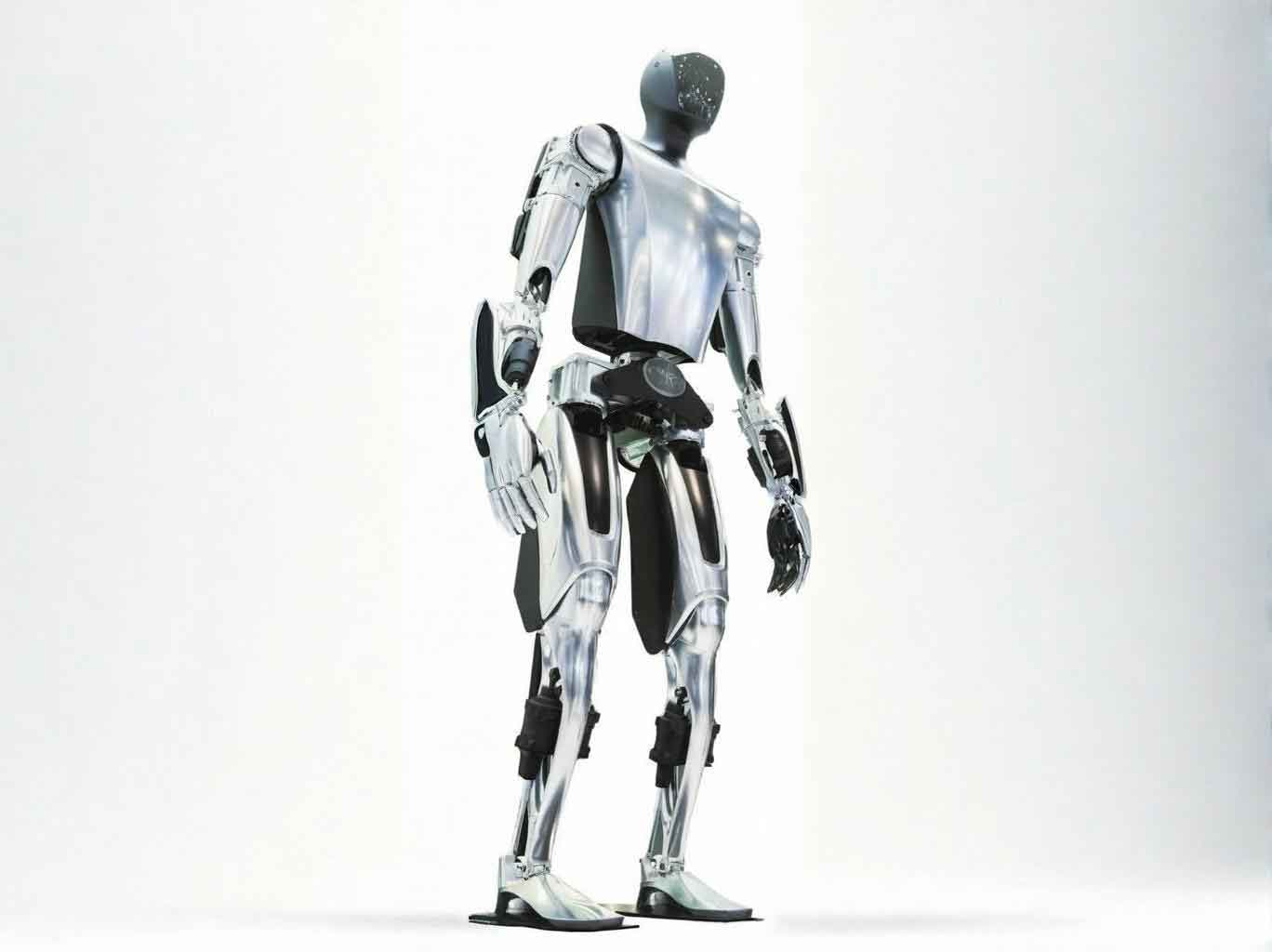
The technological and performance enhancements of embodied intelligent controllers are also enabling precise services in the healthcare industry. Embodied intelligent operating systems used in orthopedic surgical robots integrate binocular vision positioning and force feedback technologies, achieving pedicle screw placement accuracy of 0.2mm. Customized controllers in advanced surgical systems allow sub-millimeter operation of 7-degree-of-freedom instruments, reducing bleeding in procedures like prostatectomies to under 50ml. Moreover,拟人化 interaction in service domains delivers excellent customer experiences. Multi-modal interaction controllers集成 voice recognition, emotion computing, and environmental perception modules, capable of recognizing over 80 facial expressions and responding accordingly. The development of emotion adaptation algorithms, compared to traditional solutions, enhances service response satisfaction. These advancements highlight how embodied AI robots are becoming more adept and versatile.
Despite the opportunities, the development of embodied intelligent controllers faces many challenges, most notably the dual tests of technological bottlenecks and industrial synergy. The localization dilemma of core components has long troubled domestic enterprises. For instance, the planetary roller screw market is still dominated by European firms, while domestic alternatives hold minimal market share even with international orders. At运动 speeds of 1m/s, trajectory tracking errors for domestic robot joints reach 2.3mm, 1.8mm higher than those of premium international series. This stems primarily from insufficient compensation for flexible loads in controller algorithms and delays in sensor signals. The error can be modeled as: $$ E = \int (x_{\text{desired}} – x_{\text{actual}}) \, dt $$ where \( E \) is often larger in domestic systems due to latency \( \tau \): $$ x_{\text{actual}}(t) = x_{\text{desired}}(t – \tau) + \delta $$ with \( \delta \) as noise.
Ecosystem integration poses another “roadblock” for industry development. Currently, most robot enterprises adopt multi-supplier solutions, leading to frequent system compatibility issues. Surveys from leading companies indicate cross-brand controller communication failure rates of 12%, with data synchronization delays exceeding 50ms, severely affecting multi-robot协作 efficiency. In this context, we have strived to break through in adversity, developing new technologies and completing practical implementations in conjunction with industry. Our platform combines GPU computing power (e.g., 275 TOPS from NVIDIA AGX Orin) with the deterministic execution of a real-time operating system, resolving resource competition issues between AI computation and real-time control in traditional architectures. This approach optimizes performance for embodied AI robots.
In terms of multi-modal perception fusion applications, we collaborate with partners to unlock new dimensions of intelligent perception. In embodied intelligence, multi-modal perception refers to intelligent agents acquiring multi-dimensional information about the external environment through various sensors such as vision, hearing, and touch, and integrating this information via fusion algorithms to achieve accurate environmental awareness. Visual perception, compared to other modalities like touch or hearing, offers unique advantages: comprehensive information dimensions, wide spatial coverage, and strong environmental adaptability. It can simultaneously capture multi-dimensional information such as object shape, color, texture, spatial position, and motion trajectories, covering感知 needs from macro scenarios (e.g., indoor/outdoor layout) to micro details (e.g., surface defects), providing high-dimensional, high-precision raw data支撑 for subsequent motion planning (e.g., obstacle avoidance, grasping) and task execution (e.g., assembly, sorting). Visual multimodality refers to突破 the limitations of traditional single-modal vision (e.g., relying solely on 2D images) by integrating “multiple data types within the visual domain” or “visual data with other perceptual modalities,” building a more comprehensive and robust environmental cognition and information understanding system. Its core goal is to simulate the human cognitive logic of “vision-centric,联动 other senses,” addressing the issues of片面 information and insufficient robustness in single-modal vision under complex scenarios. Our multi-modal perception platform integrates full GMSL vision systems,环形 six-microphone auditory sensors, and other multi-source data, achieving scene understanding through visual-language models and enabling融合 applications in multi-modal scenarios.
We have also established an ecological cooperation model for industrial synergy. Under this model, as of recent dates, our embodied intelligent operating system has served approximately 40-50 clients, widely applied in over 40 types of embodied intelligent and bionic terminals such as drones, humanoid robots, and composite robots. Practical application cases show that clients using this system experience R&D time reductions to 20% of previous levels, system performance improvements of over 20 times, and overall cost reductions of about 30%. The table below summarizes these benefits:
| Metric | Improvement |
|---|---|
| R&D Time | Reduced to 20% of prior |
| System Performance | 20x enhancement |
| Overall Cost | ~30% reduction |
| Application Diversity | 40+ types of embodied AI robots |
Looking ahead, the technological integration and scenario深化 of embodied intelligent controllers are dual drivers for industry development. The focus of technological R&D will be on enhancing edge computing capabilities. Modular designs will become mainstream, with reconfigurable controllers supporting plug-and-play sensor expansion,大幅 lowering the cost of functional upgrades for embodied AI robots. This evolution can be expressed as: $$ C_{\text{upgrade}} = C_{\text{base}} + \sum_{i=1}^{n} \alpha_i \cdot C_{\text{sensor},i} $$ where modularity reduces \( \alpha_i \) coefficients.
In the security field, embodied intelligent security robots equipped with embodied intelligent controllers hold vast application potential. In scenarios such as campus/factory patrols, large-scale infrastructure inspections, active deterrence and warnings, and remote two-way intercoms, embodied AI robots can replace or assist humans in 24/7 uninterrupted巡逻, covering blind spots inaccessible to fixed cameras, like stairwells, parking lot corners, narrow passages, and expansive outdoor areas. Since embodied intelligent devices integrate multiple sensors (e.g.,高清 cameras, thermal imagers, LiDAR, microphone arrays, odor sensors), they enable information cross-verification, shifting from “single perception” to “multi-modal fusion perception,”提升 recognition accuracy and大幅 reducing false alarm rates. Thus, they can be deployed in complex environments for target identification, emergency search and rescue, and similar tasks. The core value of embodied intelligence lies in unifying “perception-decision-execution” into a closed loop, which not only expands security coverage but also极大地 enhances the initiative, precision, and efficiency of security, while effectively safeguarding personnel in hazardous scenarios. Embodied intelligence is upgrading security from a two-dimensional, static “surveillance network” to a three-dimensional, dynamic, autonomously reacting “intelligent agent.” As technology matures and costs decline, embodied intelligence will undoubtedly become an indispensable key component in future smart security systems, with embodied AI robots at the forefront.
In conclusion, the continuous expansion and upgrading of the embodied intelligent controller market are driving enterprises to innovate and develop relentlessly. Recently, we launched a full suite of Galaxy series embodied intelligent control systems, with端侧 computing power reaching 2070 TFLOPS at FP4 precision, ranking among the strongest端侧 computing capabilities globally. This system integrates “perception, decision-making, execution” and fully supports端侧 VLA+VLN tasks up to 70B parameters, leading the qualitative transformation of embodied intelligent controllers from “functional realization” to “intelligent evolution.” As the cost of SiC power devices declines and edge AI computing power gradually breaks through, embodied intelligent controllers are turning science fiction scenarios into reality. In this wave, we aim to achieve autonomous production line supply by 2026 and promote the integration of cloud-edge-end collaborative basic platforms along with data infrastructure, accumulating service and algorithm model data for various scenario applications to become a leading industry supplier. In this industrial变革 driven by micro-nano级 precision control, Chinese embodied intelligent controller enterprises, spearheaded by our efforts, are writing the Chinese solution for the intelligent robot era through a three-dimensional innovation model of “hardware + software + ecology.” The future of embodied AI robots is bright, and we are committed to pushing the boundaries of what these intelligent machines can achieve.