
In recent years, I have observed a remarkable surge in the development and application of bionic robots, marking a transformative period in robotics. The term “bionic robot” refers to machines that mimic biological systems, drawing inspiration from nature to enhance mobility, adaptability, and functionality. This field has gained immense traction, driven by technological innovations and increasing investment. As I delve into this topic, I aim to explore the multifaceted advancements, from fundamental research to practical implementations, highlighting the profound impact of bionic robots across various sectors. The convergence of disciplines such as biomechanics, artificial intelligence, and materials science has propelled bionic robots into the spotlight, making them a cornerstone of modern robotics.
The current landscape for bionic robots is characterized by rapid growth and diversification. A significant indicator is the substantial funding flowing into this sector, with recent investments underscoring confidence in its potential. For instance, a notable funding round exceeding $100 million for a bionic robot startup has captured attention, reflecting the robust financial backing that fuels innovation. This influx of capital has accelerated the entry of numerous players into the market, intensifying competition and fostering a dynamic ecosystem. From quadrupedal robots that traverse challenging terrains to exoskeletons that augment human capabilities, the diversity of bionic robots is expanding. I see this as a testament to the versatility and scalability of bionic designs, which are increasingly being adopted in industries ranging from healthcare to logistics.
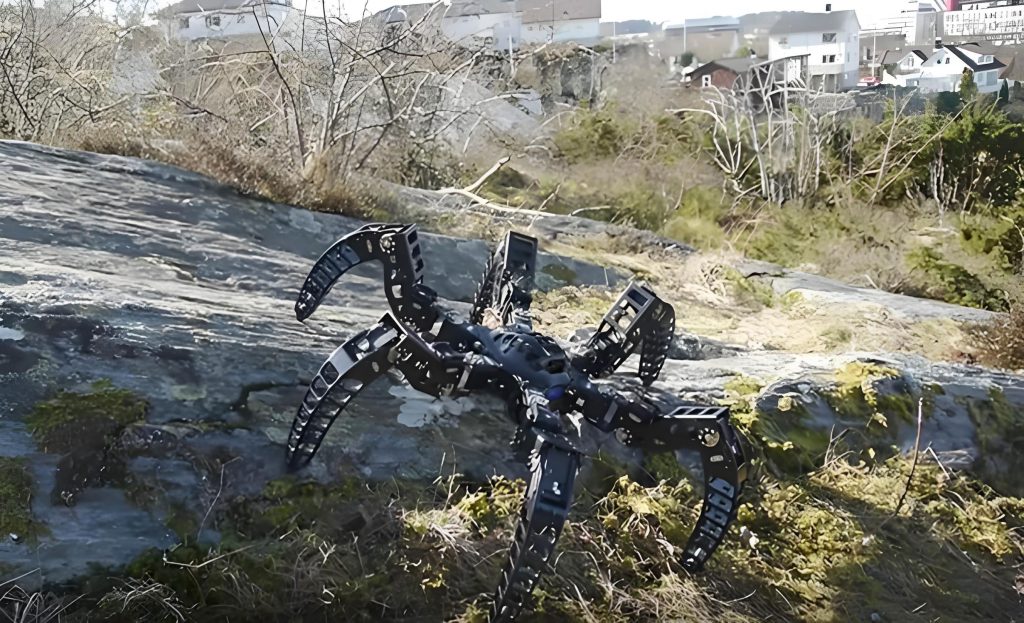
One of the most exciting aspects of bionic robot research is the continuous technological breakthroughs. For example, advancements in soft robotics have led to the development of bionic robots with compliant structures that emulate biological tissues. A recent achievement involves a soft suction-cup bionic robot inspired by marine organisms, which has demonstrated improved adhesion and manipulation capabilities in underwater environments. This innovation leverages principles from fluid dynamics and material science, enabling the bionic robot to perform delicate tasks with high precision. The mathematical modeling of such systems often involves equations describing pressure distribution and deformation. Consider the adhesion force $F_a$ generated by a soft suction cup, which can be approximated by:
$$ F_a = \frac{\Delta P \cdot A}{\mu} $$
where $\Delta P$ is the pressure difference, $A$ is the contact area, and $\mu$ is a coefficient accounting for material properties. Such formulas are crucial for optimizing the design of bionic robots, ensuring they operate efficiently in real-world conditions. Additionally, control algorithms for bionic robots frequently rely on dynamic models. The equation of motion for a legged bionic robot can be expressed as:
$$ M(q) \ddot{q} + C(q, \dot{q}) \dot{q} + G(q) = \tau $$
Here, $M(q)$ is the mass matrix, $C(q, \dot{q})$ represents Coriolis and centrifugal forces, $G(q)$ denotes gravitational forces, $q$ is the joint angle vector, and $\tau$ is the torque input. These equations underpin the stable locomotion of bionic robots, allowing them to navigate complex environments akin to their biological counterparts.
In the realm of quadrupedal bionic robots, significant progress has been made in enhancing mobility and autonomy. These bionic robots are designed to mimic the gait of animals, enabling them to traverse uneven terrain with agility. Key technologies include sensor fusion for environmental perception and adaptive control strategies for balance. To summarize the evolution of quadrupedal bionic robots, I present the following table highlighting milestones and capabilities:
| Generation | Key Features | Applications | Performance Metrics |
|---|---|---|---|
| Early Models | Basic leg mechanisms, limited sensors | Research prototypes | Speed: 0.5 m/s, Payload: 5 kg |
| Intermediate | Enhanced AI, improved actuators | Inspection, surveillance | Speed: 1.5 m/s, Payload: 20 kg |
| Advanced | Autonomous navigation, soft robotics | Disaster response, delivery | Speed: 3 m/s, Payload: 50 kg |
This table illustrates the rapid advancement of quadrupedal bionic robots, driven by innovations in actuation and intelligence. The integration of machine learning algorithms has been pivotal, enabling these bionic robots to learn from experience and adapt to new scenarios. For instance, reinforcement learning techniques optimize gait patterns, minimizing energy consumption while maximizing stability. The reward function $R$ in such learning frameworks can be defined as:
$$ R = \alpha \cdot \text{speed} – \beta \cdot \text{energy} – \gamma \cdot \text{instability} $$
where $\alpha$, $\beta$, and $\gamma$ are weighting factors. This approach ensures that the bionic robot develops efficient and robust locomotion strategies, mirroring the learning processes in biological organisms.
Another prominent area is exoskeleton bionic robots, which have revolutionized medical rehabilitation. These devices assist individuals with mobility impairments, enabling them to regain movement and independence. The design of exoskeleton bionic robots often incorporates biomechanical principles to align with human kinematics. For example, the torque required at a joint can be calculated using inverse dynamics. Consider a simple model for a lower-limb exoskeleton bionic robot assisting in walking:
$$ \tau_h + \tau_e = I \ddot{\theta} + b \dot{\theta} + k \theta $$
where $\tau_h$ is the human joint torque, $\tau_e$ is the exoskeleton assistance torque, $I$ is the moment of inertia, $b$ is the damping coefficient, $k$ is the stiffness, and $\theta$ is the joint angle. By optimizing $\tau_e$, the bionic robot can provide tailored support, enhancing rehabilitation outcomes. The widespread adoption of exoskeleton bionic robots in healthcare settings underscores their value, with applications extending to geriatric care and industrial augmentation. I have seen reports of these bionic robots being used in events like marathons and large-scale gatherings, where they empower individuals with disabilities to participate actively, showcasing the social impact of bionic technology.
Humanoid bionic robots represent the pinnacle of aspiration in this field, aiming to replicate human form and function. These bionic robots are equipped with sophisticated sensors, actuators, and AI systems to interact naturally with environments and people. Over multiple iterations, humanoid bionic robots have evolved to handle complex tasks, from object manipulation to social engagement. The development process involves continuous refinement of hardware and software. For instance, the balance control of a bipedal bionic robot can be analyzed using the Zero Moment Point (ZMP) criterion, which ensures dynamic stability. The ZMP position $(x_{zmp}, y_{zmp})$ is given by:
$$ x_{zmp} = \frac{\sum_{i} m_i (g + a_i) x_i}{\sum_{i} m_i (g + a_i)}, \quad y_{zmp} = \frac{\sum_{i} m_i (g + a_i) y_i}{\sum_{i} m_i (g + a_i)} $$
where $m_i$ is the mass of segment $i$, $g$ is gravity, $a_i$ is acceleration, and $(x_i, y_i)$ are coordinates. Maintaining the ZMP within the support polygon is critical for preventing falls, a key challenge in humanoid bionic robot design. The iterative improvement of these systems has led to bionic robots capable of operating in unstructured settings, such as homes and workplaces. I anticipate that future generations of humanoid bionic robots will achieve greater autonomy, leveraging advancements in computer vision and natural language processing to serve as companions or assistants.
The applications of bionic robots are vast and continually expanding. In industrial sectors, bionic robots are employed for tasks that require dexterity and adaptability, such as assembly and maintenance. Their ability to mimic human movements allows them to use standard tools and navigate confined spaces. In agriculture, bionic robots inspired by insects or animals can monitor crops and perform precision farming, reducing resource usage. The environmental monitoring domain benefits from bionic robots that emulate aquatic or aerial creatures, collecting data in harsh conditions. To provide a comprehensive overview, I summarize the key application areas and their corresponding bionic robot types in the table below:
| Application Area | Bionic Robot Type | Primary Functions | Technological Enablers |
|---|---|---|---|
| Medical Rehabilitation | Exoskeleton bionic robots | Gait training, mobility assistance | Biomechanical sensors, adaptive control |
| Search and Rescue | Quadrupedal bionic robots | Terrain traversal, victim detection | SLAM, thermal imaging |
| Personal Assistance | Humanoid bionic robots | Object fetching, social interaction | AI, multi-modal perception |
| Environmental Science | Soft bionic robots | Sample collection, exploration | Compliant materials, low-power actuators |
| Logistics | Hybrid bionic robots | Package delivery, warehouse management | Autonomous navigation, swarm intelligence |
This table highlights the versatility of bionic robots, each type tailored to specific challenges. The integration of bionic principles often leads to performance metrics that surpass traditional robotics. For example, energy efficiency in bionic robots can be modeled using bio-inspired optimization. The cost of transport $COT$ for a legged bionic robot is defined as:
$$ COT = \frac{P}{m g v} $$
where $P$ is power consumption, $m$ is mass, $g$ is gravitational acceleration, and $v$ is velocity. By minimizing $COT$, bionic robots achieve endurance comparable to animals, enabling prolonged operations. I believe that such efficiencies will drive the adoption of bionic robots in sustainability initiatives, such as wildlife conservation or clean energy maintenance.
Looking ahead, the future of bionic robots is brimming with potential. Emerging trends include the fusion of bionic robots with brain-computer interfaces, allowing direct neural control for enhanced symbiosis. Additionally, advances in materials science promise bionic robots with self-healing capabilities or color-changing skins for camouflage. The scalability of bionic designs will likely lead to microrobots for medical procedures or massive robots for construction. From a research perspective, open challenges remain in achieving true autonomy and emotional intelligence in bionic robots. The path forward involves interdisciplinary collaboration, drawing insights from biology, engineering, and cognitive science.
In conclusion, as I reflect on the journey of bionic robots, it is evident that we are witnessing a paradigm shift in robotics. The bionic robot, with its ability to emulate life, offers unparalleled opportunities to address global challenges. From healthcare to exploration, the impact of bionic robots is profound and growing. I encourage continued investment and research in this field, as the bionic robot stands poised to redefine human-machine interaction. The convergence of innovation and application ensures that the era of bionic robots is not just imminent but already unfolding, promising a future where machines seamlessly integrate into our lives, enhancing capabilities and enriching experiences.