
The evolution of robotics is witnessing a profound paradigm shift. For decades, the field was dominated by rigid-bodied machines, constructed from metals and hard plastics, excelling in structured environments where precision and repeatability were paramount. However, their inherent stiffness becomes a liability when faced with the unstructured, delicate, and ever-changing nature of the world inhabited by living organisms. This fundamental limitation sparked a revolutionary question: what if robots could be soft? My exploration into this domain has led me to the compelling and rapidly advancing field of bionic robots, specifically those crafted from compliant materials. A bionic robot, in this context, is not merely a machine that looks like a creature; it is a system that emulates the core mechanical principles of biological organisms—compliance, adaptability, and safe interaction—through the use of soft, deformable structures. This essay, from my personal vantage point as an observer and analyst of this technological frontier, delves into the current state of soft-bodied bionic robots. I will explore their bionic taxonomies, the materials and actuators that give them life, the formidable challenges in modeling and controlling their continuum bodies, and finally, contemplate the promising yet demanding path that lies ahead. The journey from rigid automation to soft, bio-inspired autonomy represents one of the most exciting trajectories in modern engineering.
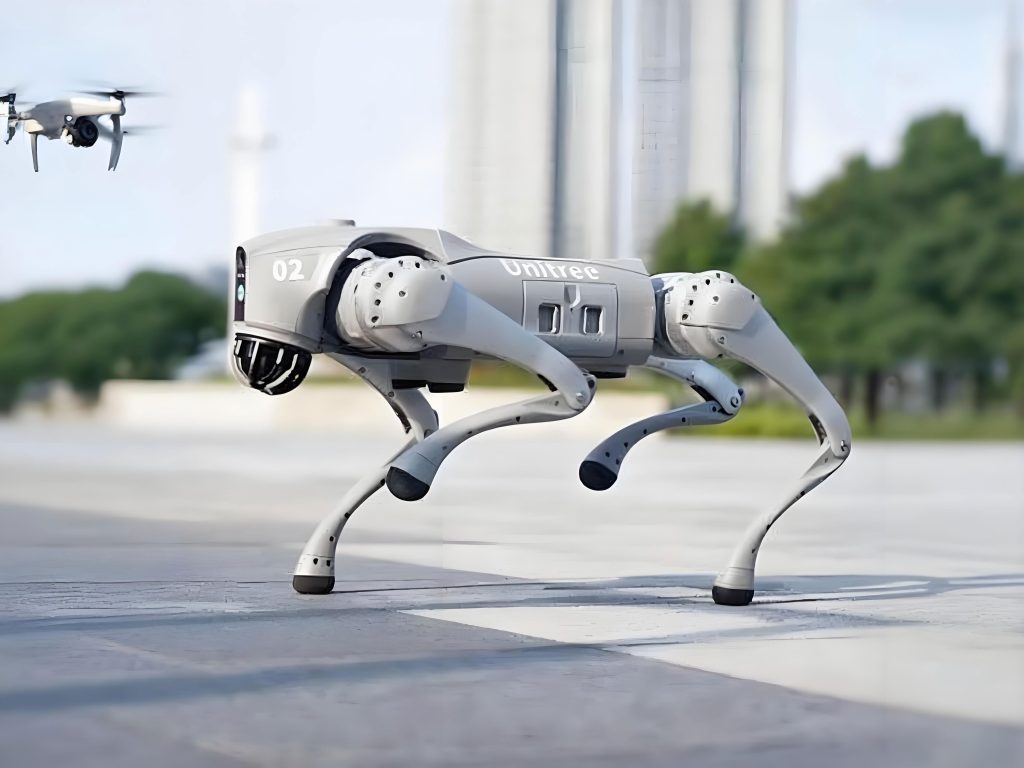
The image above captures the essence of this transition—a machine that draws direct inspiration from the fluid forms of nature, embodying the very principle of a soft bionic robot. It is a tangible representation of the shift from hard mechanics to compliant, life-like motion.
Bionic Taxonomy: Mimicking Form and Function
When I analyze the landscape of soft bionic robot designs, I find they generally follow two intertwined yet distinct philosophical paths: morphological (form-based) imitation and functional (principle-based) imitation. The choice of path fundamentally shapes the robot’s capabilities and potential applications.
Morphological Imitation: Emulating the Blueprint of Life
This approach is the most visually intuitive. Here, the design of the bionic robot takes direct cues from the anatomical structure of a biological counterpart. The goal is to replicate the physical shape and arrangement of components to achieve a similar mode of locomotion or interaction. The success of this approach is evident across multiple biological classes.
- Serpentine and Vermiform Locomotion: Snakes and worms move through complex terrain with grace and efficiency, using whole-body deformation. Researchers have created soft robots that mimic this by using patterned skins (like Kirigami) on soft actuators to generate directional friction for crawling. Others have employed embedded smart materials like Shape Memory Alloys (SMA) to create peristaltic waves in a worm-like body, enabling robust, shock-resistant motion.
- Aquatic Propulsion: The underwater world is a masterclass in efficient movement. Soft bionic robot designs here often mimic fish. Some replicate the complex flexion of a fish’s body and tail for agile swimming and even rapid escape maneuvers. Others take inspiration from rays and manta rays, using wide, flapping pectoral fins made from bending pneumatic actuators for smooth, elegant propulsion. The iconic octopus, with its eight hyper-redundant arms, has inspired entirely soft-bodied robots where fluidic channels within silicone replace muscles, allowing for complex manipulation and locomotion.
- Aerial and Terrestrial Legged Motion: Inspiration is also drawn from insects and amphibians. I have observed six-legged robots where each leg is a combination of soft actuators, allowing for adaptive walking and turning. Jumping mechanisms powered by controlled combustion in multi-material bodies demonstrate how soft-rigid hybrids can achieve dynamic, untethered motion.
Functional Imitation: Emulating the Underlying Principle
Perhaps more profound than shape-copying is the imitation of functional principles. This approach asks: what is the core mechanical or control strategy that makes a biological motion work? A functional bionic robot may not look like its inspiration but behaves according to the same rules.
- Appendage-less Locomotion: Many soft creatures move without distinct legs. This is mimicked using traveling waves of deformation. For instance, a caterpillar’s rolling escape mechanism has been replicated by a robot that uses embedded SMA coils to rapidly curl its body into a wheel. Similarly, the peristaltic motion of earthworms—rhythmic waves of contraction and expansion—has been recreated in soft pneumatic robots, enabling them to navigate confined spaces.
- Grasping and Manipulation: The human hand is a marvel, but its bionic imitation in soft robotics often focuses on the principle of underactuation and conformal wrapping rather than replicating every bone and tendon. A single pressure input to a soft, multi-chambered gripper can cause it to gently envelop an object of arbitrary shape, much like how an octopus arm or a sea star’s tube foot adapts to its prey. This is functional bionics at its best—achieving a complex outcome (secure, adaptive grasp) through a simple, embodied mechanical intelligence.
The table below summarizes this bionic taxonomy, illustrating the connection between inspiration, method, and robotic outcome.
| Bionic Inspiration Source | Mimicked Feature | Typical Actuation Method | Primary Function of the Bionic Robot |
|---|---|---|---|
| Snakes, Worms | Whole-body traveling waves, directional skin texture | Pneumatic (FRA), SMA, EAP | Terrain-adaptive crawling, burrowing |
| Fish, Rays, Octopuses | Body/fin undulation, arm flexion | Pneumatic (PneuNets, FRA), Hydraulic, EAP | Efficient aquatic propulsion, manipulation |
| Caterpillars, Inchworms | Rolling gait, anchoring/stretching sequence | SMA, Combustion-driven | Rapid rolling, inch-worming climbing |
| Human Hands, Tube Feet | Conformal, underactuated grasping | Pneumatic (PneuNets), Tendon-driven | Adaptive grasping of fragile/irregular objects |
Materializing Motion: The Core of Soft Bionic Robot Actuation
The soul of any bionic robot lies in its actuators—the artificial muscles. The transition from rigid motors and gears to soft, compliant actuators is what enables true biomimicry. From my analysis, the actuator choice defines the robot’s performance envelope, its limitations, and its potential for integration. I categorize the primary actuation methodologies as follows:
Pneumatic and Hydraulic Actuation
This is arguably the most prevalent method in soft robotics today, and for good reason. By pressurizing a fluid (air or liquid) inside elastic chambers, large, graceful deformations can be achieved. The principle is elegantly simple, often described by models relating input pressure to output strain or bending curvature. For a simple bending actuator, the relationship between the pressure ($P$), the material’s Young’s modulus ($E$), and the resulting bending curvature ($\kappa$) can be approximated from first principles considering chamber geometry and wall thickness. Two dominant architectures have emerged:
- Fiber-Reinforced Actuators (FRA): Here, a cylindrical elastic bladder is wrapped with strong, inextensible fibers at specific angles. Upon pressurization, the bladder expands only in directions not constrained by the fibers, leading to predictable motions like bending, twisting, or extending. The kinematics can be modeled by considering the fiber winding angle $\alpha$ and the initial chamber radius $R_0$. The extension strain $\epsilon$ is constrained by the fiber length, leading to a coupling between radial expansion and axial contraction/bending.
- Pneumatic Network (PneuNets): These actuators feature a network of small channels within a stiffer top layer and a softer bottom layer. Pressurization causes the soft bottom layer to expand more than the top, resulting in complex bending motions. The bending curvature is a function of the differential strain between the layers, which in turn depends on the relative stiffness (modulus) and the channel geometry. A simplified model for the bending angle $\theta$ can be given by:
$$ \theta \approx \frac{L (\epsilon_{bottom} – \epsilon_{top})}{d} $$
where $L$ is the actuator length, $\epsilon$ are the strains in the respective layers, and $d$ is the distance between the neutral axis and the constrained layer.
While powerful, fluidic actuators traditionally require external pumps, valves, and tethers, hindering autonomy. Recent advances in integrated micro-pumps and chemical gas generation (e.g., controlled combustion) are promising steps toward untethered bionic robot platforms.
Tendon-Driven Actuation
Inspired by vertebrate musculature, this method uses cables or tendons (often synthetic fibers) pulled by motors to deform a soft structure. It offers high force transmission and precise control, bridging soft morphology with traditional mechatronics. The tension $T$ in the tendon creates a moment $M$ about the structure’s neutral axis, causing bending. For a constant curvature segment, the relationship is:
$$ \kappa = \frac{M}{EI} \approx \frac{T \cdot r}{EI} $$
where $r$ is the moment arm of the tendon from the neutral axis, $E$ is the modulus, and $I$ is the cross-sectional moment of inertia. While effective, the system complexity from motors and pulleys can compromise the desired simplicity and compliance of a fully soft bionic robot.
Smart Material-Based Actuation
This category represents a direct material-level mimicry of muscle, where the material itself transduces energy into motion.
- Shape Memory Alloys (SMA): These metals contract when heated (via electrical current) due to a solid-state phase transformation. They offer high power density in a small package. The recovery strain $\epsilon_{max}$ and the generated stress $\sigma$ are key parameters. However, their efficiency is low, cooling is slow (limiting cycle frequency), and precise control requires complex hysteresis modeling.
- Electroactive Polymers (EAP): These polymers deform under an electric field. Dielectric Elastomer Actuators (DEAs) are a prominent type, acting as compliant capacitors. A voltage $V$ applied across a thin elastomer film sandwiched between electrodes generates Maxwell stress ($\sigma_{Maxwell}$), causing the film to expand in area and contract in thickness:
$$ \sigma_{Maxwell} = \epsilon_0 \epsilon_r E^2 = \epsilon_0 \epsilon_r \left(\frac{V}{t}\right)^2 $$
where $\epsilon_0$ and $\epsilon_r$ are the vacuum and relative permittivity, $E$ is the electric field, and $t$ is the film thickness. EAPs promise fast response and large strains but require high voltages and are prone to dielectric breakdown and mechanical failure modes like creeping. - Ionic Polymer-Metal Composites (IPMC): Another EAP subtype, IPMCs bend due to the migration of ions and solvent molecules when a low voltage is applied. Their motion is more akin to biological muscles but typically generates lower forces.
Other and Hybrid Methods
Beyond these, I see niche but innovative methods like chemical-driven actuators, where reactions inside a hydrogel cause rhythmic swelling/deswelling for autonomous motion, or magnetic actuation, where embedded particles or elastomers are deformed by external magnetic fields for wireless control.
The following table provides a comparative overview of these actuation methods from my perspective, highlighting their trade-offs.
| Actuation Method | Key Advantages | Primary Limitations | Typical Strain/Force Profile |
|---|---|---|---|
| Pneumatic/Hydraulic (FRA/PneuNets) | Large deformation, high force, simple principle, good speed. | Typically requires tether (pump/valves), potential for leakage. | High strain (>100%), moderate to high force. |
| Tendon-Driven | High precision, high force transmission, good control bandwidth. | Complex external drive system, can localize stress points. | Moderate strain, high force. |
| Shape Memory Alloy (SMA) | Very high power density, silent operation, simple structure. | Low efficiency, slow cooling, hysteresis, fatigue. | Moderate strain (~5-8%), very high stress. |
| Dielectric Elastomer (EAP) | Fast response, high theoretical strain, direct electrical control. | Requires very high voltage (>1kV), dielectric breakdown, stress relaxation. | Very high strain (>100%), moderate stress. |
| Ionic EAP (IPMC) | Low voltage operation, biomimetic bending motion. | Low force output, operates in wet environments, can dry out. | Moderate bending strain, low force. |
The Daunting Duo: Modeling and Control of Bionic Robots
If actuation is the muscle of a soft bionic robot, then modeling and control are its nervous system. This, in my view, is the most formidable intellectual challenge in the field. How does one describe and command a system with effectively infinite degrees of freedom, made from materials with nonlinear, viscoelastic, and time-dependent properties?
Kinematic and Dynamic Modeling
The first step is to create a mathematical representation of the robot’s motion. For continuum soft robots, the predominant modeling assumption is the piecewise constant curvature (PCC) model. This elegant simplification assumes that any segment of the robot, when actuated, deforms into a perfect circular arc. This reduces the complex continuum mechanics to a manageable set of parameters: the bend angle $\theta$, the curvature $\kappa = \theta / L$ (where $L$ is the segment length), and the plane of bending $\phi$.
The forward kinematics problem—predicting the robot’s tip position given its actuator inputs—can then be solved using geometric transformations. For a single segment, the homogeneous transformation matrix $T$ from base to tip in its bending plane is:
$$ T = \begin{bmatrix}
\cos\theta & -\sin\theta & 0 & (L/\theta)(1-\cos\theta)\\
\sin\theta & \cos\theta & 0 & (L/\theta)\sin\theta\\
0 & 0 & 1 & 0\\
0 & 0 & 0 & 1
\end{bmatrix} $$
This can be extended to multi-segment robots through concatenation. However, the PCC model is an approximation. It often fails to capture effects like external loading, material hyperelasticity, or the complex interaction between multiple pressurized chambers in a PneuNet. This leads to the “mapping problem”: defining the relationship between the actuator space (e.g., pressures $P_i$) and the configuration space (curvatures $\kappa_i$). This mapping is often nonlinear and is typically derived empirically or via more complex Cosserat rod theory or Finite Element Analysis (FEA).
Dynamic modeling, which accounts for forces, masses, and time, is even more complex. Lagrangian mechanics or Newton-Euler formulations adapted for continuum bodies are areas of active research, crucial for predicting interactions with the environment or for high-speed dynamic maneuvers in a bionic robot.
Control Strategies
Given a model (however imperfect), how does one control the bionic robot? I observe a spectrum from simple open-loop to sophisticated closed-loop strategies.
- Open-Loop Control: This involves sending predetermined actuator commands (e.g., a pressure sequence) without feedback. It works for repetitive tasks in predictable environments but lacks robustness. It’s often the starting point for demonstrating a new bionic robot’s basic motion capability.
- Closed-Loop Control: This is essential for accurate and adaptive operation. It requires sensors to measure the robot’s state (e.g., curvature, tip position, contact force) and a controller to adjust actuator commands based on the error between the desired and measured state.
- Model-Based Control: Uses the kinematic/dynamic model (e.g., PCC-based) to design controllers like PID, computed torque, or inverse dynamics control. Performance is limited by model accuracy.
- Model-Free Control: Employs methods like machine learning (e.g., reinforcement learning) or adaptive control to learn the control policy directly from sensorimotor data, bypassing the need for an explicit analytical model. This is particularly promising for soft robots where deriving an accurate model is extremely difficult.
The integration of flexible, stretchable sensors—for curvature, strain, pressure, and touch—directly into the soft body of the bionic robot is a critical enabling technology for advanced closed-loop control. This creates a proprioceptive and exteroceptive sensory skin, moving the robot closer to its biological inspiration.
Future Pathways: Toward Intelligent, Adaptive Bionic Machines
Reflecting on the current state, the trajectory for soft bionic robot development is clear. The future lies not in pure softness, but in functional compliance—the ability to modulate mechanical properties on demand and to seamlessly integrate perception with action. Two directions stand out as particularly critical.
Variable Stiffness and Hybrid Structures
A fundamental trade-off exists between compliance and load-bearing capacity. The next generation of bionic robots must master variable stiffness. I see several promising mechanisms:
- Granular Jamming: Filling a soft pouch with granular material (e.g., coffee grounds). In a loose state, the pouch is compliant. When a vacuum is applied, the grains interlock, dramatically increasing stiffness. The transition can be modeled by considering the effective modulus change from a fluid-like to a solid-like state.
- Layer Jamming: Similar principle, but using stacks of flexible sheets that friction-lock under vacuum.
- Thermal Modulation: Using materials like low-melting-point alloys or thermally-active polymers (e.g., some SMPs) that change stiffness with temperature.
- Magnetic/Electrostatic Stiffening: Using fields to alter the interaction between embedded particles or layers.
- Tendon-Based Rigidization: Using antagonistic tendon networks to tense and stiffen a structure, much like the human arm flexing its muscles.
The ideal bionic robot will transition seamlessly between a soft, safe mode for interaction and a stiff, precise mode for manipulation or load carriage, embodying the ultimate principle of embodied intelligence.
Full Integration of Sensing and Computation
The true potential of a bionic robot will be unlocked when it can “feel” its own deformation and its environment as naturally as it moves. This requires the development and integration of:
- Stretchable Sensors: Capacitive, resistive, or optical sensors made from soft composites, liquid metals (e.g., eutectic Gallium-Indium, eGaIn), or conductive textiles that can measure large strains without failing or constraining motion.
- Embedded Processing: Moving from external computers to lightweight, low-power processing units either worn by the robot or distributed within its body. This enables real-time sensor fusion and reflexive control loops.
- Machine Learning for Embodied Intelligence: Using the stream of sensor data to train models that map directly from perception to action, allowing the robot to learn complex tasks like adaptive grasping, terrain navigation, or human-robot collaboration. The soft body itself, with its passive adaptability, provides a form of “mechanical intelligence” that can be augmented by “computational intelligence.”
In conclusion, the journey of the soft bionic robot is a profound convergence of materials science, mechanical design, biology, and advanced computation. From my perspective, we are moving beyond mere imitation of form toward the creation of a new class of machines that capture the essential functional principles of life: adaptability, resilience, and safe interaction. The challenges in modeling, control, and integration are significant, but they are the frontiers where the next breakthroughs will occur. The ultimate vision is an autonomous, intelligent bionic robot capable of navigating our complex world, not with the rigid precision of an industrial arm, but with the graceful, adaptive compliance of a living organism. This is not just the future of robotics; it is a new paradigm for how machines can coexist and collaborate with the natural world.