
In my years of research into bio-inspired robotics, I have been continually fascinated by the elegance and efficiency of adhesion mechanisms found in nature. Biological adhesion is not merely a curiosity; it is a sophisticated survival strategy that has evolved over millions of years, enabling organisms to climb, grasp, and attach to a vast array of surfaces. As an engineer and scientist, I see this as a boundless source of inspiration for creating the next generation of bionic robot systems. The field of biomimetic soft adhesion robots seeks to translate these natural principles into artificial devices that are adaptable, efficient, and capable of operating in complex environments where traditional rigid robots fail. This article delves into the fundamental biological adhesion mechanisms, explores the state-of-the-art in bionic robot design inspired by them, and presents a detailed case study on the development of a remora-inspired adhesive disc, highlighting the intricate journey from biological observation to functional bionic robot prototype.
The evolutionary drive for adhesion in nature is profound. Organisms have developed adhesive systems to conserve energy during locomotion, to capture prey, to secure themselves against environmental forces, and to find mates. These systems are functional masterpieces, often involving a combination of mechanical interlocking, frictional forces, and molecular bonding. From a technical perspective, we can classify these adhesive mechanisms into three primary categories: mechanical interlocking, friction, and bonding. Bonding itself can be further subdivided into dry adhesion (reliant on van der Waals forces), wet adhesion (utilizing capillary forces), suction-based adhesion (employing negative pressure), and chemical adhesion (via glue or mucus). These mechanisms frequently work in concert, providing robust and reversible attachment. Understanding this taxonomy is the first step in designing effective bionic robot systems. The following table summarizes key biological models and their primary adhesion strategies, which have directly informed numerous bionic robot projects.
| Biological Model | Primary Adhesion Mechanism(s) | Key Structural Features | Environmental Context |
|---|---|---|---|
| Gecko | Dry Adhesion (van der Waals forces) | Hierarchical micro-/nano-scale fibrils (setae) with spatular tips | Terrestrial, vertical & inverted surfaces |
| Tree Frog | Wet Adhesion (Capillarity & viscous forces) | Hexagonal epithelial cells with nanopillars, connected to mucus glands | Terrestrial, humid environments on various surfaces |
| Octopus | Suction (Negative Pressure) | Muscular-hydrostat suckers with acetabulum and infundibulum | Underwater, on smooth and rough substrates |
| Remora (Suckerfish) | Suction, Friction, Complementary Sealing | Soft lip seal, pectinated lamellae with spinules, mucus secretion | Underwater, on dynamic, rough biological hosts (e.g., sharks) |
| Clingfish | Suction enhanced by hierarchical sealing | Fringed lip with micro- and nano- structures | Underwater, on rough rocky surfaces |
| Sea Urchin | Chemical Adhesion (Gluing) & possible suction | Tube feet with adhesive disc and secretory cells | Underwater, on rocky substrates |
The physics underlying these mechanisms can often be described by foundational formulas. For instance, the dry adhesion force in gecko-inspired systems is primarily governed by van der Waals interactions. For a single contact, the force can be approximated by the Lennard-Jones potential or, for simpler models, the adhesion energy per unit area \( W \) relates to the force \( F_{ad} \) and the effective contact area \( A \). A common representation for the van der Waals force between a sphere and a plane is:
$$F_{vdW} = \frac{A_H R}{6D^2}$$
where \( A_H \) is the Hamaker constant, \( R \) is the radius of the sphere, and \( D \) is the separation distance. In a bionic robot employing a gecko-like fibrillar array, the total adhesion force becomes the sum over millions of such contacts, heavily dependent on the density and orientation of the fibrils. For suction-based adhesion, as seen in octopus and remora, the theoretical holding force \( F_{suction} \) under ideal conditions is given by:
$$F_{suction} = \Delta P \times A_{seal}$$
where \( \Delta P \) is the pressure difference between the external environment and the cavity inside the sucker, and \( A_{seal} \) is the effective sealed area. However, in real-world, especially underwater, conditions for a bionic robot, this is modified by factors like seal compliance, surface roughness, and fluid dynamics. The actual force is often:
$$F_{hold} = \eta (\Delta P \cdot A_{seal} + F_{friction} + F_{chemical})$$
where \( \eta \) is an efficiency factor accounting for seal leakage, and \( F_{friction} \) and \( F_{chemical} \) represent contributions from frictional elements (like remora spinules) and chemical adhesion (like mucus), respectively.
My research into gecko adhesion reveals the power of hierarchical design. The gecko’s foot is a multi-scale marvel. Macro-scale toes branch into micro-scale lamellae, which are covered with nano-scale setae terminating in spatular pads. This structure maximizes real contact area with a surface, allowing weak van der Waals forces to sum into a substantial macroscopic adhesive force. The detachment is equally ingenious, achieved by peeling the toe at a specific angle, which drastically reduces the effective contact area. This principle of “controlled contact” is central to designing dry-adhesive pads for climbing bionic robot systems. The challenge lies in fabricating durable, high-aspect-ratio polymer fibers that mimic the gecko’s setae. Materials like polydimethylsiloxane (PDMS) are often used, and the adhesion performance is highly sensitive to fiber geometry, as described by the following empirical relationship for fiber density \( \rho \) and shear adhesion strength \( \tau \):
$$\tau \propto \rho^{\alpha} \cdot E^{\beta}$$
where \( E \) is the effective modulus of the fiber material and \( \alpha, \beta \) are exponents determined by fiber geometry and loading conditions. This underscores the material science challenges in creating a reliable bionic robot foot.
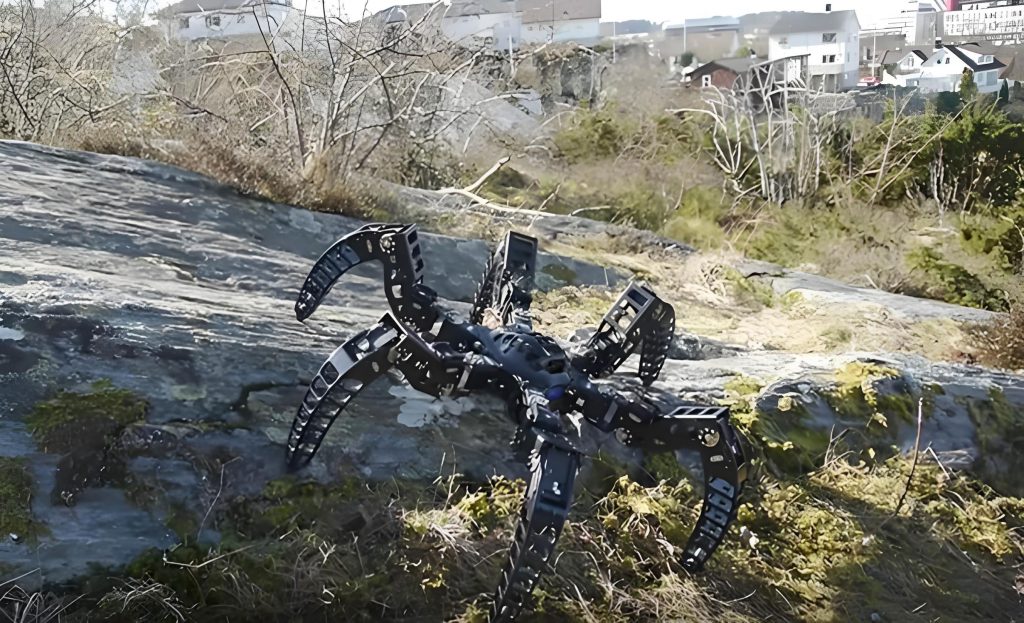
The transition from understanding biology to building a functional bionic robot is exemplified by the development of soft adhesive robots. Soft robotics, a paradigm shift from rigid linkages, uses compliant materials to achieve adaptability and safety. When combined with biomimetic adhesion, it unlocks potential for robots that can gently grasp delicate objects, navigate unstructured terrains, or perform underwater inspections. I have been particularly involved in the development of suction-based bionic robot systems inspired by marine organisms. The octopus sucker, for example, is a muscular-hydrostat—a structure with no rigid skeleton that uses fluid-filled compartments and arranged muscle fibers to change shape and generate force. A biomimetic version might use soft actuators like pneumatic artificial muscles or dielectric elastomers to replicate the contraction of the acetabular roof, creating negative pressure. The design parameters for such a soft sucker in a bionic robot include the cavity volume \( V \), the seal modulus \( G \), and the actuation strain \( \epsilon \). The achievable pressure difference can be modeled as:
$$\Delta P \approx – \frac{E_{act} \cdot \epsilon \cdot V_{0}}{V_{cavity}}$$
where \( E_{act} \) is an effective actuation modulus and \( V_{0} \) is a reference volume. This highlights the integration of soft actuator design directly into the adhesive mechanism, a core concept for autonomous bionic robot systems.
Perhaps one of the most comprehensive journeys from biology to bionics is the case of the remora-inspired adhesive disc. The remora, or suckerfish, possesses a specialized dorsal fin evolved into a sophisticated adhesive disc. My team’s work began with a detailed morphological study of the biological disc. We used micro-CT scanning, SEM imaging, and high-speed videography to quantify everything from the macro-scale lip geometry to the micro-scale dimensions of the lamellae and their spinules. A key finding was the active mobility of the lamellae—they can be raised and lowered by muscular action. This is not a passive structure; it is an active adhesive system. The following table outlines the critical functional components we identified and their hypothesized roles, which directly informed our bionic robot design specifications.
| Biological Component | Measured Feature / Property | Hypothesized Function | Design Parameter for Bionic Robot |
|---|---|---|---|
| Soft Lip Seal | Anisotropic viscoelasticity, micro-blind pores | Conforms to rough surfaces, creates primary seal, may facilitate mucus retention | Soft silicone rubber shore hardness, lip cross-section profile, surface patterning |
| Pectinated Lamellae | Number of rows (~15-30), length gradient, embedded in tissue | Reduce fluid leakage (create separate chambers), provide structural support | Lamellae spacing, height, rotational stiffness about hinge point |
| Spinules (on lamellae) | Hard, backward-facing, ~200-500 µm length, multi-row arrangement | Increase friction in flow direction, potentially interlock with host surface irregularities | Spinule material hardness, tip angle, density, height |
| Mucus Secretion | Present on disc surface | Enhances seal by filling micro-gaps, provides minor chemical adhesion | Application of synthetic hydrogel or viscous fluid in bionic robot seal interface |
| Lamellae Actuation Muscles | Observed angular displacement (~15-25°) | Actively control seal engagement/disengagement and internal volume/pressure | Integrated actuator type (e.g., tendon-driven, pneumatic chamber) and range of motion |
Based on this biological blueprint, we engineered a multi-material, soft-rigid hybrid bionic robot disc. The core was fabricated using polyjet 3D printing, which allowed us to deposit materials with different shore hardness values in a single build. This was crucial to replicate the soft lip (Shore A 30), the compliant lamellae bodies (Shore A 70), and the stiffer disc backbone (Shore D 50). The hard spinules, requiring a more rigid material, were laser-machined from a polymer and later inserted into pre-designed slots on the 3D-printed lamellae. The lamellae were designed with living hinges, enabling their rotation—mimicking the biological actuation. The adhesion performance of this bionic robot disc was then rigorously tested. We measured holding force \( F_{hold} \) on surfaces of varying roughness \( R_a \) and under different lamellae angles \( \theta \). The data revealed a complex interaction. On smooth surfaces, the suction component dominated. On rough surfaces, the contribution from friction, enhanced by the spinules, became significant. We could model the total holding force as a function:
$$F_{hold}(R_a, \theta) = F_{suction}(R_a, \theta) + F_{friction}(R_a, \theta)$$
where \( F_{suction} \) decays with increasing roughness due to seal leakage, but \( F_{friction} \) increases due to the interlocking of spinules. The optimal lamellae angle \( \theta_{opt} \) for maximum force was found to be surface-dependent, justifying the need for active control in an adaptive bionic robot. Our prototype achieved an impressive holding force over 400 times its own weight on smooth surfaces, validating the biomimetic approach. This disc was then integrated onto a small underwater vehicle, creating a bionic robot capable of “hitchhiking” on submerged surfaces to conserve energy—a direct translation of the remora’s ecological strategy.
The field of biomimetic soft adhesion robots extends far beyond this single example. Numerous other bionic robot platforms have been developed. For instance, tree frog-inspired wet adhesion has led to surfaces with patterned micropillars for enhanced friction in humid conditions, useful for bionic robot grippers in moist environments. The principle is often described by the friction law \( \mu = \mu_0 + \kappa \cdot \gamma_{lv} \cos(\phi) / P \), where \( \mu_0 \) is the dry friction coefficient, \( \kappa \) a geometry factor, \( \gamma_{lv} \) the liquid surface tension, \( \phi \) the contact angle, and \( P \) the applied pressure. For clingingfish-inspired suction, researchers have created pads with microfibrillated lips that achieve remarkable adhesion on rough substrates, a key advance for bionic robot station-keeping in turbulent aquatic environments. The common thread is the exploitation of soft, compliant materials and hierarchical structures to manage interfacial stresses and achieve robust, often reversible, adhesion. The table below compares the performance metrics and application focuses of several major classes of adhesive bionic robot technologies.
| Bionic Robot Adhesion Type | Typical Materials | Key Performance Metric (Range) | Primary Application Focus | Major Challenge |
|---|---|---|---|---|
| Gecko-inspired Dry Adhesion | PDMS, CNT arrays, PU microfibers | Shear Stress: 10-100 kPa (highly surface-dependent) | Vertical climbing robots, micro-grippers for cleanrooms | Durability, contamination resistance, performance on rough/dusty surfaces |
| Tree Frog-inspired Wet Adhesion | Hydrogel-filled micropillars, soft elastomers | Friction Coefficient: 0.5-2.0 (in presence of fluid) | Medical robots, grippers for wet objects, amphibious robots | Controlled fluid secretion/replenishment, performance in dry conditions |
| Octopus-inspired Suction | Silicone rubber, DEA, pneumatic elastomers | Negative Pressure: 20-80 kPa, Hold/Weight Ratio: 10-100 | Underwater manipulation, soft grippers for fragile items | Energy efficiency of actuation, sealing on porous surfaces |
| Remora-inspired Hybrid Suction | Multi-material silicones, embedded rigid elements | Hold/Weight Ratio: 100-400, works on rough surfaces | Underwater docking, station-keeping robots, biofouling-resistant attachments | Complex fabrication, integration of active lamellae control |
| Chemical/Glue-based Adhesion | Pressure-sensitive adhesives, biomimetic glues (e.g., mussel-inspired) | Peel Strength: 1-10 N/cm (often irreversible or slow-release) | One-time anchoring, medical patches, heavy-load temporary fixtures | Controlled reversibility, residue, environmental impact |
Looking forward, the development of advanced bionic robot systems hinges on several interdisciplinary frontiers. First is the deepening of adhesion机理 understanding at finer scales. We need more sophisticated models that couple mechanics, surface chemistry, and fluid dynamics. For example, the role of mucus in remora adhesion isn’t just about sealing; its rheological properties under shear and pressure likely play a critical role in energy dissipation and stability. Modeling this requires a non-Newtonian fluid dynamics approach:
$$\tau = \mu(\dot{\gamma}) \cdot \dot{\gamma} + \sigma_y$$
where \( \tau \) is shear stress, \( \dot{\gamma} \) is shear rate, \( \mu(\dot{\gamma}) \) is the shear-dependent viscosity, and \( \sigma_y \) is a yield stress. Incorporating such models into the design of a bionic robot‘s interfacial layer could dramatically improve performance.
Second is the move towards truly intelligent, material-level actuation and sensing. The ideal bionic robot adhesive would not just stick and release on command; it would sense surface topology, adjust its compliance in real-time, and modulate adhesion strength locally. This requires the integration of flexible sensors (e.g., piezoresistive strain gauges, capacitive touch sensors), distributed soft actuators (e.g., pneumatic networks, electroactive polymers, liquid crystal elastomers), and embedded control loops. The governing equations for such a system become a coupled set of differential equations describing sensor output \( S(x,t) \), control law \( u(S) \), actuator response \( \epsilon(u) \), and the resulting adhesion force \( F_{ad}(\epsilon, \text{surface}) \). Creating this “sensing skin” for a bionic robot is a monumental challenge in soft robotics.
Third is the exploration of novel, bio-inspired composite materials. Nature rarely uses homogeneous materials. The remora’s lamella is a perfect example of a stiff spine (collagen) embedded in a soft matrix (connective tissue). We are now exploring 3D-printed and molded composites with graded stiffness, self-healing polymers, and stimuli-responsive materials (e.g., changing adhesion with temperature or pH). The effective modulus \( E_{eff} \) of such a composite for a bionic robot component can be tailored using rule-of-mixtures or more complex micromechanics models:
$$E_{eff} = V_f E_f + (1-V_f) E_m \quad \text{(for simple alignment)}$$
where \( V_f \) is the volume fraction of the stiff fiber/filler, and \( E_f \) and \( E_m \) are the moduli of the fiber and matrix, respectively. The goal is to achieve the optimal balance of conformability (softness) and load-bearing capacity (stiffness) that defines biological adhesive structures.
Finally, the future lies in multi-modal adhesion and locomotion. The most adaptable organisms, like insects, use claws for interlocking on rough surfaces and adhesive pads for smooth ones. A next-generation bionic robot for exploration in mixed terrain might combine gecko-inspired dry adhesive toes, remora-inspired suction palmar pads, and grappling hook mechanisms, all controlled by a unified algorithm that selects the optimal strategy based on surface sensing. This represents the pinnacle of biomimetic integration, where the bionic robot ceases to be a mere copy of one organism but becomes a synthetic entity embodying principles learned from many.
In conclusion, the journey from observing a gecko scaling a wall or a remora hitching a ride on a shark to building a functional bionic robot is a profound testament to interdisciplinary science. It requires the patience of a biologist, the rigor of a physicist, the creativity of a materials scientist, and the systems-thinking of an engineer. The field of biomimetic soft adhesion robots is rapidly moving from proof-of-concept prototypes towards deployable systems with real-world applications in search-and-rescue, environmental monitoring, medical surgery, and industrial automation. As we continue to decode nature’s adhesive secrets and learn to fabricate increasingly sophisticated soft, responsive materials, the capabilities of these bionic robot systems will only grow. They represent not just a technological advancement, but a new way of thinking about robot interaction with the world—one that is gentle, adaptable, and intimately inspired by the genius of evolution. The potential for a bionic robot that can seamlessly traverse from a rocky seabed to the smooth hull of a ship, or from a desert cliff to a glass skyscraper, is no longer mere fantasy, but a tangible goal driving research forward. Every new discovery in biology adds another tool to our engineering toolkit, pushing the boundaries of what a bionic robot can achieve.