
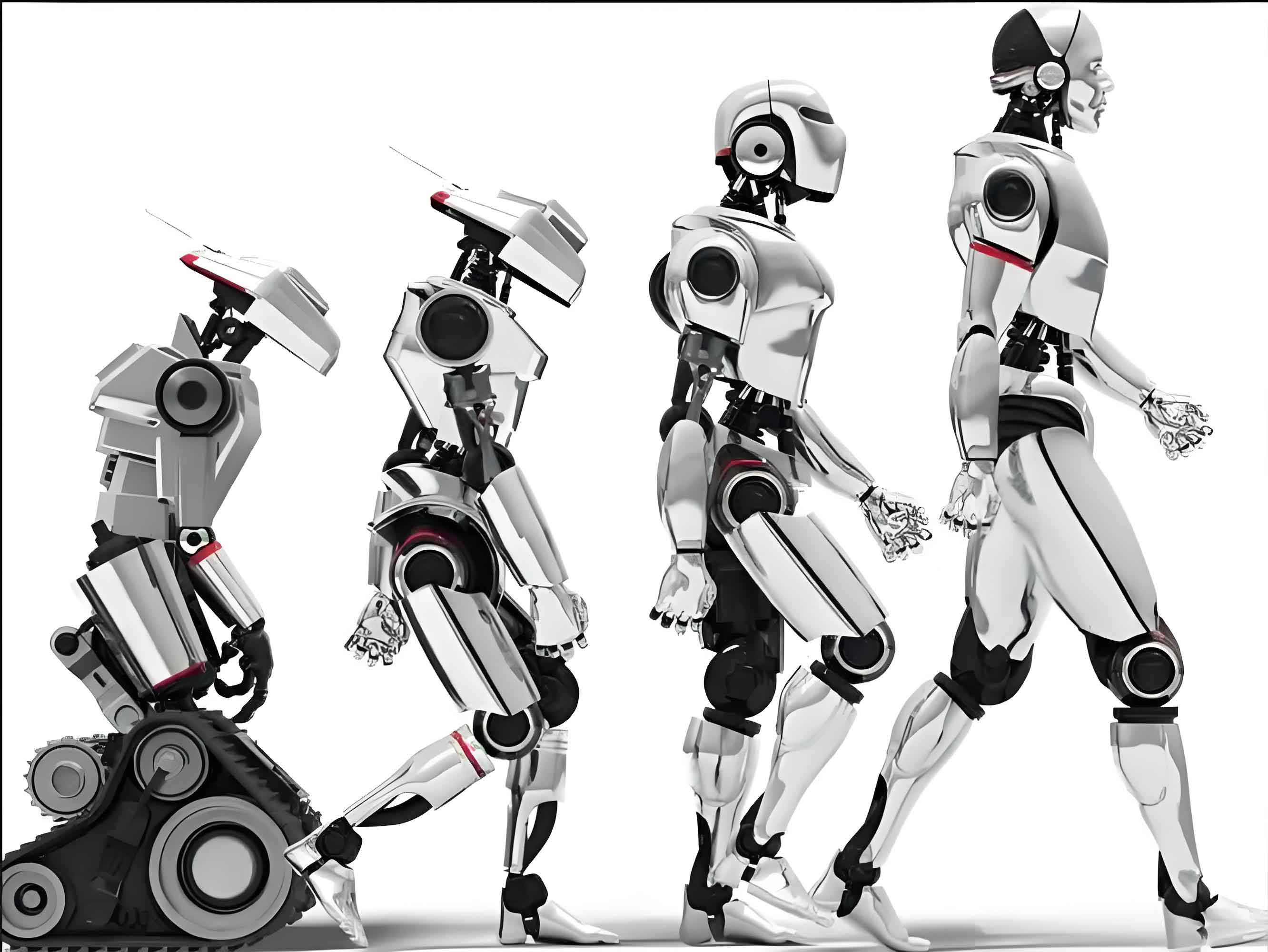
The global landscape is undergoing a revolutionary leap driven by Artificial Intelligence and robotics. We are witnessing AI’s evolution from a “tool for empowerment” towards autonomous intelligent agents, fueled by exponential growth in computing power, the fusion of multi-source heterogeneous data, and algorithmic breakthroughs. Concurrently, the deep integration of AI with robotics is catalyzing the emergence of embodied intelligence, embodied in humanoid intelligent robots, creating vast new market opportunities across industrial manufacturing, logistics, consumer services, and healthcare.
Recognizing this historic juncture, our city has strengthened our sense of opportunity to proactively seize the initiative. By leveraging our unique advantages and continuously fostering an innovation ecosystem, we are accelerating the cultivation of industries like intelligent robots and implementing comprehensive “AI+” initiatives. This has pressed the “accelerator button” for AI industrial development, propelling our city to rapidly establish itself as a national base for AI industry development and a highland for innovative applications. By the end of 2024, the core AI industry scale in our city exceeded 30 billion yuan, with a distinctive advantage forming in the hardware domain for humanoid intelligent robots, where the scale of the industrial chain approached 8 billion yuan.
Looking forward, our core positioning is to build a highland for the innovative development of the AI and intelligent robot industry. We are focusing on constructing a full-stack industrial system encompassing the “foundation layer – core products – scenario applications,” accelerating the formation of a trillion-yuan level industrial cluster. Our goal is to establish a first-class benchmark for the innovative development of AI and intelligent robot industries, vigorously advance new quality productive forces, and provide a distinctive solution for the intelligent upgrade of China’s manufacturing sector.
Current Foundations and Competitive Landscape
Our development is built upon a systematically constructed industrial system and distinct advantages in robotics.
I. The Constructed Full-Stack AI Industrial System
We have methodically built a three-tiered industrial architecture.
| Tier | Key Components | Our Current Status & Achievements |
|---|---|---|
| Foundation Layer | Compute, Data, Models |
|
| Core Product Layer | Hardware, Software, Integrated Machines |
|
| Application Layer | AI+ Manufacturing, Services, Urban Governance |
|
II. Distinctive Advantages in the Intelligent Robot Industry
Our strength lies in a comprehensive industrial chain and deep scenario integration.
1. Complete Industrial Chain Advantage: We possess one of China’s most完备 humanoid intelligent robot chains, covering core components, software,本体 manufacturing, and system integration. With over 50规上 enterprises, the total output value of the robot industrial chain approached 8 billion yuan in 2024, growing 12.2% year-on-year. Breakthroughs in key components (reducers, controllers, servo motors) and整机 like “Navigator 2.0” provide a solid foundation for mass production.
2. Diversified Application Scenarios:
$$ \text{Application Depth} = \int_{\text{Scenario Complexity}}^{\text{Technical Maturity}} \text{Economic Value}(t) \, dt $$
We have established mature application systems:
- Port Logistics: Featuring 24/7 smart inspection robots, mixed “unmanned+manned” truck operations, and the world’s largest commercial fleet of unmanned port trucks.
- Intelligent Manufacturing: From智能 welding for aerospace to humanoid intelligent robots for assembly and quality inspection.
- Service Sector: Active exploration in commercial, medical, and home scenarios.
3. Ecological Synergy: Supported by major platforms like the Zhejiang Humanoid Robot Innovation Center and a comprehensive policy framework including special action plans and fiscal measures. Talent and capital are being aggressively attracted.
III. Key Challenges and Structural Gaps
Despite progress, several critical challenges must be addressed to achieve our highland vision.
| Challenge Area | Specific Manifestations |
|---|---|
| Foundation Layer Support | Fragmented development of vertical models; insufficient industrial data scale/quality; suboptimal compute supply structure for multimodal/edge needs. |
| Core Product Competitiveness | Structural weaknesses in “New Four Core Components” (AI chips, solid-state batteries,高性能 materials, connectors); low autonomy in high-end industrial software and real-time OS. |
| Application Scenario Depth | Fragmented, small-scale applications (“small, scattered, weak”); lack of national-level embodied intelligence training grounds and validation platforms. |
| High-end Factor Supply | Shortage of leading AI service providers; weak public platform支撑; structural deficit of复合型 talent; low willingness for core business AI investment among traditional enterprises. |
Strategic Pathways to an Innovation Highland
To overcome these challenges and solidify our position, we are implementing four interconnected strategic thrusts.
Strategy 1: Strengthening Core Industrial Competitiveness
This strategy focuses on solidifying the foundation, breaking product bottlenecks, and deepening applications.
1. Systematically Consolidate the Foundation.
We prioritize three pillars, modeled by their synergistic function:
$$ C = f(D, M, S) = \alpha \cdot D_{quality} + \beta \cdot M_{vertical} + \gamma \cdot S_{edge} $$
Where \(C\) is foundational capability, driven by high-quality Data (\(D\)), vertical Models (\(M\)), and optimized edge/centralized compute Supply (\(S\)).
- Data: Deploy智能 sensors in key industries for automated multi-modal data collection. Build integrated “cleaning-labeling-desensitization” platforms to create high-quality industry datasets. Promote interoperability among data交易 platforms.
- Compute: Optimize supply with a “Center + Edge”架构. Upgrade the AI Supercomputing Center while accelerating布局 of regional edge computing centers. Establish a city-wide compute resource池 and unified调度 platform.
- Models: Foster vertical models via industry innovation centers using an “Enterprise提出问题 + Academia攻关 + Scenario验证” model. Develop dual-engine “General Model + Industry Knowledge Graph” architectures and set up model validation zones in flagship factories and ports.
2. Accelerate Breakthroughs in Core Products. The innovation target for核心 hardware can be expressed as achieving a performance-cost equilibrium:
$$ \text{Innovation Index}_{hardware} = \frac{\text{Technical Performance}_{localized}}{\text{Cost}_{imported}} \rightarrow \infty $$
- Key Hardware: Tackle bottlenecks in高端 chips, power batteries, and connectors through “Technology攻关 Lists” and joint R&D-testing consortia. Establish shared pilot manufacturing platforms for core components.
- Intelligent Software Ecosystem: Support the development of autonomous real-time operating systems (RTOS) for intelligent robots. Build open-source industrial algorithm platforms and deepen the integration of industrial software with domestic hardware.
- Integrated Machine Products: Establish a full-chain协同 mechanism for humanoid intelligent robots to synchronize the迭代 of reducers, servos, and OS. Implement a localization procurement list with annual increase targets. Enhance scenario adaptability for特种 robots (e.g., explosion-proof, high-temperature resistant).
- AI Consumer Terminals: Leverage manufacturing prowess to innovate in smart home, health monitoring, wearables, and视听 terminals.
3. Continuously Expand Scenario Applications.
$$ \text{Scenario Value} = \int (\text{Technical Feasibility} \times \text{Economic Impact} \times \text{Policy Support}) \, d(\text{Industry}) $$
- Deepen Manufacturing Integration: Perfect a four-tier smart factory cultivation system. Explore tailored application paths for特色 industries and create an industry-specific “AI App Store.”
- Expand City-level Scenarios: Build a smart port robot application demonstration zone. Construct a全域 perception network for dynamic monitoring. Promote medical robots and smart elderly care systems.
- Advance AI in Services: Deepen integration in trade, finance, and culture & tourism for智能报关, risk warning, and immersive VR experiences.
- Strengthen Implementation Safeguards: Build a tripartite “Mechanism-Platform-Policy” system for scenario落地,发布 high-value scenario lists,搭建 test beds, and implement “揭榜挂帅” and首购 policies.
Strategy 2: Strengthening Open Innovation Ecosystem Synergy
Building a vibrant, collaborative, and self-reinforcing innovation ecosystem is paramount.
1. Accelerate Nurturing of Enterprise Entities. We adopt a tiered enterprise cultivation model:
| Enterprise Type | Cultivation Focus |
|---|---|
| AI-Native Innovators | Attract and cultivate firms focused on底层 algorithmic breakthroughs. |
| Scenario-Deepening Specialists | Support firms mastering vertical industry pain points. |
| Ecosystem Builders | Foster龙头 enterprises with platform capabilities and生态主导力. |
Also, encourage spin-offs from academia and industry, and strengthen群链协同 for high-quality whole-chain development.
2. Promote Open Technological Innovation.
- Break through core共性技术 bottlenecks in perception-decision, motion control, and embodied AI datasets via flagship projects and major专项.
- Build a全要素开源 ecosystem, supporting the creation of open-source communities and public service platforms.
- Bridge the “R&D-Pilot-Production” gap by establishing industry alliances and共建 laboratories and中试 bases, particularly for embodied intelligence.
3. Enhance Platform Support Capabilities.
- Build Open R&D & Training Platforms: Create a全域异构 humanoid intelligent robot training base for multi-brand协同训练. Establish cross-vendor data-sharing and build a通用型 embodied intelligence large model底座 to lower R&D costs.
- Strengthen Pilot & Validation Platforms: Provide rapid prototyping for core components and establish rigorous testing评估 systems for功能安全 and human-robot interaction.
- Create Scenario Training & Industrial协同 Platforms: Build “digital twin training fields” to close the technology-to-application loop. Support with scenario insurance funds and rental subsidies to lower SME barriers.
Strategy 3: Strengthening Whole-Stack Industrial Collaboration and Agglomeration
Spatial clustering and global engagement are key to achieving critical mass.
1. Promote Industrial Cluster Development.
- Accelerate the construction of特色产业园:整机 manufacturing parks in specific districts, and core component/system software parks in others.
- Encourage全域 functional spatial布局 for R&D, data training, and算力 sharing across the city.
- Build integrated carriers that combine R&D, production, and verification under professional operation.
2. Drive Scenario-Based Standard & International Rule Output.
$$ \text{Global Influence} \propto \text{Standard Ownership} \times \text{Solution Export} $$
- Upgrade local standards (“Our City Standards”) to national and international levels, issuing multilingual white papers.
- Encourage and subsidize enterprises to lead international standard-setting, enhancing our话语权 in global intelligent robot rules.
- Build a standard跨境互认池, prioritizing cooperation with Central and Eastern European countries, and offer dual “CNAS+SGS” certification services.
3. Create High-End Industry Exchange Platforms.
- Actively构建 global cooperation networks, organizing participation in top-tier conferences and competitions like the World AI Conference and World Robot Conference.
- Host distinctive national-level brand events and professional contests in our city, with winning projects gaining direct access to scenario testing.
- Promote local industry链交流 through “technology open days” hosted by龙头 firms and upstream-downstream对接 events.
Strategy 4: Strengthening High-End Factor Resource Support
The final pillar ensures the sustained flow of talent, services, and capital.
1. Attract and Cultivate AI Service Providers.
- Intensify recruitment of key service商 (model, data, industry solution providers) guided by a published development图谱.
- Establish a gradient cultivation system, forming an “AI Service Application Alliance” with龙头 firms to embed services into intelligent robot and smart vehicle scenarios.
- Build expert service teams and AI service enablement centers to strengthen case study promotion.
2. Expand the Scientific and Technological Talent Pool.
- Increase the引进 of innovative领军 talent and young拔尖人才.
- Intensify cultivation of复合型 talent: support local institutions in establishing interdisciplinary embodied intelligence programs and enhance校企合作 through workshops and practical exchanges.
- Refine talent systems: iteratively implement our top talent工程 with special tracks for high-level人才. Innovate评价标准 by incorporating metrics like开源贡献 and training optimization experience.
3. Augment Financial Service Support.
The理想的 capital support model follows a patient, full-cycle approach:
$$ V_{Enterprise} = \int_{t_{R\&D}}^{t_{Scale}} [I_{Patient}(t) \cdot (1 + \eta_{Gov} + \eta_{Bank})] \, dt $$
Where \(I_{Patient}\) is patient capital, amplified by government fund guidance (\(\eta_{Gov}\)) and innovative bank信贷 mechanisms (\(\eta_{Bank}\)).
- Expand Professional Fund Investment: Attract influential funds and establish local industry investment funds. Create a “投早、投小、投长、投新” fund ecosystem with clear gradient exit channels.
- Leverage State Capital Guidance: Optimize市/区 fund布局 towards AI & intelligent robots. Improve尽职免责制度和市场化 co-investment mechanisms with social capital.
- Smooth Credit Channels: Guide financial institutions to innovate specialized products. Explore mechanisms like risk compensation pools,首台套 insurance pools, and risk缓释 to lower innovation trial costs.
Conclusion: Towards a Synergistic Future
Our journey to become a global highland for AI and intelligent robot innovation is underpinned by a clear, self-reinforcing strategy. By systematically strengthening our industrial foundations, fostering an open and collaborative innovation ecosystem, driving spatial and标准-based aggregation, and ensuring robust factor supply, we are constructing a comprehensive and resilient development model.
The ultimate measure of our ecosystem’s health is the synergistic output of its full-stack components:
$$ E = \sum_{i=1}^{n} (T_i + P_i + S_i) \cdot C_i $$
Where \(E\) is the total ecosystem output, \(T_i\) represents foundational technologies, \(P_i\) represents core products, \(S_i\) represents成熟 scenarios, and \(C_i\) is the collaboration coefficient across layers \(i\) (Foundation, Core, Application). Our strategies are designed to maximize each component and, crucially, the collaboration coefficient \(C_i\).
Through this multi-pronged and deeply integrated approach, we are not merely building an industry cluster but are engineering a dynamic innovation engine. This engine will propel the continuous advancement of intelligent robot technology, its deep integration into the real economy, and the creation of tangible “new quality productive forces.” Our ambition is to contribute a validated, scalable, and distinctly effective model to the global discourse on intelligent manufacturing and technological upgrade, solidifying our role as a pivotal player in the age of embodied intelligence.